Archimedes of Syracuse was, by common agreement, the most brilliant scientific mind of the entire ancient world — a mathematician and inventor so far ahead of his time that some of his work wouldn’t be matched for nearly two thousand years. He calculated pi more accurately than anyone before him, laid foundations of geometry and calculus, and understood levers, buoyancy, and machines at a level no one would equal again for centuries. And in the last years of his long life, that genius was turned to war.
THE HORROR In 213 BC, the might of Rome came for his home city of Syracuse, in Sicily, with a massive army and fleet, expecting a straightforward victory. They had not counted on Archimedes. Now an old man, probably in his seventies, he became the mind behind the city’s defence — and he made the Romans pay in blood.
Ancient historians describe the machines he devised to defend the harbour and walls. Enormous catapults hurled stones down onto the ships. Cranes and grappling arms reached out over the battlements and seized the prows of Roman warships, lifting them bodily out of the water and then dropping or capsizing them, spilling men into the sea — the Romans later called it “the Claw of Archimedes.” Legends say he used arrays of mirrors to focus the sun’s rays and set ships alight; most modern historians doubt that was physically practical, but whatever the exact details, the effect was real. The Roman assault was broken again and again. Soldiers grew so terrified that, it was said, if they saw even a beam or rope appear over the walls, they would flee, shouting that Archimedes was about to unleash another machine. For almost two years, a single old man helped hold the Roman war machine at bay.
But no city can resist forever. In 212 BC, during a festival when the defenders’ vigilance had slipped, Roman troops found a lightly guarded stretch of wall and poured into Syracuse. The city was sacked. The Roman commander, Marcus Claudius Marcellus, gave one very specific command: Archimedes was to be captured alive and brought to him unharmed. Marcellus knew just how rare and valuable that mind was.
It did not save him. As soldiers rampaged through the burning streets, one came upon an old man sitting on the ground, completely absorbed in geometric figures drawn in the dust or sand, so lost in thought he seemed barely aware of the chaos around him. The soldier ordered him to get up and come along. According to the famous version of the story, Archimedes waved him off, unwilling to leave his diagram unfinished, and told him not to disturb his circles. The soldier — who had no idea he was standing over the most important scientist alive — flew into a rage and ran him through with his sword.
THE MODERN RELIC When Marcellus was told that Archimedes was dead, killed against his direct orders over a mathematical drawing, he was, by every account, devastated and appalled. He treated the killing as a disgrace, punished the soldier, and gave Archimedes an honourable burial. On the tomb, following Archimedes’ own earlier wish, they carved the image he had loved most in all his work: a sphere fitting perfectly inside a cylinder, symbolising his favourite discovery — that a sphere has exactly two‑thirds the volume and surface area of the cylinder that encloses it. He was so proud of that piece of pure mathematics that he wanted it, not his war machines, to mark his grave.
Over the following century, the tomb of the greatest mind of the ancient world was neglected, overgrown, and ultimately lost; the people of Syracuse forgot where it was. Then, in 75 BC — 137 years after Archimedes died — a young Roman official named Cicero, the future great orator, was serving in Sicily and went searching for it. The locals insisted no such tomb existed. Cicero kept looking. Near one of the city gates, in a thicket of brambles, he spotted a small column poking out of the undergrowth — and on it, worn but still visible, the carving of a sphere within a cylinder. He had found it. He ordered the site cleared and restored, and stood, moved, at the grave of the man whose mind had reshaped the world.
The soldier who killed Archimedes is a nameless nobody. The sphere and cylinder he was so proud of are still taught in classrooms everywhere — and a man who begged only to be left alone with his circles became immortal, remembered for the very geometry he died refusing to abandon.
Nearby on the Dark Atlas
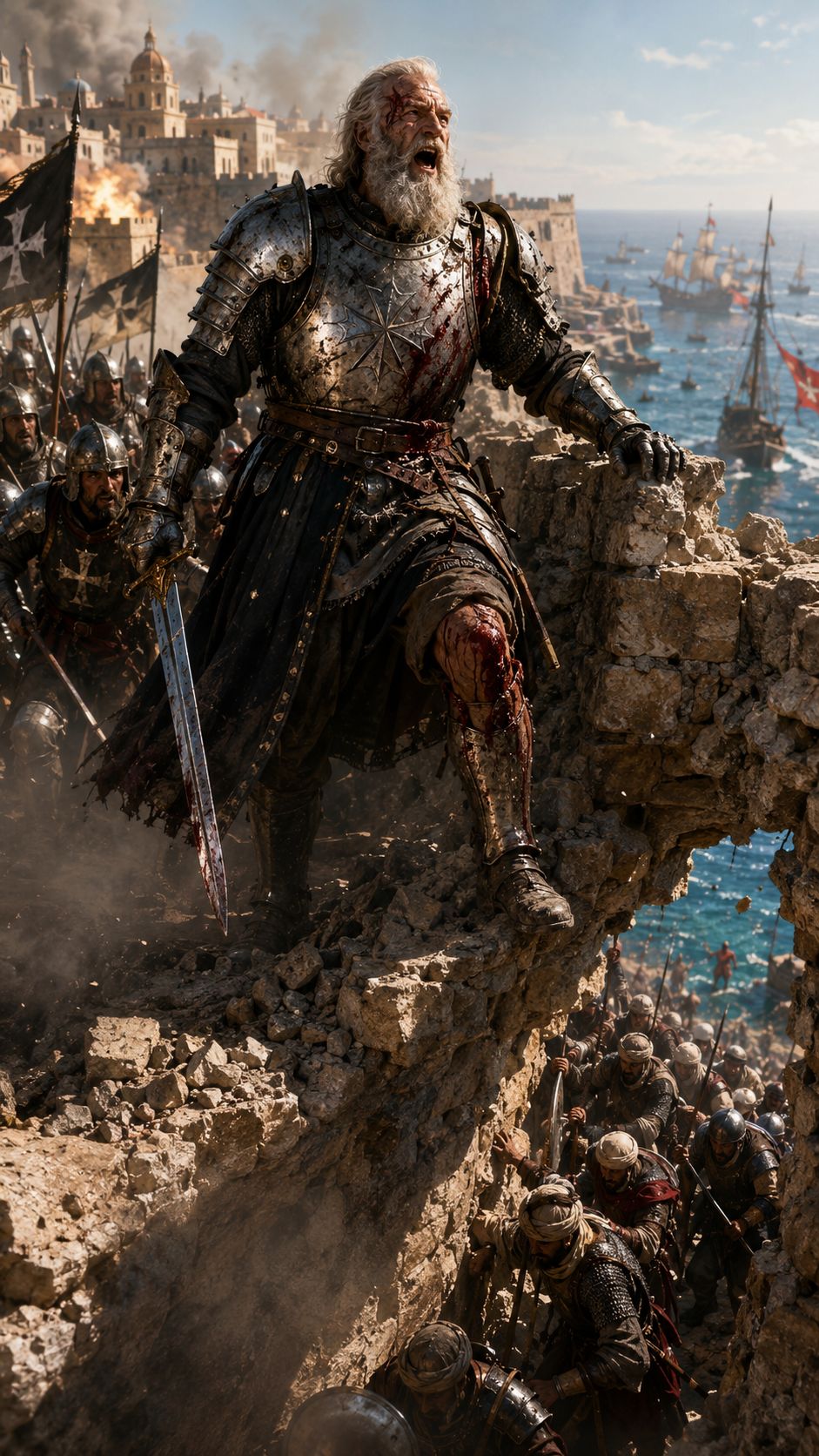 The Grand Master Who Refused To Retreat
A former Ottoman galley slave commanded a tiny garrison against forty thousand invaders, and built a capital on the blood-soaked shore that survived them.
Valletta, Malta · 1565 · 148 km away
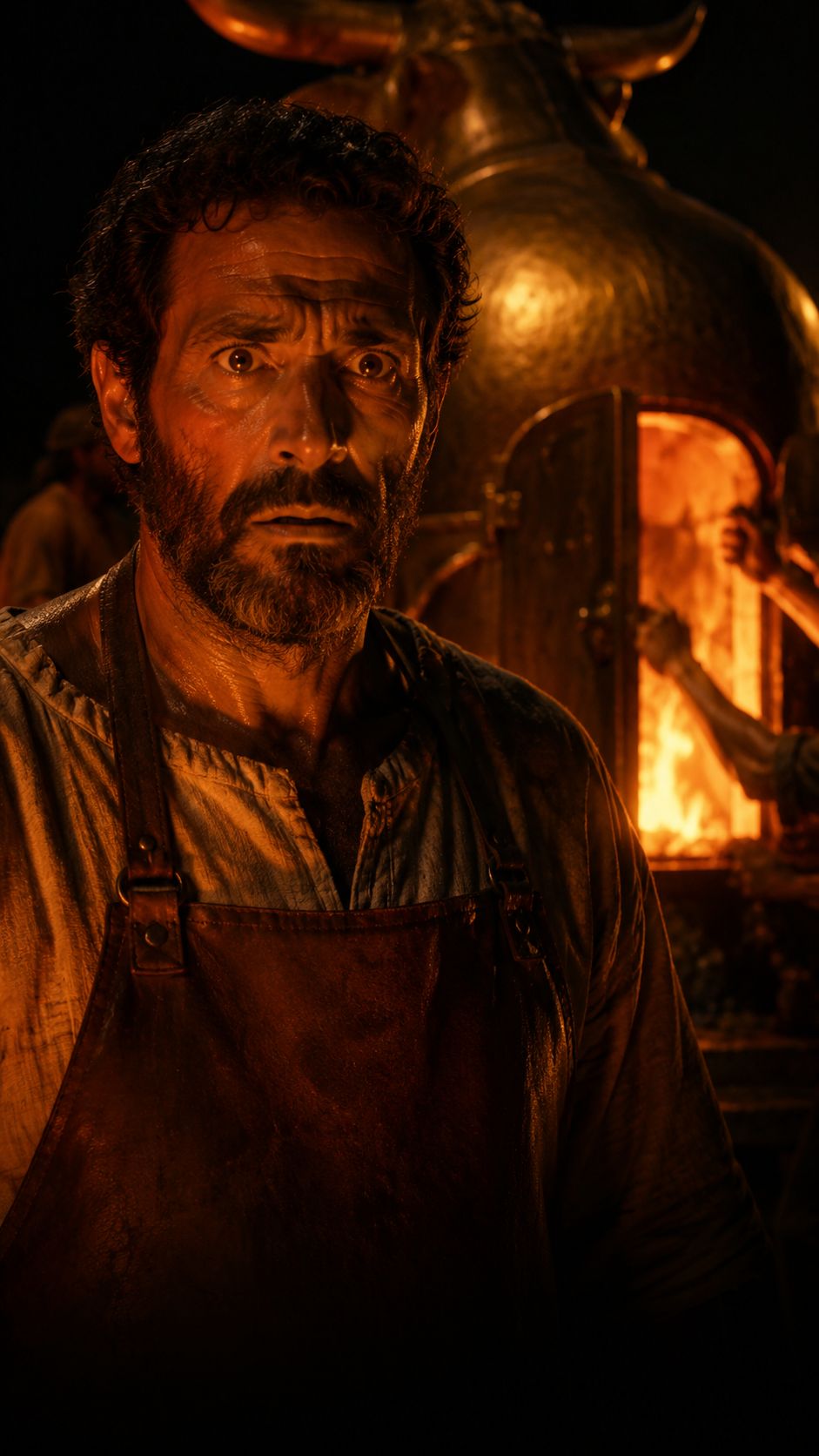 The Bronze Bull Built To Turn Screams Into Song
An inventor designed a bronze bull to roast men alive and pipe their screams out as music — then became its first victim.
Akragas (Agrigento), Italy · 550 BC · 154 km away
- The Bull That Sang With Human Screams
A bronze bull was built to turn a dying man's screams into music for the crowd.
Agrigento, Italy · 550 BC · 154 km away
- The Bull That Turned Screams Into Bellows
Tubes built into its bronze head disguised a burning man's screams as the roar of an animal.
Agrigento, Italy · 560 BC · 154 km away