Elizabeth Báthory was born on 7 August 1560 into one of the most powerful noble families in the Kingdom of Hungary. Her uncle became king of Poland; her nephew was a prince of Transylvania. By marriage and inheritance she controlled vast estates and income, making her one of the wealthiest women in Europe.
In 1604, her husband Ferenc Nádasdy died, leaving her a widowed countess with castles, villages and vassals under her authority. Within six years, she would be sealed behind stone inside one of those castles and never allowed out again.
The Horror
In late 1610, Palatine György Thurzó — the highest royal official in Hungary — led an armed party to Čachtice Castle (today in western Slovakia), where Báthory was residing. He later claimed to have found dead or dying girls on the premises, evidence of horrific abuse.
Báthory’s closest servants and associates were arrested, tortured and tried in early 1611. Under interrogation they described beatings, mutilations and murders of young women on a scale that shocked Europe; some modern retellings inflate the number of victims to as many as 650. Three servants were executed; one had her fingers torn off with hot pincers before being burned, another was beheaded then burned.
Elizabeth herself, however, was never brought into a courtroom. She was never formally indicted. No panel of judges ever questioned her. She was not allowed to confront her accusers.
Thurzó argued to King Matthias II that putting a high‑born countess on public trial for mass murder would disgrace the Hungarian nobility and destabilise the realm. There was another consideration: if she were convicted and attainted, her vast estates could legally revert to the Crown. If she were quietly neutralised without a formal verdict, her lands could pass to her relatives. Those relatives — who stood to gain financially — were among the people providing statements about her supposed crimes.
On 31 December 1610, without trial or sentence, Elizabeth Báthory was confined by order of the king. Inside Čachtice Castle, a set of rooms was bricked up: windows blocked, doors filled in. Small openings were left in the wall so food and air could reach the prisoner, but there was no exit.
She lived like that for roughly four years.
On 24 August 1614, a guard peered through one of the slits and saw her lying on the floor. Several plates of food sat untouched beside her. No one knew exactly when she had died. She was about fifty‑four.
In modern reference works and in the Guinness World Records, Báthory is often described as the most prolific female murderer in history, sometimes credited with up to 650 victims. But the surviving evidence has serious problems.
Of 289 witness statements collected during the investigation, more than 250 were hearsay: people who reported what they had heard others say, not what they themselves had seen. Among the rest, only a handful claimed any direct knowledge, and even those testimonies were taken under torture or threat. No contemporary trial record includes the famous claim that she bathed in the blood of virgins to preserve her youth; that detail only appears in later literary accounts from the 18th century onward.
What remains, once the legend is stripped away, is stark: a politically powerful widow with enormous landed wealth; male relatives, officials and churchmen who benefited from her downfall; an investigation controlled by those same men; a collection of mostly second‑hand accusations; and a decision to wall her up without ever letting her speak in her own defence.
The Modern Relic
Čachtice Castle still stands in ruins on a hill above the village of Čachtice in western Slovakia, in the foothills of the Little Carpathians. Visitors can walk among its broken walls and look out over the countryside she once ruled.
The exact rooms where Báthory was confined are not clearly identified; different guides point to different chambers, and no contemporary plan marks the cell that was bricked off. Her body was originally buried in the castle crypt, but later moved to an unknown location — perhaps a family church, perhaps another grave that has since been lost. No marked tomb bears her name.
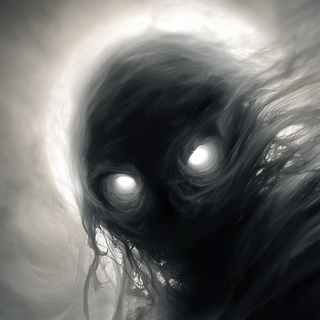
Today Čachtice markets its connection to the “Blood Countess” in tours and local lore. Yet the most famous parts of her story — the baths of blood, the precise victim count — rest on later invention and tortured testimony. The stones remember a woman locked behind a wall until she died. The documents remember a case in which rumour, politics and power mattered more than proof. Whether she was a sadistic murderer, a victim of a political purge, or some uneasily mixed combination of both, no court ever weighed the evidence. The wall was her verdict.
Nearby on the Dark Atlas
 The Composer Buried In An Unmarked Grave
The man who wrote The Magic Flute and an unfinished Requiem was given the cheapest funeral money could buy.
St Marx Cemetery, Vienna, Austria · 1791 · 121 km away
 The Composer Buried Without His Own Head
Eight days after his funeral, phrenology obsessives dug up a beloved composer and made off with his skull.
Vienna, Austria · 1809 · 122 km away
 The Composer Whose Skull Was Stolen
A genius conceals his encroaching deafness for years, and even after death, souvenir hunters aren't done taking pieces of him.
Vienna, Austria · 1827 · 122 km away
 The Doctor Who Discovered Handwashing Too Late
A Vienna doctor works out why women are dying of childbed fever in droves, and nobody in power wants to believe him.
Vienna, Austria · 1847 · 122 km away