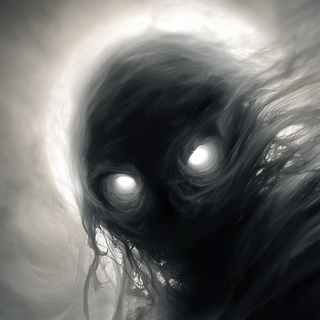
Charles the Bold is one of the most striking cautionary tales in all of European history — one of the wealthiest and most ambitious rulers of the Middle Ages, a man who came within touching distance of building his own kingdom, and who ended as a naked, half-frozen corpse in a marsh ditch, so disfigured that only his scars and his fingernails could tell the world who he had been.
To understand the scale of his fall, you have to understand how high he stood. Charles was the fourth and last Valois Duke of Burgundy, ruler from 1467. And “Duke” barely captures what he was. The Burgundian state he inherited and expanded was one of the richest and most glittering domains in all of Europe — a vast, wealthy patchwork stretching from eastern France up through the Low Countries: modern Belgium, the Netherlands, Luxembourg. Its court was the most magnificent in the West, dripping with gold, art, and ceremony. Charles technically owed allegiance to the King of France, but in reality he was more powerful, and more rich, than his own king — and he knew it. He had one consuming ambition: to weld his scattered territories into a single, independent kingdom, and to have himself crowned a king to rival France itself. He was proud, brilliant, restless, and utterly relentless — which is exactly why his enemies, and his own nature, would destroy him.
His downfall came from an unexpected quarter: the Swiss. Charles went to war against the Swiss Confederacy and the Duke of Lorraine, and the tough, fast-moving Swiss infantry shattered his glittering armies not once but twice — at Grandson and at Murten in 1476 — humiliating one of the proudest men in Europe and slaughtering thousands of his men. But Charles the Bold — also called Charles the Rash — could not stop. Consumed with fury, especially against the Duke of Lorraine who had taken back his capital, Charles marched in the dead of winter to lay siege to the city of Nancy. It was a catastrophe waiting to happen. The bitter cold was killing his soldiers where they stood; his army melted away through desertion and frostbite until only a few thousand freezing men remained. And it was with this pitiful, half-frozen force that, on the 5th of January 1477, he turned to face a Swiss and Lorrainer relief army that outnumbered him massively.
The Horror
The Battle of Nancy was less a battle than an annihilation. The Swiss swept around Charles’s flanks in a blinding blizzard and crushed his exhausted men. His army disintegrated in the snow. And this time, there would be no lucky escape. Charles the Bold, refusing to flee, was dismounted in the chaos and cut down. A Swiss halberdier swung at his head and the blade pierced his helmet and skull. He fell, and the fighting and the snow closed over him, and he vanished.
For two days, no one knew what had become of him. In Artois, his own subjects refused to believe he was dead — they sold armour, horses, and jewels on credit, convinced their duke had escaped to Germany to undertake seven years of penance and would return in glory. But Charles was not doing penance. On the morning of the 7th of January, his own young page, Baptiste Colonna, swore he could find the place where his master had fallen, and led a party of lords and searchers out onto the frozen battlefield. They found him at the edge of the St. Jean marsh — in a ditch by the banks of the stream, half-submerged in a pool of ice.
And then came the truly gruesome part. Charles the Bold — the richest duke in Europe, the man who would be king — was lying naked and on his side, one half of his head frozen fast into the ice. Looters had already been to him in the dark, stripping away his fine armour, his jewels, his golden rings, the very symbols of the crown he’d never won. His face was a ruined mask: one cheek torn and bitten by wolves, the other cheek imbedded in frozen slime. A tremendous wound had cut open his face from above the ear to the teeth — the halberd blow that had killed him, struck by a Swiss soldier named Humbert. Three pike wounds pierced his body — two in the thighs, one in the abdomen. His corpse had been partially gnawed by dogs and wolves. This proud man had become an anonymous, mutilated thing in the mud and ice.
The Modern Relic
In the end, they could only identify him by the intimate, unglamorous marks of a life. His personal physician, his Roman valet, his chaplain, his chronicler Olivier de la Marche, and two of his bastard brothers were brought to the frozen corpse. And it was they who confirmed it was the Duke — not by his face, which was gone, but by the old battle scar on his shoulder from Montlhéry, by his strangely long fingernails, by an ingrown toenail on his left foot, by a fistula swelling on his groin, and by his missing upper front teeth, which he had lost years before in a fall. Six definite proofs in all. Only these small, humiliating details could prove that this ruined body in a ditch had once been one of the greatest princes of the age.
His body was wrapped in a blanket, carried into Nancy, and laid on display for five days — an ignoble end to an astonishing career. His widow, Margaret of York, begged for his remains to be returned to her. René II of Lorraine, the man who had destroyed him, refused. Charles was buried in the Church of Saint-Georges in Nancy, in the city that had killed him. But over seventy years later, his great-grandson, the Holy Roman Emperor Charles V, had the remains exhumed and brought north to the Low Countries, to the Church of Our Lady in Bruges, in modern Belgium. There, Charles the Bold lies today beneath a stunning gilded bronze tomb, his effigy in golden armour, crown at his side, hands raised in prayer — laid beside the equally beautiful tomb of his beloved daughter, Mary of Burgundy. You can walk into that church in Bruges right now and stand before him: the last Duke of Burgundy, resplendent in gold for all eternity — a final, glittering monument to a man whose real end was a naked, faceless corpse, one half of his head frozen into the ice, eaten by wolves in the frozen dark, unrecognisable but for the scars of his own hard life.
The relic is the tomb — and it is magnificent, the exact opposite of the squalor of his death. But the deeper relic is the ditch itself. The étang Saint-Jean was drained in the nineteenth century; the marsh where one of the greatest princes in Europe rotted naked in the ice is now the Place de la Croix-de-Bourgogne in Nancy, a paved square with a monument. The cross that once marked where he fell was moved to a museum. The ice is gone. The wolves are gone. But the humiliation remains — the richest man in Europe, undone by his own relentlessness, ending as a thing that had to be identified by its fingernails.
Nearby on the Dark Atlas
 The Plague That Made A City Dance Itself To Death
One woman started dancing for no reason, and within weeks hundreds joined her, dancing uncontrollably until some dropped dead.
Strasbourg, France · 1518 · 116 km away
 How A Volcano Gave Us The Bicycle
A volcanic eruption on the far side of the world triggers failed harvests, a horse shortage, and the invention that changed how the world moves.
Mannheim, Germany · 1817 · 188 km away
- The Monk Who Defied the Emperor and Survived
Declared an outlaw who anyone could kill without consequence, he stood before the empire and refused to take back a word.
Worms, Germany · 1521 · 190 km away
 The Astronomer Who Raced Home To Save A Witch
While her son mapped the orbits of planets, a sharp-tongued old herbalist sat in a cell accused of witchcraft.
Leonberg, Germany · 1615 · 208 km away