
At about 2 a.m. on 17th July 1918, the Romanov family — Tsar Nicholas II, his wife Alexandra, and their children Olga, Tatiana, Maria, Anastasia and Alexei — were woken in the Ipatiev House in Yekaterinburg and told to dress quickly.
They were told they were being moved. The White Army was approaching. For their safety, they had to go to the basement.
They believed it. They brought pillows. They brought the dog.
Alexei, the thirteen‑year‑old heir crippled by haemophilia, could not walk. Nicholas carried him downstairs.
In the cellar, they were arranged for what they thought was a transfer. Nicholas stood in the centre. Alexandra asked for chairs — she and Alexei could not stand for long. Two chairs were brought. They sat. The rest of the family stood around them.
Then Yakov Yurovsky entered with eleven armed men and read out a sentence.
Nicholas said: “What?”
They opened fire.
THE HORROR The execution was supposed to take seconds. Each gunman had a specific target. Yurovsky shot Nicholas first, point‑blank in the chest. The Tsar died almost at once. Alexandra was killed in the same volley.
Then the plan failed.
Bullets hit the children — and bounced.
During months of captivity, Alexandra and her daughters had sewn the family’s diamonds and other jewels into the linings of their corsets and underclothes: roughly 17 pounds of gems hidden in their clothing as portable security. When pistol rounds struck the girls’ torsos, the hard stones acted like armour. Lead flattened or glanced off, ricocheting into walls and ceiling and, in at least one case, back into the executioners.
The small basement filled with smoke and dust. Visibility vanished. The gunmen fired blind. The children did not go down.
When the air cleared, the girls were still alive — crouched, bleeding, screaming on the floor. Alexei was still in his chair, protected by jewels sewn into his cap and garments. Yurovsky watched one of his men empty a magazine into the boy. The child did not die.
The shooters switched to bayonets. Steel blades were driven into the children’s bodies through the diamond‑lined fabric. Many bayonets bent or glanced off the stones. The killers had to aim for gaps — necks, faces, places without jewels.
Anastasia, seventeen, was stabbed and fell. Then she screamed and raised her arm to cover her face. One of the men stepped closer and shot her in the head.
Anna Demidova, the maid, survived the first volley and ran around the basement clutching a pillow stuffed with hidden jewels. She was chased down and bayoneted by the wall.
It took about twenty minutes to kill eleven people in a room the size of a large living room.
Yurovsky later wrote: “The firing went on for a very long time and, despite my hopes, it turned into a real mess.”
THE MODERN RELIC The Ipatiev House — the “House of Special Purpose” where the Romanovs spent their final weeks — was demolished in 1977 on orders from the local party leadership, headed then by Boris Yeltsin, who feared it would become a shrine for monarchists. The basement where the family died was destroyed.
In 2003, a new church was completed on the site: the Church on Blood in Honour of All Saints Resplendent in the Russian Land. It is one of the largest churches built in post‑Soviet Russia, standing directly over the place where the killings happened. The cellar room no longer exists; lit icons and marble now occupy the ground above it.
In 1991, a grave containing nine bodies was uncovered in woodland outside Yekaterinburg — burned, doused in acid and buried under a cart track. Later forensic and DNA work, including comparisons to living relatives on the Tsarina’s side, confirmed they were Nicholas, Alexandra, three daughters and several attendants.
Two bodies — Alexei and one sister — were missing. A second grave found in 2007 contained those remains.
In 2000, the Russian Orthodox Church canonised the family as passion‑bearers: saints who meet death with Christian patience. The children whose hidden jewels turned bullets into ricochets and forced their killers to use bayonets and close‑range shots are now shown in gold haloes on church walls.
The dog, Jimmy, died in the basement. No one canonised the dog.
Nearby on the Dark Atlas
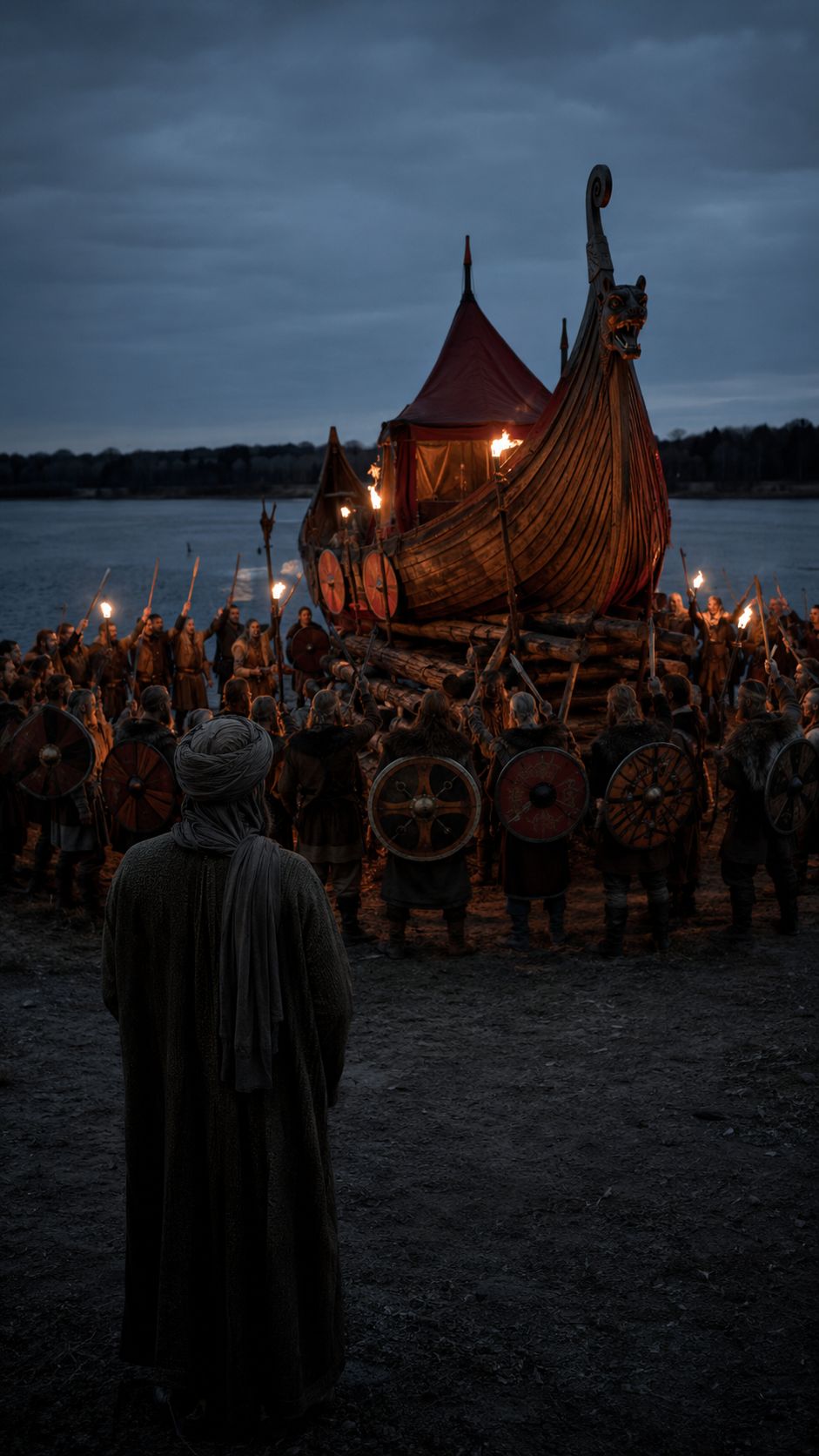 The Arab Diplomat Who Watched Vikings Burn
A Muslim envoy to the Volga recorded a Viking ship funeral in horrifying detail, and got an answer that still unsettles readers.
Bolgar, Russia · 921 · 749 km away
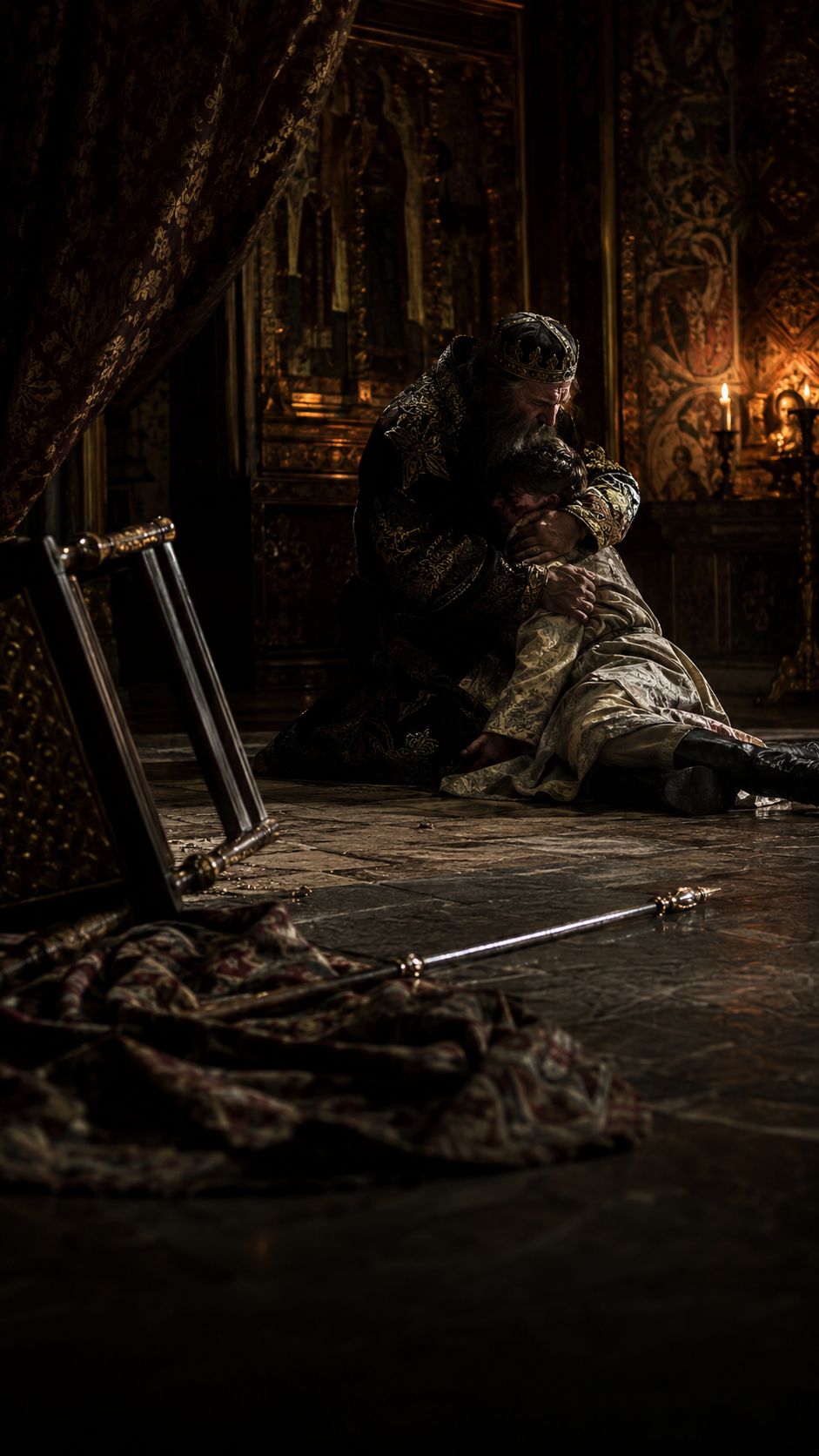 The Staff That Killed A Tsar's Own Heir
A row over his pregnant daughter-in-law's clothing ended with Ivan striking his own son with an iron-tipped staff.
Alexandrov, Russia · 1581 · 1333 km away
- The Father Who Killed His Own Heir
A single blow in a fit of rage killed his son and heir, and the moment was later painted so disturbing a man attacked it with a knife.
Alexandrov, Russia · 1581 · 1334 km away
- The Night Stalin Silenced His Own Poets
Thirteen of the Soviet Union's greatest Jewish writers were led into a basement and shot in a single night.
Lubyanka Prison, Moscow, Russia · 1952 · 1416 km away