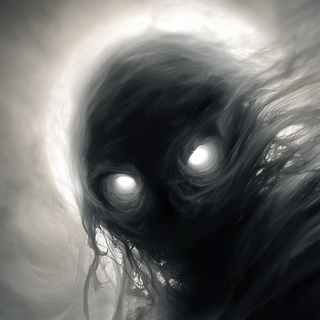
In the 1320s, if you wanted to know who really ruled England, the answer was not the king. It was Hugh Despenser the Younger — the royal chamberlain, King Edward II’s closest favourite, and, by strong contemporary rumour, his lover. Edward was weak and infatuated, and he let Despenser do as he pleased. What Despenser pleased to do was get rich. He seized lands, extorted noblewomen, falsely accused rivals to steal their estates, and made himself the most powerful and the most loathed man in the kingdom.
Among the people he humiliated was the one who would destroy him: Edward’s own wife, Queen Isabella of France. Despenser controlled her money, kept her short of funds, and helped push her out of her husband’s life. It was a fatal mistake.
THE HORROR In 1325 Isabella went to France and did not come back quietly. She took a lover — the exiled baron Roger Mortimer — raised a small mercenary force, and in September 1326 invaded England to tear Despenser down. Edward’s support evaporated. The king and his favourite fled west into Wales, and in mid‑November they were run down and captured near Neath.
Despenser knew exactly what was coming, and he tried to rob his enemies of it. Chroniclers record that in captivity he refused food, trying to starve himself to death rather than face a public execution. He was still alive, though weakening, when they hauled him to the city of Hereford for what passed as a trial on 24th November 1326.
It was pure theatre of revenge. They dressed him in his coat of arms reversed, to brand him a traitor, and crowned his head with a wreath of stinging nettles. On his skin they wrote a line of Latin scripture — a verse from the Psalms about a man who glories in malice. A great crowd had gathered with trumpets and drums, some reportedly ready to tear him apart with their bare hands. The verdict was never in doubt. The sentence was the most horrific death English law allowed: hanging, drawing, and quartering, with castration.
He was tied not to the usual two horses but to four, and dragged through the streets of Hereford to a specially built gallows fifty feet high — so tall that every person in the town could see him die. There he was hanged until nearly dead, then cut down, castrated, disembowelled with his entrails burned before him, beheaded, and his body hacked into four quarters.
And while it happened, according to several chroniclers, Queen Isabella and Roger Mortimer sat at a banquet and feasted, dining and making merry as they watched the man who had wronged her die piece by piece above the crowd.
THE MODERN RELIC The pieces of Hugh Despenser were scattered across the kingdom as a warning. His head was set on London Bridge. The four quarters of his body were sent to hang in York, Bristol, Dover, and possibly Carlisle — sources differ slightly on the exact list — so that no part of him rested in one place.
His story did not end well for his killers either. Within four years, the young King Edward III seized power from his own mother, and had Roger Mortimer executed as a traitor. Isabella was quietly retired from public life. Edward III, in a strange act of mercy, later allowed what was left of Despenser to be gathered up and buried.
Here is the relic — and it is remarkable. Despenser was commemorated in Tewkesbury Abbey in Gloucestershire, and the abbey still contains an elaborate alabaster tomb associated with his family; you can visit it today. The truly extraordinary part came in our own time. In the 1970s, a hacked‑apart medieval skeleton was found buried at Hulton Abbey in Staffordshire — decapitated, chopped through the spine and limbs, missing its head and some bones. In 2008, Dr Mary Lewis of the University of Reading examined the injuries — matching exactly the trauma of hanging, drawing, and quartering — and argued that the remains are almost certainly Hugh Despenser himself. The missing head and bones correspond to the parts known to have been given to his widow for burial.
Seven hundred years later, the mutilations the queen ordered are still written on his bones — and you can stand in Tewkesbury Abbey at the memorial of the most hated man in England, knowing that his dismembered skeleton has now been identified.
Nearby on the Dark Atlas
- The Golden Prince Who Died Old at Fifteen
A brilliant young prince died mysteriously with the withered organs of an old man.
Ludlow Castle, Ludlow, United Kingdom · 1502 · 35 km away
 The Bishop Burned By Three Fires
A Reformation bishop's execution went so horrifically wrong it became one of the most agonising deaths in the Tudor persecutions.
Gloucester, United Kingdom · 1555 · 39 km away
 The King Who May Have Escaped His Murder
The red-hot poker story may be propaganda; a mysterious letter claims the deposed king actually escaped his own killing.
Berkeley Castle, Berkeley, United Kingdom · 1327 · 44 km away
 The She-Wolf Who Overthrew Her Own King
A humiliated queen raised an army against her own husband and brought down a King of England.
Berkeley Castle, Berkeley, United Kingdom · 1327 · 45 km away