
Stede Bonnet had everything. Born in Barbados in 1688, he inherited a 400‑acre sugar plantation as a child. He was educated as a gentleman, described by contemporaries as a man of letters. He held the rank of major in the island militia and served as a justice of the peace. He married Mary Allamby, the daughter of another wealthy planter, in 1709, and they had three children. He was, by every measure available in the colonial Caribbean, a made man.
And in the spring of 1717, at the age of about twenty‑nine, Stede Bonnet quietly had legal papers drawn up handing his affairs over to his wife and two friends — walked out of his life — and became a pirate.
Nobody could believe it. His neighbours in Bridgetown decided he had simply lost his mind. The most influential account of his life, published a few years later, offered the explanation that was whispered all over Barbados: that it was “some discomforts he found in the married state” that drove him to this “humour of going a‑pyrating.” He didn’t run away to sea for gold, or revenge, or freedom. The story that stuck was that Stede Bonnet became a pirate to get away from his wife.
THE HORROR What followed is one of the most gloriously incompetent criminal careers in history — right up until it stops being funny.
Bonnet had never sailed a ship. He’d only ever been a passenger. He had no idea how to navigate, how to handle a crew, or how to fight at sea. And rather than steal a vessel like every other pirate on earth, Bonnet — a businessman to his bones — went out and bought one. He purchased a sloop, had it armed with ten guns, named it the Revenge, and hired a crew of about seventy men, whom he paid wages out of his own pocket. Pirates did not do this. Pirates were violent democracies who elected their captains and split the plunder. Bonnet was running his pirate ship like a small business, and his crew, who took his money, quite reasonably had no respect for him whatsoever.
He was also, bizarrely, quite successful at first, taking ships off Virginia and New York — mostly because his men did the actual work. And he kept his gentleman’s habits at sea. A Boston newspaper reported a sighting of Bonnet aboard ship, strolling the deck in his morning gown before retiring below to his books, of which he had a good library aboard. A pirate captain, in a dressing gown, going below to read.
Then he met Blackbeard.
Bonnet was thrilled. Blackbeard took one look at this soft, bookish gentleman and saw an opportunity. He got Bonnet drunk and explained, kindly, that a man of Bonnet’s breeding shouldn’t have to trouble himself with the burdens of command — far better to relax as a guest aboard the Queen Anne’s Revenge and leave the tiresome work to others. Then he installed his own man as captain of Bonnet’s ship. Bonnet’s own crew agreed to it. Blackbeard had stolen his ship, his men, and his career, and Bonnet became a passenger in his dressing gown aboard someone else’s vessel, reading his books while his old ship sailed under another man’s flag.
It got worse. After the two of them blockaded Charleston together in 1718, Bonnet went ashore to accept a royal pardon and get papers to sail to St Thomas. He came back to find that Blackbeard had taken all the loot, stripped his ships, marooned twenty‑five of his men on a sandbar, and vanished. Bonnet had been robbed by the most famous pirate in the world.
Furious and humiliated, Bonnet went back to piracy under the alias “Captain Thomas,” renamed his ship the Royal James, and took thirteen ships in two months. Then, in September 1718, Colonel William Rhett cornered him at the mouth of the Cape Fear River. The two sides ran aground and fired at each other for five or six hours. Bonnet declared he would blow up his own ship rather than surrender — and his crew, once again, simply overruled him.
THE MODERN RELIC They took him to Charleston in chains. He escaped — bribed his guards and hid on Sullivan’s Island for two weeks — and was recaptured. He wrote a letter to the governor begging for clemency, playing the gentleman card and blaming Blackbeard for everything. It was never answered. Twenty‑nine of his crew were hanged on 8 November and buried in the marsh below the high‑water mark. Bonnet’s own trial followed, and Chief Justice Nicholas Trott sentenced him to death.
On 10 December 1718, Stede Bonnet was hanged at White Point on the tip of the Charleston peninsula. Accounts describe the once‑proud major, broken and terrified at the end, holding a small bunch of flowers in his bound hands as they led him out. He was buried in the mud at the edge of the swamp, below the tide line, alongside the bodies of the men he had led to their deaths — a plantation gentleman who had wanted an adventure, and who had, in about twenty months, lost his fortune, his family, his ship, his dignity, and finally his life.
The relic is right there in one of America’s prettiest cities. Go to Charleston, walk to White Point Garden at the Battery — the grassy park at the very tip of the peninsula where tourists photograph the mansions — and under the oaks you’ll find a stone memorial, unveiled in 1943. Its inscription records that near that point in the autumn of 1718, Stede Bonnet, the notorious “Gentleman Pirate,” and twenty‑nine of his men “met their just deserts,” and that all were buried off White Point Gardens, in the marshes beyond the low‑water mark. They’re still there, under the mud, at the bottom of the Battery. And in a final twist Bonnet could never have imagined, three hundred years later HBO made a hit comedy series about him — Our Flag Means Death — turning the worst pirate who ever lived into a romantic hero, and giving the man who fled his marriage a love story with the very pirate who stole his ship.
Nearby on the Dark Atlas
- The Innkeeper Who Poisoned Her Guests at Tea
Guests checked into her hotel and didn't check out; she drugged them with oleander before her husband finished the job.
Charleston, United States · 1820 · same site
 The Deadly Origin Of The Word Deadline
Long before it meant a due date, a dead line marked the boundary where Civil War prisoners could be shot on sight.
Andersonville, Georgia, United States · 1864 · 399 km away
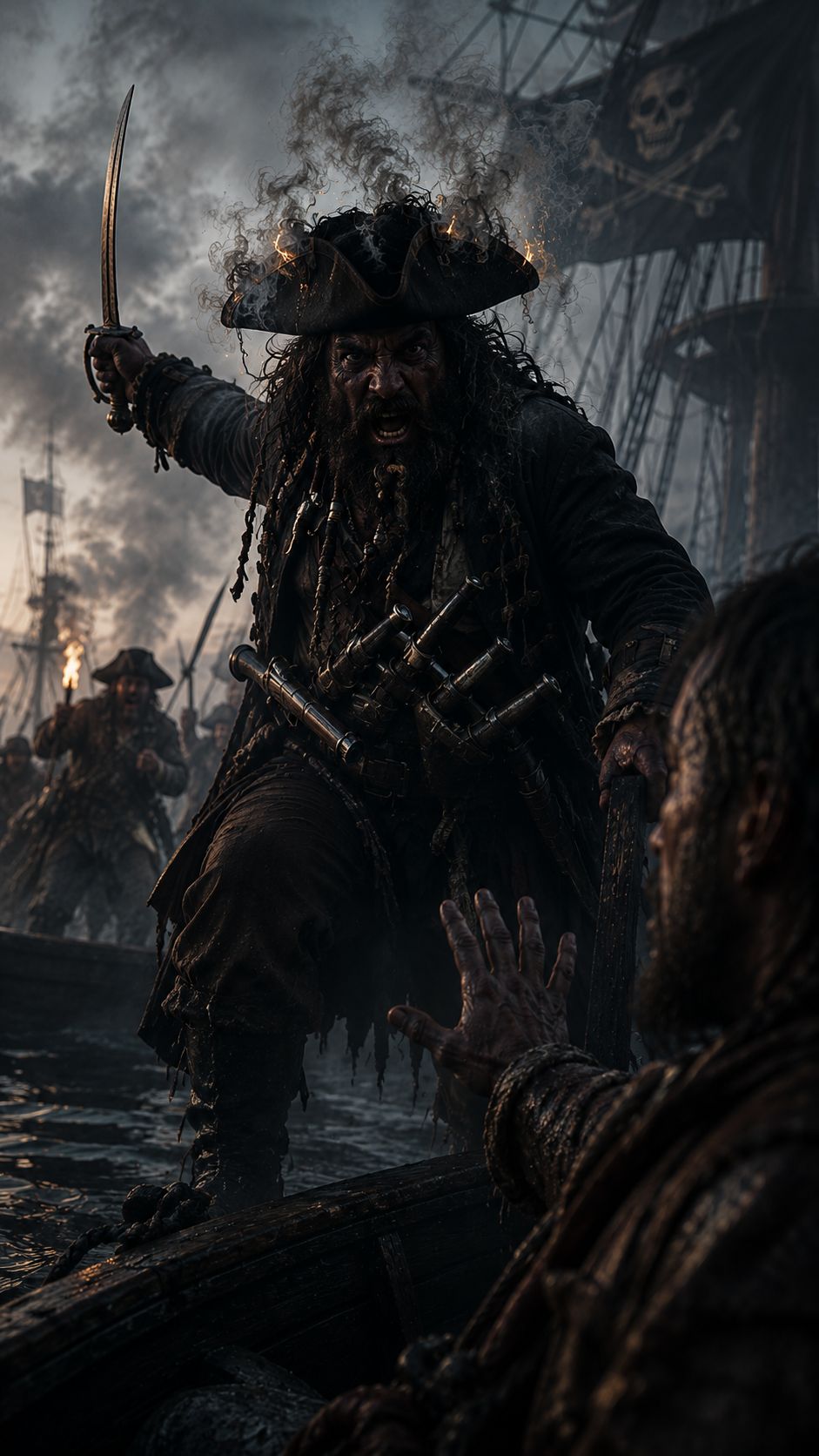 The Pirate Who Wore Smoke And Fire Into Battle
He lit fuses under his hat brim before boarding ships, becoming a living nightmare that terrified crews into surrender.
Ocracoke Island, North Carolina, United States · 1718 · 447 km away
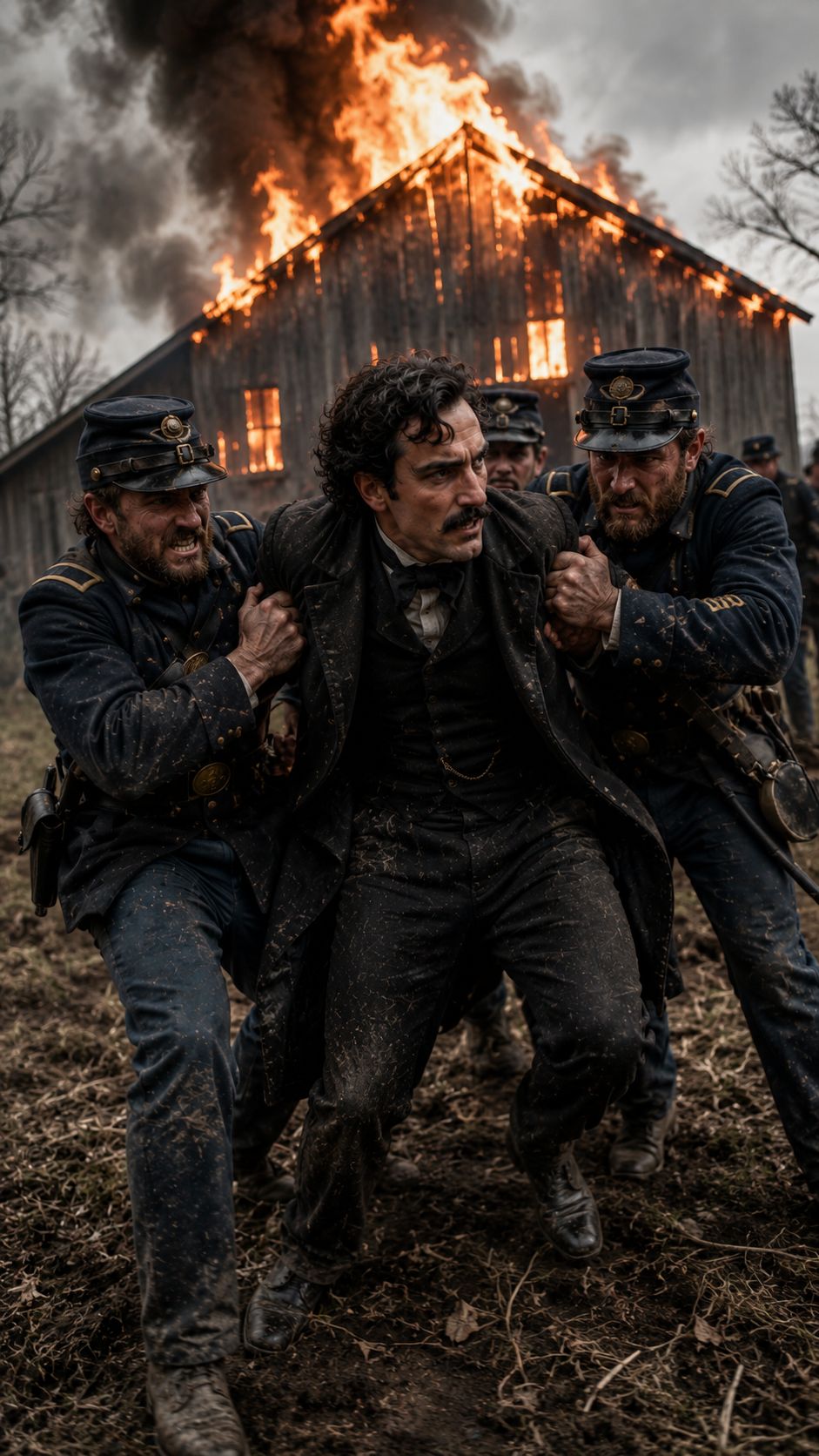 The Barn Where Lincoln's Killer Fell
Cornered in a burning tobacco barn, America's most wanted fugitive met a violent end after a twelve-day manhunt.
Port Royal, Virginia, United States · 1865 · 650 km away