For fifty years, the official story of King George V’s death was simple: an old king, worn out by illness, slipped away peacefully in his sleep. It was a comforting story. It was also, as the world discovered half a century later, not quite true.
By January 1936, George V — grandfather of the future Queen Elizabeth II — had reigned for twenty-five years and was gravely ill with long-term bronchial and heart problems. His physician, Lord Dawson, had treated him for a quarter of a century and knew the end was close. He told the Prime Minister the King was “packing up his luggage and getting ready to depart.” On the evening of 20th January 1936, at 9:25pm, Dawson scrawled what became one of the most famous medical bulletins in royal history on the back of a menu card: “The King’s life is moving peacefully towards its close.” The nation held its breath. And then, quietly, in a private diary that nobody would read for another fifty years, Dawson wrote down what he actually did next.
The Horror
At around 11pm, Dawson decided the King’s decline was taking too long. In his own words, “hours of waiting just for the mechanical end… only exhausts the onlookers.” So he acted. Alone, on his own authority, he prepared a syringe and injected the King — three-quarters of a grain of morphia, followed shortly after by a grain of cocaine, straight into the distended jugular vein of the monarch’s neck. Within about forty minutes, King George V was dead. Earlier that night, his nurse, Catherine Black, had given him a sedative, and as she did, the King’s last coherent words — mumbled, and directed at her — were reportedly “God damn you.” Dawson later claimed that Queen Mary and the Prince of Wales had told him they did not want the King’s life “needlessly prolonged.” But there is no record that the King himself was ever consulted. And Dawson’s own notes reveal a second motive, colder than mercy: timing. He wanted the death announced in the next morning’s respectable papers — The Times, above all — rather than in what he called the “less appropriate” evening tabloids. To make sure of it, he telephoned his wife in London so she could alert The Times the moment it was done. A king’s final hour, quietly adjusted for a newspaper deadline.
There is a bleak postscript. Catherine Black, the nurse who heard those last damning words, never once spoke publicly about what she witnessed that night for the rest of her life. And the Prince of Wales standing at his father’s deathbed — the son who had allegedly agreed his father’s suffering should not be prolonged — became King Edward VIII within hours. Less than a year later, he threw the crown away for Wallis Simpson, in an abdication that consumed the monarchy for the rest of 1936.
The Modern Relic
Dawson’s diary entry sat quietly in the archives for exactly fifty years. His own biographer, Francis Watson, read it while researching a book on Dawson published in 1950 — and, at the request of Dawson’s widow, left it out entirely. It was not until November 1986 that Watson finally published the truth in History Today, and it made front pages around the world, the New York Times headline reading: “1936 Secret Is Out: Doctor Sped George V’s Death.” The revelation reignited the entire euthanasia debate in Britain — critics noting the bitter irony that Dawson himself had stood in the House of Lords in 1936, just months after ending his own patient’s life, to help defeat a bill that would have legalised voluntary euthanasia for ordinary people. Dawson’s handwritten notes are still preserved today in the Royal Archives at Windsor Castle. The quiet, private proof of a very public lie — one that held, unbroken, for half a century.
Nearby on the Dark Atlas
 The Living Woman Given Her Own Funeral
A healthy thirty-year-old woman had her own funeral rites read over her before walling herself into a cell for forty years.
Norwich, United Kingdom · 1373 · 58 km away
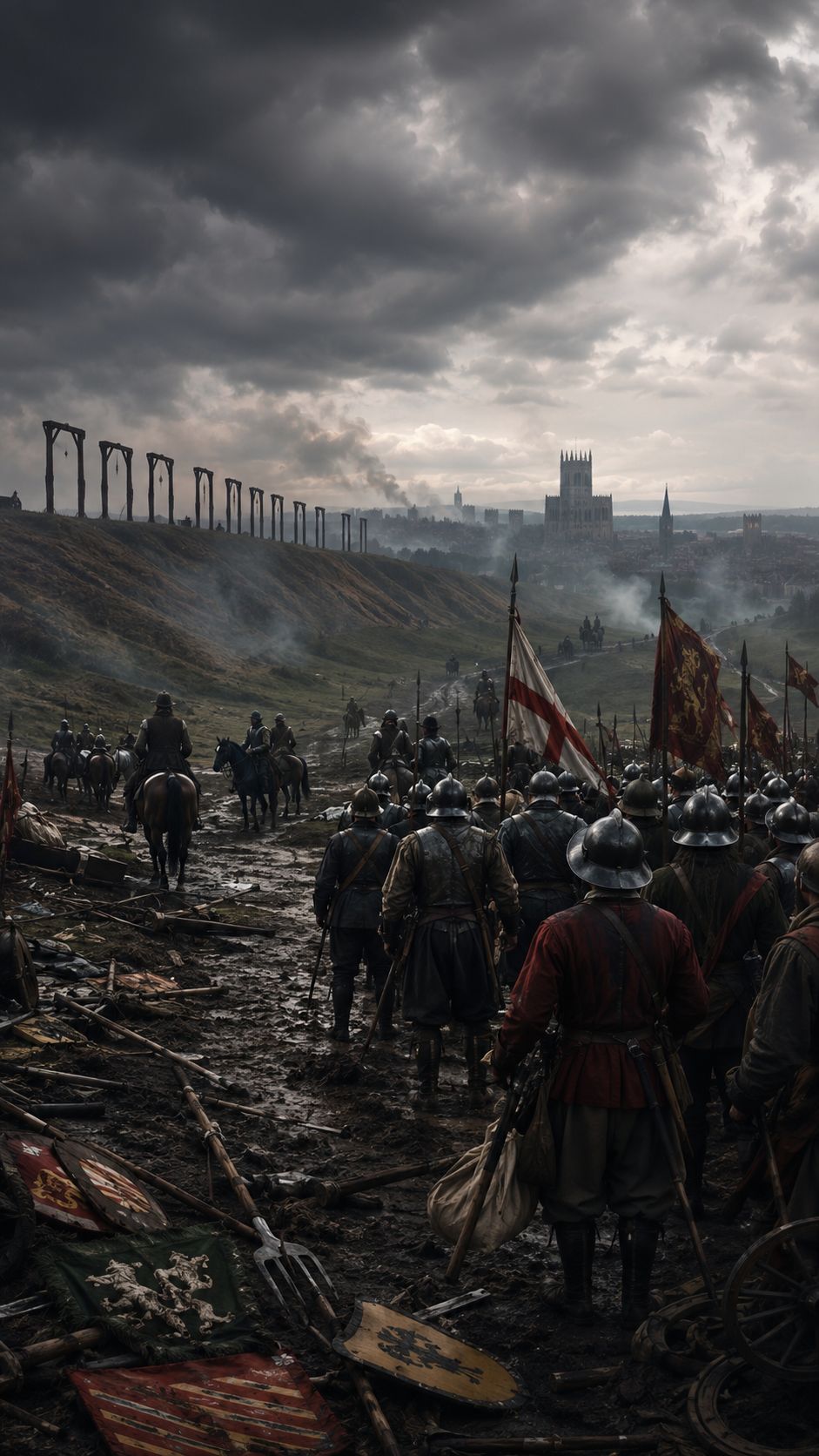 The Killing Field at Dussindale
Thousands of starving rebels were funneled into an open basin outside Norwich and cut down without mercy.
Norwich, United Kingdom · 1549 · 58 km away
 The King Whose Head Called Out From The Woods
A Viking army executed an English king and hid his head in the forest, where his followers heard it calling back to them.
Hoxne, Suffolk, United Kingdom · 869 · 71 km away
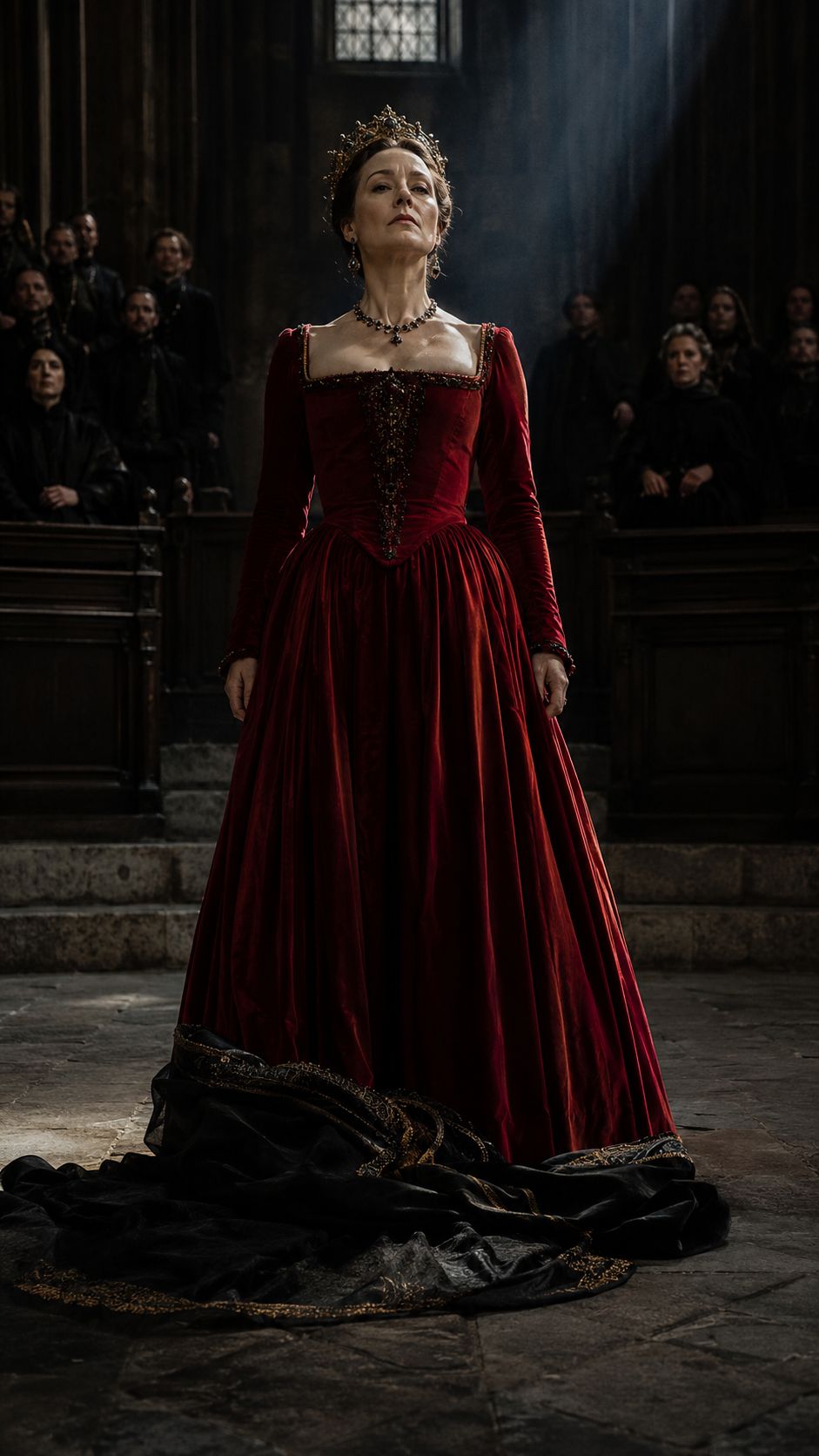 The Queen Who Dressed for Martyrdom
On her final morning, she revealed a crimson gown beneath her black robes — the color of Catholic martyrdom.
Fotheringhay, United Kingdom · 1587 · 72 km away
More like this
- The King's Favourite Who Bet Against Richelieu
A dazzling young courtier gambled his head against Cardinal Richelieu, and lost it in a public square.
Place des Terreaux, Lyon, France · 1642
- The Leper King's Story No Film Would Show
Kingdom of Heaven gave him a dignified death behind a silver mask, the truth was far crueller.
Jerusalem, Israel · 1185
- The Only Peer Ever Hanged At Tyburn
A violent nobleman was hanged before a stunned crowd who never expected to see a lord die on the public gallows.
Tyburn, London, United Kingdom · 1760
 The Rape Trial That Ended In Trial By Combat
A woman's accusation of rape led to France's last judicial duel, with her own life staked on the outcome.
Paris, France · 1386