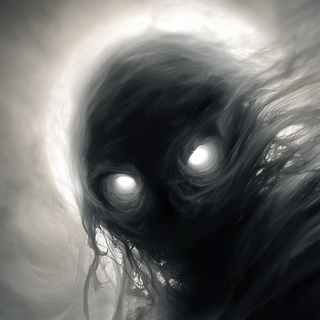
In the year 865, the largest Viking force England had ever seen landed on its shores. The Anglo‑Saxons called it the Great Heathen Army — not a raiding party after silver and slaves, but an army of conquest, led by the sons of the legendary Ragnar Lothbrok, including the fearsome Ivar the Boneless. They had come to take England for good.
One by one, they broke the Anglo‑Saxon kingdoms. And in 869, they turned on East Anglia — and its king, Edmund.
THE HORROR Edmund was a Christian king, said to have come to the throne as a teenager, remembered as devout and just. When the Great Heathen Army marched into his kingdom and wintered at Thetford, he did what a king was supposed to do: he raised his army and he fought them.
He lost. The Anglo‑Saxon Chronicle records it with brutal simplicity: that winter the Danes gave battle, took the victory, killed the king, and overran the land.
But it’s the tradition of how Edmund died — written down within living memory of people who’d known men who were there — that turned a defeated king into one of the most venerated figures in English history.
Edmund was captured. And Ivar the Boneless offered him a deal, the same deal the Vikings offered other conquered kings: keep your throne, but renounce your Christ, submit to us, and rule as our puppet — a client king wearing a crown the Vikings controlled.
Edmund refused. He would not, he said, abandon his faith or betray his God to save his own life. He sent word back that he would sooner die.
The Vikings obliged him, and they took their time.
They seized him and tied him to a tree. They beat him with whips, and as they beat him, Edmund called out the name of Christ over and over — which only enraged them further. So they began to shoot him. Not all at once — one arrow at a time, deliberately, drawing it out, treating it as sport. They loosed shaft after shaft into the bound king, aiming to wound rather than kill, prolonging it, laughing, as if it were a game.
The medieval account gives us the image that has followed Edmund for eleven hundred years: they shot him so full of arrows that his body was entirely covered in them, bristling from head to foot, “like the bristles of a hedgehog.” A man turned into a pincushion, still alive, still calling on his God between the arrows.
Finally, tired of the sport, Ivar ordered it ended. They cut Edmund down from the tree and beheaded him.
And then they did one last cruel thing. To a Christian of that age, being buried whole mattered enormously — the body needed to be intact and in consecrated ground. So the Vikings took the king’s severed head and hurled it away into the depths of the dense forest, where it could never be found, so that Edmund could never be made whole, never be properly buried, never rest.
Then they marched on, and left him.
THE MODERN RELIC When the Vikings had gone, Edmund’s followers crept back to search for their king. They found his arrow‑riddled body where it had been thrown down. But the head was lost somewhere in miles of thick woodland, and they despaired of ever finding it.
So they spread out through the forest, calling to one another to keep from getting lost — and, the story says, as they searched, they began to hear a voice answering them from deep in the trees. A voice calling out, in Latin, “Hic, hic, hic” — “Here, here, here.”
They followed it. And in a clearing they found the head of King Edmund, unharmed — cradled between the paws of an enormous grey wolf. The wolf had found the head and, instead of devouring it as a wolf should, had gathered it up and was guarding it, protecting it from other beasts, calling out to lead the searchers to it. When Edmund’s men lifted the head, the wolf followed them peacefully out of the forest, saw the king’s head safely carried home, and only then turned and padded back into the woods, never to be seen again.
They reunited the head with the body — and here the legend delivers its final miracle: the head was said to have rejoined the body seamlessly, leaving only a thin red line around the neck where the sword had passed.
The relic is one of the greatest in England, and the town it created still bears his name. Edmund’s body was eventually moved to a place called Beodricsworth, where a great abbey was raised over his shrine. It became one of the richest and most important pilgrimage sites in all of medieval England — and the town that grew up around it is called, to this day, Bury St Edmunds, in Suffolk. You can walk through the ruins of the vast abbey there now, in the gardens, and stand where for centuries pilgrims came to kneel at the tomb of the arrow‑shot king.
And here is the part almost everyone has forgotten. Long before St George and his dragon — a saint who never set foot in England — the patron saint of England was Edmund. This murdered Anglo‑Saxon king, shot full of arrows by the Vikings for refusing to renounce his God, was the original patron saint of the English, and remained so for centuries until a foreign dragon‑slayer quietly replaced him in the later Middle Ages.
There’s a real movement in Suffolk today to have Edmund restored as England’s patron saint. And he holds one last, fitting patronage: because of the beast that guarded his head in the forest, King Edmund the Martyr is, officially, the patron saint of wolves.
Nearby on the Dark Atlas
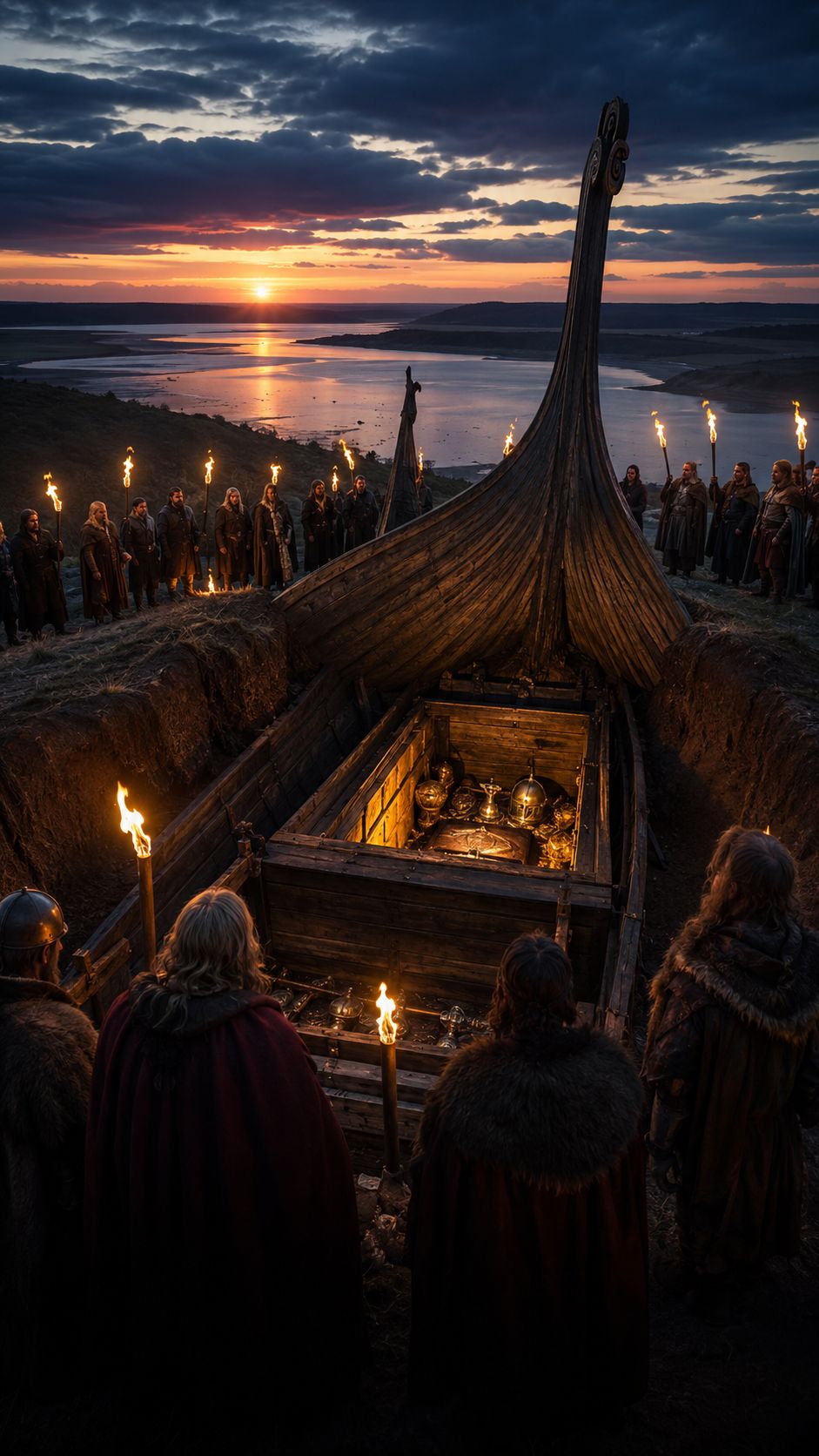 The King Who Vanished Into A Body-Shaped Void
A ship burial fit for a king held a fortune in gold, but the king's own body had completely dissolved away.
Sutton Hoo, Suffolk, United Kingdom · 625 · 31 km away
 The Living Woman Given Her Own Funeral
A healthy thirty-year-old woman had her own funeral rites read over her before walling herself into a cell for forty years.
Norwich, United Kingdom · 1373 · 32 km away
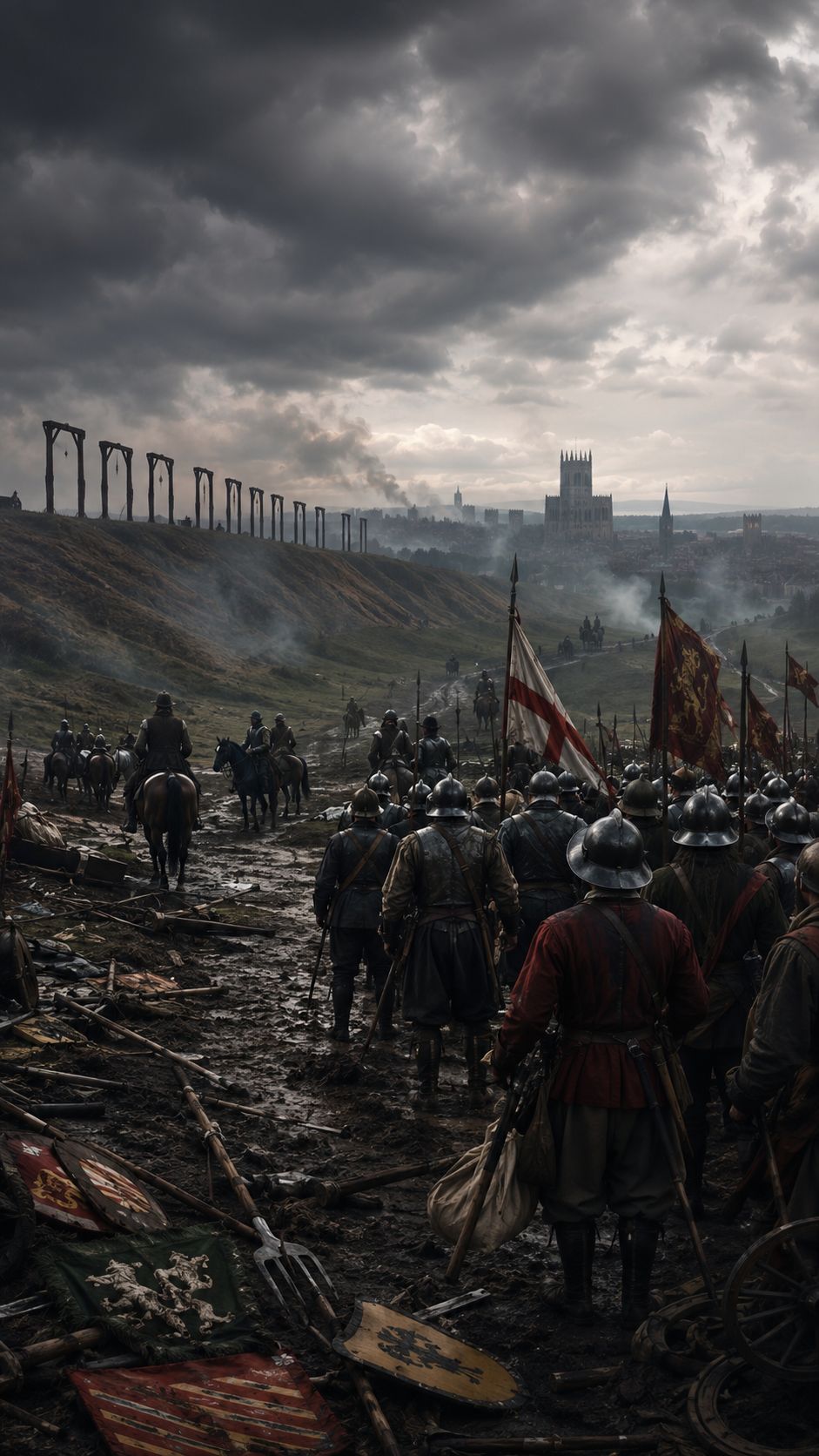 The Killing Field at Dussindale
Thousands of starving rebels were funneled into an open basin outside Norwich and cut down without mercy.
Norwich, United Kingdom · 1549 · 34 km away
 The Parson Who Danced To His Own Burning
A beloved country parson faced being burned alive with such joy that he turned his execution into a triumph.
Hadleigh, Suffolk, United Kingdom · 1555 · 39 km away