
In October 1536, Robert Aske — a Yorkshire lawyer — emerged as the chief captain of the Pilgrimage of Grace, a rising against Henry VIII’s dissolution of the monasteries. He led thousands of armed men into York; by the end of the month, the main rebel host in the north was around 30,000 strong, backed by local gentry, abbots and much of northern England.
Henry VIII did not have enough troops in the region to fight them. The royal force under the Duke of Norfolk was perhaps 5,000–8,000 men — badly outnumbered. If Aske had marched south, Henry risked a rebel army on the road to London.
Norfolk was sent north to negotiate. He played for time. At Doncaster, he offered promises in the king’s name: a general pardon, no more monasteries closed until a parliament met at York, and safe conduct for representatives to carry northern grievances to Henry himself. Aske, believing in the king’s word, agreed to disband the host. The pilgrims went home.
The Horror
Henry received Aske at court that winter. Contemporary accounts describe him as gracious and charming. He listened. He gave Aske gifts and a Christmas pension. He let him believe the king respected him as a loyal subject who had simply been misled. Then he sent him back north.
In early 1537, a smaller, confused rising broke out in the East and North Ridings led by Sir Francis Bigod — not by Aske. Aske actually helped the Crown suppress it, mustering men and working with Norfolk to shut it down.
Once order was restored, Norfolk invited Aske south again — this time, ostensibly, to be thanked for his service. When he reached London, he was arrested, questioned, and eventually sent to the Tower of London.
Henry insisted that Aske’s execution take place in York, where he had once been hailed as a hero, and that it be on market day so the maximum number of people would see it.
On 12th July 1537, Aske was tied to a hurdle and dragged through the streets of York to the mound beneath Clifford’s Tower, the keep of York Castle. Chroniclers differ on the exact method, but they agree on the essentials: Aske was executed there as a traitor, and his body was displayed in chains from the castle walls so that he hung above the city he had once led. Some sources emphasise the full traitor’s death — hanged, cut down, disembowelled and quartered; others summarise simply that he was “hanged in chains… till he died.” Either way, his corpse hung as a warning over York.
Jane Seymour — Henry’s third wife, pregnant with the future Edward VI — is said to have pleaded with Henry on behalf of the northern rebels and the monasteries, suggesting that the risings were God’s punishment and that he should show mercy. Henry turned on her, reminding her what had happened to Anne Boleyn when she “meddled in his affairs” and warning her not to follow the same path. After that, Jane never publicly challenged him again.
In the aftermath, more than 200 people across the north were executed for their part in the Pilgrimage of Grace and its aftershocks. Abbots and priors were hanged outside their own monasteries. The religious houses the rebels had risen to defend were dissolved anyway. The largest popular rebellion of Henry’s reign ended because one man trusted the king’s pledge of pardon and safe conduct — twice.
The Modern Relic
Clifford’s Tower still stands in York — a squat, round stone keep on a steep grass mound, now cared for by English Heritage. You can climb the mound and walk the parapet. From the walls, the rooftops and streets of the city spread out in every direction much as they did in the 1530s.
Aske would have been able to see the streets he had marched through at the head of thousands, and the marketplace where Henry chose to make an example of him. The Shambles and the central market square are still used today. The keep is a tourist attraction. The chains and the body are gone. The mound, the tower, and the view are the same.
Nearby on the Dark Atlas
- The Horse-Thief Turned Into A Folk Hero
A violent burglar and horse-thief understood one thing perfectly: how to command an audience at his own execution.
York, United Kingdom · 1739 · same site
- The Poisoner Whose Skin Was Sold as Charms
After she was hanged for poisoning a client, her skin was tanned into good-luck charms and sold to the public.
York, United Kingdom · 1809 · same site
- The Viking Execution Carved Into Legend
Ribs pulled outward like wings and lungs drawn through the back; historians still debate if this ritual was ever real.
York, United Kingdom · 867 · same site
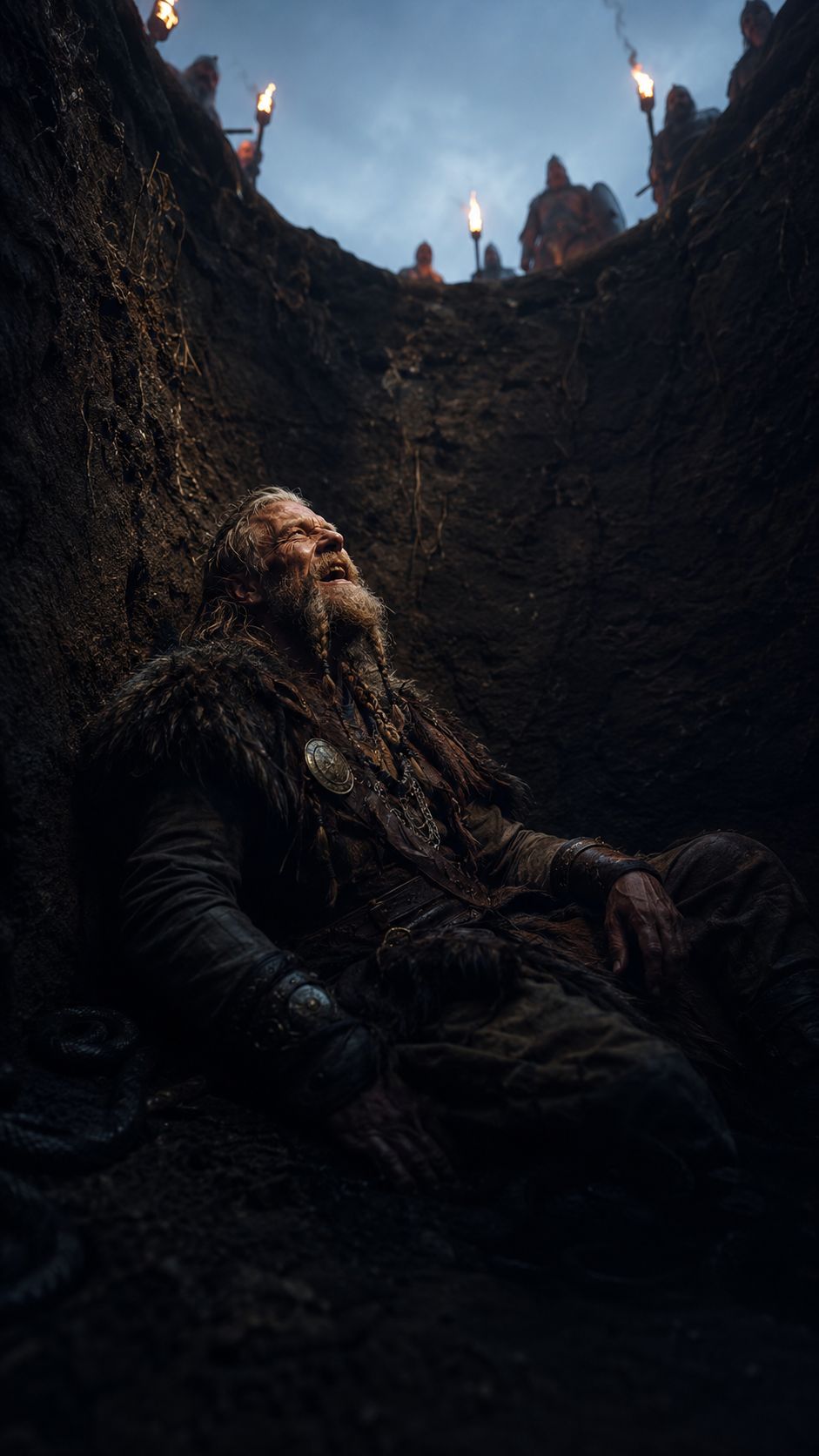 The Viking Legend Who Died Laughing In A Snake Pit
Thrown into a pit of vipers, the legendary Viking king reportedly laughed as he died, and his sons avenged him with an army.
York, United Kingdom · 865 · same site