In the spring of 1941, the Soviet government dispatched its leading physical anthropologist, Mikhail Gerasimov, to Samarkand to open one of the most feared tombs in Central Asia: the Gur‑e‑Amir, mausoleum of Timur.
Timur — known in the West as Tamerlane — was a Turco‑Mongol conqueror who carved out a vast empire across Central Asia, Persia, and into India and the Middle East. Contemporary and modern estimates suggest his campaigns killed something like 17 million people, roughly five per cent of the world’s population at the time. He had lain in Samarkand since 1405 beneath a massive block of dark jade, said to be the largest single piece in the world.
An inscription at the entrance of the tomb warned: “When I rise from the dead, the world shall tremble.”
Local elders in Samarkand begged the Soviet team not to disturb him. One old man is said to have warned: “Do not open it. If you do, war will come.” Gerasimov and his colleagues proceeded anyway.
The Horror
On 19 June 1941, the Soviet team lifted the jade slab and opened Timur’s coffin. Witnesses later described a thick, sweet smell filling the chamber — almost certainly the residue of centuries‑old embalming materials rather than anything supernatural. Inside lay Timur’s skeleton, confirming details of his life: his damaged right leg matched the injury that gave him his name Timur‑e‑Lang — Timur the Lame.
Accounts that circulated later — and whose literal accuracy historians now debate — say there was another inscription associated with the remains, either on or inside the coffin: “Whosoever opens my tomb shall unleash an invader more terrible than I.”
Two days later, in the early hours of 22 June 1941, Adolf Hitler launched Operation Barbarossa. Three million German troops and their allies crossed into the Soviet Union in the largest land invasion in history. The war on the Eastern Front would last four years and kill an estimated 27 million Soviet soldiers and civilians.
The chain of events had been set in motion long before Gerasimov ever went to Samarkand; Barbarossa had been planned and signed off in 1940. The “curse” did not cause the war. But for the people in Samarkand who had begged the Soviets not to disturb the tomb, the coincidence — tomb opened 19 June, invasion 22 June — was close enough. They had warned that war would come. Within 48 hours, it did.
As the war raged and the Wehrmacht pushed deep into Soviet territory, the story of the “Tamerlane curse” circulated in Central Asia. In the autumn of 1942, with the Red Army locked in brutal street fighting in Stalingrad, Stalin reportedly ordered Timur’s remains returned to Samarkand and reburied according to Islamic rites, in part as a gesture toward Muslim populations whose support he needed.
The reburial took place in November 1942, around the 19th–20th. On 19 November 1942, the Soviet Union launched Operation Uranus, the massive encirclement attack that trapped the German 6th Army in Stalingrad and marked the turning point of the Eastern Front.
The body went back into the earth the same week the tide of the war turned.
Whether Stalin believed in the curse, or simply decided that with millions dead it was wise to respect local fears and traditions, is impossible to prove. But the timing — exhumation followed within days by invasion, reburial coinciding with counter‑invasion — has kept the story alive.
The Modern Relic
The Gur‑e‑Amir complex still stands in Samarkand, Uzbekistan, its turquoise dome and tiled walls making it one of Central Asia’s most visited monuments. Inside, beneath the dome, the great block of jade still covers Timur’s tomb. Nearby rest other members of his family and descendants, including Ulugh Beg.
At the entrance, visitors can still read the warning that has been quoted for centuries: “When I rise from the dead, the world shall tremble.” Guides tell the story of the 1941 exhumation and the “curse” to tour groups every day. The coffin below has remained sealed since the reburial in 1942.
Operation Barbarossa and Stalingrad are now chapters in history books; the Soviet Union itself is gone. Timur’s tomb remains where it has been for over six hundred years, its inscriptions still offering a warning to anyone who thinks about lifting the jade again.
Nearby on the Dark Atlas
- The Curse That Coincided With Barbarossa
His tomb warned that opening it would unleash a conqueror worse than himself, and it was opened the day before Hitler invaded Russia.
Samarkand, Uzbekistan · 1941 · 3.3 km away
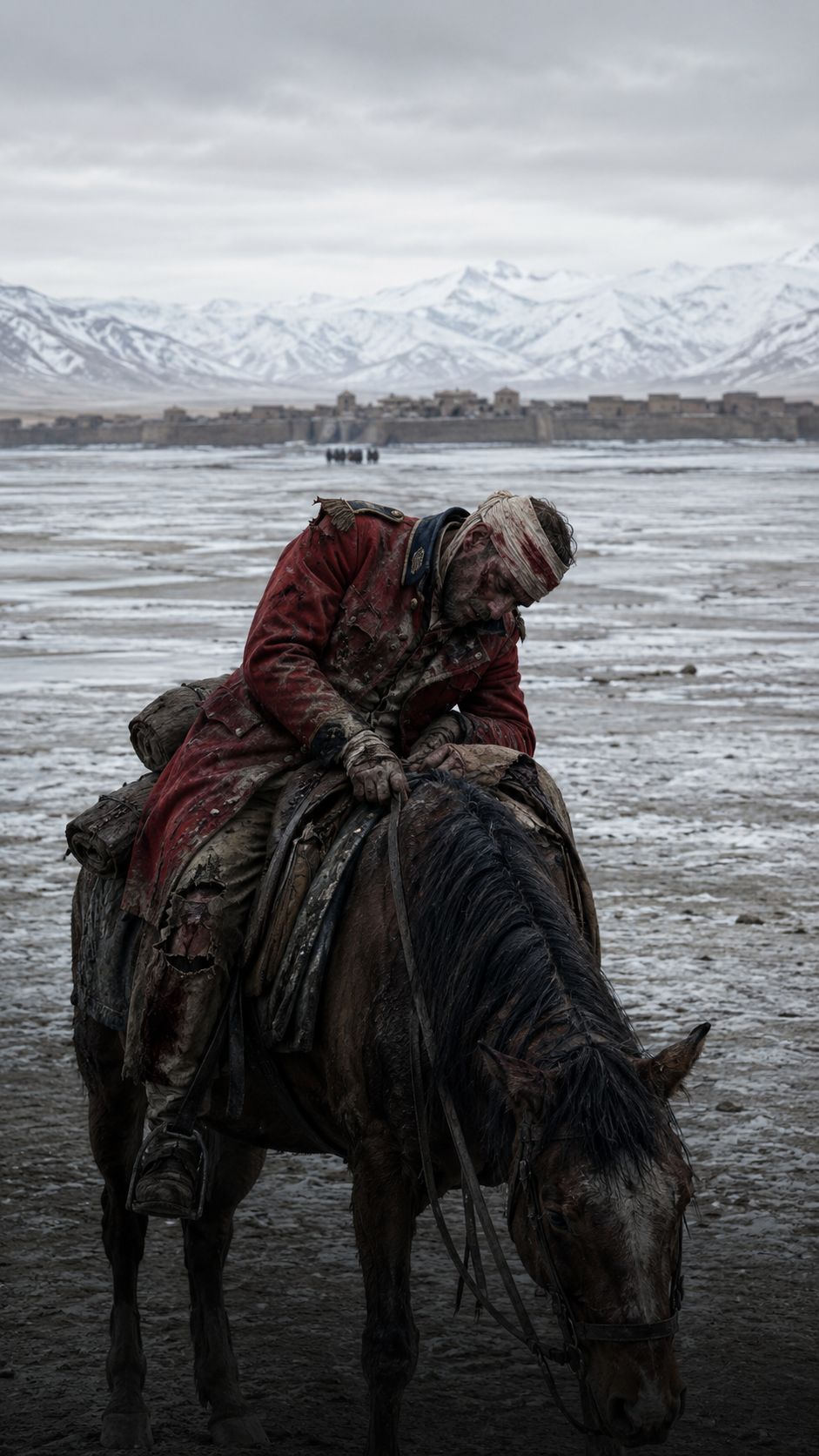 The Retreat That Killed An Army
Sixteen thousand British troops and camp followers retreated from Kabul, and almost none of them made it out alive.
Kabul to Jalalabad road, Afghanistan · 1842 · 601 km away
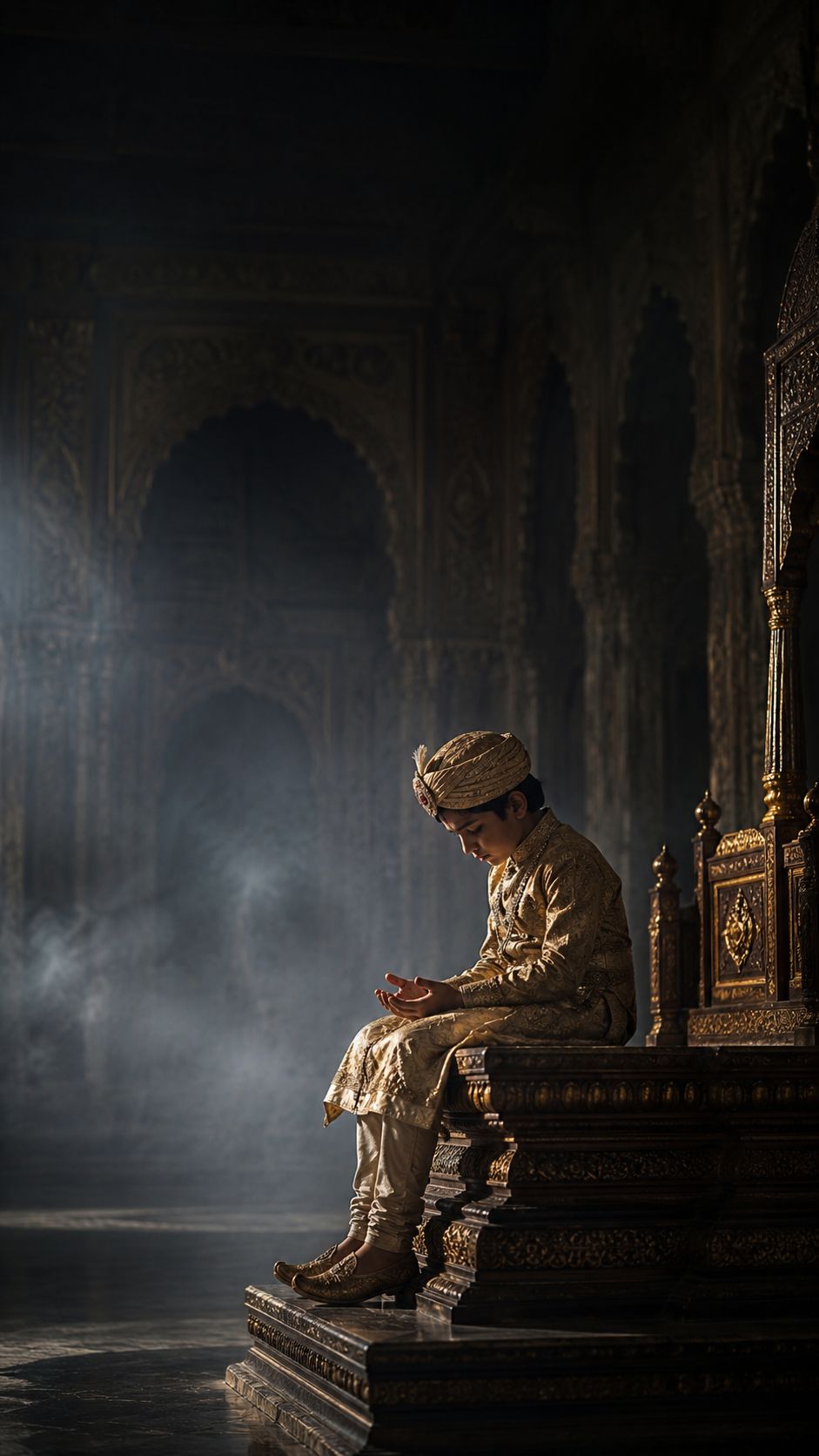 The Diamond Taken From a Ten-Year-Old King
A legal trap stripped a child king of his mother, his throne, and the most famous diamond in the world.
Lahore, Pakistan · 1849 · 1121 km away
- The Soldier Devoured Alive by Insects
A young soldier was bound between two boats and left to be eaten alive by insects drawn to honey on his skin.
Persia, Iran · 401 BC · 1436 km away