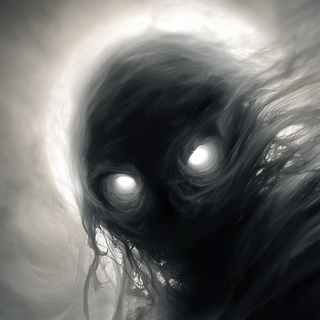
In 945 AD, Prince Igor of Kiev was killed by a Slavic tribe called the Drevlians. They had warned him not to come back for a second collection of tribute. He came anyway. They bent two birch trees to the ground, tied one of his legs to each tree, and let go. He was torn in half.
The Drevlians then sent twenty ambassadors to Igor’s widow, Princess Olga, with a proposal: marry our Prince Mal, unite our peoples, and the killing stops.
Olga received them warmly.
Then she destroyed them. Four times. Each act of revenge worse than the last.
THE HORROR Revenge One — The Trench. Olga told the twenty ambassadors she was honoured by the proposal and would give them her answer the next morning. She asked them to remain in their boat overnight — she would have the boat itself carried to her court as a sign of respect. They agreed.
That night, her men dug a deep trench in the courtyard. In the morning, the ambassadors were carried — still sitting in the boat — to the trench and tipped in. Olga stood at the edge, looked down at them and asked: “Is this honour to your taste?” Then they were buried alive.
Revenge Two — The Bathhouse. Olga sent a message back to the Drevlians: she was considering the marriage and wanted their most distinguished leaders to escort her. A group of high‑ranking Drevlian nobles arrived in Kiev. Olga offered them a bathhouse to wash in before the feast.
They went in. She barred the doors from the outside and ordered the building to be set on fire. They burned alive.
Revenge Three — The Feast. Olga then travelled into Drevlian territory, supposedly to hold a funeral feast at Igor’s grave before the wedding. The Drevlians — who still had not heard what had happened to their ambassadors or their nobles — prepared a huge banquet.
Olga’s attendants poured drink after drink. When the Drevlians were drunk and helpless, she gave the signal. Her soldiers fell on them and killed around 5,000 men at the feast.
Revenge Four — The Birds. Olga returned with an army and laid siege to the Drevlian capital of Iskorosten. The siege dragged on. The city held. Olga sent a message: she did not want more bloodshed and would be satisfied with a small tribute — three pigeons and three sparrows from each household.
The Drevlians, relieved, collected the birds and sent them out.
Olga’s men tied small bundles of cloth soaked in sulphur to the legs of every bird. At dusk, they lit the sulphur and released them.
Each bird flew home. The pigeons went to their dovecotes. The sparrows went to nests under the eaves. Hundreds of tiny fires landed on roofs and beams at once. Thatched roofs caught first. Then rafters. Then whole houses.
Iskorosten burst into flame from the inside. As people fled the burning city into the open, Olga’s soldiers were waiting. The capital was destroyed, survivors killed or enslaved. The Drevlians ceased to exist as an independent people.
Olga ruled Kievan Rus’ as regent for her son for about twenty years. Around 957, she travelled to Constantinople and converted to Christianity, baptized by the Patriarch himself. She spent the rest of her life promoting Christianity in her realm.
Later, the Orthodox Church canonised her as Saint Olga, Equal to the Apostles.
THE MODERN RELIC Saint Olga is venerated in the Eastern Orthodox Church, the Roman Catholic Church, and several other Christian traditions. Her feast day is 11 July. Icons show her holding a cross and a model of a church — signs of faith and building. They do not show the trench, the bathhouse, the feast or the burning birds.
The city of Iskorosten still exists under the name Korosten, in northern Ukraine. A monument to Olga stands there — in the place that was once burned by its own pigeons and sparrows carrying fire on their legs. The woman who destroyed the city is honoured in the rebuilt one.
Nearby on the Dark Atlas
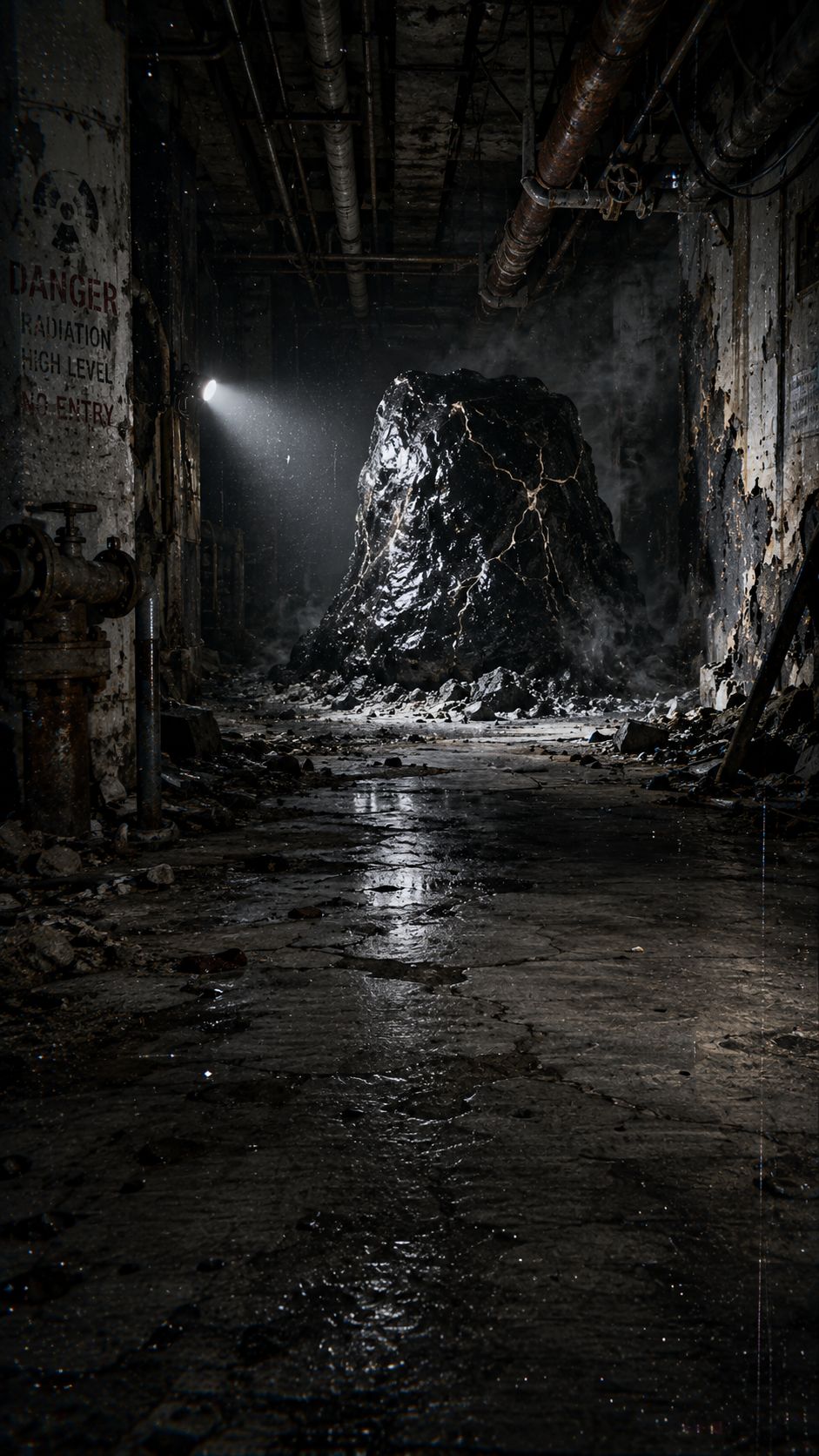 The Mass Still Too Deadly To Touch
Scientists force their way into a basement beneath a destroyed reactor and find a substance the world had never seen before.
Chernobyl, Ukraine · 1986 · 112 km away
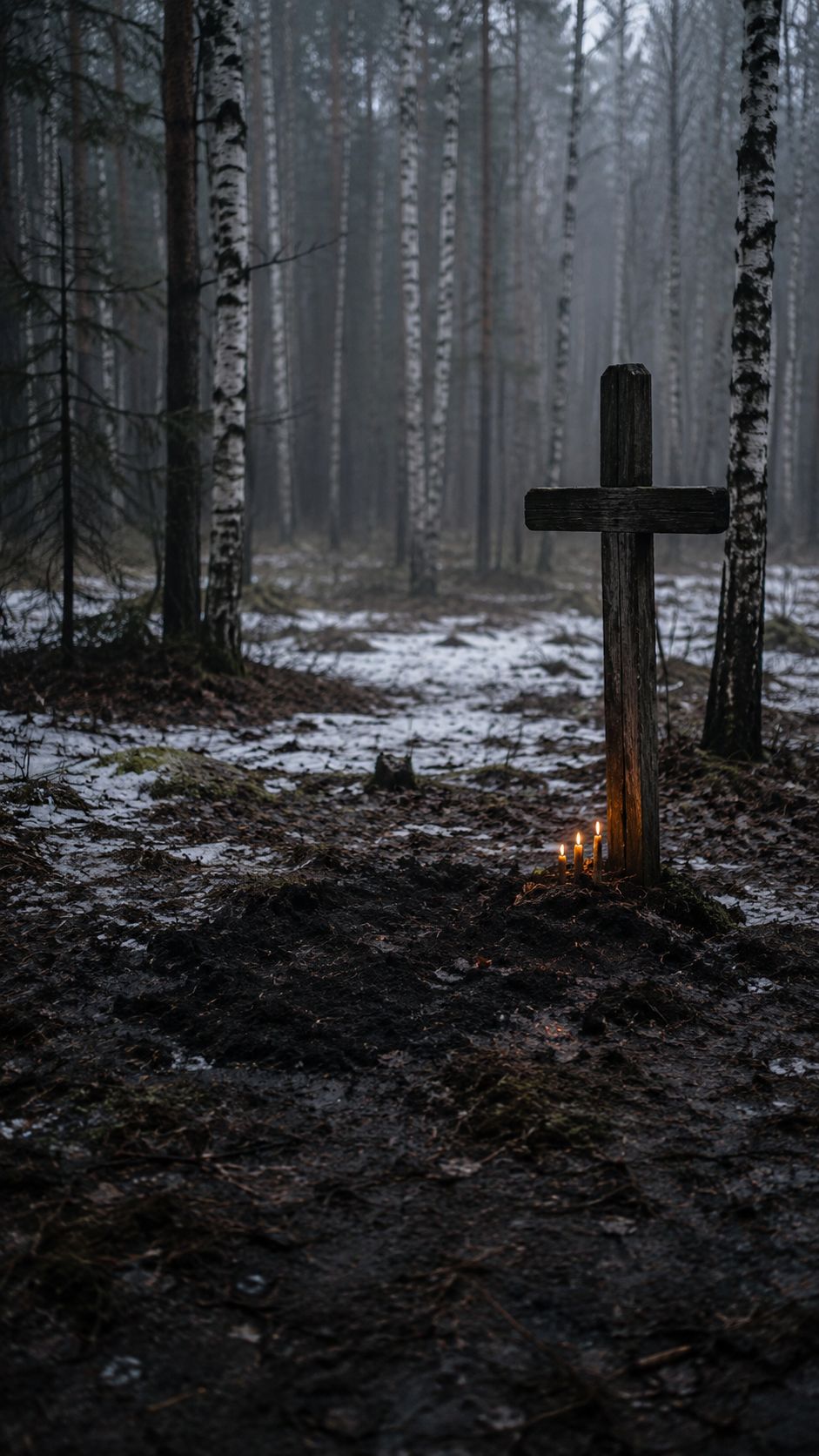 The Massacre Covered Up For Fifty Years
Twenty-two thousand men were murdered in a forest — and the lie about who did it was maintained by a superpower for half a century.
Katyn, Russia · 1940 · 475 km away
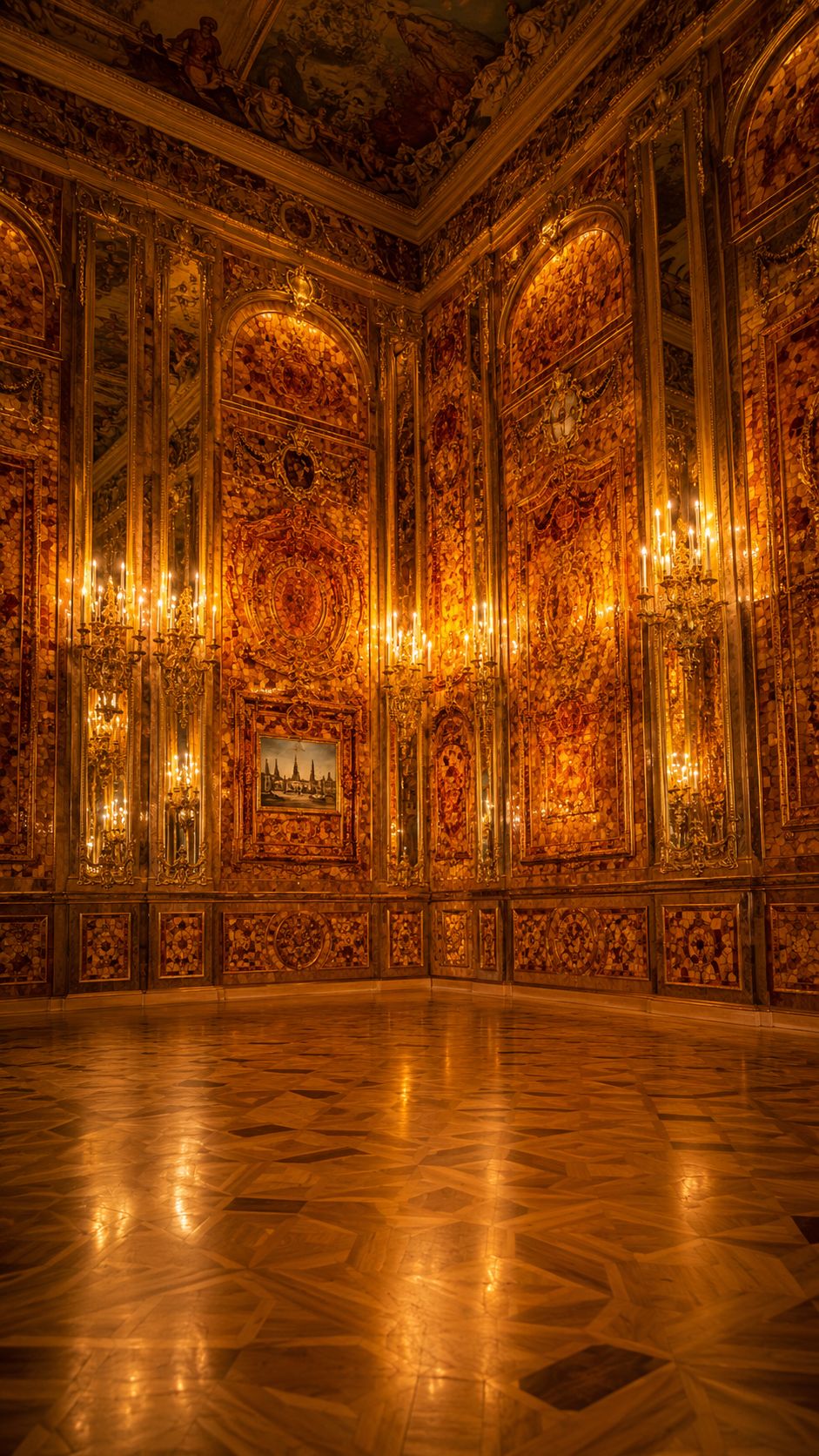 The Room Made Of Amber That Vanished
A gift so extravagant it was called the Eighth Wonder of the World disappears during a war and has never been found.
Kaliningrad, Russia · 1945 · 691 km away
- The Forest of Corpses That Turned Back an Empire
He left 20,000 impaled bodies outside his capital, and the sight was so horrifying it made the conquering Ottoman army retreat.
Targoviste, Romania · 1462 · 711 km away