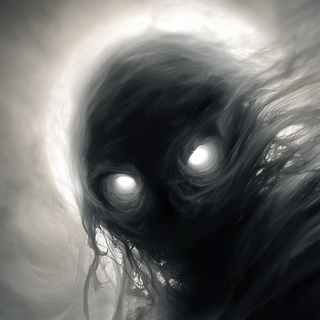
The case of Gloria Ramirez is one of the strangest and most genuinely unexplained medical mysteries of modern times — the story of a dying woman whose own body seemed, impossibly, to poison the very people trying to save her life, in a hospital emergency room, in front of dozens of witnesses. It is a mystery that has never been fully solved, and it has haunted the people who were in that room for more than thirty years.
To understand it, you have to start not with the mystery, but with the human being at the centre of it — because Gloria Ramirez was a real person, not a monster or a curiosity. She was a thirty-one-year-old woman from Riverside, California, a wife and a mother, and she was very sick. Just weeks earlier, she had been diagnosed with advanced cervical cancer. On the evening of the 19th of February 1994, her condition became critical, and she was rushed by ambulance to the emergency room of Riverside General Hospital, gravely ill, her heart racing and her breathing failing. She was, in truth, a dying woman — and the staff of the ER worked urgently to try to stabilise her and save her life.
The Horror
And that is when the impossible began to happen. As the doctors and nurses worked over Gloria, several of them began to notice strange things about her. Her skin, some said, had an unusual oily or greasy sheen to it. And there was a smell — some described it as fruity or garlic-like, others as a sharp chemical odour, like ammonia. Then a nurse named Susan Kane drew a sample of Gloria’s blood into a syringe. And the blood smelled powerfully of ammonia. When another staff member, resident physician Julie Gorchynski, examined the syringe, she saw something that made no sense: floating in the blood were strange, manila-coloured particles, like tiny crystals.
And then the people in the room started to collapse. Nurse Susan Kane, holding the syringe, suddenly felt faint, and passed out. Julie Gorchynski began to feel ill, her limbs going numb, and she too collapsed. One after another, members of the emergency room staff were overcome — feeling nauseous, dizzy, struggling to breathe, some fainting outright. The situation in the ER descended into chaos and fear. The room was evacuated; a skeleton crew stayed with Gloria to continue treatment while most of the staff were rushed outside into the fresh air. In total, twenty-three of the roughly three dozen staff who had been in that emergency room reported feeling symptoms, and several were hospitalised. Gloria Ramirez herself, despite everything, could not be saved — she died that night, of her illness. But the horror, for the staff, was only beginning to sink in: whatever had happened, it had come from the body of the woman they had been trying to help.
The worst affected was Dr Julie Gorchynski. Her symptoms were severe and long-lasting: she spent two weeks in intensive care, and developed serious medical problems, including hepatitis and a condition called avascular necrosis, in which the bone tissue in her knees died from lack of blood supply, leaving her unable to walk for a time. Whatever she had been exposed to, it had done real, lasting physical damage to her body — which is one of the central reasons the mystery has never been comfortably explained away.
The Modern Relic
Because from the very start, the official investigation struggled to explain what had happened — and the explanations it eventually offered satisfied almost no one who had actually been there. The first official conclusion, from the California Department of Health Services, was essentially that it had been a case of “mass hysteria,” or mass psychogenic illness — the idea that the ER staff, under stress, had unconsciously made themselves feel sick through the power of suggestion. But the staff bitterly rejected this. Julie Gorchynski in particular pointed to her own severe, documented, physical injuries — dead bone tissue and organ damage are not produced by imagination — as proof that something real and chemical had happened in that room. The verdict of “hysteria” felt, to the people who had collapsed and been hospitalised, like an insult. So the coroner’s office turned to one of the most sophisticated scientific institutions in the country: the Lawrence Livermore National Laboratory. And their scientists developed a genuinely ingenious, if disputed, chemical theory. They proposed that Gloria, in agony from her cancer, had been using a home remedy — a common but unapproved painkiller called DMSO, dimethyl sulfoxide, an industrial solvent that some people rub on their skin for pain, and which is known to cause a garlic-like taste and smell. The theory ran like a chain reaction: the DMSO in her body, they suggested, was converted by the oxygen she was given in the ambulance into a second chemical, dimethyl sulfone — which can form crystals, potentially explaining the manila-coloured particles in the syringe. And then, in the cold ER, this chemical may have been converted one final, fatal step further — into dimethyl sulfate, a genuinely terrifying and highly toxic gas, a nerve-agent-like substance, which escaped from the blood and poisoned the people nearby. It was a brilliant hypothesis that seemed to account for the smell, the crystals, the oily skin, and the toxic effects, all at once.
But here is why it remains a relic of an unsolved mystery rather than a closed case: many scientists and doctors have never fully accepted it. The chain of chemical conversions the theory requires has never been shown to actually happen inside a living human body under normal conditions — it is a plausible laboratory scenario, not a proven biological fact. The final toxic chemical it blames, dimethyl sulfate, was never actually detected in Gloria’s body. And crucially, many of the medical staff who were in that room on that night have never been satisfied by any of the official explanations — not the “hysteria” verdict, and not entirely the DMSO theory either. Some have wondered about other possibilities, from a contaminant to a problem with the hospital’s own systems. The lasting relic of the case is that uncertainty itself — the fact that, more than thirty years later, one of the most public and well-witnessed medical incidents in modern American history has no single, universally accepted explanation. Gloria Ramirez’s autopsy was performed by a coroner’s team taking extreme precautions. Her family, understandably, were angered and hurt that the media had branded a dying cancer patient “the Toxic Lady,” turning a suffering young mother into a horror-movie figure — and they fought to defend her memory. The truth is that Gloria Ramirez was a victim, not a villain: a woman who died far too young of a terrible disease, and whose death became wrapped in a scientific enigma she never asked for. What really happened in that emergency room in Riverside on the night of the 19th of February 1994 — what filled that syringe with crystals and dropped nurses and doctors to the floor — remains, to this day, one of medicine’s true unsolved mysteries.
Nearby on the Dark Atlas
 Hollywood's Most Scandalous Unsolved Murder
A silent-film director's 1922 murder was never solved, until a dying woman's whispered confession forty-two years later.
Los Angeles, United States · 1922 · 79 km away
 The Hanging That Ended An Execution Method
Her hanging went so horrifically wrong in front of witnesses that an entire state abandoned the gallows forever.
Florence, United States · 1930 · 566 km away
 The Shortcut That Cost Thirty-Nine Lives
A shortcut promised to save hundreds of miles — instead it trapped two families in the snow with nothing left to eat but each other.
Donner Pass, California, United States · 1847 · 652 km away
 The Songwriter Who Said Don't Mourn, Organize
Facing a firing squad on evidence that would never convict him today, he turned his last telegram into a rallying cry.
Salt Lake City, United States · 1915 · 899 km away
More like this
 The Rape Trial That Ended In Trial By Combat
A woman's accusation of rape led to France's last judicial duel, with her own life staked on the outcome.
Paris, France · 1386
- The Parish Registers Of The Beast's Victims
Between 1764 and 1767 something killed roughly a hundred people, recorded in the registers as 'devoured by the beast.'
Saugues, France · 1764
- The Manufacturing Of England's Most Haunted House
For decades it was called the most haunted house in England, until its ghost story revealed how a haunting gets made.
Borley, Essex, United Kingdom · 1929
- The Truth Behind The Elephant Man
The real man behind the famous film was quieter, stranger and far more heartbreaking than any screenplay.
Whitechapel, London, United Kingdom · 1890