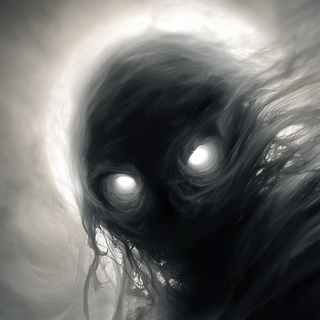
Vincent van Gogh’s death has long been told as the perfect ending to the myth of the tortured artist.
A lonely, mentally unwell painter walks into a wheat field outside a French village.
He shoots himself.
He returns to his inn, dies two days later in the arms of his beloved brother Theo, and becomes immortal only after death.
It is a powerful story.
It may also be incomplete.
In 2011, biographers Steven Naifeh and Gregory White Smith published Van Gogh: The Life, the result of years of research. Their book revived a startling possibility:
What if Van Gogh did not shoot himself?
What if he was accidentally shot by local boys — and chose not to expose them as he lay dying?
It is not the accepted conclusion.
It is not proven.
But it is one of art history’s most haunting unresolved debates.
The Horror
On 27 July 1890, Vincent van Gogh was gravely wounded near Auvers-sur-Oise, France.
He returned to the Auberge Ravoux with a gunshot wound to his abdomen. He died around thirty hours later, in the early hours of 29 July, aged thirty-seven, with Theo at his bedside.
The traditional account is suicide.
Van Gogh reportedly told people around him that he had tried to kill himself. Theo later referred to the death as suicide. For the Van Gogh Museum and many leading scholars, that testimony remains central.
But Naifeh and Smith argued that several details deserved another look.
The wound was not a straightforward contact shot. It entered Van Gogh’s abdomen at an oblique angle. The biographers consulted forensic experts who believed aspects of the wound were difficult to reconcile with a typical self-inflicted shooting.
There was no formal nineteenth-century forensic investigation by modern standards.
No reliable gunshot-residue test was carried out.
No contemporary crime-scene analysis exists.
And the weapon was not recovered at the time of Van Gogh’s death.
A corroded revolver discovered decades later in a field near Auvers has sometimes been presented as the possible weapon, but it cannot be conclusively linked to Van Gogh.
The Modern Relic
Naifeh and Smith also found an old local story.
In the 1930s, art historian John Rewald visited Auvers and recorded a rumour that Van Gogh had been shot by young men. The story held that the boys had not come forward because they feared being blamed for his death.
One name became central to the theory: René Secrétan.
In 1890, Secrétan was a teenager spending the summer in Auvers with his brother Gaston. Decades later, he admitted that he and the other boys had mocked and tormented Van Gogh.
He also said that he carried a malfunctioning revolver.
Secrétan did not confess to shooting Van Gogh.
That distinction matters.
Naifeh and Smith’s theory is that the gun may have gone off during an encounter with the boys — perhaps accidentally, perhaps during rough teasing — and that Van Gogh chose not to implicate them.
Why would he do that?
The authors suggest that Van Gogh may have accepted death when it came, rather than actively seeking it. In this interpretation, his reported words about suicide were not a full confession but a refusal to accuse frightened teenagers.
It is a poignant idea.
It is also speculation.
The Van Gogh Museum rejects the shooting theory, calling it unsupported by sufficient evidence. Critics note that Van Gogh’s reported statements, Theo’s response, and his history of mental-health crises continue to support the suicide explanation.
They also warn that the alternative case relies heavily on later hearsay and a theory built long after every direct witness had died.
So what can be said with certainty?
Vincent van Gogh was shot near Auvers-sur-Oise on 27 July 1890.
He died two days later.
The conventional conclusion is suicide.
A serious alternative theory argues he was accidentally shot by teenagers, possibly including René Secrétan.
But no gun, witness testimony, or forensic evidence now exists that can prove exactly what happened.
Van Gogh’s death remains a mystery.
Not because we know he was murdered.
But because history has left us with a gunshot wound, conflicting interpretations, and a final silence no one can now break.
This story discusses suicide. If you are struggling or feel at risk, contact local emergency services or a crisis-support service in your country, or reach out to someone you trust.
Nearby on the Dark Atlas
 The Heart Smuggled Home In A Jar Of Brandy
Terrified of being buried alive, a dying composer asked for his heart to be cut out — and it made a secret journey home.
Paris, France · 1849 · 25 km away
 Betrayed By The Friend Who Stood At Their Wedding
The revolutionary firebrand and his devoted wife were destroyed by the very friend who once witnessed their marriage.
Place de la Révolution, Paris, France · 1794 · 26 km away
 Devoured By The Revolutionary Machine He Built
He helped build the tribunal that sent thousands to the guillotine, and then it turned on him too.
Place de la Révolution, Paris, France · 1794 · 26 km away
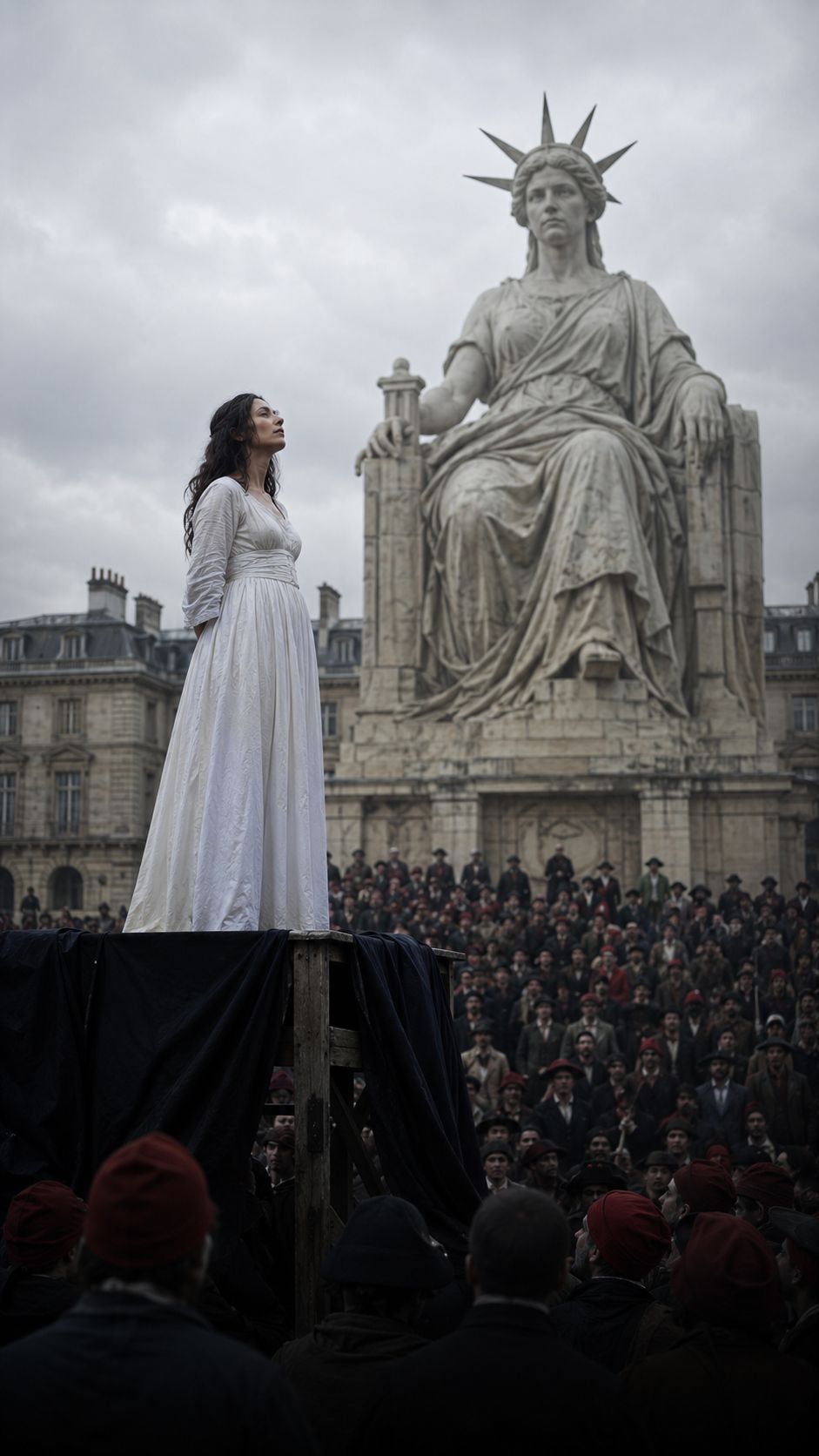 She Faced The Statue Of Liberty Before The Blade Fell
Destroyed by the revolution she helped build, she turned to a statue of Liberty for her final, famous words.
Place de la Révolution, Paris, France · 1793 · 26 km away
More like this
 The Rape Trial That Ended In Trial By Combat
A woman's accusation of rape led to France's last judicial duel, with her own life staked on the outcome.
Paris, France · 1386
- The Parish Registers Of The Beast's Victims
Between 1764 and 1767 something killed roughly a hundred people, recorded in the registers as 'devoured by the beast.'
Saugues, France · 1764
- The Manufacturing Of England's Most Haunted House
For decades it was called the most haunted house in England, until its ghost story revealed how a haunting gets made.
Borley, Essex, United Kingdom · 1929
- The Truth Behind The Elephant Man
The real man behind the famous film was quieter, stranger and far more heartbreaking than any screenplay.
Whitechapel, London, United Kingdom · 1890