In March 1306, Robert the Bruce was crowned King of Scotland at Scone. By tradition, only the head of Clan MacDuff could place the crown on the monarch’s head. The Earl of Fife — the MacDuff chief — was a child in English custody.
Isabella MacDuff, Countess of Buchan — a MacDuff by birth — defied both politics and her marriage. Her husband, John Comyn, Earl of Buchan, supported the English. Isabella rode to Scone without his permission, arriving a day late, and claimed her clan’s right. She placed the crown on Bruce’s head herself.
That single act defined the rest of her life.
The Horror
Bruce was defeated at the Battle of Methven three months later. He sent his wife Elizabeth, his young daughter Marjorie, his sisters, and Isabella north toward sanctuary. They sought safety at Tain, in Easter Ross — and were betrayed by Uilleam (William), Earl of Ross, who violated the church’s sanctuary and handed them over to the English.
Edward I’s orders for Isabella were specific and chilling. One version, preserved in royal records and quoted by later historians, reads:
“Let her be closely confined in an abode of stone and iron made in the shape of a cross, and let her be hung up out of doors in the open air at Berwick, that both in life and after her death, she may be a spectacle and an everlasting reproach to travellers.”
Other documents expand: the chamber or cage was to be made of strong wooden laths, barred and reinforced with iron, like a little timber house latticed so all might see her, with a privy and just enough room to live — “all the conveniences of a handsome chamber” — but suspended or exposed so she could be watched. Only a small number of English women were appointed to attend her, and she was forbidden to speak to anyone else.
Chronicler Sir Thomas Gray later wrote that she was held in a cage with crossed timbers so that all could gaze upon her as a spectacle. Whether that cage was inside a tower room with open sides or literally hung from the outer walls remains debated, but she endured this punishment at Berwick for about four years.
She was not alone in this. Mary Bruce, Robert’s sister, was ordered to be confined in a similar cage at Roxburgh Castle, exposed to the public. Edward also initially ordered a cage built for Bruce’s daughter Marjorie at the Tower of London; because she was only about ten or twelve, he eventually relented and had her placed in a convent in Yorkshire instead.
In 1310, after Edward I’s death and under his son Edward II, Isabella was finally removed from the cage and transferred to the Carmelite friary at Berwick. In April 1313 she was released again into the custody of Henry de Beaumont, husband of her kinswoman Alice Comyn.
After that, she disappears completely from the record. No death date. No burial. No later grant, lawsuit, or chronicler’s note. The woman who rode without her husband’s leave to crown a king becomes invisible. Her story ends not with a recorded execution, but with silence.
The Modern Relic
Berwick Castle today is a ruin on a bluff above the River Tweed. Much of it was demolished in the 19th century to build the railway and Berwick‑upon‑Tweed station; the site is now an English Heritage monument directly beside the tracks. The specific tower where Isabella’s cage was fixed is gone.
Roxburgh Castle, where Mary Bruce was caged, is also a ruin, little more than earthworks and collapsed stone on a Scottish hillside. No trace of the cages survives. What does survive are Edward’s original orders — the instructions for a “house of timber” strengthened with iron, hung where travellers could see; the insistence that she be displayed as a living warning. Those letters and entries in the royal records are the cage now: the lattice of words that holds the outline of a woman the rest of history let go.
Nearby on the Dark Atlas
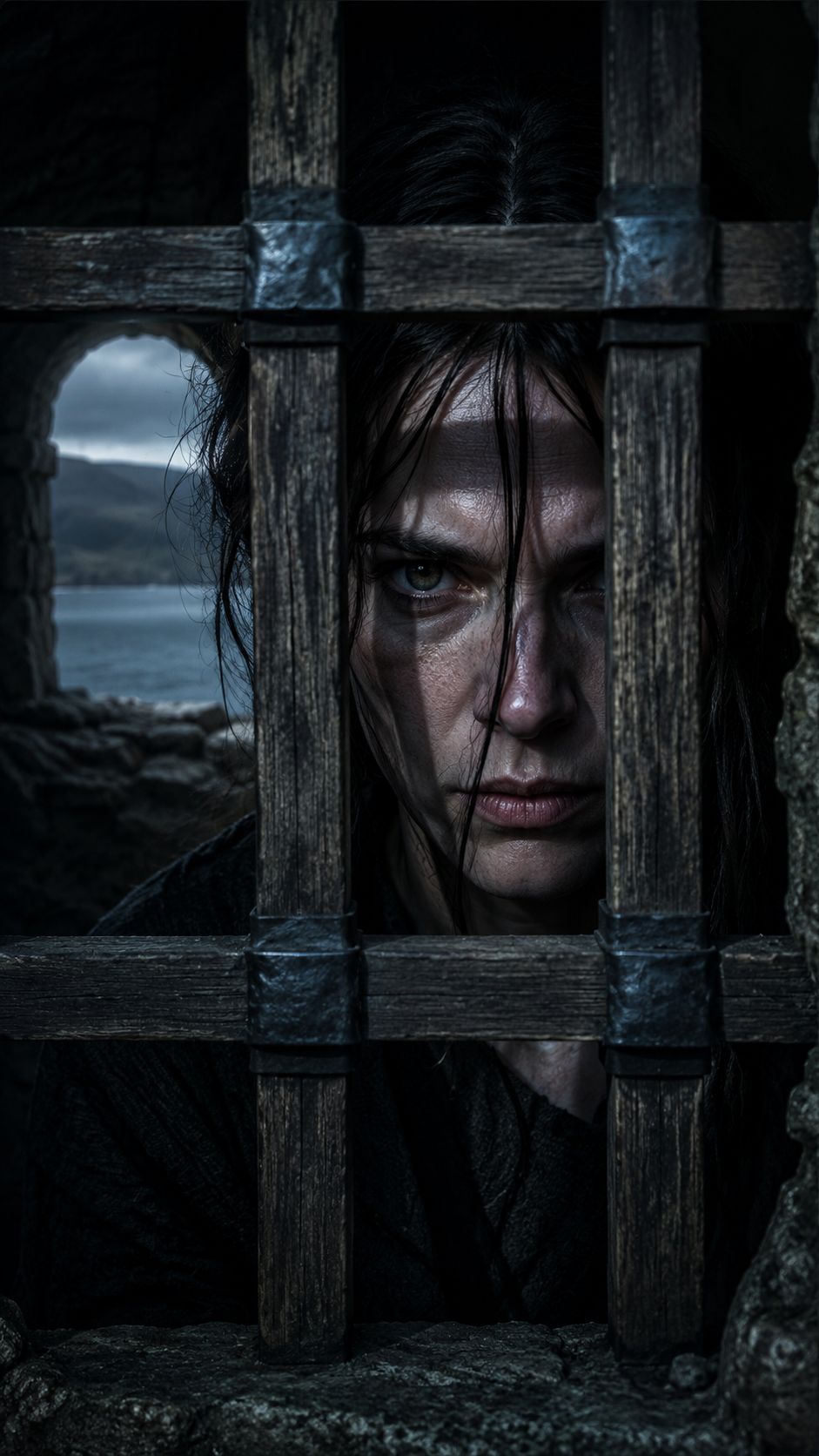 The Countess Locked In A Cage For Crowning A King
She rode in secret to crown Robert the Bruce, and England answered by hanging her in an open cage.
Berwick Castle, Berwick-upon-Tweed, United Kingdom · 1306 · same site
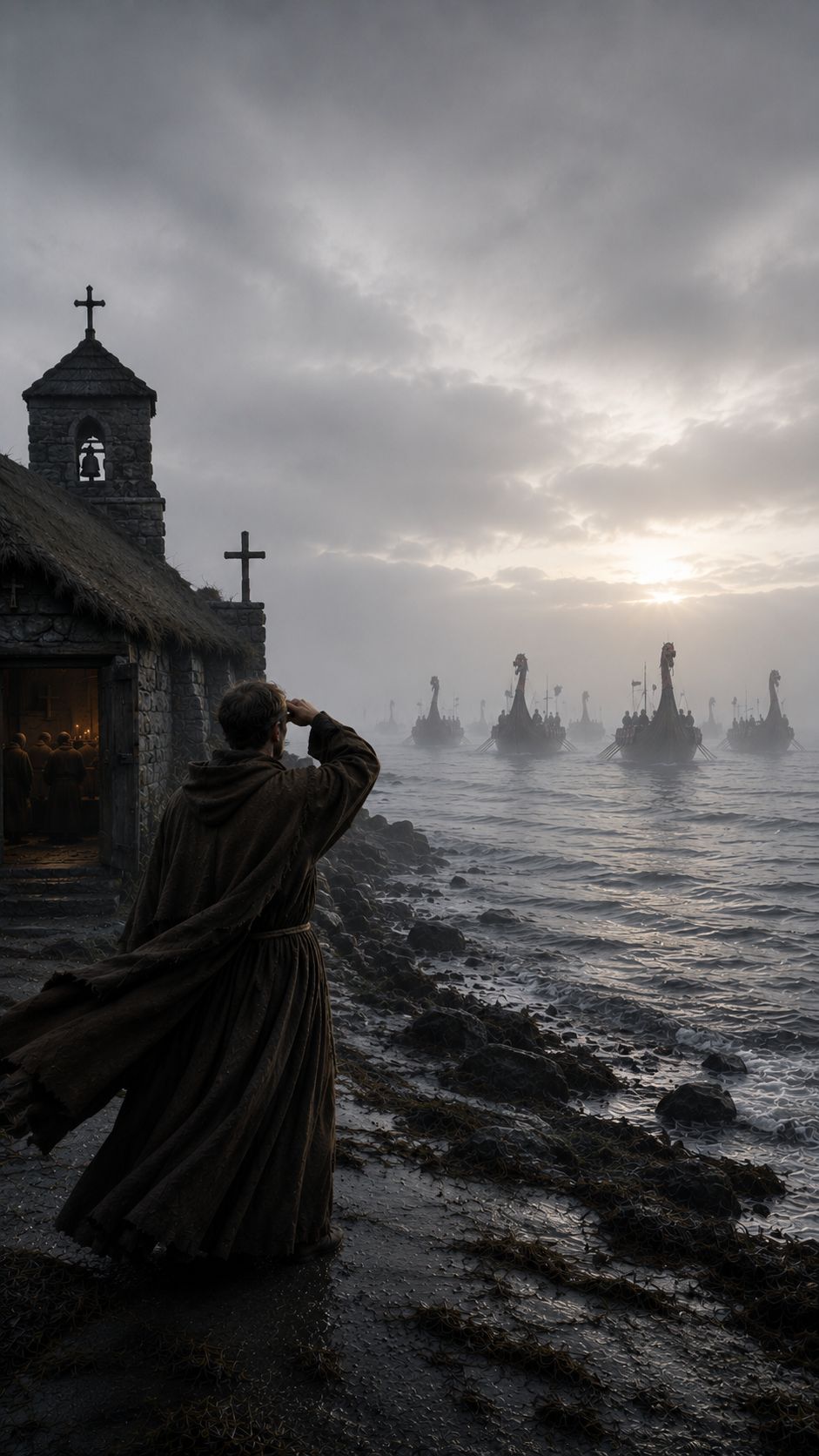 The Dragons That Came By Sea
Strange omens filled the Northumbrian sky before Vikings landed at Lindisfarne and shattered 150 years of monastic peace.
Lindisfarne, United Kingdom · 793 · 17 km away
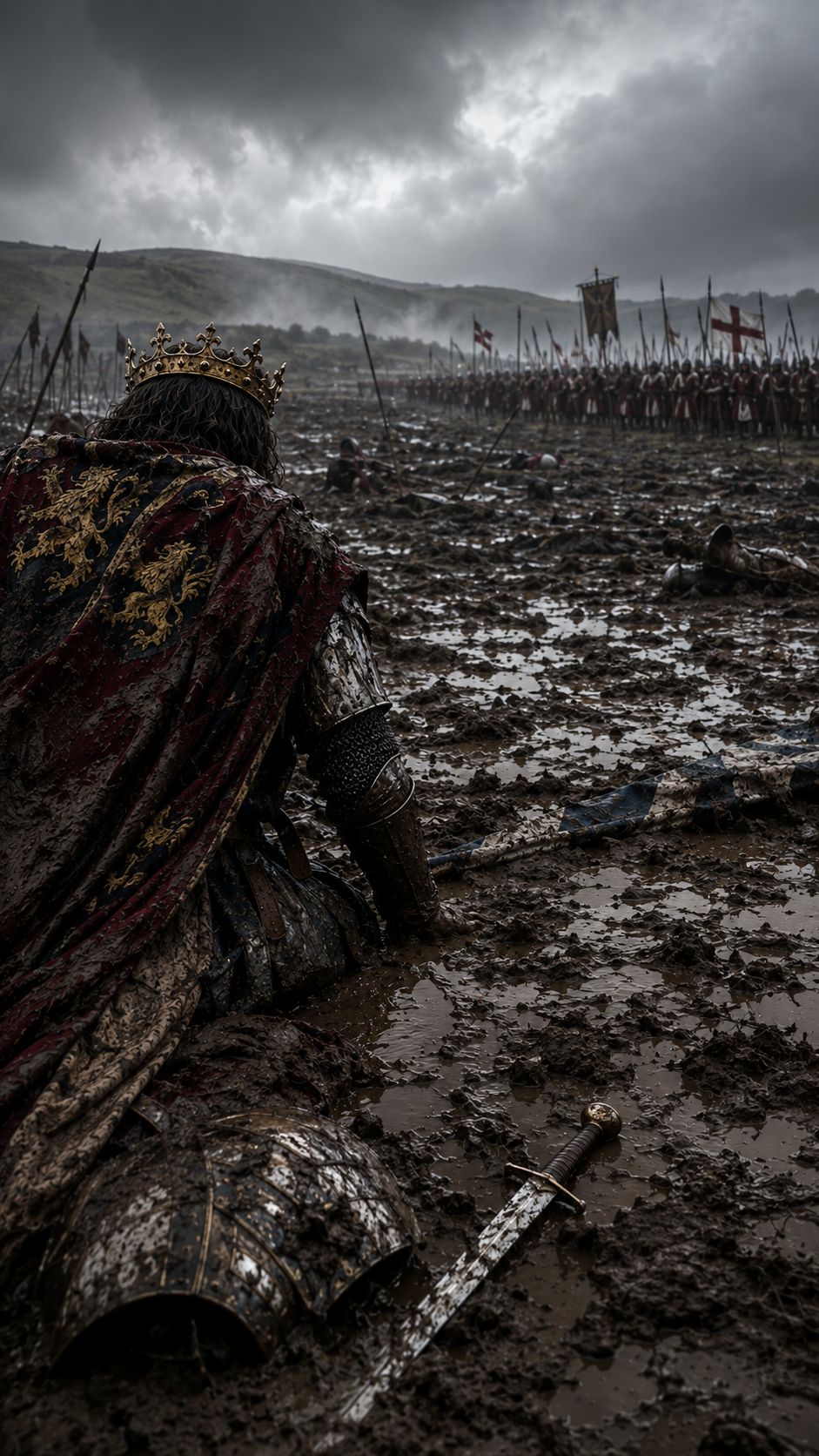 The Renaissance King Who Lost His Head For Honour
Scotland's most brilliant king marched to war for an old alliance, and his skull ended up as a curio on an Englishman's shelf.
Flodden Field, United Kingdom · 1513 · 19 km away
- England's Most Fought-Over Haunted Castle
Centuries of border warfare and torture wrote Chillingham's darkness into history long before anyone spoke of ghosts.
Chillingham, Northumberland, United Kingdom · 1245 · 28 km away