
The breaking wheel was used across Europe from ancient Greece until 1841, and the method was this: the condemned was spreadeagled on a large cartwheel with their limbs stretched along the spokes, and the executioner worked methodically from the ankles upward with a heavy iron bar, breaking each bone in sequence — twice in each arm, twice in each leg, once in the spine — and when the bones were shattered the broken limbs were woven through the spokes so the body held its shape, and the wheel was raised on a post in the public square and left there, sometimes for days, and a 14th century murderer remained conscious for three days after being broken on the wheel, and in 1581 the German serial killer Christman Genipperteinga remained conscious for nine days, deliberately kept alive with strong drink, and the executioner could end it quickly with a single blow to the chest called the coup de grâce, and whether he delivered it depended entirely on the crime, and the judge’s instructions, and his mood.
Interesting Fact: The device gets its other name — the Catherine Wheel — from Saint Catherine of Alexandria, who was sentenced to be executed on one of these devices for refusing to renounce her Christian belief. According to legend the wheel miraculously broke when she touched it. She was then beheaded instead. The last execution by breaking wheel took place in Prussia on 13 August 1841. In Germany it was considered a mirror punishment — the nature of the death reflecting the nature of the crime. Highwaymen who had broken travellers on remote roads were themselves broken on the wheel in public. The bodies were left exposed on the pole until they disintegrated — birds and scavenging animals would pick at the helpless victim while they were still alive, and at the remains long after they were dead. The last man broken on the wheel in France was Robert-François Damiens in 1757 — who had attempted to assassinate King Louis XV with a penknife. He survived the stabbing. The wheel was only the beginning of what they did to Damiens.
Nearby on the Dark Atlas
- The Werewolf Trial Of Peter Stumpp
A wealthy farmer confessed to becoming a wolf and killing his neighbours, and his execution became medieval theatre.
Bedburg, Germany · 1589 · 28 km away
 The Real D'Artagnan's Lost Grave
The true musketeer behind the swashbuckling legend died on foreign soil, and his grave was lost for three and a half centuries.
Maastricht, Netherlands · 1673 · 90 km away
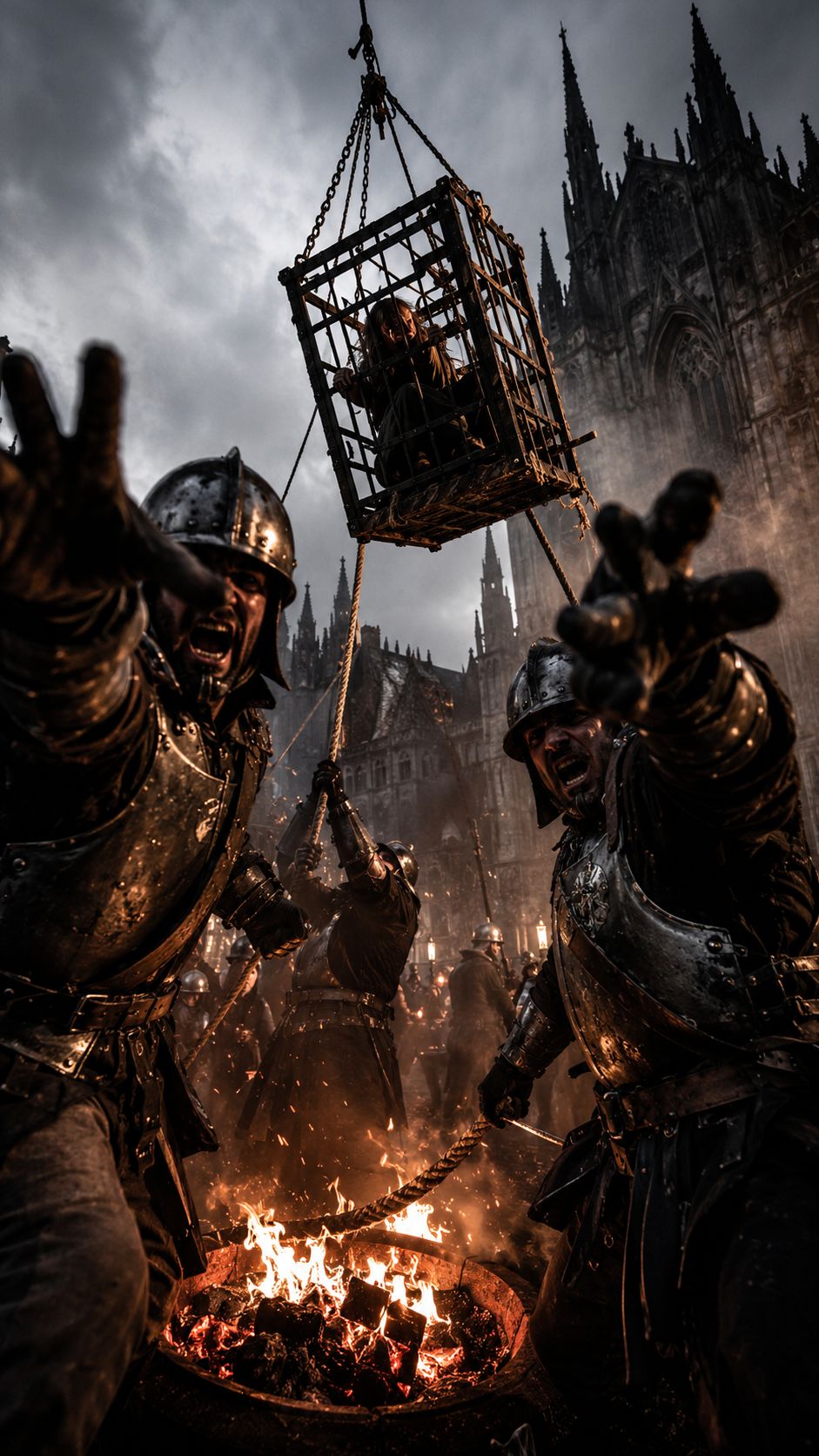 The Iron Cages Above Münster
When Münster's radical kingdom fell, its leaders' bodies were hoisted into iron cages that still hang from a church spire.
Münster, Germany · 1536 · 123 km away
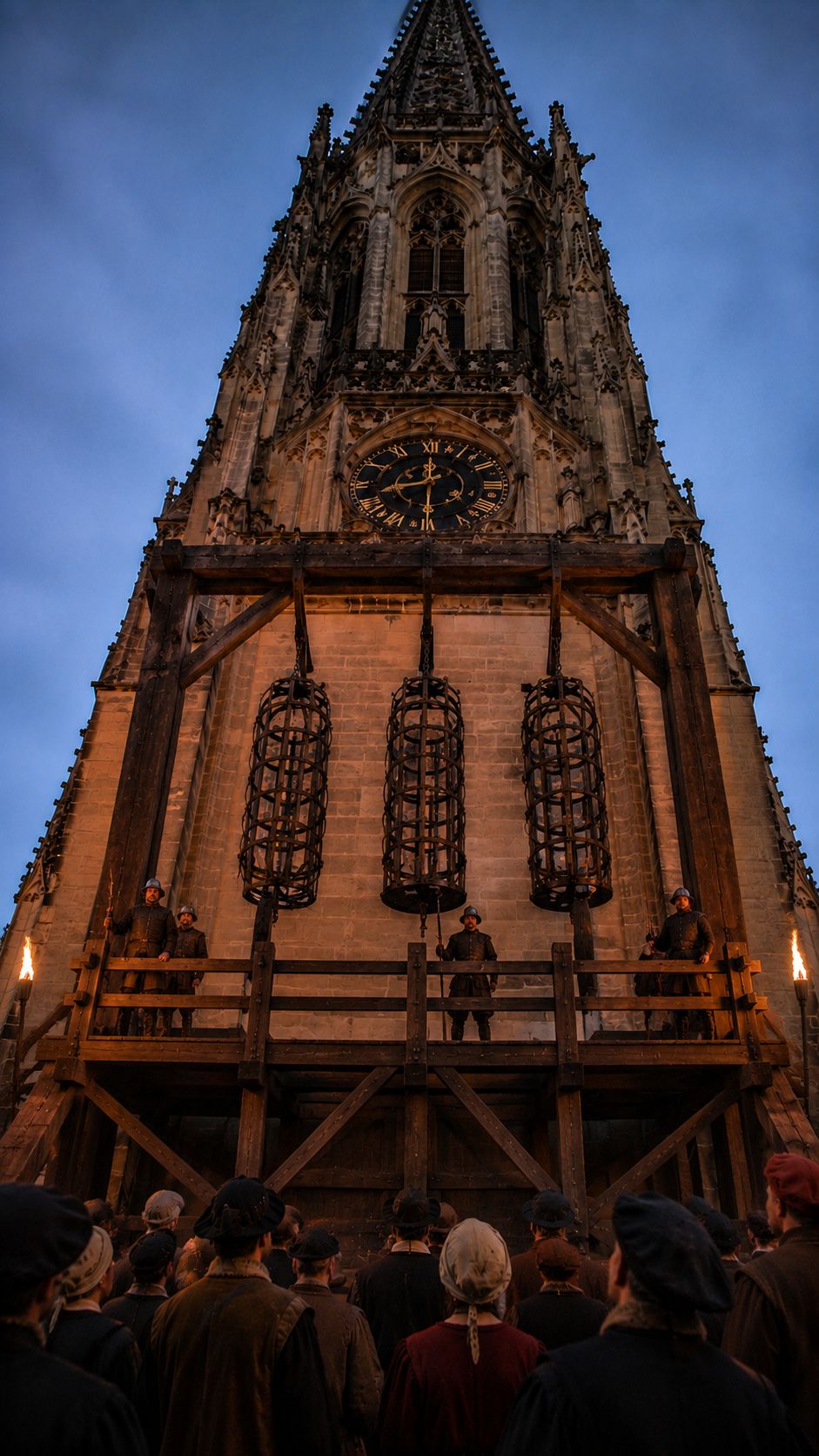 The Tailor Who Crowned Himself King
A 25-year-old tailor seized a German city, took sixteen wives, and declared himself king of a new Jerusalem.
Münster, Germany · 1534 · 123 km away