
On 8 August 1588, England won one of its most celebrated victories: the defeat of the Spanish Armada.
The familiar story is glorious. Protestant England, led by Elizabeth I, faced the greatest Catholic power in Europe and survived. English ships outmanoeuvred the supposedly “Invincible” Armada, fireships scattered it, and the Battle of Gravelines forced Spain’s invasion fleet away from the English coast.
But the battle was not where most of the Armada’s men died.
The worst part came afterward.
The Spanish Armada had been sent by Philip II to support an invasion of England, remove Elizabeth I, and restore Catholic power. It comprised around 130 ships and roughly 30,000 men, though exact figures vary.
Its plan depended on joining with the Duke of Parma’s army in Flanders. That never happened.
After the English attack near Calais and the battle off Gravelines, the Spanish fleet was damaged, short of supplies, and unable to return safely through the English Channel. The winds drove it north.
The commander, the Duke of Medina Sidonia, had one terrible route left: around the north of Scotland, then down the Atlantic coast of Ireland, before turning south toward Spain.
The Horror
The Atlantic destroyed what English guns had not.
The fleet had lost anchors during the chaos around Calais. Many vessels were damaged. Charts of the Irish coast were poor, food and water were running low, and the crews were exhausted by disease, injury, and weeks at sea.
Then the storms came.
As the Armada passed Ireland in September and October 1588, ships were driven onto rocks and beaches from Ulster to Kerry. Hulls broke apart in the surf. Men drowned, froze, starved, or died from sickness after reaching land.
Around two dozen Armada ships are generally believed to have been lost on or near the Irish coast.
The exact death toll is impossible to establish. Modern estimates commonly place the number of Spaniards who died in Ireland at roughly 5,000 to 6,000. Across the entire Armada campaign, perhaps 15,000 men died — overwhelmingly from weather, disease, hunger, shipwreck, and the aftermath rather than direct naval combat.
The Battle of Gravelines was a strategic English victory.
But it was the sea that turned defeat into disaster.
Then came the fate of survivors.
English authorities in Ireland feared that shipwrecked Spanish soldiers might join forces with Irish Catholic resistance against English rule. Sir William FitzWilliam, the Lord Deputy, ordered that Spanish survivors be captured and killed, while people who aided them could also face punishment.
This was state violence, carried out in the context of an English colonial administration trying to control Ireland.
Soldiers and local officials hunted survivors along the coast. Some Spaniards were killed immediately after capture. Others died after being imprisoned. A minority escaped with help from Irish communities or made their way to Scotland and eventually back to Spain.
At Spanish Point in County Clare, tradition and historical accounts associate the site with the killing of about 300 Armada survivors after the wreck of the San Esteban. The number should be treated as an estimate rather than an exact verified count.
But the massacre itself is not a myth.
The Modern Relic
England turned catastrophe into providence.
To English Protestants, storms that shattered the Catholic invasion fleet appeared to be an act of God. A commemorative medal proclaimed: Flavit Jehovah et dissipati sunt — “Jehovah blew, and they were scattered.”
The phrase became part of the victory’s mythology.
It was a powerful message: England had not merely survived Spain; it had been visibly protected by divine favour.
But that story concealed the human cost.
Thousands of men died far from Gravelines, on unfamiliar shores. Some died trapped in wrecks or swept into cold Atlantic water. Some died from hunger and exposure. Others survived the sea only to be executed by the English administration that feared what they might become if left alive in Ireland.
The Armada’s defeat did not instantly make England a global superpower, and Spain remained a formidable empire. The Anglo-Spanish War continued until 1604, while England’s own Counter-Armada of 1589 ended in costly failure.
But 1588 became a national legend.
That legend deserves its darker half.
England won at sea.
Thousands of Spanish men died afterward — not in a heroic final battle, but in storms, shipwrecks, illness, starvation, and killings along Ireland’s coast.
Nearby on the Dark Atlas
- The Gas Attack That Tore Open The Line
German forces released a poison cloud that dissolved men's lungs from the inside in minutes.
Ypres, Belgium · 1915 · 55 km away
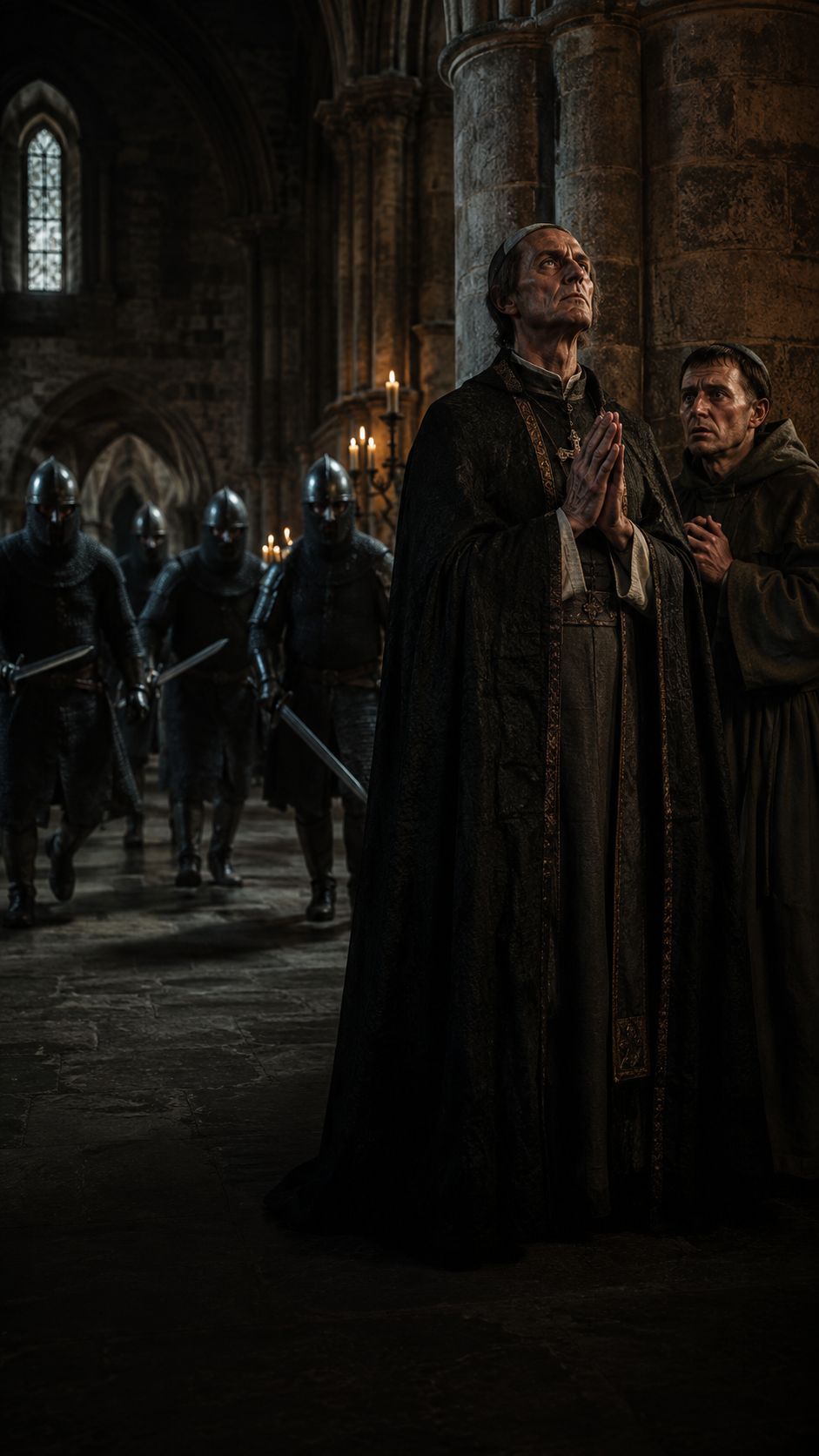 The Archbishop Murdered At His Own Altar
Killed inside his own cathedral by men acting on a king's wish, his blood-soaked murder shocked all of Christendom.
Canterbury Cathedral, Canterbury, United Kingdom · 1170 · 80 km away
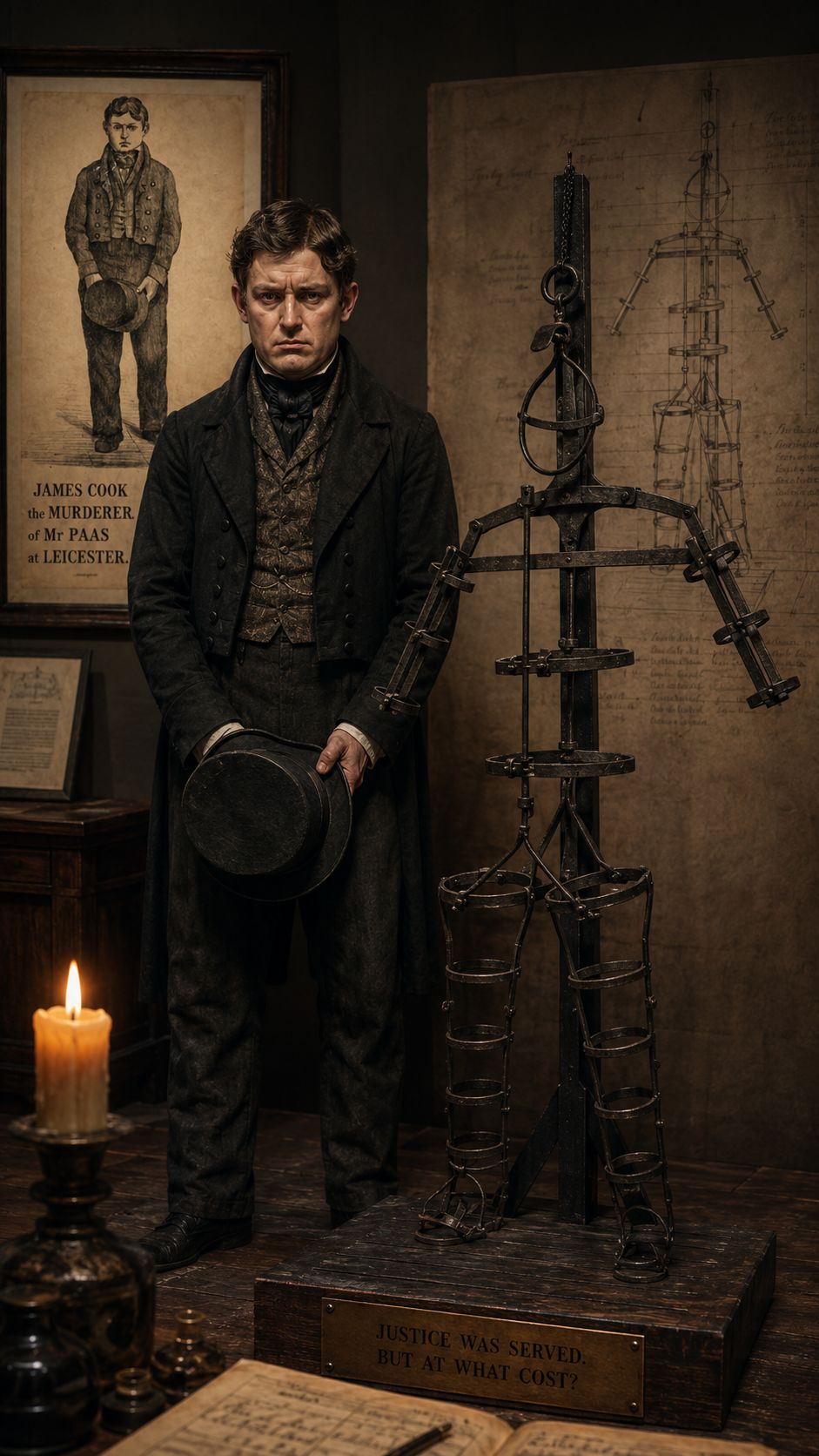 The Iron Cages Built To Fit A Corpse
After the hanging, courts could order a second sentence: a body tarred, locked into a custom-forged iron cage, and left to rot in public.
Rye, East Sussex, United Kingdom · 1742 · 98 km away
 Tortured To Death Over A Hat
A nineteen-year-old nobleman was tortured and executed for blasphemy in a case that scandalised all of Enlightenment Europe.
Abbeville, France · 1766 · 100 km away