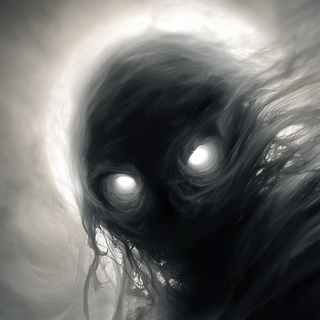
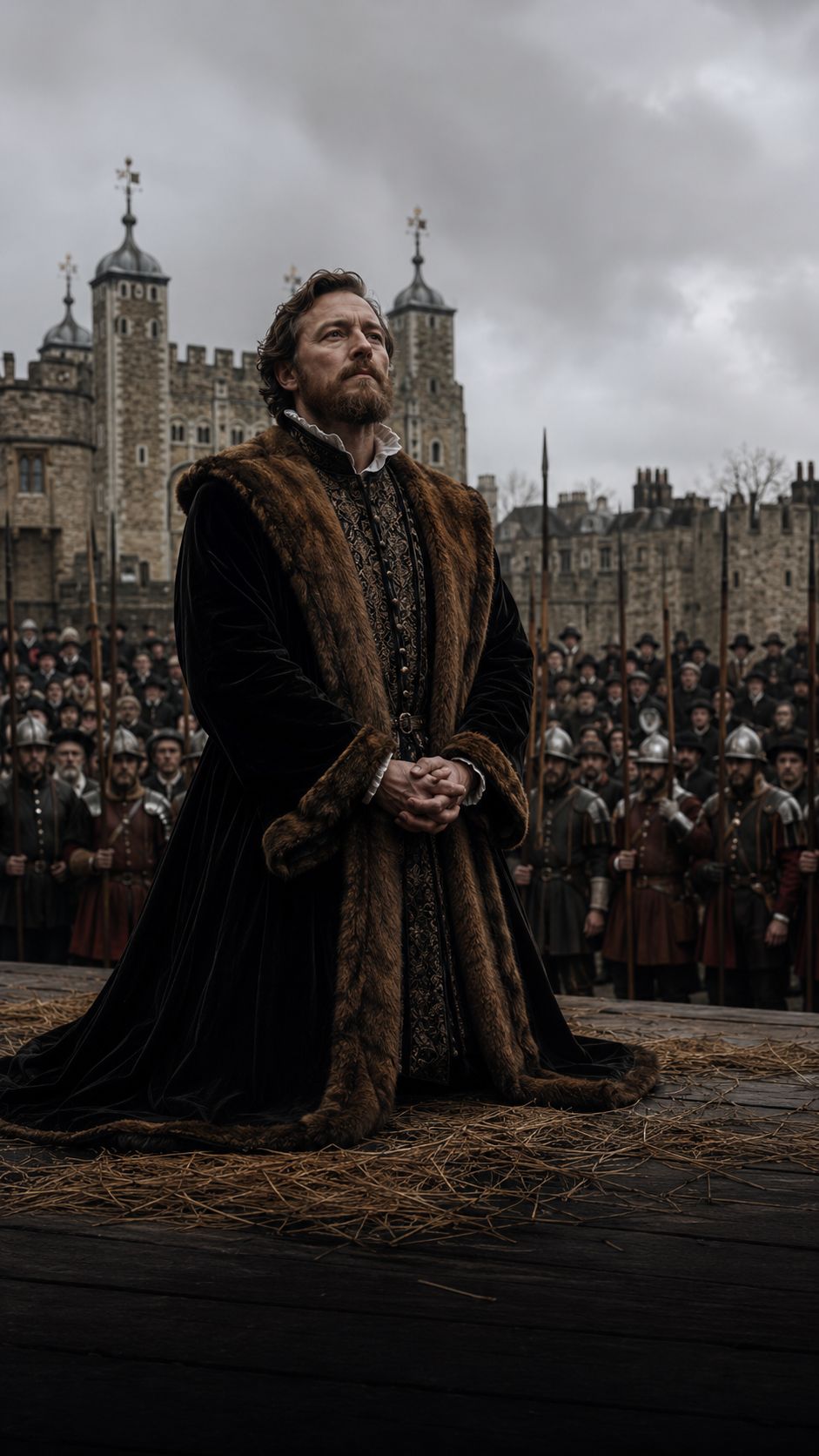
Arthur Elphinstone, 6th Lord Balmerino, was born in 1688 into a Scotland still bitterly divided over who had the right to sit on its throne. He grew into that division and never let go of it. When Bonnie Prince Charlie raised the standard of the Jacobite cause and marched to reclaim the crown for the House of Stuart, Balmerino — by then an old man by the standards of his day — took up arms and followed him. The rising ended in April 1746 on the freezing moor of Culloden, in a slaughter that broke the Jacobite army and the Highland world along with it. Balmerino was captured. For a lord taken in armed rebellion against the Crown, there was only one road left, and it led to Tower Hill in London. He was condemned to die by beheading, the traditional death of the nobility, and the date was set for 18 August 1746. He would not die alone that day. Alongside him was the Earl of Kilmarnock, another Jacobite lord under the same sentence. Tower Hill, just outside the walls of the Tower of London, was the customary place for the execution of persons of rank, and a beheading there was a spectacle that drew great crowds — a raised scaffold, the block, the axe, and the condemned lord brought out to die in full view of the city. The two men were among the last public beheadings that Britain would ever carry out — only Lord Lovat, executed the following year in 1747, would come after them, the very last man in Britain to be beheaded. There is a sense, reading the accounts, of a whole ancient theatre of aristocratic death drawing to its close, and Balmerino playing his part in it with a composure that stunned everyone who watched. He was already an old man by the reckoning of his century — born in 1688, he was fifty-eight — and he carried the years not as frailty but as a kind of settled indifference to what was coming. Kilmarnock went first. His execution was clean — a single stroke, the head taken at once, the mercy of a competent headsman. Then it was Balmerino’s turn, and the manner of the old lord’s death would become one of the most talked-about scenes of the century, for two reasons: the astonishing courage he brought to it, and the horror of how it actually went.
The Horror
Balmerino approached his own beheading not with dread but with something close to cheerful curiosity. He wore his old blue coat — the very coat, by tradition, that he had worn as a Jacobite in the field, dressing for the block in the uniform of the lost cause he refused to disown. He walked to the scaffold and, rather than avert his eyes from the instruments of his death, he examined them. He looked over the block. He inspected the axe itself, studying the blade that would come down on his neck. He handed money to the executioner — the headsman was John Thrift, and the fee Balmerino reportedly gave him is recorded as three guineas — the customary tip from the condemned to the man who would kill him, offered here with an old soldier’s calm. And then came the remark that made him famous. Handling or eyeing the axe, he reportedly said words to the effect of: “Take care, or you will break my shins with this damned axe.” A joke. On the scaffold, over the blade of his own execution, to the man about to swing it. He arranged himself at the block and, in a final act of control, gave the signal for the blow to fall himself, rather than leaving the timing to another. And then it went wrong. The executioner, John Thrift, was said to be overcome — weeping, unmanned by the task, perhaps shaken by the very courage of the man kneeling before him. When the axe came down, the first blow did not sever the head. Balmerino’s neck was struck but not cut through. It took more than one stroke to finish — accounts vary, some saying two blows, some three — to complete what a single clean cut had done for Kilmarnock only minutes before. The old lord who had inspected the axe, tipped the headsman, and joked about his shins was subjected to exactly the botched, drawn-out death that his dark humour had seemed to anticipate. His fearlessness had been perfect; the execution was not. The contrast between the two men’s deaths that day was stark and was remarked upon at once. Kilmarnock: one stroke, clean, over. Balmerino: fearless, defiant, dressed in his rebel coat, in command of every moment he could command — and then failed by a weeping executioner and an axe that would not do its work the first time. The courage was his. The bungling was Thrift’s. The exact details have always carried a margin of uncertainty. Contemporary accounts differ on the precise number of blows — two or three — and on the exact wording of Balmerino’s remark about the axe, which survives in several forms. What is consistent across the sources is the shape of the thing: an old Jacobite who met his death with a fearlessness so complete it disarmed everyone present, and an execution that failed to match his composure, taking more than one stroke to end him.
The Modern Relic
The place remains. Tower Hill in London — the ground where Balmerino, Kilmarnock and, a year later, Lovat died — still stands, marked and visitable, a short walk from the Tower of London itself, in the middle of a modern city that flows around it every day. Within the Tower’s collections, the traditions of the executioner’s block and axe survive, the physical apparatus of the aristocratic death that Balmerino endured, kept and displayed among the relics of the fortress that has stood over so many state killings. And the man himself has not entirely vanished into the past: his portrait hangs in the National Galleries of Scotland, where you can stand and look into the face of the lord who inspected his own axe — not an imagined face, but a likeness preserved, the features of a man who joked with his headsman and then died badly. He and Kilmarnock were among the last public beheadings in Britain, the closing scenes of a practice centuries old, and the fact that we can still walk the ground, view the axe traditions, and meet his painted gaze in Edinburgh means the story has never fully receded into abstraction. It is anchored in places you can reach. He asked them not to break his shins. He gave the signal himself. And then the blade came down, and would not do in one stroke what his courage had done in an instant.
Nearby on the Dark Atlas
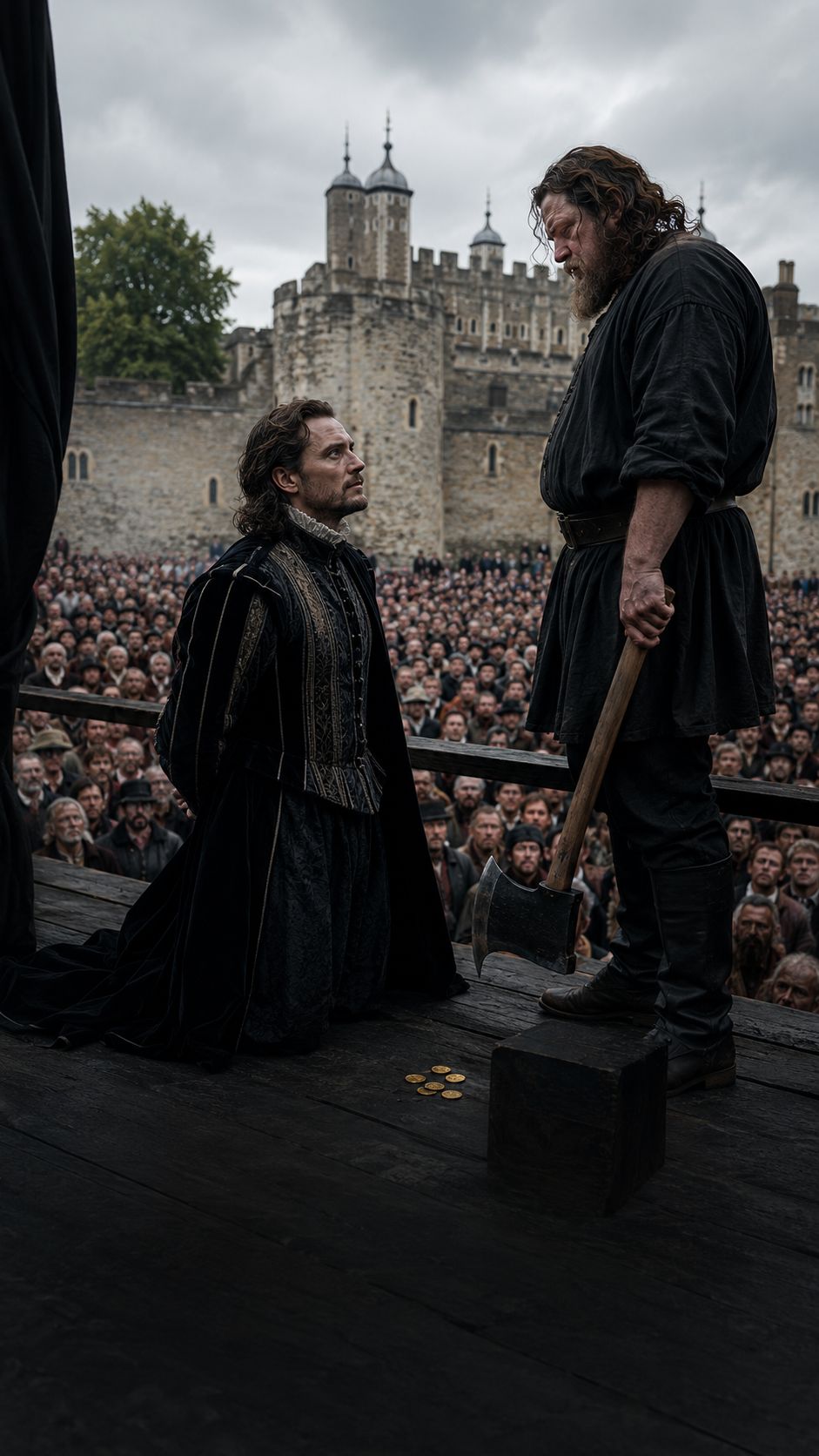 The Botched Beheading That Named The Hangman
It took the executioner several horrific blows to finish the job, and his name became slang for hangman forever.
Tower Hill, London, United Kingdom · 1685 · same site
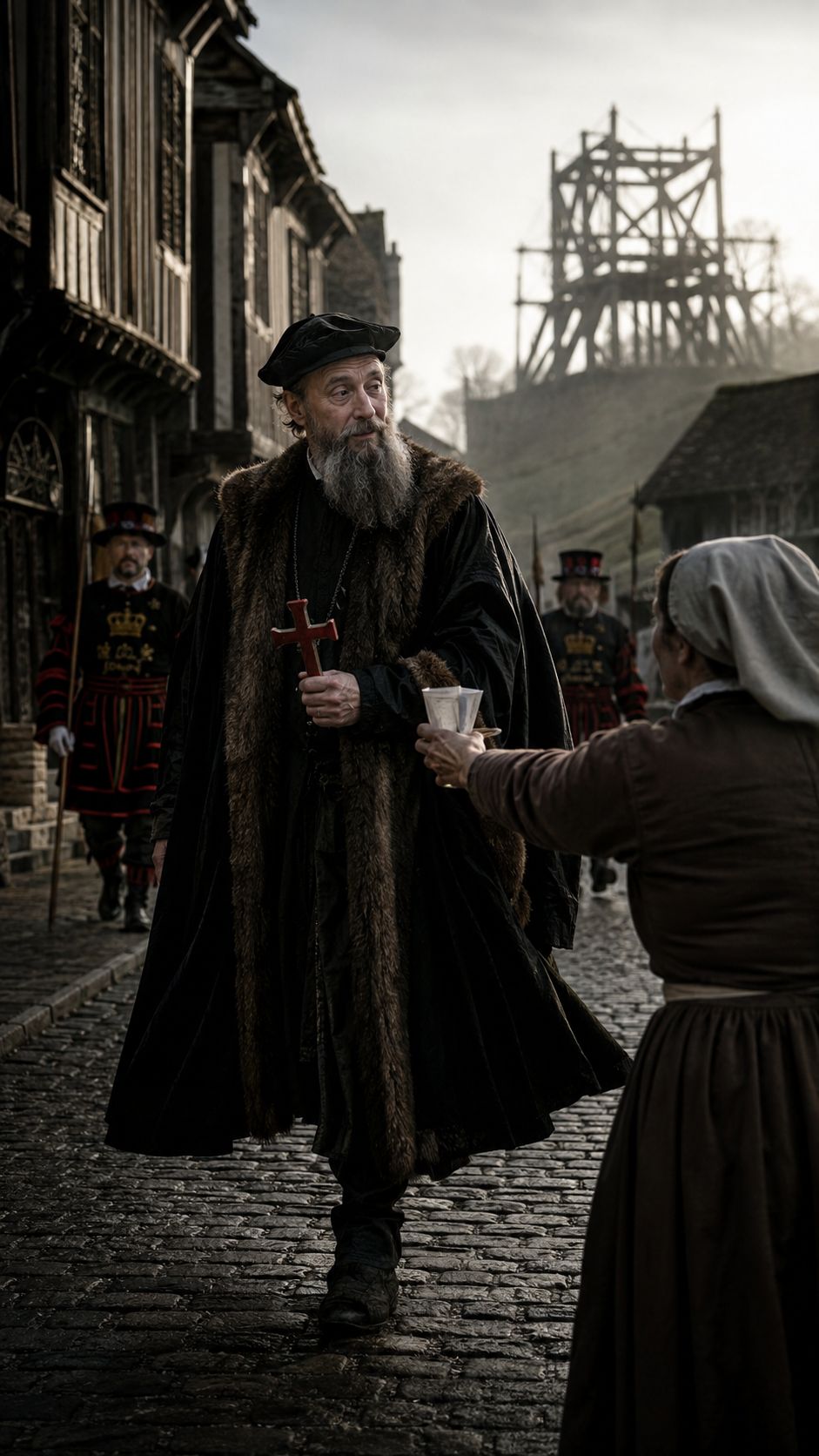 The Chancellor Who Refused His King's Supremacy
Henry VIII's own former Lord Chancellor walked to the block for refusing to accept the king as head of the Church.
Tower Hill, London, United Kingdom · 1535 · same site
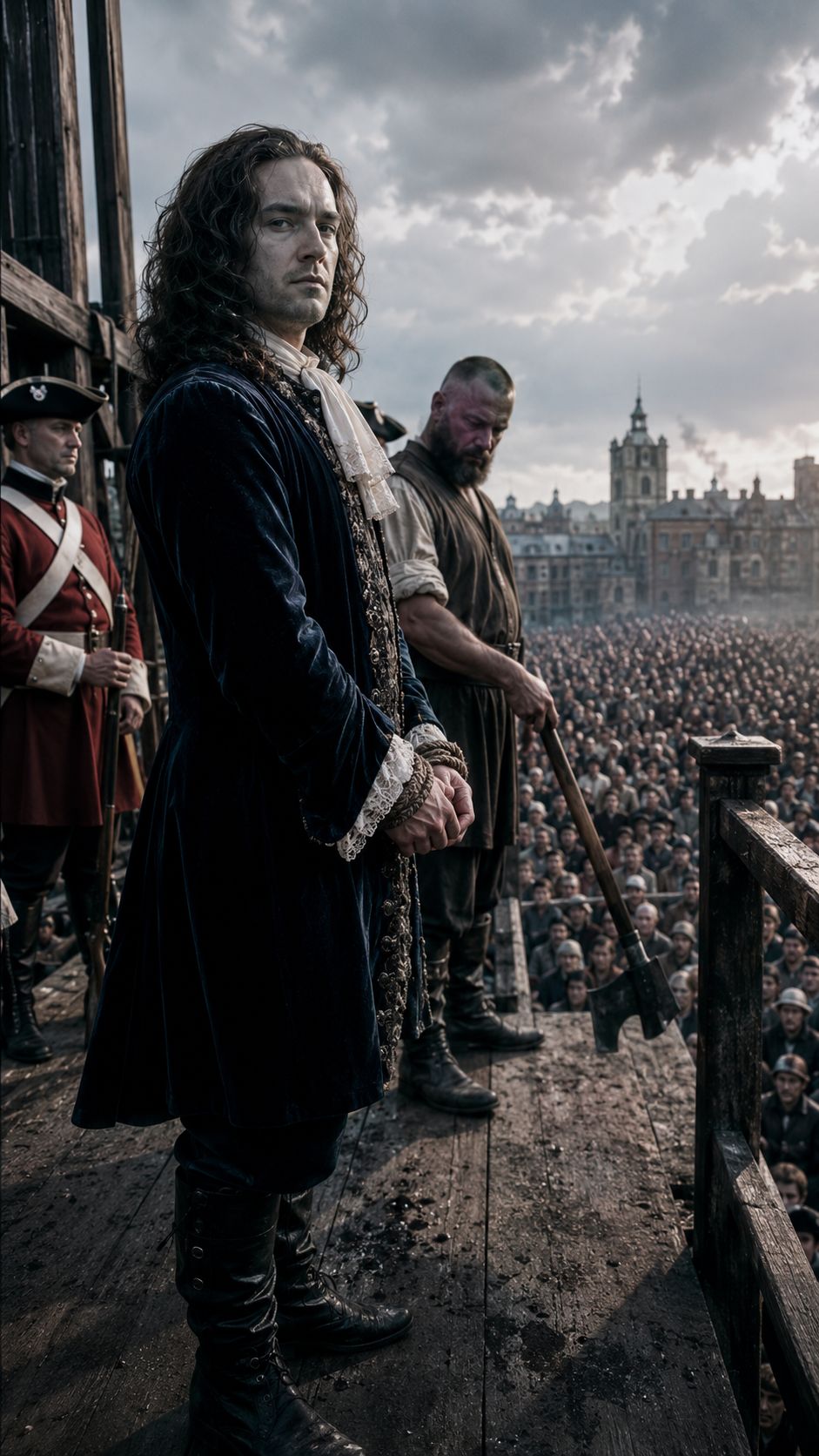 The Duke Who Paid The Headsman In Advance
He handed the executioner six guineas and begged him not to hack him apart like his last victim — it didn't work.
Tower Hill, London, United Kingdom · 1685 · same site
 The Duke Whose Royal Blood Was a Death Sentence
His royal Plantagenet blood made him too dangerous to live under a paranoid, sonless Henry VIII.
Tower Hill, London, United Kingdom · 1521 · same site