
On 10th July 1584, a Catholic fanatic named Balthasar Gérard hid behind a pillar in the Prinsenhof in Delft and waited for William the Silent — Father of the Fatherland, leader of the Dutch Revolt, the most important man in the Netherlands — to finish his lunch.
William descended the stairs. Gérard stepped out and fired two shots from a wheellock pistol at point‑blank range. Both bullets struck William in the chest. His reported last words: “My God, have mercy on my soul and on this poor nation.”
He is often described as the first head of state in history to be assassinated by a firearm.
The Dutch wanted to make sure nobody tried it again.
THE HORROR Gérard’s execution was designed to be the worst punishment the magistrates of Delft could conceive — and the magistrates of Delft were inventive.
The sentence was read aloud. It was methodical. It was specific. Each stage was designed to destroy a different part of the body while keeping the man alive for the next stage.
First: the right hand — the hand that had fired the pistol — was clamped into red‑hot irons and burned or crushed until it was destroyed.
Then: red‑hot pincers were used to tear the flesh from his body in six separate places — arms, chest, legs. The wounds were left open.
Then: his feet were placed into shoes made from uncured, oiled dog skin — cut two fingers shorter than his feet. The shoes were heated over a fire. As the leather warmed, it contracted. His feet were slowly crushed and cooked inside the tightening hide. When the shoes were removed, the half‑broiled skin of his feet peeled off with them.
Then: his armpits were branded with hot irons.
Then: he was dressed in a shirt soaked in alcohol.
Then: boiling fat — often recorded as bacon fat — was poured into his open wounds.
Then: nails or needles were driven between the flesh and the fingernails — and toenails — of his remaining hand and feet.
This torture continued over several days. Then came the formal execution.
On the fourth day, Gérard was quartered alive. His abdomen was cut open. His intestines were pulled out. His heart was torn from his chest and thrown in his face. Contemporary accounts record that he was still conscious when the heart struck him.
He was then beheaded. His head was placed on a pike behind the Prinsenhof. His arms and legs were displayed on the four gates of Delft.
Gérard reportedly remained calm throughout. He never recanted. He believed he was a Catholic martyr. Philip II of Spain — who had offered the bounty — gave Gérard’s family three estates and raised them to the peerage. The assassin was punished as a monster by one country and rewarded as a hero by another.
THE MODERN RELIC The Prinsenhof in Delft is now Museum Prinsenhof — open to the public. In the hallway where William was shot — the Moordhal, the Murder Hall — the original bullet holes in the wall are still visible, preserved behind glass.
You can stand in the exact spot where one of the first heads of state was killed by a gun and see where the bullets entered the plaster nearly 450 years ago. The holes are small — finger‑width, shoulder‑height, roughly a foot apart. They do not look like the beginning of something.
But every political assassination by firearm in the centuries since — Lincoln, the Archduke, Kennedy, Sadat, Rabin — follows the precedent set in this corridor by a man with a pistol and a pillar to hide behind.
The hallway is quiet. The glass is clean. The bullet holes are neat and still. They have been there since 1584.
William the Silent lies in an honoured tomb in Delft’s Nieuwe Kerk. Gérard’s body was burned, torn, cooked and scattered. His right hand was burned off in irons. His feet were cooked in dog‑skin shoes.
The bullet holes remain. The torture sentence survives in legal documents and chronicles. The museum tour passes by the place where a gunshot changed the history of political murder.
Nearby on the Dark Atlas
- The Assassin Paid In His Victim's Own Coin
A stranger too poor to attend church was given money for clothes — he used it to buy the pistols that killed his benefactor.
Delft, Netherlands · 1584 · same site
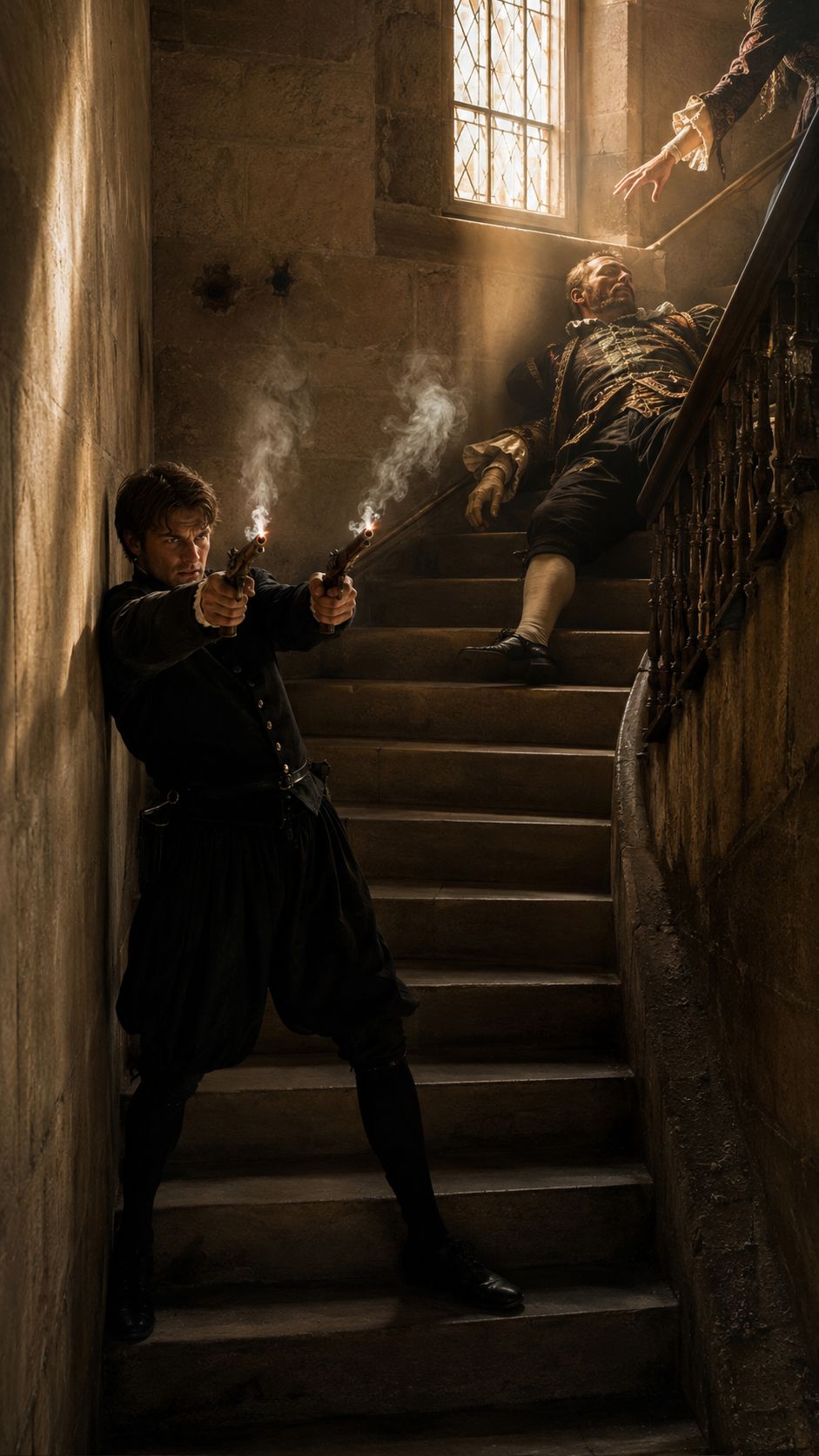 The First Assassination By Gun
A young lawyer became the first man in history to assassinate a head of state with a firearm, then endured an execution meant to terrify a nation.
Delft, Netherlands · 1584 · same site
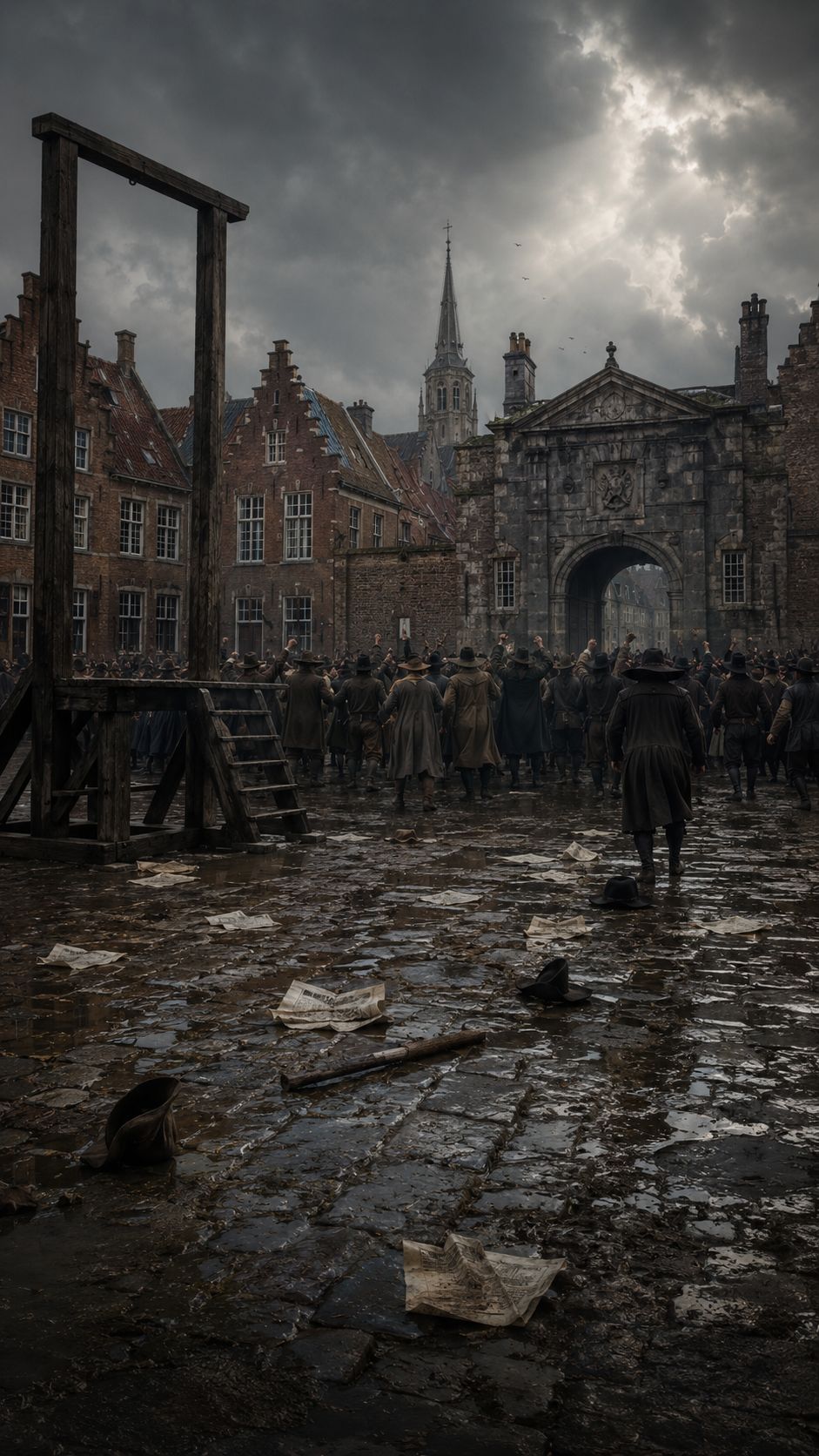 The Brothers Torn Apart By Their Own Countrymen
The leaders of a wealthy, sophisticated republic were torn apart and cannibalised by their own citizens in broad daylight.
The Hague, Netherlands · 1672 · 8.2 km away
- The Naval Punishment Worse Than the Lash
Dragged beneath the ship across barnacle-covered wood, few survived the infections that followed, if they survived at all.
Amsterdam, Netherlands · 1853 · 54 km away