
Balthasar Gérard is one of the most extraordinary figures in the history of political violence — a young French lawyer who became the first man in recorded history to assassinate a head of state with a firearm, and who then endured an execution so prolonged and so savage that it became a legend of defiance across Europe. The Dutch authorities intended his death to be a warning. Instead, they created a martyr. Gérard was born around 1557 in Vuillafans, in the Franche-Comté, then under Spanish rule. His father was a jurist, his mother came from a family with roots in the Netherlands, and Balthasar himself studied law at the University of Dole. He was a devout Catholic, a fervent admirer of Philip II of Spain, and when the Spanish king offered 25,000 crowns, a peerage, and an inheritable estate to anyone who would kill William of Orange — the Protestant leader of the Dutch Revolt — Gérard saw a holy duty. He was not a professional killer. He was a twenty-six-year-old lawyer with a pistol and a conviction.
On 10 July 1584, he presented himself at the Prinsenhof in Delft as the son of a martyred Calvinist, begged 50 crowns for new clothes from William himself, and two days later returned. As William climbed the stairs to his private apartments, Gérard stepped from a dark corner and fired two shots at point-blank range. The Father of the Netherlands collapsed. His sister knelt beside him. It was over in seconds. Gérard fled, stumbled over a heap of rubbish in a narrow lane, and was caught by a servant and a halberdier before he could reach the moat. When they called him a traitor, he replied: “I am no traitor; I am a loyal servant of my lord the King of Spain.”
The Horror
What followed was not justice. It was a laboratory of cruelty. The magistrates of Delft sentenced Gérard to be tortured and executed in a manner they considered spectacular even by sixteenth-century standards. The sentence read: his right hand was to be burned off with a red-hot iron; his flesh torn from his bones with pincers in six different places; he was to be quartered and disembowelled alive; his heart torn from his bosom and flung in his face; and finally, his head cut off. The torture began the night of his capture. He was hung on a pole and lashed with a whip. Then his wounds were smeared with honey, and a goat was brought to lick the honey off with its rough tongue — a method designed to flay the skin. The goat refused. They left him bound hand and foot like a ball through the night, so sleep was impossible. For three days he was mocked, hung from poles with his hands tied behind his back, and had weights of 300 pounds attached to each big toe for half an hour at a time. They fitted him with wet leather boots and heated them until they crushed and burned his feet simultaneously. He gave them nothing. No accomplices. No contrition. Only quiet exultation. At his trial, he compared himself to David slaying Goliath.
On the fourth day — 14 July 1584 — they finally killed him. His right hand was burned away. Pincers tore his flesh in six places. They quartered him and disembowelled him while he still lived. They tore his heart from his chest and threw it in his face. And then they cut off his head. Through it all, he is said to have shown neither despair nor repentance. He was twenty-six years old.
The Modern Relic
The relic is the bullet hole. The stairs at the Prinsenhof in Delft — where William the Silent was climbing when Gérard shot him — still bear the two bullet holes in the stone wall. They have been left untouched for over four hundred years, a permanent scar in the masonry. The museum that now occupies the building has preserved the stairwell exactly as it was, and you can stand on those steps today and see the holes at chest height, dark and round, where a young lawyer changed the course of Dutch history with two pulls of a trigger. Gérard’s own body was destroyed so completely that nothing remains. But the holes in the wall are still there — and so is the irony of his end. Philip II of Spain made good on his promise: Gérard’s family was given William’s former lands in three French provinces and taken into the Spanish peerage. The assassin’s mother and siblings lived out their lives as nobles, funded by the bounty on a murdered man’s head.
Nearby on the Dark Atlas
- The Assassin Paid In His Victim's Own Coin
A stranger too poor to attend church was given money for clothes — he used it to buy the pistols that killed his benefactor.
Delft, Netherlands · 1584 · same site
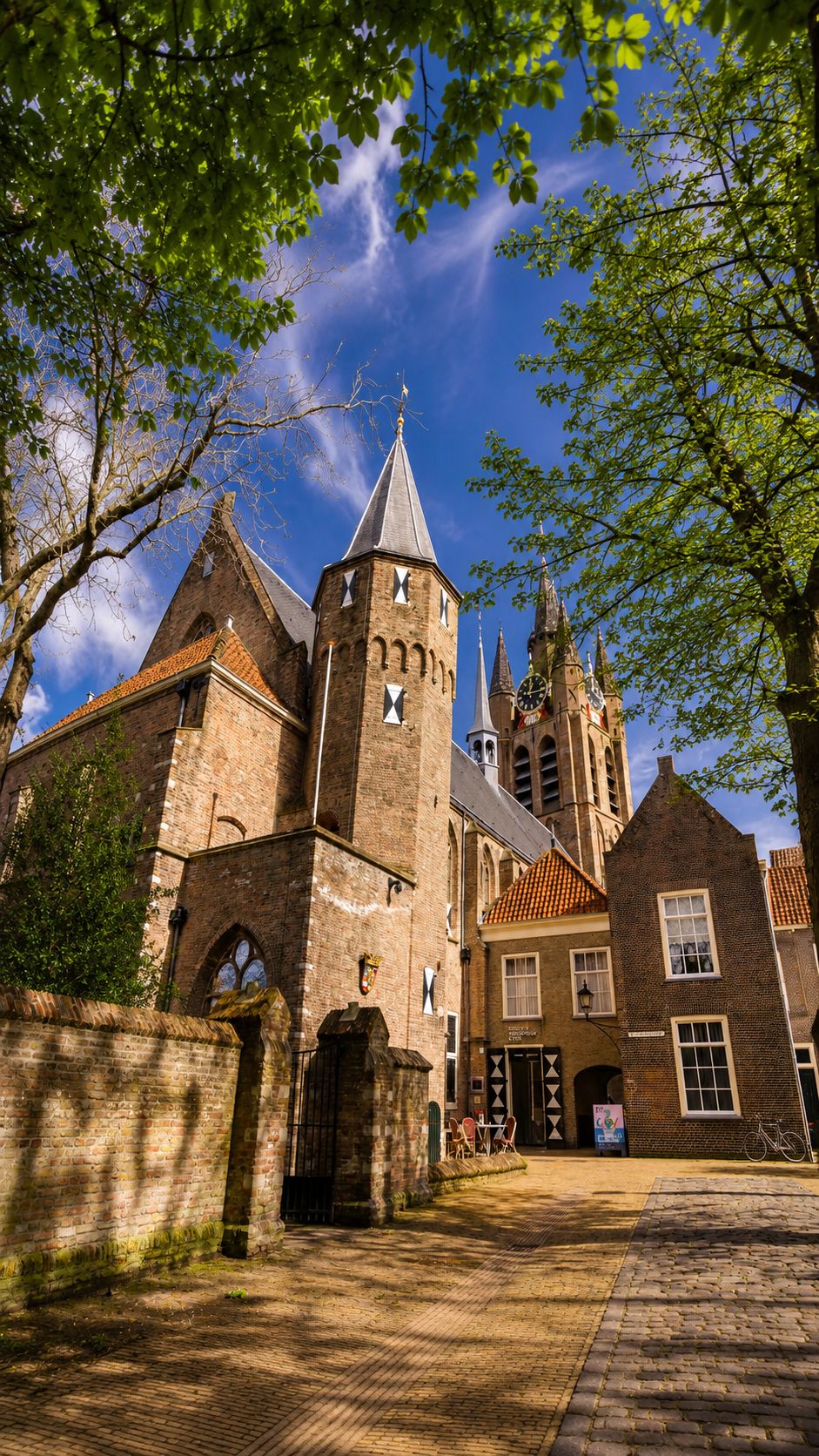 The Bullet Holes Behind The Murder Hall Glass
A fanatic waited behind a pillar for a prince to finish lunch, then fired the shots that made him the first head of state shot dead.
Prinsenhof, Delft, Netherlands · 1584 · same site
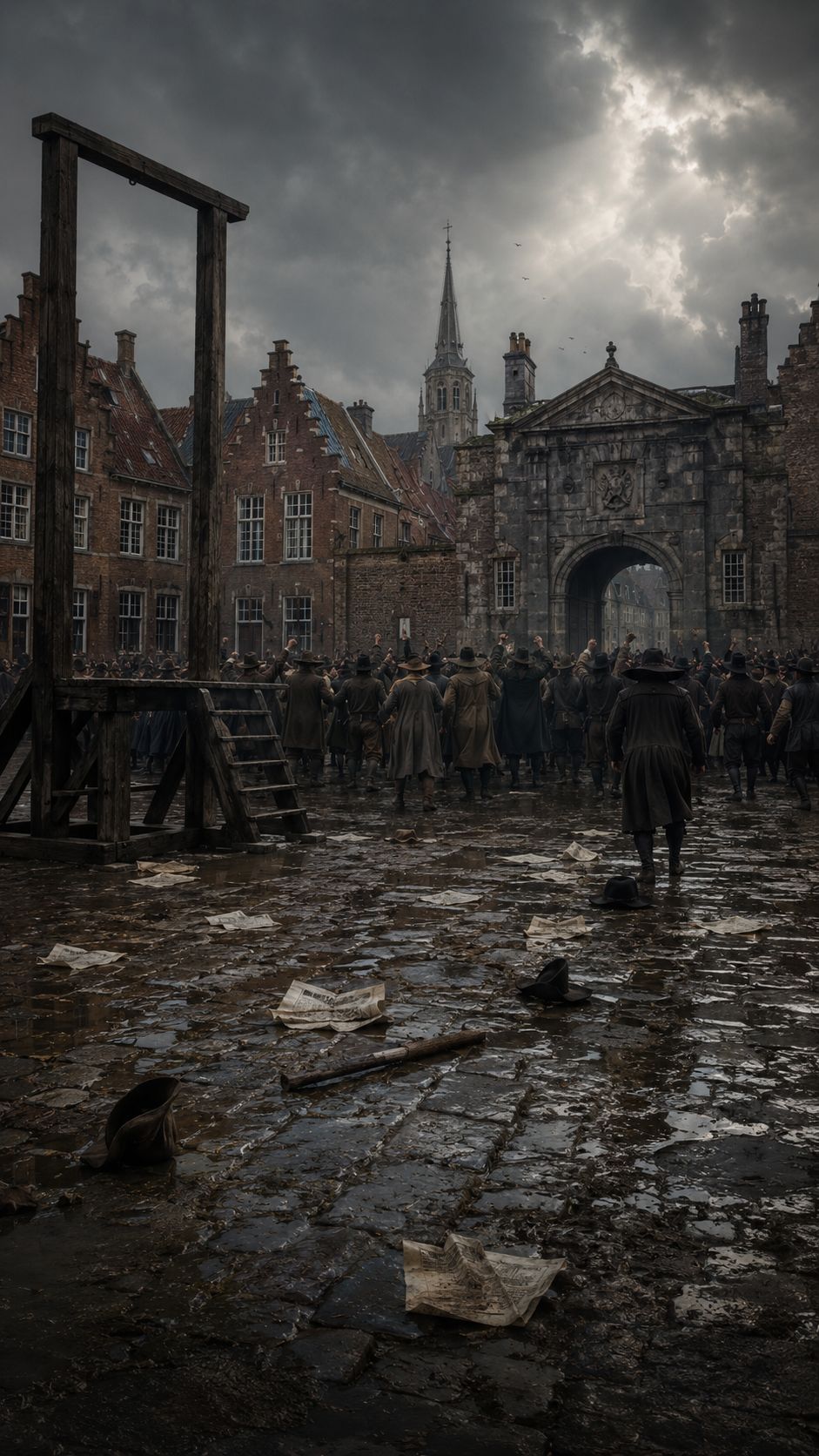 The Brothers Torn Apart By Their Own Countrymen
The leaders of a wealthy, sophisticated republic were torn apart and cannibalised by their own citizens in broad daylight.
The Hague, Netherlands · 1672 · 8.2 km away
- The Naval Punishment Worse Than the Lash
Dragged beneath the ship across barnacle-covered wood, few survived the infections that followed, if they survived at all.
Amsterdam, Netherlands · 1853 · 54 km away