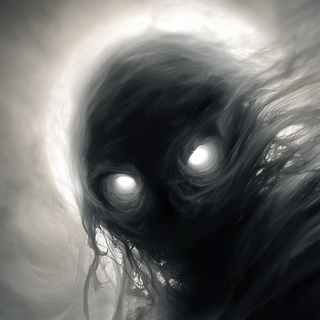
There is a children’s book, first published in Germany in 1845, that has never once gone out of print. Generations of children across Europe and America have had it read to them at bedtime. It was translated into English by, among others, Mark Twain. And it contains a boy having both his thumbs sliced off, a girl burning alive until only ash remains, and a child starving to death in under a week — all rendered in bright, cheerful, hand-coloured illustration. Its name is “Der Struwwelpeter.” “Shock-headed Peter.” And it was made, with love, as a Christmas present. The author was Heinrich Hoffmann, a physician in Frankfurt am Main. In 1844 he went looking for a picture book to give his three-year-old son for Christmas and found nothing that satisfied him — the children’s books of the day were, to his eye, either dully moralising or lifelessly dull. So the doctor bought a blank notebook and made one himself, writing the verses and drawing the pictures by hand. Friends persuaded him to publish it, and in 1845 it appeared. It has been in print, in some form, ever since. He published it not under his own name but under a pseudonym, Reimerich Kinderlieb, and gave it at first a milder title — “Lustige Geschichten und drollige Bilder,” “Funny Stories and Droll Pictures.” The name by which the world now knows it comes from the very first child in its pages: Struwwelpeter himself, “Shock-headed Peter,” a boy who has refused for so long to let anyone cut his hair or trim his nails that he stands on the title page like a small wild thing, a mane of filth above him and his fingernails grown into long claws, held up for other children to recoil from. And he is the gentlest fate in the entire book. His whole punishment is that no one will go near him. What Hoffmann produced was a set of short illustrated cautionary tales, each about a child who misbehaves, and each ending in a punishment out of all proportion to the crime. This was the whole design. The book teaches by terror.
The Horror
The most infamous tale is “Die Geschichte vom Daumenlutscher” — “The Story of Little Suck-a-Thumb.” A mother is going out. Before she leaves, she warns her son Conrad, plainly and calmly, not to suck his thumbs while she is gone, because if he does, a tailor will come. She shuts the door. The instant she is gone, Conrad puts a thumb in his mouth. And the door bursts open. In storms, in Twain’s own translation, “the great, long, red-legged scissor-man” — a tall tailor brandishing a pair of enormous open shears — who crosses the room and, in two swift strokes, cuts off both of the boy’s thumbs. The illustration shows it happening. The verse describes the blood. And then the mother returns to find her son maimed, and the moral is simply that he was warned. If that were the worst of it, the book might pass as grotesque comedy. It is not the worst of it. In “Die gar traurige Geschichte mit dem Feuerzeug” — “The Very Sad Tale of the Matches” — a little girl called Paulinchen, Pauline, is left alone at home. She finds a box of matches. Her two cats cry out to her, again and again, that she must not touch them, that her mother has forbidden it, that she will burn. She strikes one anyway, delighted by the flame. Her dress catches. And the little girl burns to death, entirely, in her own home. The final illustration is one of the most haunting images in children’s literature: a small heap of ashes on the floor, with only her two scarlet shoes left unburned beside it, and her two cats sitting on either side, weeping great tears into pools on the ground. There is no rescue. There is no lesson learned in time. There is a child reduced to ash and a pair of red shoes. And still the book goes on. A boy named Kaspar, fat and healthy, decides one day he will not eat his soup — “I won’t eat my soup, no!” — and refuses it again the next day, and the next. Within five days he has wasted away to a thread, and on the fifth day he is dead; the final picture shows his grave with a soup tureen set on top of it. Another boy torments animals and is savagely bitten. Another, Hans, walks along staring at the sky instead of watching his feet, and strides straight off a riverbank and into the water, his little red portfolio floating away as he sinks. Cruelty, fire, starvation, drowning — a catalogue of the ways a child might die, drawn brightly and rhymed neatly, bound up as a gift. This was not underground literature. It was mainstream, beloved, a fixture of respectable nurseries across the German-speaking world and far beyond. And it crossed the Atlantic in the hands of one of America’s greatest writers: Mark Twain translated it in 1891 under the title “Slovenly Peter,” relishing the black comedy of its punishments. Whether Hoffmann meant the book as sincere moral instruction, as sly satire of the heavy-handed morality tales he despised, or as both at once, has been argued ever since — but the children who received it did not read footnotes. They read the pictures.
The Modern Relic
You can go and meet the book where it was born. In Frankfurt am Main, the city where Heinrich Hoffmann practised medicine and wrote his Christmas gift, there is the Struwwelpeter-Museum, which holds Hoffmann’s material — manuscripts, early editions, and the world of the book — and keeps the strange doctor’s creation alive for visitors. The grip of the thing on the imagination never loosened. Its shape was so deeply lodged in the European mind that during the Second World War it was turned into propaganda: a British parody of 1941, “Struwwelhitler,” borrowed Hoffmann’s exact format to mock the Nazi leadership — proof that nearly a century on, the look and rhythm of his cautionary pages were still instantly recognisable to adults who had first met them, and been frightened by them, as children. And the book itself, that catalogue of small horrors, remains one of the most enduring children’s books ever made, never out of print in more than a century and a half, still sold, still read, still — somewhere tonight — being handed to a child at bedtime. A doctor sat down to make his son something better than the lifeless books on the shelves. What he made was a book about the ways children die, and the world has never been able to put it down.
Nearby on the Dark Atlas
 The Exorcism That Killed Her
A young woman's epilepsy was treated with 67 exorcism rites instead of medicine, until her body finally gave out.
Klingenberg am Main, Germany · 1976 · 51 km away
- The Monk Who Defied the Emperor and Survived
Declared an outlaw who anyone could kill without consequence, he stood before the empire and refused to take back a word.
Worms, Germany · 1521 · 58 km away
 How A Volcano Gave Us The Bicycle
A volcanic eruption on the far side of the world triggers failed harvests, a horse shortage, and the invention that changed how the world moves.
Mannheim, Germany · 1817 · 71 km away
- The Blood And Blindness In The Original Cinderella
There is no fairy godmother in the Grimms' first Cinderella, only a grave, mutilation, and eyes pecked out by birds.
Kassel, Germany · 1812 · 145 km away
More like this
- England's Most Fought-Over Haunted Castle
Centuries of border warfare and torture wrote Chillingham's darkness into history long before anyone spoke of ghosts.
Chillingham, Northumberland, United Kingdom · 1245
 The Real Warlord Behind Count Dracula
Behind the caped movie vampire lies a real medieval warlord whose deeds were more horrifying than Bram Stoker's fiction.
Târgoviște, Romania · 1462
 The Midwife Who Tortured Her Apprentices
A respectable London midwife tortured the orphan girls in her care in a case that horrified all of Georgian England.
London, United Kingdom · 1767
 The Socialite Who Hid A House Of Horrors
A glamorous New Orleans socialite's mansion concealed one of the antebellum South's most horrifying secrets.
New Orleans, United States · 1834