On 26th November 1922, Howard Carter held a candle through a small hole he had chipped in a sealed doorway in the Valley of the Kings. Lord Carnarvon, standing behind him, asked: “Can you see anything?”
Carter replied: “Yes, wonderful things.”
They had found the tomb of Tutankhamun — virtually intact after more than 3,000 years. It was the greatest archaeological discovery of the century. Within months, people connected to the discovery began dying in ways that felt less like coincidence and more like a ledger.
THE HORROR The pattern started before the tomb was fully opened.
Not long after the discovery, a cobra — the uraeus serpent worn on the pharaoh’s crown as a symbol of divine protection — got into Carter’s house and killed his pet canary. The snake was found coiled inside the cage with the dead bird in its mouth. Carter’s Egyptian staff told him the pharaoh had sent the serpent as a warning. Carter reportedly laughed.
Nobody else laughed for long.
Lord Carnarvon — the English aristocrat who had financed Carter’s work for eight years — entered the burial chamber in February 1923. In March, a mosquito bit him on the cheek. While shaving, he nicked the bite with his razor. The cut became infected; blood poisoning set in; pneumonia followed.
He died on 5th April 1923 in a Cairo hotel room, less than five months after the tomb was first opened.
At the moment of his death, the electric lights in Cairo reportedly went out. The blackout had a mundane explanation — a failure in the city’s power supply — but nobody ever nailed down the timing to everyone’s satisfaction. At the same moment, according to Carnarvon’s son, the lord’s fox terrier Susie at Highclere Castle in England let out a single howl and dropped dead.
The city lost its light. The dog lost its life. The man who paid for the tomb paid with his own.
More names followed. Sir Archibald Douglas Reid, the radiologist who X‑rayed the mummy, fell ill soon after the work and died days later. Arthur Mace, a member of Carter’s team, sickened and died in his forties. Carter’s secretary, Richard Bethell, was found smothered with a pillow at a London club. Bethell’s father then jumped from his seventh‑floor flat, leaving a note that mentioned the curse. Archaeologist Hugh Evelyn‑White died by suicide and reportedly left a message in his own blood: “I have succumbed to a curse.”
Arthur Conan Doyle — creator of Sherlock Holmes, the ultimate rational detective — told reporters that an “evil elemental spirit” placed by ancient priests had killed Carnarvon. The man who fictionalised scientific deduction publicly entertained a supernatural explanation.
And yet, the numbers are stubborn. Of the roughly 58 people present when the tomb and sarcophagus were opened, only about eight died within a dozen years. Those who spent the most time working with the mummy lived to a higher‑than‑average age for the period. No carved curse was found anywhere in the tomb. The famous phrase “Death comes on swift wings to he who disturbs the tomb” was a headline, not a hieroglyph.
Howard Carter — the man who found the tomb, opened the doors, catalogued the treasures and worked around the mummy for years — was never touched by any “curse.” He died in 1939 of lymphoma, aged 64, seventeen years after the discovery.
The curse, if you believe in it, killed nearly everyone around him and ignored the man at the centre.
THE MODERN RELIC Tutankhamun’s golden death mask — about eleven kilograms of gold inlaid with lapis lazuli and coloured glass — is displayed in Cairo, one of the most famous objects ever unearthed. The tomb itself is still in the Valley of the Kings, open to visitors on a limited basis to preserve the painted walls.
There is no curse text on those walls. No warning. The cobra that killed the canary was behaving like a cobra. The mosquito that infected Carnarvon was behaving like a mosquito.
But the stories line up in a sequence that’s hard to ignore: the blackout, the dog, the blood‑written suicide note, the smothered secretary, the radiologist dead in days. The rational explanation can account for each event. The irrational explanation cannot be proved at all.
And yet, nearly a century later, the tomb is still there, the gold still shines, and the idea of the curse still walks out of the doorway with every new visitor, whether they admit it or not.
Nearby on the Dark Atlas
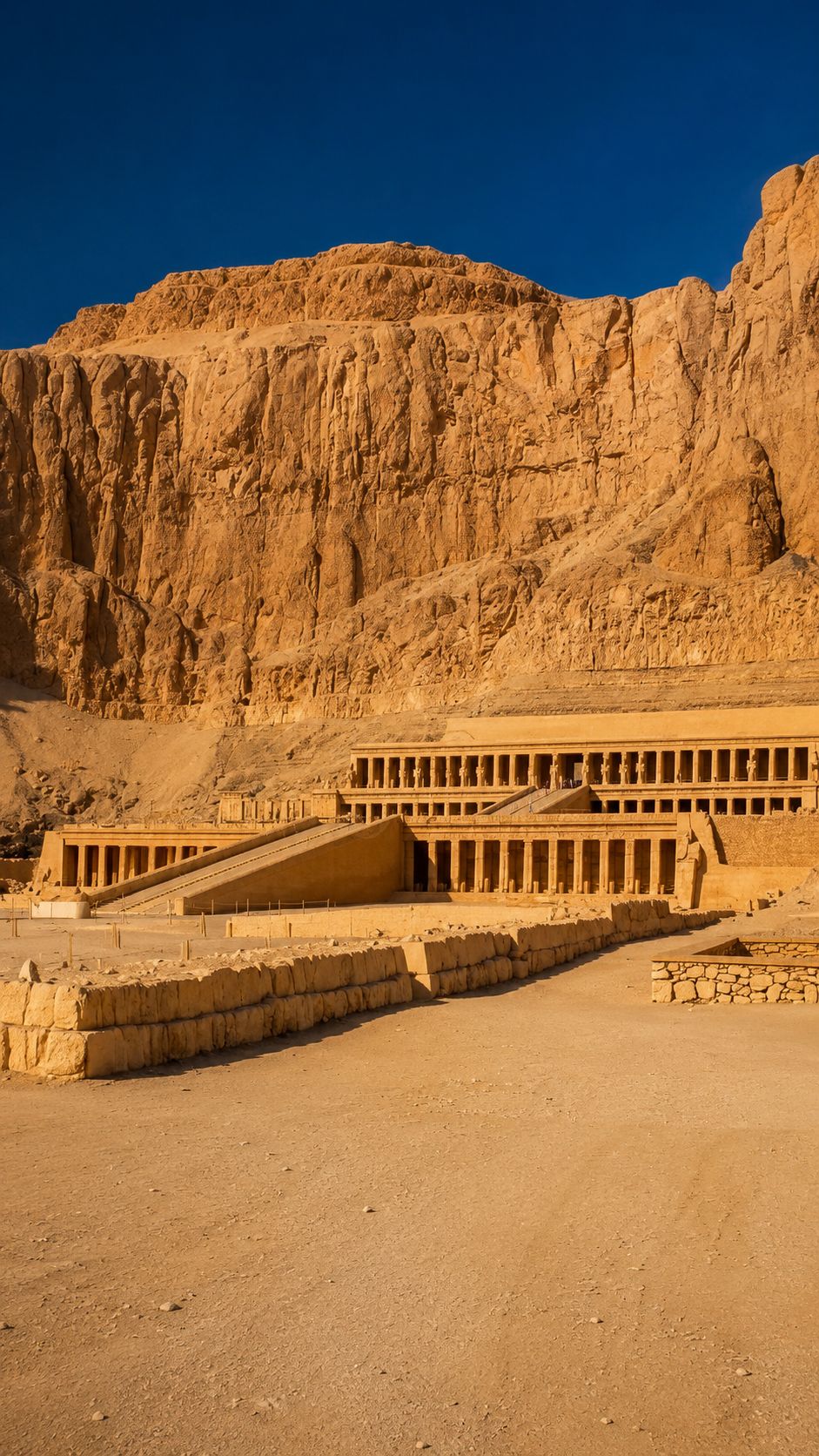 The Female Pharaoh Erased After Death
She ruled Egypt through one of its richest eras as a woman wearing the pharaoh's ceremonial beard — then someone tried to erase her.
Deir el-Bahri, Luxor, Egypt · 1458 BC · same site
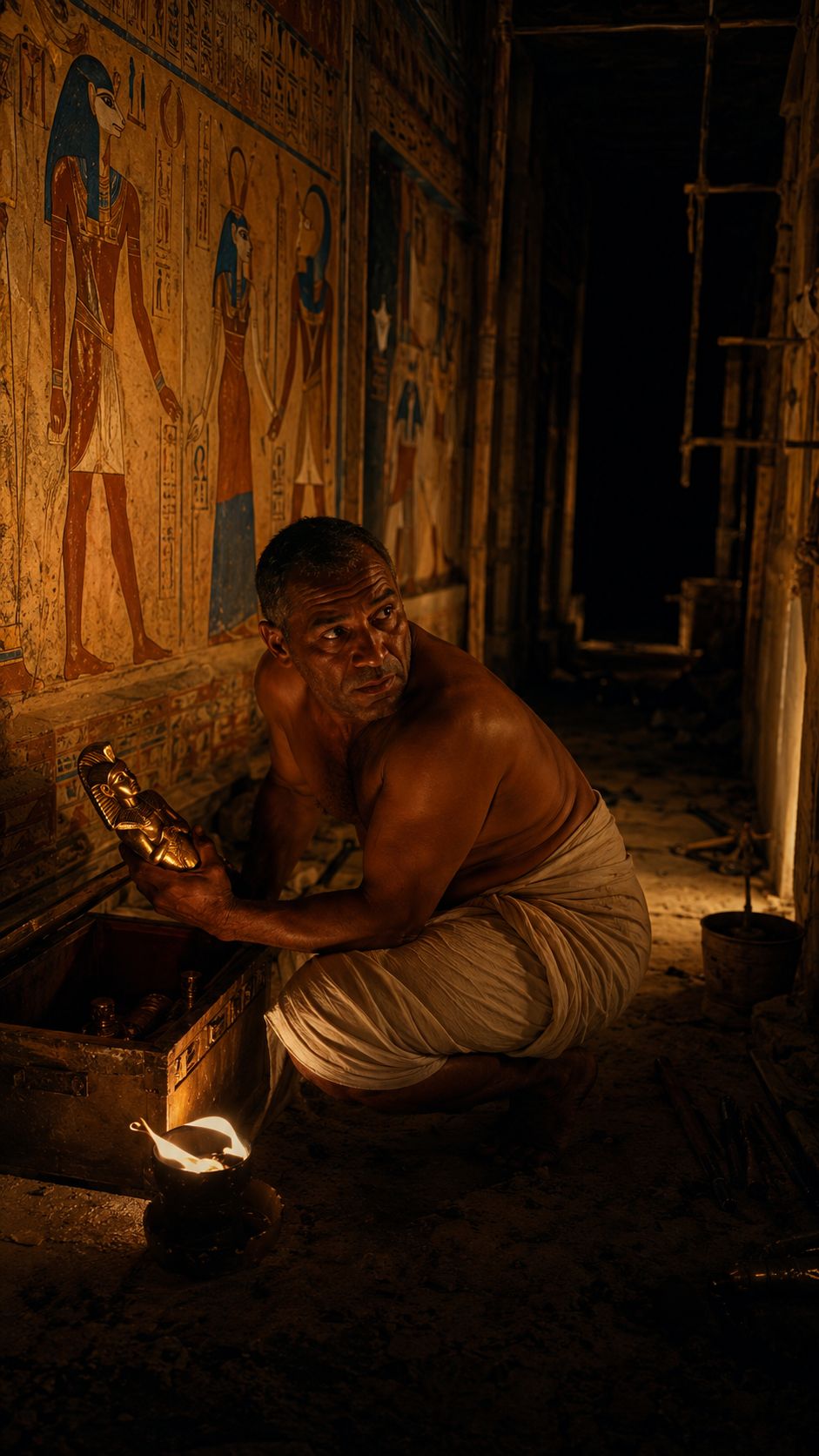 The Tomb Robber's Charge Sheet
A 3,200-year-old papyrus names the women a powerful Egyptian craftsman was accused of assaulting, and his own tomb still stands as evidence.
Deir el-Medina, Egypt · 1150 BC · 1.3 km away
- The Pharaoh Murdered By His Own Harem
A CT scan finally revealed the hidden throat wound that ended the reign of Egypt's last great pharaoh.
Thebes, Egypt · 1155 BC · 4.5 km away
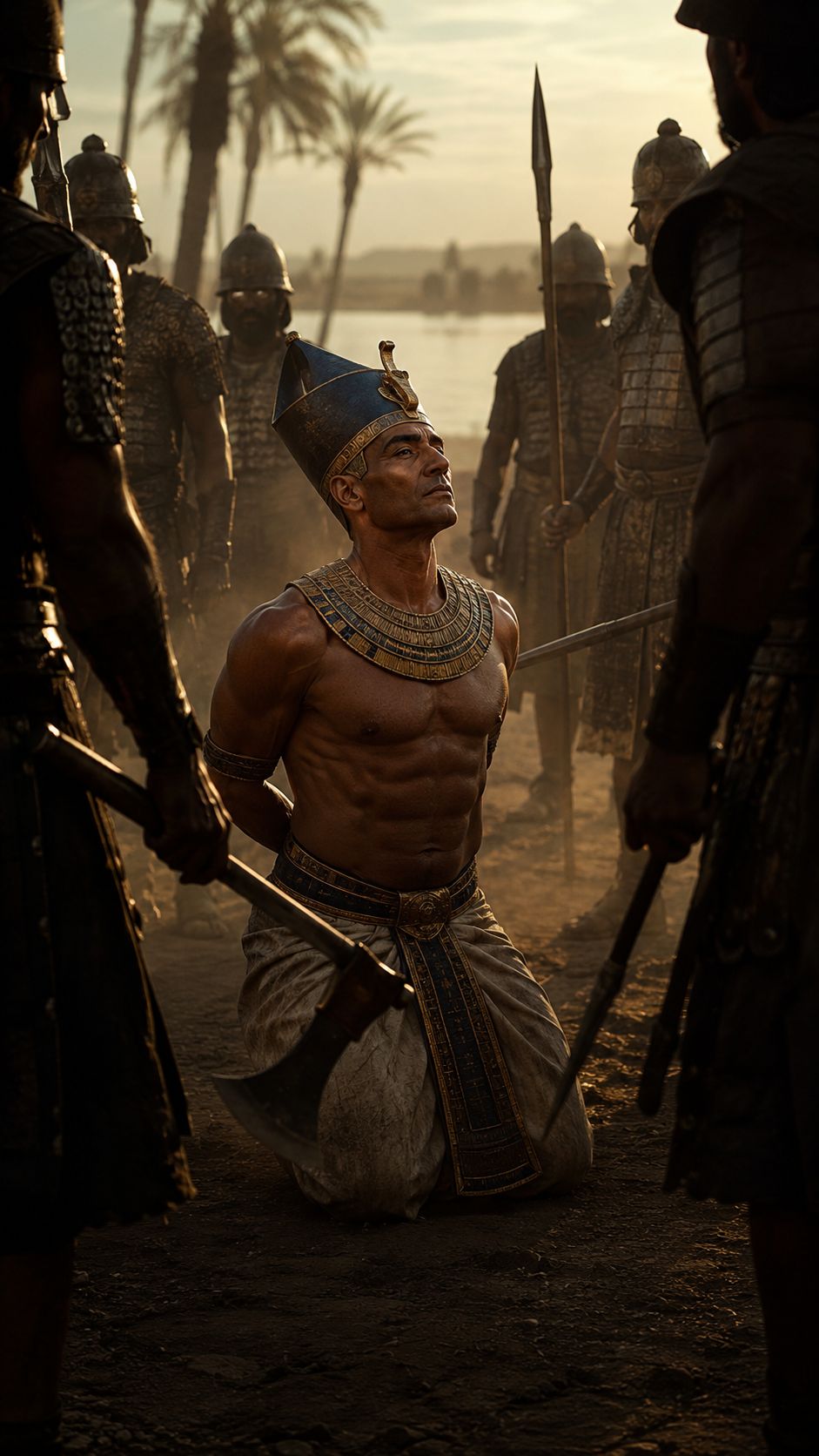 The Pharaoh Who Refused To Kneel To The Hyksos
Egypt had lived under foreign occupation for a century until one pharaoh rode out to war and was butchered for it.
Thebes (Luxor), Egypt · 1550 BC · 4.5 km away
More like this
- The Leper King's Story No Film Would Show
Kingdom of Heaven gave him a dignified death behind a silver mask, the truth was far crueller.
Jerusalem, Israel · 1185
 The Rape Trial That Ended In Trial By Combat
A woman's accusation of rape led to France's last judicial duel, with her own life staked on the outcome.
Paris, France · 1386
- The Parish Registers Of The Beast's Victims
Between 1764 and 1767 something killed roughly a hundred people, recorded in the registers as 'devoured by the beast.'
Saugues, France · 1764
- The Manufacturing Of England's Most Haunted House
For decades it was called the most haunted house in England, until its ghost story revealed how a haunting gets made.
Borley, Essex, United Kingdom · 1929