Around 1458 BC, a pharaoh named Hatshepsut died after ruling Egypt for about 21 years.
She presided over one of the wealthiest and most stable periods in Egyptian history. She built her mortuary temple at Deir el‑Bahri, still considered one of the most beautiful monuments of the ancient world. She raised massive obelisks at Karnak, sent trading expeditions to Punt on the Red Sea coast, and filled Egypt with statues of herself.
She also broke a rule so deep it was almost invisible: she ruled as a female pharaoh, wearing the ceremonial beard, using the full male titulary, and exercising the authority of a role Egyptian culture reserved for men.
After she died, someone set out to make her vanish.
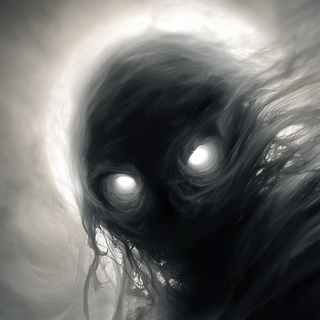
THE HORROR Thutmose III — Hatshepsut’s stepson, co‑ruler, and eventual successor — appears to have led one of the most systematic deletion campaigns in ancient history.
Her statues were targeted. Eyes were gouged. The royal cobra — the uraeus, symbol of kingship — was hacked off her brow. Noses and mouths were smashed; heads and bodies were separated. When archaeologists excavated her temple complex at Deir el‑Bahri in the 20th century, they found statue fragments scattered across long distances: dumped in pits, reused as building rubble, built into foundations of Thutmose’s own projects.
Her name was chiseled away wherever it appeared. Cartouches — the oval frames encasing royal names — were scraped off temple walls, obelisks and chapels. In many places, Thutmose substituted his own name or those of Hatshepsut’s father and husband, men whose rule fit the traditional pattern in a way hers did not.
He altered the official chronology. The regnal years of his own reign were counted back to cover the period when Hatshepsut had ruled, making the records read as though he, not she, had been king all along.
She was removed from king lists: the carved sequences of royal names on temple walls that served as Egypt’s historical spine. In lists at Abydos and Saqqara, Hatshepsut simply doesn’t appear. Officially, she never existed.
The erasure worked. Within a few generations, Hatshepsut’s name was gone from living memory. Her monuments were damaged; her achievements blurred into those of surrounding male rulers.
So when European scholars started reading hieroglyphs in the 19th century, they occasionally found inscriptions describing a king with feminine grammar attached to what looked like a bearded figure and assumed their translations were wrong.
They weren’t wrong. They were accidentally rediscovering a woman who had been king.
THE MODERN RELIC Hatshepsut’s mortuary temple at Deir el‑Bahri, on the west bank of the Nile at Luxor, still stands in its cliff‑backed basin: three broad terraces of colonnades stepping up toward the rock. It is one of the most recognisable silhouettes in Egyptian archaeology.
Thutmose III’s own temple nearby, partly constructed using chunks of Hatshepsut’s dismantled buildings, is largely ruined. The monument he tried to erase survived; the one he built for himself did not.
Dozens of statues of Hatshepsut, once smashed and scattered, have been painstakingly reassembled in museums. Curators at the Metropolitan Museum of Art in New York and the Egyptian Museum in Cairo have matched broken faces to broken bodies, reattached hacked‑off cobras to her headdress and rebuilt figures that were meant never to be whole again.
In 2007, researchers identified a mummy believed to be Hatshepsut by matching a molar tooth found in a canopic jar inscribed with her name to a missing tooth in an anonymous royal mummy. After more than three millennia, the woman who had been removed from lists and walls had her body tentatively returned.
She may have originally been placed elsewhere and then moved into the tomb where she was found, lying on the floor rather than inside a sarcophagus — another hint of attempts to hide, rearrange or downgrade her burial.
Hatshepsut ruled for roughly 21 years. Thutmose III spent decades trying to erase those years. He did not succeed.
Her temple still rises in stone. Her statues look out from glass cases. Her name is back in the king lists in modern books.
The woman who wore the beard and called herself king was buried twice — once by the politics of her own time, once by centuries of forgotten inscriptions. Archaeology has dug her up from both.
Nearby on the Dark Atlas
 The Curse That Followed The Boy King's Tomb
Within months of opening a pharaoh's sealed tomb, the people connected to the discovery began dying in ways that felt like a ledger being settled.
Valley of the Kings, Luxor, Egypt · 1922 · same site
 The Tomb Robber's Charge Sheet
A 3,200-year-old papyrus names the women a powerful Egyptian craftsman was accused of assaulting, and his own tomb still stands as evidence.
Deir el-Medina, Egypt · 1150 BC · 1.3 km away
- The Pharaoh Murdered By His Own Harem
A CT scan finally revealed the hidden throat wound that ended the reign of Egypt's last great pharaoh.
Thebes, Egypt · 1155 BC · 3.9 km away
 The Pharaoh Who Refused To Kneel To The Hyksos
Egypt had lived under foreign occupation for a century until one pharaoh rode out to war and was butchered for it.
Thebes (Luxor), Egypt · 1550 BC · 3.9 km away
More like this
- The King's Favourite Who Bet Against Richelieu
A dazzling young courtier gambled his head against Cardinal Richelieu, and lost it in a public square.
Place des Terreaux, Lyon, France · 1642
- The Leper King's Story No Film Would Show
Kingdom of Heaven gave him a dignified death behind a silver mask, the truth was far crueller.
Jerusalem, Israel · 1185
- The Only Peer Ever Hanged At Tyburn
A violent nobleman was hanged before a stunned crowd who never expected to see a lord die on the public gallows.
Tyburn, London, United Kingdom · 1760
 The Rape Trial That Ended In Trial By Combat
A woman's accusation of rape led to France's last judicial duel, with her own life staked on the outcome.
Paris, France · 1386