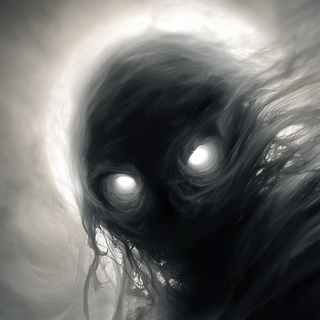
The film Gladiator shows Emperor Commodus as a petulant, scheming villain who fights the hero in a rigged duel and dies with a blade in his throat.
The real Commodus was worse. Significantly, creatively, almost incomprehensibly worse.
THE HORROR Commodus became sole emperor at eighteen. His father, Marcus Aurelius — philosopher‑emperor, last of the Five Good Emperors, author of Meditations — left him a mostly stable empire and a full treasury. Commodus dismantled both.
He had little interest in governing. He kept a harem said to include hundreds of women and men. He handed actual power to favourites and palace officials. His real obsession was the arena.
Commodus entered the amphitheatre as a gladiator. But his “fights” were performances, not contests. His opponents were given blunt or wooden weapons and ordered to lose. Over twelve years he claimed thousands of victories. None were genuine.
He killed animals from the safety of an elevated imperial platform: shooting arrows at elephants, giraffes, hippos, bears and ostriches from above, where nothing could reach him. Cassius Dio recounts a single day when Commodus killed 100 bears without once descending to the sand.
Then he turned to people who could not fight back at all.
He had men with missing feet and legs — amputees, veterans maimed in war, others crippled by accidents — gathered and taken into the arena. He tied them together, dressed them as monsters, gave them sponges to throw instead of stones, and beat them to death with a club while pretending they were giants from myth.
Each public appearance cost the Roman state a million sesterces. He invoiced the empire for the privilege of killing chained and disabled citizens.
In another spectacle he decapitated an ostrich in front of the crowd, held up the severed head, then pointed his bloody sword directly at the senators watching from their seats and stared.
Dio, who was present, wrote that the message was unmistakable: he wanted them to know they could be next. The senators, unable to show any reaction without risking death, reportedly chewed laurel leaves from their garlands to keep their mouths moving and hide their expressions.
Commodus reshaped Rome in his own image. He renamed the city Colonia Lucia Annia Commodiana — the Colony of Commodus. He renamed all the months after his titles. He altered the giant statue near the Colosseum, putting his own head on it, adding a club, and declaring himself a new Hercules.
At one grotesque banquet, he reportedly served two living disabled men on silver platters smeared with mustard, as centrepieces. They weren’t eaten; they were decoration.
Eventually Commodus drew up a list of people he planned to kill and left it where others could find it. His mistress Marcia did. Her name was on it.
On the night of 31 December 192, Marcia poisoned his wine. Commodus drank — and vomited. His tolerance for drink was such that the poison didn’t finish him. As he bathed to wash away the vomit, a professional wrestler named Narcissus, his own training partner, came into the room and strangled him.
The emperor of Rome died at 31, naked in a bath, with vomit still fresh, killed by the man he used for exercise.
The Senate immediately declared damnatio memoriae — official erasure. His names were chiselled from monuments, his statues pulled down, his months and city renamed back. The golden Antonine age ended with his reign and never really returned.
THE MODERN RELIC Despite the erasure, one famous bust survived: a marble portrait of Commodus as Hercules, now in the Capitoline Museums in Rome. Lion skin draped over his head, club in hand, symbols of the golden apples beside him. The expression is calm, almost gentle.
It is the face of a man who clubbed amputees to death for fun and invoiced the treasury for doing it.
The Colosseum, where he staged his rigged shows and “giant” killings, now receives millions of visitors a year. Gladiator earned hundreds of millions at the box office and won Best Picture. Joaquin Phoenix’s Commodus is remembered as a calculating, emotionally twisted villain.
The historical Commodus was not carefully calculating. He was something worse: a bored young man with absolute power, who discovered that the only thing that held his attention was watching helpless people die.
Nearby on the Dark Atlas
 The Poison Sold As A Woman's Cosmetic Oil
Disguised as beauty oil, a tasteless poison gave abused wives in Rome a way to outlive their husbands.
Rome, Italy · 1650 · same site
- The Vanished Statue That Named The Colosseum
Rome's greatest arena was never named for itself — it borrowed its name from a giant bronze statue that vanished.
Rome, Italy · 80 · same site
- The Wheel In The Wall That Took Unwanted Babies
A pope looked at drowned infants in the Tiber and ordered a spinning wooden cylinder built into church walls instead.
Rome, Italy · 1198 · same site
 When Rome Staged Executions As Myth
Romans didn't just execute prisoners — they dressed them as mythological heroes and staged their real deaths as theatre.
Rome, Italy · 80 · same site