
In August 1612, ten people from the area around Pendle Hill in Lancashire were tried for witchcraft at the Lancaster Assizes. The accused included an 80‑year‑old blind woman, her daughter, her granddaughter, and several neighbours. They were poor. They were uneducated. They lived in an isolated part of England where old superstitions had never fully disappeared.
The trial lasted two days. The key witness — the person whose testimony convicted most of the accused — was a nine‑year‑old girl named Jennet Device.
She condemned her own family.
The Horror
Jennet was brought into the courtroom and placed on a table so the judges could see her. Her mother, Elizabeth Device, was in the dock. When Elizabeth saw her daughter being prepared to testify against her, she screamed — so violently that she had to be removed from the courtroom before the child could speak.
Jennet gave her evidence calmly. She named her mother as a witch. She described a meeting at Malkin Tower — the family’s home — where, she said, witches had gathered on Good Friday to plot the murder of a man by sorcery. She named her brother James. She named her sister Alizon.
The clerk of the court, Thomas Potts, recorded her testimony in detail in a book he later published as The Wonderfull Discoverie of Witches in the Countie of Lancaster. He noted her composure. He noted her precision. He noted that the judges found her entirely convincing.
Her mother was convicted. Her brother was convicted. Her sister was convicted. Seven others were convicted alongside them. All ten were hanged on the moor above Lancaster Castle on 20th August 1612.
A nine‑year‑old girl watched her mother, her brother, and her sister walk to the gallows — and she was the reason they were there.
Whether Jennet was coached, coerced, or manipulated by local magistrates, or simply repeating things she had heard, is unknown. She was nine. She had been taken from her family, placed in the custody of the authorities, and asked to perform in a courtroom designed to produce a specific outcome. The trial was presided over by judges who needed convictions. Jennet provided them.
Twenty‑two years later, in 1634, Jennet Device was herself accused of witchcraft. A ten‑year‑old boy named Edmund Robinson gave testimony against her and around twenty others, claiming he had seen them at a witches’ gathering. The echo was precise: a child pointing at adults and saying the word “witch.” The same mechanism that had destroyed Jennet’s family was now aimed at her.
She was imprisoned at Lancaster Castle — the same building where her mother had been tried and sentenced. The case attracted enough attention that it reached London. King Charles I ordered an investigation. Under questioning, Edmund Robinson eventually admitted he had invented the entire story. Jennet was released.
Nobody investigated whether Jennet’s own testimony in 1612 had been similarly invented.
The Modern Relic
Lancaster Castle still stands. Until 2011 it functioned as both a working court and a prison; today it is open to visitors. The courtroom where Jennet testified — high wooden panelling, raised bench, central floor — is still intact.
Pendle Hill, visible for miles across the Lancashire countryside, is now a popular walking trail. Every Halloween, thousands of people climb it, many of them thinking of the Pendle witches whose stories have become part of local folklore.
In 2012, exactly 400 years after the trial, a memorial to the Pendle witches was unveiled at Lancaster Castle. It names all ten who died. It does not name the nine‑year‑old who put them there. There is no plaque to her in any village. No stone with her name on it.
Jennet Device exists in the historical record only in Potts’s trial book — a child’s voice trapped in a text designed to prove that witches were real and justice had been done. The family she helped condemn is still dead. The hill is still there. The courtroom is still there. The question of what a frightened nine‑year‑old really understood when she stood on that table has never been answered.
Nearby on the Dark Atlas
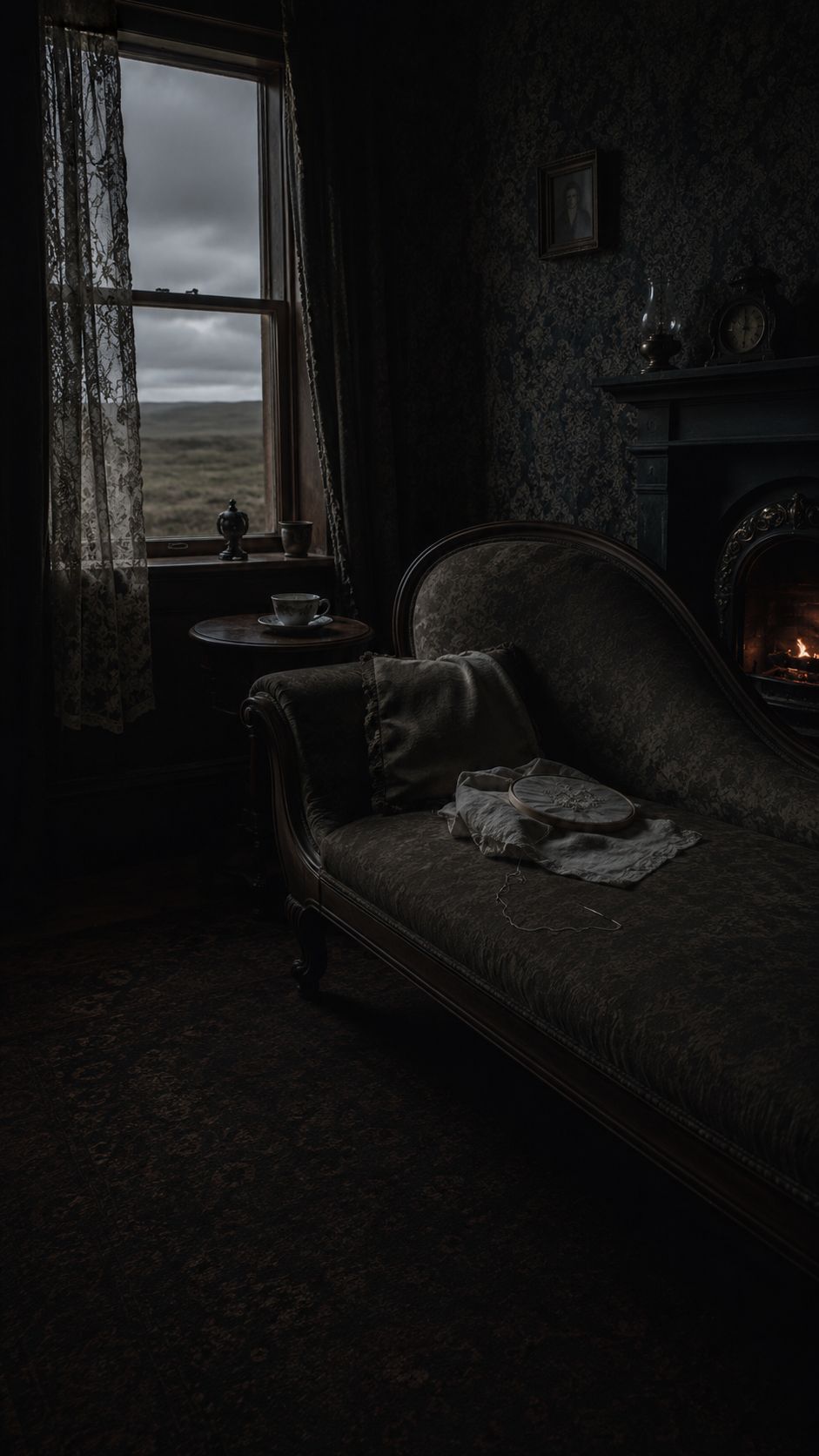 The Novelist Who Refused Every Doctor
The author of Wuthering Heights got dressed and sat with her sewing every day of her final illness, refusing all medicine until the end.
Haworth, United Kingdom · 1848 · 60 km away
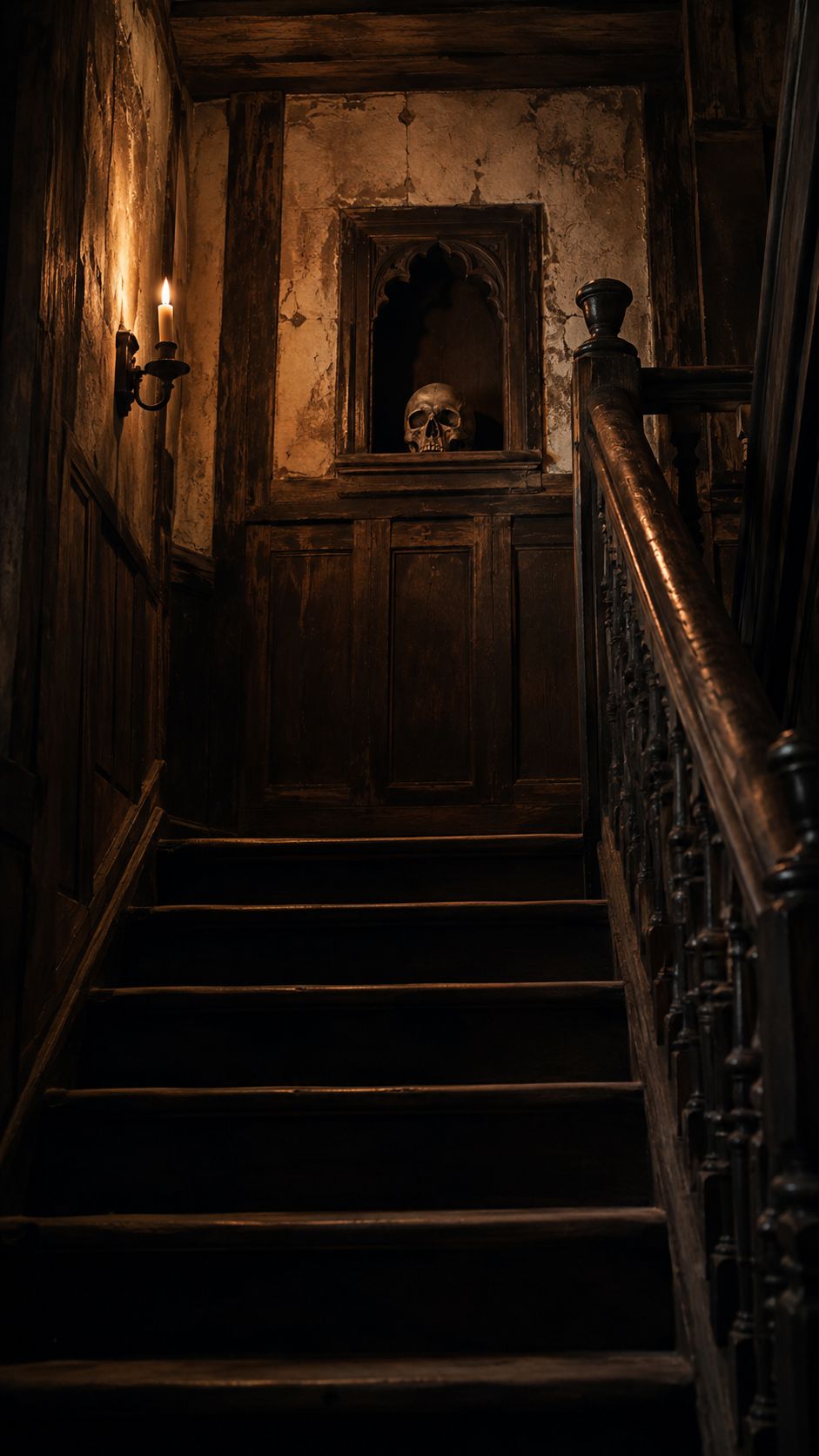 England's Screaming Skulls That Refuse To Leave
In old English houses, real human skulls are kept in niches and boxes because of one shared fear: remove them, and disaster follows.
Wardley Hall, Greater Manchester, United Kingdom · 1600 · 69 km away
- The Medieval Machine That Beheaded Petty Thieves
Centuries before the guillotine, a Yorkshire town used a wood-and-iron machine to behead anyone caught stealing over thirteen pence.
Halifax, United Kingdom · 1650 · 71 km away
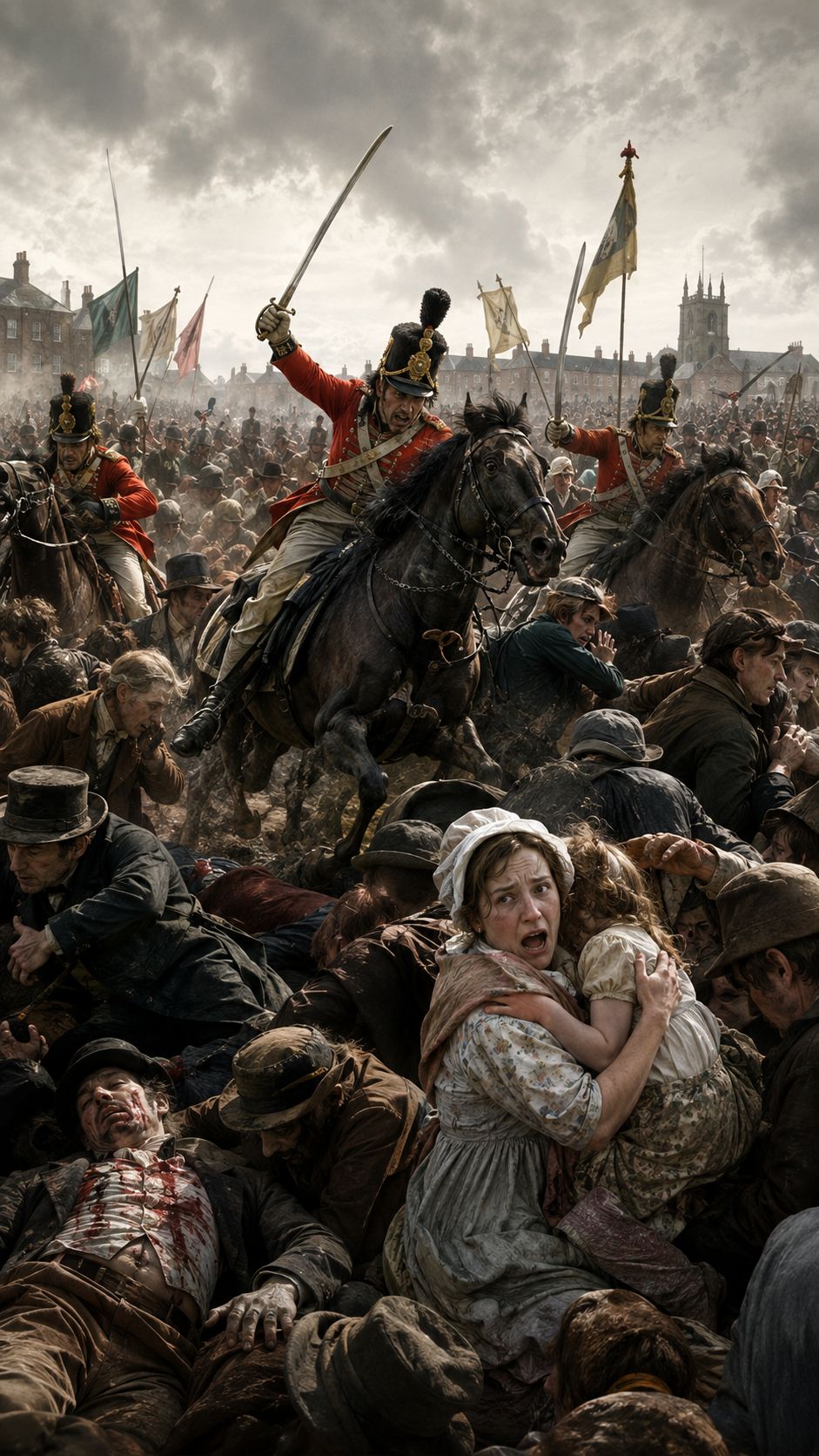 The Law Behind Reading The Riot Act
A phrase for a stern telling-off was once the legal warning before cavalry charged a crowd with sabres drawn.
Manchester, United Kingdom · 1819 · 73 km away