
If you stand on the traffic island on the northeast corner of Hyde Park — directly beside Marble Arch, one of the most photographed landmarks in London — you are standing on the site of the most prolific killing ground in English history.
For over 600 years, from around 1196 to 1783, this spot was Tyburn — London’s primary execution site. Estimates suggest that tens of thousands of people, perhaps 60,000, were hanged here.
The gallows are gone. The traffic is not.
The Horror
The Tyburn Tree — as it was known by the 16th century — was a triangular wooden gallows about 18 feet high, with three beams meeting in the middle, each beam strung with multiple nooses. Up to twenty‑four people could be hanged at the same time.
On execution days — roughly eight times a year — the city slowed or stopped. Shops closed. Workers took the day off. Tens of thousands lined the three‑mile route from Newgate Prison to Tyburn, filling every window, rooftop and tree.
The condemned rode through London in an open cart. The procession stopped at taverns along the way. Tradition said the condemned were offered drinks at each one. Some arrived at the gallows drunk. Some arrived defiant. Some arrived barely conscious. The crowd cheered, jeered and threw things regardless.
At the gallows, the condemned were expected to speak. A good last speech — witty, brave, repentant or pious — could turn a thief into a folk hero. A bad one earned laughter and rotten vegetables. Death at Tyburn was theatre, and the audience was unforgiving.
The hangman was an entrepreneur. He sold pieces of the rope by the inch after each hanging — the shorter the piece, the higher the price. He sold the clothing of the dead. He charged families to return the bodies. His income came not from a salary, but from turning execution into merchandise.
Spectators paid for seats in purpose‑built viewing stands called “Mother Proctor’s Pews” — tiered wooden galleries around the gallows. The best seats cost a premium. The worst were standing places at the back. In every commercial sense, a Tyburn execution was a ticketed event.
The “drop” at Tyburn was often short. Instead of a clean neck‑breaking fall, most condemned men and women strangled slowly. Their legs kicked and twisted. The crowd called it “dancing the Tyburn jig.” Friends and relatives sometimes ran forward and pulled on their legs to shorten the suffering — a grim act of mercy known as “hanging on.”
The Modern Relic
Today, a small round stone plaque is set into the pavement on the traffic island where Edgware Road meets Bayswater Road, right beside Marble Arch. It reads simply: “The site of Tyburn Tree.” It is at ground level. You have to look down to see it.
More than ten million people pass Marble Arch every year. They photograph the arch. They walk into Hyde Park. They shop on Oxford Street. They hail taxis. Almost none of them look at the ground. The plaque, roughly the size of a dinner plate, marks the spot where, over six centuries, thousands upon thousands of people were put to death.
The gallows that could hold 24 at once are gone. The hangman’s rope is gone. The viewing stands are gone. The city that once treated hanging days as holidays now marks that past with a disc of stone at ankle height. The biggest killing ground in London has the smallest memorial.
Nearby on the Dark Atlas
- Betrayed by a Farmer's Grudge
The man who helped condemn Anne Boleyn was destroyed years later by a tenant's accusation and a single well-placed word.
Tyburn, London, United Kingdom · 1540 · same site
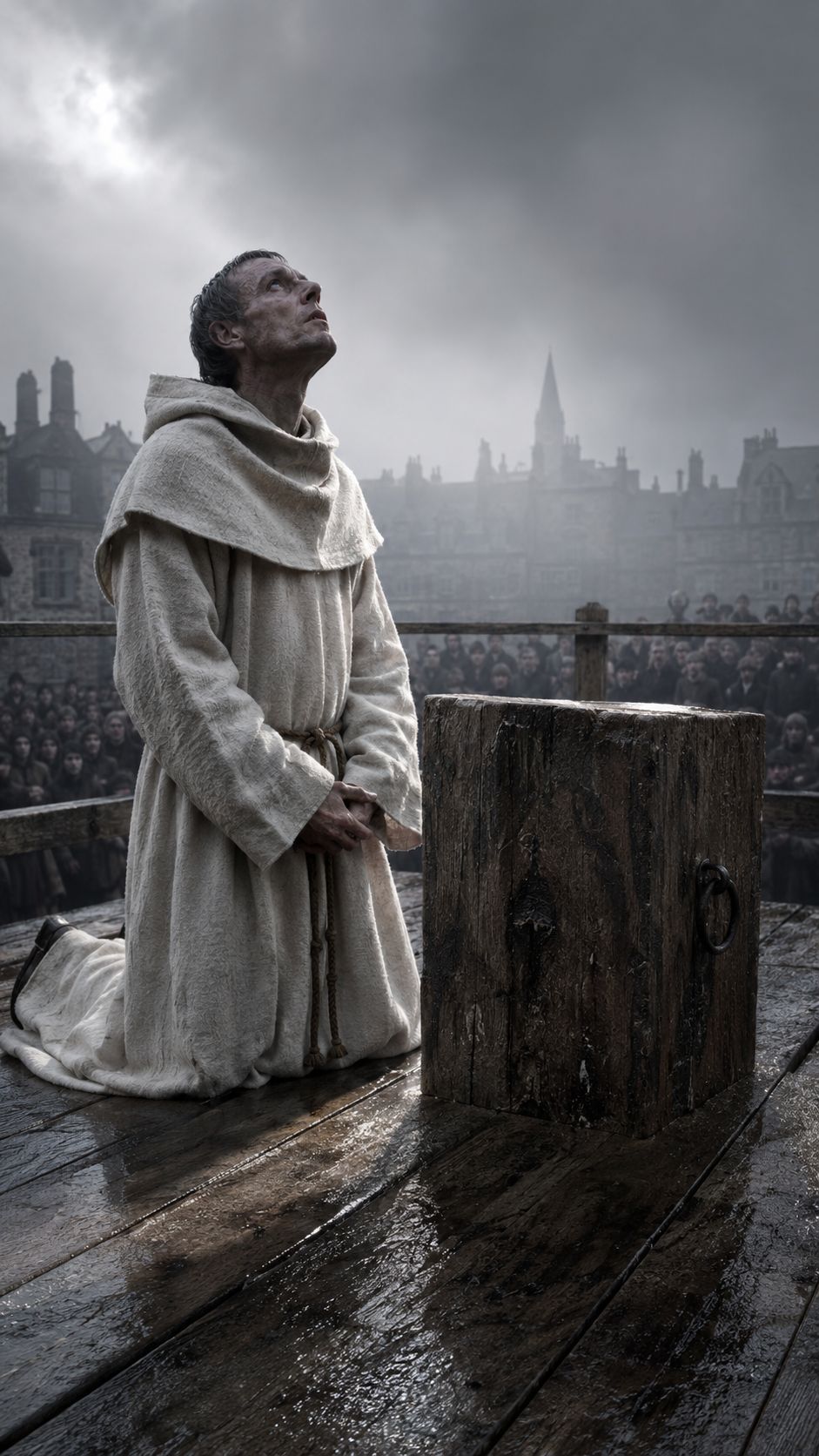 The Cheerful Walk to Tyburn
Watching from his cell, Thomas More saw five monks dragged to Tyburn cheerful as bridegrooms, knowing he would follow.
Tyburn, London, United Kingdom · 1535 · same site
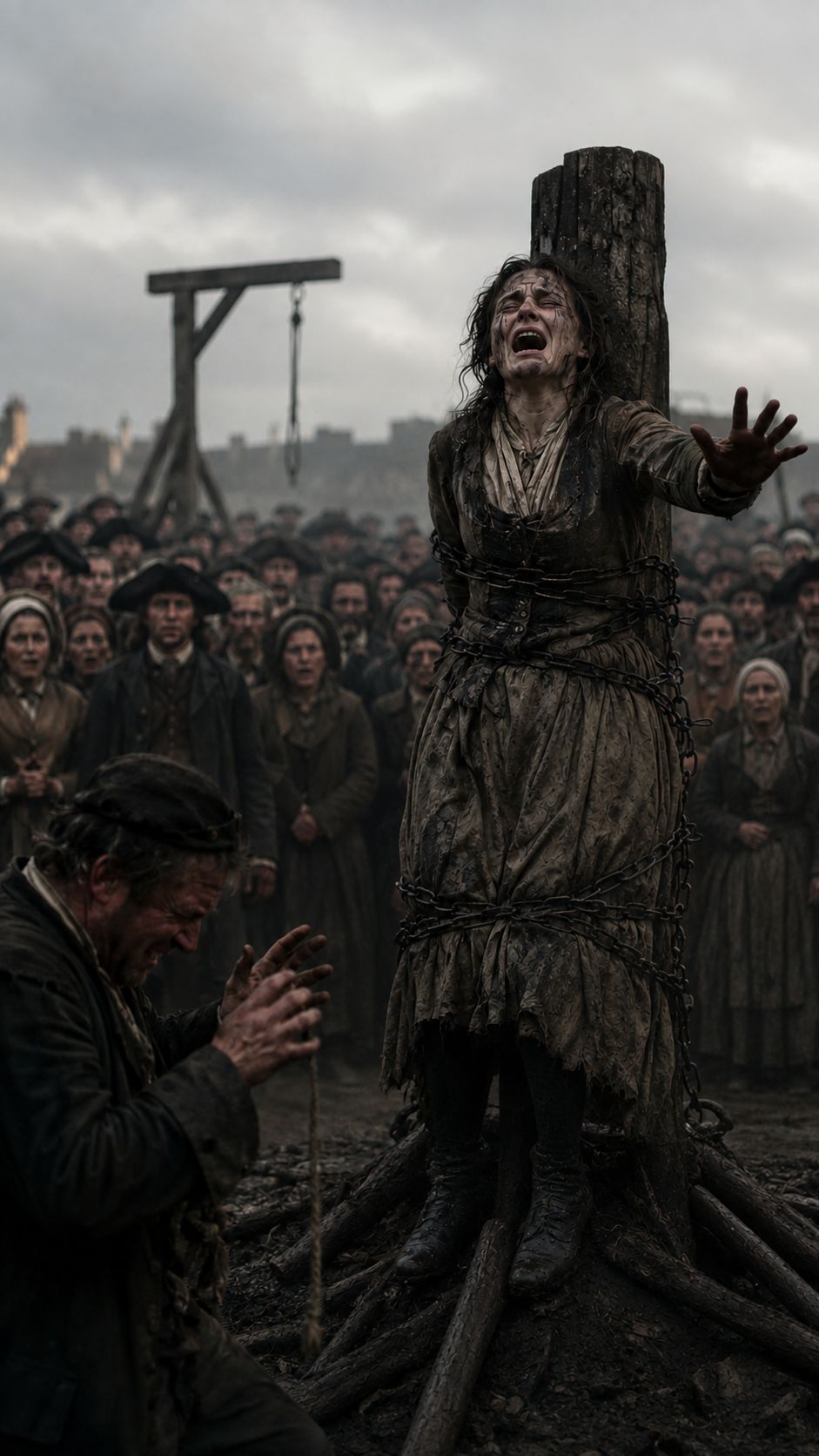 The Last Woman Burned Alive In England
Her murder became the stuff of ballads and nightmares — and her execution went so wrong it stands as a black mark on English justice.
London, United Kingdom · 1726 · same site
 The Queen's Physician on the Gallows
The only royal doctor ever executed in English history, his trial may have helped inspire Shakespeare's Shylock.
Tyburn, London, United Kingdom · 1594 · same site