Joachim Murat is one of the most dazzling and tragic figures of the entire Napoleonic age — the most famous cavalry commander in Europe, a man who rose from the humblest of origins to wear a crown, and who, when it all came crashing down, met a firing squad with a vanity and courage so complete that his final words became legend.
To understand the fall, you have to understand the astonishing rise. Murat was born in 1767 in a small village in southern France, the son of an innkeeper — about as far from royalty as it was possible to be. But he joined the army, and in the fire of the French Revolution and the wars that followed, he found his calling: he was, quite simply, one of the greatest and bravest cavalry leaders who ever lived. He attached himself to the rising star of Napoleon Bonaparte, and rose with him at breathtaking speed. He led thundering, massed cavalry charges that shattered enemy armies across Europe — at the head of thousands of horsemen, sabre drawn, always in the very front. And he did it all dressed like a peacock. Murat was famously, gloriously vain, designing his own flamboyant, theatrical uniforms dripping with gold lace, plumes, and fur, so that he was instantly recognisable on any battlefield. He became a Marshal of the Empire, and then Napoleon did something extraordinary: he made this innkeeper’s son a king. In 1808, Joachim Murat became His Majesty the King of Naples. He had married Napoleon’s sister, Caroline Bonaparte, and now he ruled a kingdom.
But it could not last. As Napoleon’s empire began to crumble, Murat was caught in an impossible position between loyalty to his brother-in-law the Emperor and the desperate need to save his own throne. He wavered, switched sides, and gambled — and lost. After Napoleon’s final defeat at Waterloo in 1815, the great powers of Europe decided to strip Murat of his kingdom and hand Naples back to its old Bourbon royal family. Murat would not accept it. In a final, reckless act of bravado entirely in keeping with his character, he decided to win his kingdom back by force — landing in southern Italy with only a tiny handful of followers, perhaps a couple of dozen men, gambling that the people would rise up and flock to their old king.
The Horror
They did not. On the 8th of October 1815, Murat and his pitiful little force landed at the small port town of Pizzo, in the region of Calabria, on the toe of Italy. He strode into the town square expecting cheering crowds. Instead, he was met by a hostile mob and Bourbon loyalists. There was a scuffle, his men were overwhelmed, and Joachim Murat — Marshal of France, former King of Naples, brother-in-law of Napoleon himself — was seized by armed townsfolk and thrown into a cell in the local fortress, the castle that would forever after bear his name: the Castello di Pizzo.
The end came with brutal speed. The new Bourbon King of Naples, Ferdinand, wanted no drama and no delay. Murat was hauled before a hastily convened military court, tried for treason, and condemned to death — and the orders from Naples were chillingly specific: there were to be just fifteen minutes between the sentence and the execution. In his last hours in his cold stone cell, Murat did what a man of his character would do. He requested a bath and made himself presentable. And he sat down to write a final, heartbreaking farewell letter to his wife Caroline and their four children: “Dear Caroline, the fatal hour has come… I die innocent. I embrace you all.”
On the 13th of October 1815, he was led out into the narrow courtyard of the castle to face the firing squad. And here Murat gave the performance of his life — or rather, of his death. He refused the offer of a chair to sit on. He refused the blindfold, wanting to look his executioners in the eye. He is said to have taken out a cameo portrait engraved with the head of his beloved wife Caroline, and kissed it. And then, standing tall before the levelled muskets, this vain and fearless man gave the soldiers his final command — worrying, even now, about how he would look in death. According to the account passed down from his wife, he told them: “Soldiers! Do your duty. Aim at the heart, but spare the face.” And then, giving the order himself: “Fire!” The volley cut him down.
The Modern Relic
The story did not end cleanly even after his death. He was placed in a plain fir coffin, and — in a final, almost farcical indignity for a former king — the accounts say that on the way to the church the coffin was dropped and broke open, and had to be hastily tied back together with cord before his body was placed, without ceremony, into a common grave in the crypt of the Church of Saint George in Pizzo. The exact location of his remains became uncertain, and to this day there have been efforts to identify and DNA-test bones thought to be his — the king who died so gloriously, lost in an unmarked grave.
The relic is the place he died, and it is remarkably well preserved and open to visitors. The Castello di Pizzo — now known as the Castello Murat — still stands on its rocky spur overlooking the blue Tyrrhenian Sea in Calabria. You can walk into the very cell where Murat spent his final hours writing to his wife, its bare stone walls unchanged. You can stand in the courtyard where he faced the muskets. The castle is now a museum dedicated to his memory, with reconstructions of his trial and last moments, and it draws visitors from across the world to the spot where a king met his end. His grander memorials are in Paris — a cenotaph in the great Père Lachaise Cemetery, and his name inscribed on the Arc de Triomphe among the heroes of France. But the true relic of Joachim Murat is that little castle by the sea, where the innkeeper’s son who became a king proved, in the words of the epitaph written by his oldest friend, that whatever else he was — vain, reckless, brilliant, doomed — “he knew how to die.”
Nearby on the Dark Atlas
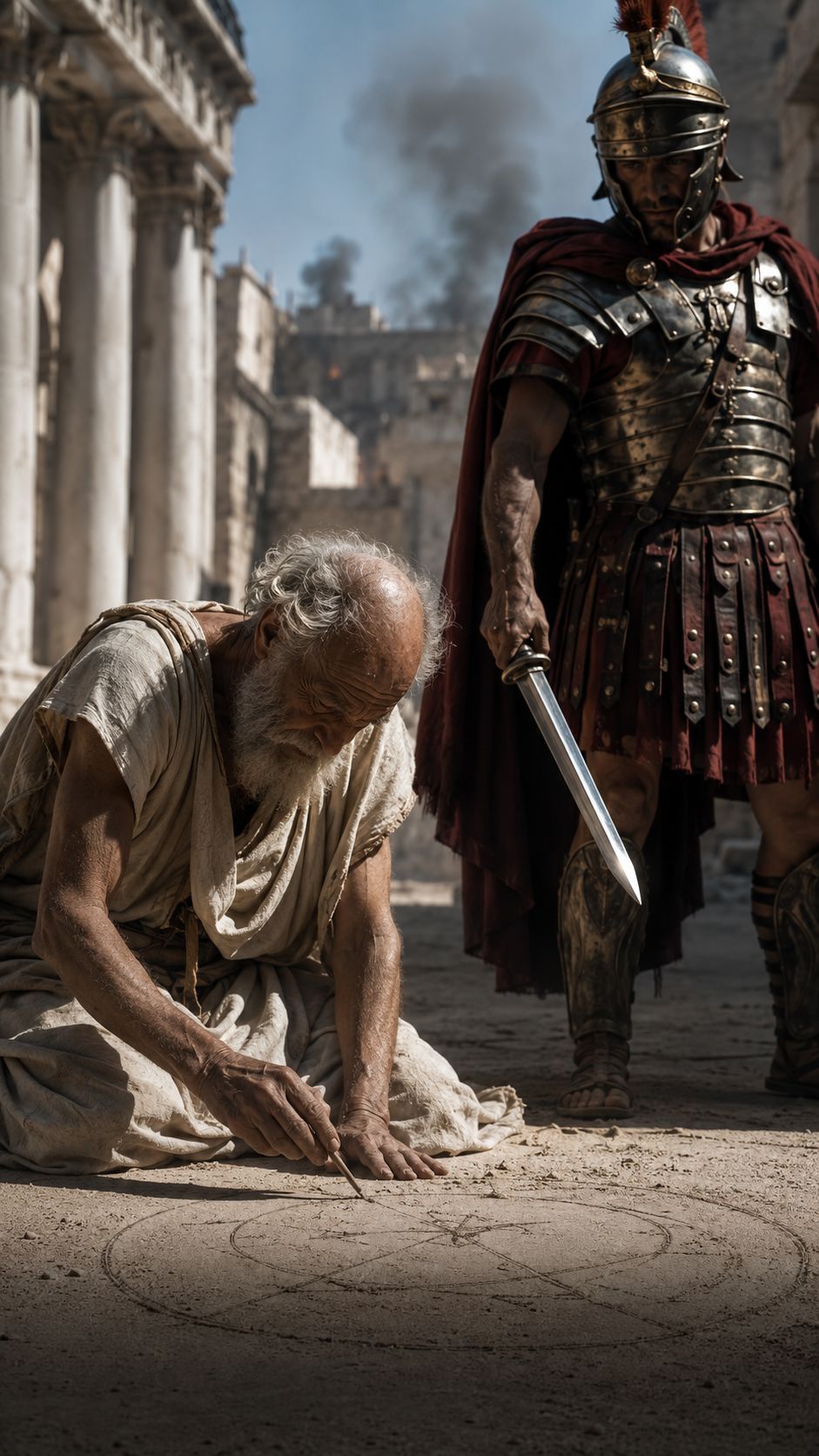 Killed Over A Drawing In The Sand
Rome's soldiers finally broke into Syracuse, and its greatest mind died mid-calculation, refusing to abandon his diagram.
Syracuse, Italy · 212 BC · 200 km away
- The Sleeping Beauty Who Never Decayed
A grieving father had his two-year-old daughter embalmed with a secret formula — a century later she still looks asleep.
Palermo, Italy · 1920 · 254 km away
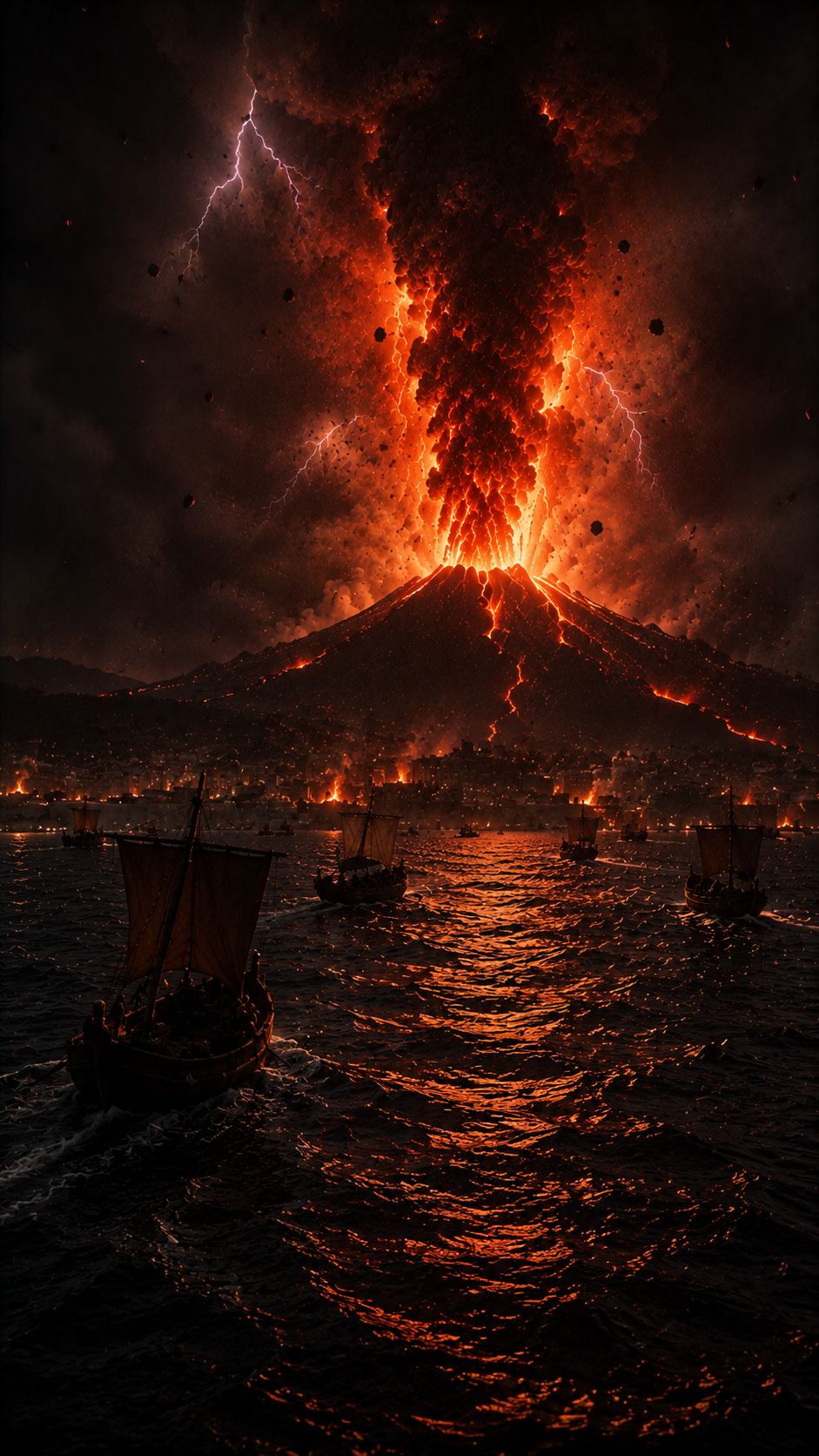 The Naturalist Who Sailed Toward Vesuvius
As Vesuvius erupted, the Roman fleet commander sailed straight toward the disaster to study it, and it killed him for his curiosity.
Stabiae, Italy · 79 · 262 km away
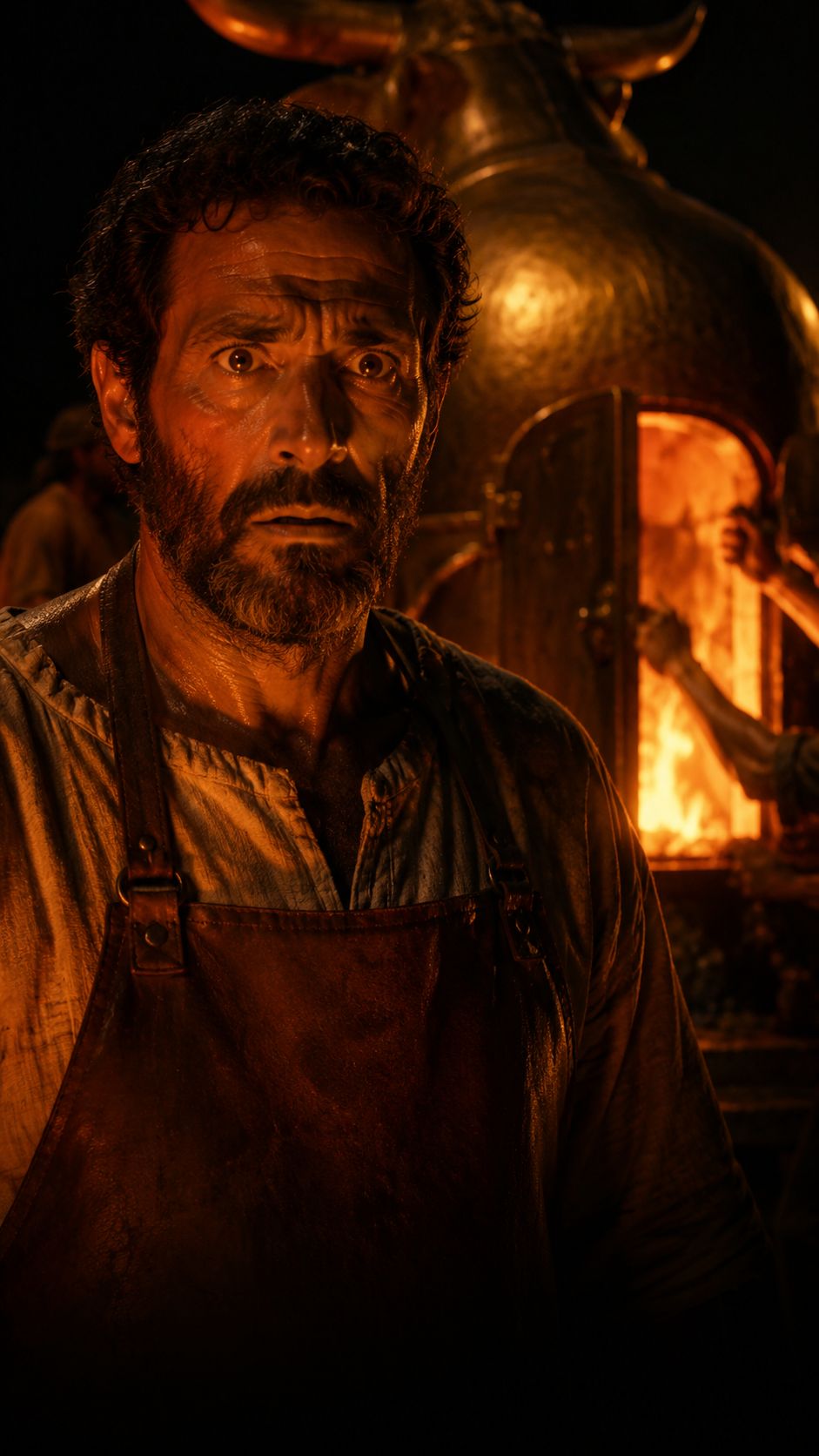 The Bronze Bull Built To Turn Screams Into Song
An inventor designed a bronze bull to roast men alive and pipe their screams out as music — then became its first victim.
Akragas (Agrigento), Italy · 550 BC · 277 km away