
Cuauhtémoc was the last emperor of the Aztecs — and his story is one of the most powerful tales of defiance in the history of the Americas: a young ruler who watched his world destroyed, endured torture without breaking, and met a shameful death with unbreakable dignity.
When the Spanish conquistador Hernán Cortés arrived in Mexico in 1519, the mighty Aztec Empire, ruled from the great island city of Tenochtitlán, was at its height. But within two years, it was gone. The previous emperor, Moctezuma, had been taken captive and died. His successor died of smallpox — the European disease that was scything through a people with no immunity to it. And so, in 1520, the crown passed to Cuauhtémoc, a young warrior in his mid-twenties, whose name means “one who descends like an eagle.” He inherited an empire in its death throes.
The Horror
Cuauhtémoc did not surrender it easily. He led the Aztec resistance in a desperate, heroic defence of Tenochtitlán against Cortés and his army of Spaniards and their many Indigenous allies. For four brutal months in 1521, the Aztecs held out as the Spanish besieged their island capital, cutting off food and water. The city starved. Disease ravaged the defenders. Cuauhtémoc walked the streets among his dying people, offering what hopeless comfort he could as they perished in their doorways. Finally, with his capital reduced to rubble and most of its people dead, Cuauhtémoc surrendered — reportedly asking only that his starving people be allowed to leave the ruined city, and that Cortés take his life. The great city of Tenochtitlán, and the Aztec Empire, had fallen.
At first, Cortés treated the captured emperor with a show of respect. But the conquistadors had come for one thing above all: gold. They were convinced that the Aztecs had a vast hoard of treasure hidden away, and that Cuauhtémoc knew where it was. When the amount of gold they actually found proved bitterly disappointing — much of the fabled “Aztec gold” was a myth, as the Aztecs prized featherwork and jade over bullion — the Spanish became convinced the emperor was concealing the rest.
So they tortured him to make him talk. In one of the most infamous episodes of the entire conquest, Cuauhtémoc and one of his loyal fellow lords — Tetlepanquetzal, the ruler of Tlacopan — were subjected to a horrific ordeal: their feet were coated with oil, and then held over a fire, burning them in an effort to force the emperor to reveal the location of the hidden gold.
Cuauhtémoc endured it in silence. He would not break. He would not tell them what they wanted — whether because there was no great treasure to reveal, or because he would rather die than hand it over.
And it was during this agony that Cuauhtémoc spoke the words that made him immortal. As the flames burned his feet, the lord being tortured beside him, Tetlepanquetzal, wracked with unbearable pain, looked to his emperor — perhaps begging for permission to give in, to tell the Spanish what they wanted, to make it stop. And Cuauhtémoc, enduring the exact same torture, turned to him and, with cold, contemptuous dignity, silenced him with a single line: “Do you think that I am on a bed of roses? Do you think that I am enjoying myself in my bath?”
In other words: I am suffering exactly as you are — and I am not complaining. Endure it. Be silent. Do not shame us before these men. It was a rebuke that shamed the suffering lord back into stoic silence, and it has echoed through five centuries as the ultimate expression of defiant courage in the face of torment. The emperor, his own feet burning, would not give his tormentors the satisfaction of a single cry.
The torture, in the end, yielded almost nothing. There was no great hidden hoard.
THE MODERN RELIC Cuauhtémoc survived the torture, crippled but unbroken, and was kept as Cortés’s prisoner. But a captive emperor, even a broken one, was a dangerous thing — a living symbol around whom his conquered people might one day rally. And so, in 1524, when Cortés set out on a gruelling expedition south into the jungles of Honduras, he took Cuauhtémoc with him, unwilling to leave him behind in Mexico where he might inspire a rebellion.
The expedition was a nightmare of jungle, hunger, and hardship. And somewhere along the way, at a Maya town called Itzamkanac, Cortés claimed to have uncovered a plot — that Cuauhtémoc and the other captive lords were conspiring to kill the Spanish and rise up. The “evidence” came from a dubious informant, and many, even among the Spanish, doubted it was true. But it was enough. On or around the 28th of February 1525, Cortés had Cuauhtémoc hanged from a great ceiba tree, alongside his fellow lords. The last emperor of the Aztecs, who had defended his people to the bitter end and endured torture without breaking, was executed on a trumped-up charge in a distant jungle, far from his ruined home. He was only around twenty-eight years old. Even the Spanish chronicler Bernal Díaz, who was there, called the execution unjust, and wrote that it weighed on Cortés’s conscience.
But they could not erase him. Cuauhtémoc became something far greater in death than a defeated king. Over the centuries, he was transformed into a national hero and an enduring symbol of Mexico itself — of Indigenous courage, of resistance against tyranny, of dignity in the face of conquest. His famous words on the bed of roses became legendary, immortalised in the 19th and 20th centuries in poetry and in monumental paintings like Leandro Izaguirre’s The Torture of Cuauhtémoc.
The relics endure in the heart of modern Mexico. A magnificent monument to Cuauhtémoc stands on the grand Paseo de la Reforma, one of the great avenues of Mexico City — the very city built by the Spanish on the ruins of his Tenochtitlán — honouring the last Aztec emperor as a founding hero of the nation. And in the town of Ixcateopan, bones believed by many to be Cuauhtémoc’s own were enshrined in 1949, venerated as the remains of the fallen emperor. His image appears on statues, streets, and the names of countless Mexican children to this day. The young eagle who descended into the fire and would not cry out — the emperor who lost everything but his dignity — became, in the end, one of the most beloved and defiant figures in all the history of the Americas.
Nearby on the Dark Atlas
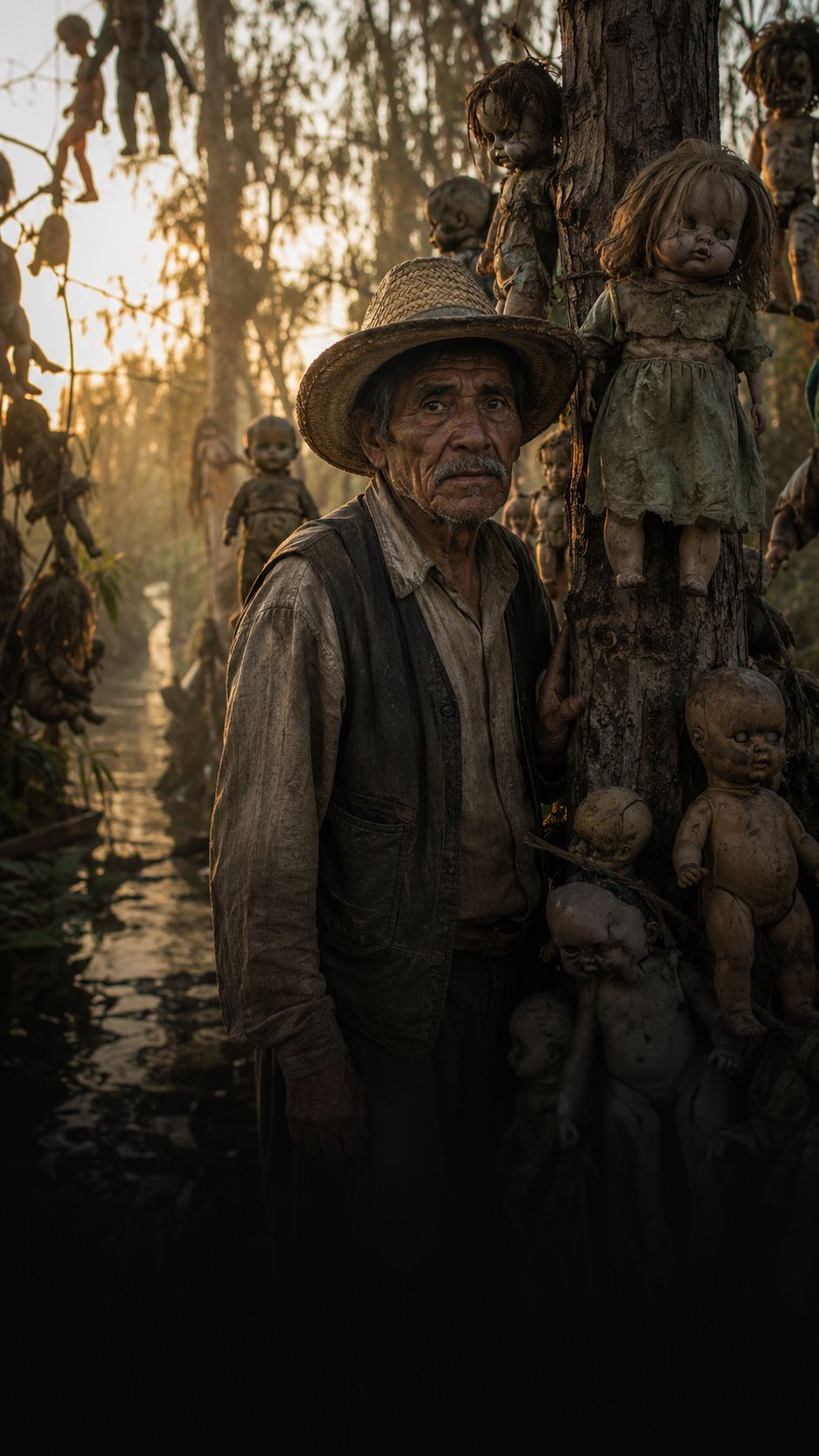 The Island Hung With Thousands Of Dolls
One lonely man's fifty years of grief for a drowned child slowly turned a canal island into a shrine of nightmares.
Xochimilco, Mexico City, Mexico · 2001 · 812 km away
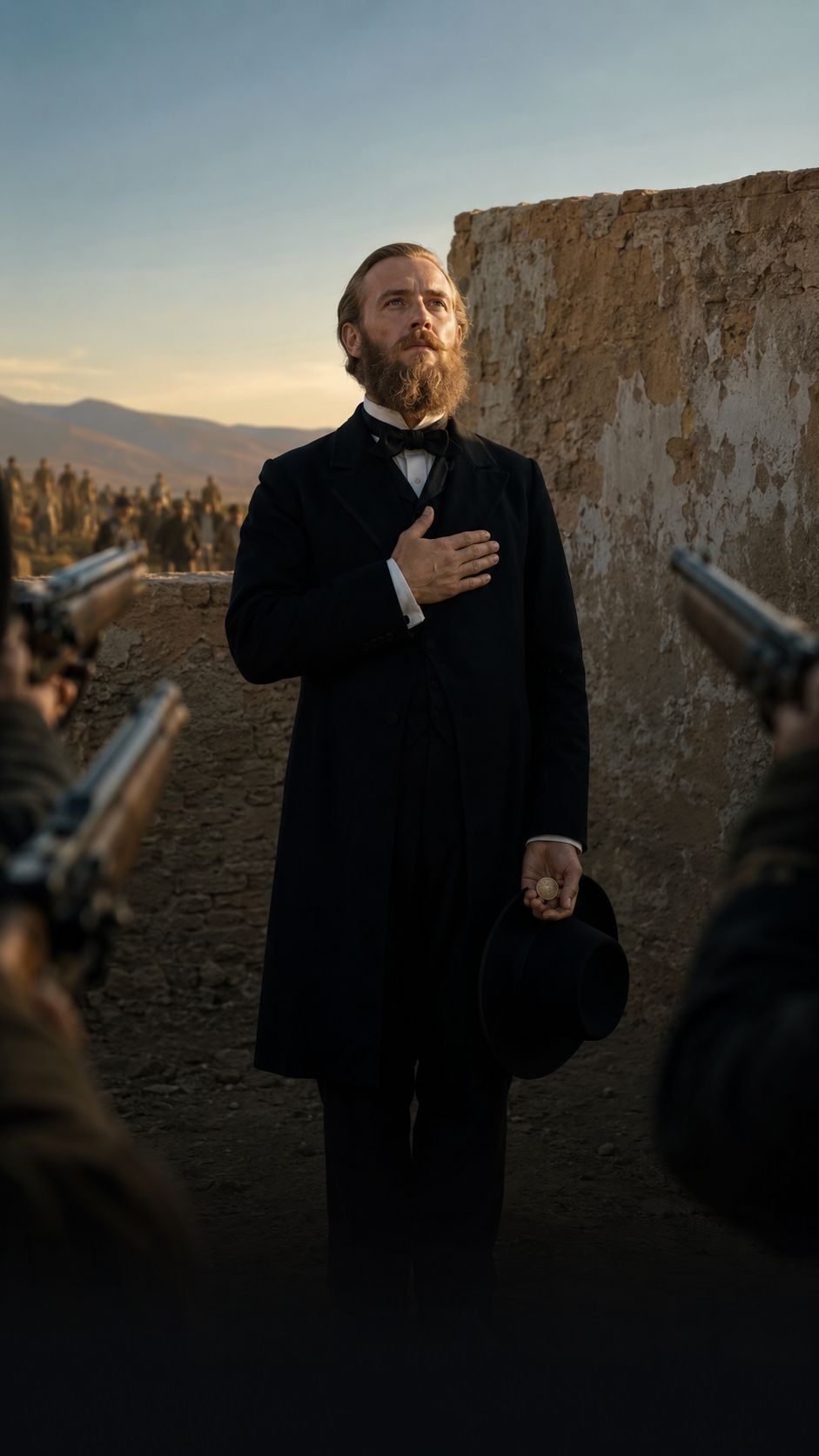 The Emperor Who Faced A Firing Squad With Dignity
An Austrian archduke lured onto Mexico's throne met a firing squad with a courage that stunned the world.
Querétaro, Mexico · 1867 · 975 km away
 The Socialite Who Hid A House Of Horrors
A glamorous New Orleans socialite's mansion concealed one of the antebellum South's most horrifying secrets.
New Orleans, United States · 1834 · 1339 km away
 The Last Two Pirates Standing Were Women
When pirate hunters boarded the ship, the drunken crew hid below — only two fighters remained on deck, both women.
Negril, Jamaica · 1720 · 1393 km away