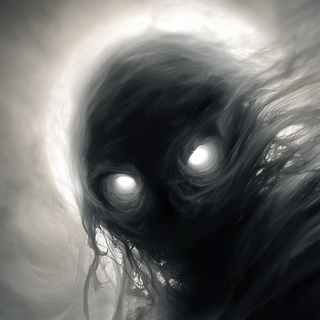
Everyone has seen Disney’s Bambi — the wide-eyed fawn, Thumper the rabbit, Flower the skunk, the gentle music. Almost nobody has read the book it came from. Almost nobody knows who wrote it, why he wrote it, or what the book cost him in the end.
The author was Felix Salten, born Siegmund Salzmann on 6th September 1869 to a poor Jewish family in Pest, Hungary, who carried him to Vienna when he was only weeks old. He grew up self-taught, started as a journalist at seventeen, and by his forties was one of the most respected men of letters in Austria: a member of the glittering “Young Vienna” literary scene, a friend of the playwright Arthur Schnitzler, president of the Austrian PEN Club, and the author of nearly forty novels. In 1922, with the horror of the First World War still raw, he began serialising a new story in a Viennese newspaper: the life of a roe deer, from birth to old age. He published it as a book the following year under the title Bambi, Eine Lebensgeschichte aus dem Walde — “Bambi, a Life Story from the Woods.” He did not write it for children. He wrote it for adults. It shows.
The Horror
The real Bambi is nothing like the film. Salten’s forest is not a cosy home. It is a place of constant, existential fear, where death can fall from a clear sky at any moment, and everyone you love can be gone before you understand what happened. Deer fight brutal, bloody duels for mates. Animals betray and abandon one another. And in the novel’s most devastating scene, described by one critic as its linchpin, Bambi’s mother is shot dead by a hunter right in front of him. The book does not wail or weep. The old English translation puts it with a chill that no children’s film could survive: “Bambi never saw his mother again.” Another young deer, Gobo, disappears, is presumed dead, then reappears tamed and trusting of humans, certain that man is a friend. The moment he wanders back toward a hunter, he is shot — believing, to the very end, that he would be protected. Scholars and critics have long read the novel as something far bigger than an animal story: an anti-hunting parable, one of the first environmental novels, and — because Salten was a Jew writing in an Austria where antisemitism was rising like floodwater — an allegory of persecution itself. A world in which an entire population lives under the constant, arbitrary threat of violence from a more powerful predator, one that can strike at any time, for reasons its victims can neither predict nor control.
The Nazis read it exactly that way. In 1936, Nazi Germany officially banned Bambi and burned copies of it, stating outright that the book was “a political allegory on the treatment of Jews in Europe.” That was not a guess or a rumour. It was the regime’s own stated reason for destroying it. Salten’s other books were banned too. In 1938, Germany annexed Austria in the Anschluss, and Salten — one of the country’s most famous living writers — became a marked man simply for being Jewish. In March 1939 he fled Vienna for neutral Switzerland, losing his Austrian publisher, his citizenship, and eventually, in 1941, his German citizenship as well, revoked by the regime that had already burned his most famous book.
THE MODERN AFTERMATH: Salten lived out his final years in exile in Zurich, writing a sequel, Bambi’s Children, that had to be published in English in America before it could even appear in German. His wife died there in 1942. Family lore holds that Salten saw Disney’s cheerful, softened film version of his own dark novel when it screened in Zurich in 1945 — just months before his own death that October, at the age of 76. He is buried in Zurich’s Jewish cemetery, the Israelitischer Friedhof Unterer Friesenberg, and a fountain dedicated to his most famous creation, the Bambibrunnen, still stands in the city today. For decades, the sanitised Disney version buried the original novel’s darkness so completely that most readers assumed the “grim adult story” claims were exaggerated — until new, more faithful English translations, including a 2022 edition from Princeton University Press, finally restored the forest of fear. The forest a Jewish refugee had written, while Europe fell into exactly the nightmare he had already put on the page.
Nearby on the Dark Atlas
 The Composer Buried Without His Own Head
Eight days after his funeral, phrenology obsessives dug up a beloved composer and made off with his skull.
Vienna, Austria · 1809 · same site
 The Composer Whose Skull Was Stolen
A genius conceals his encroaching deafness for years, and even after death, souvenir hunters aren't done taking pieces of him.
Vienna, Austria · 1827 · same site
 The Doctor Who Discovered Handwashing Too Late
A Vienna doctor works out why women are dying of childbed fever in droves, and nobody in power wants to believe him.
Vienna, Austria · 1847 · same site
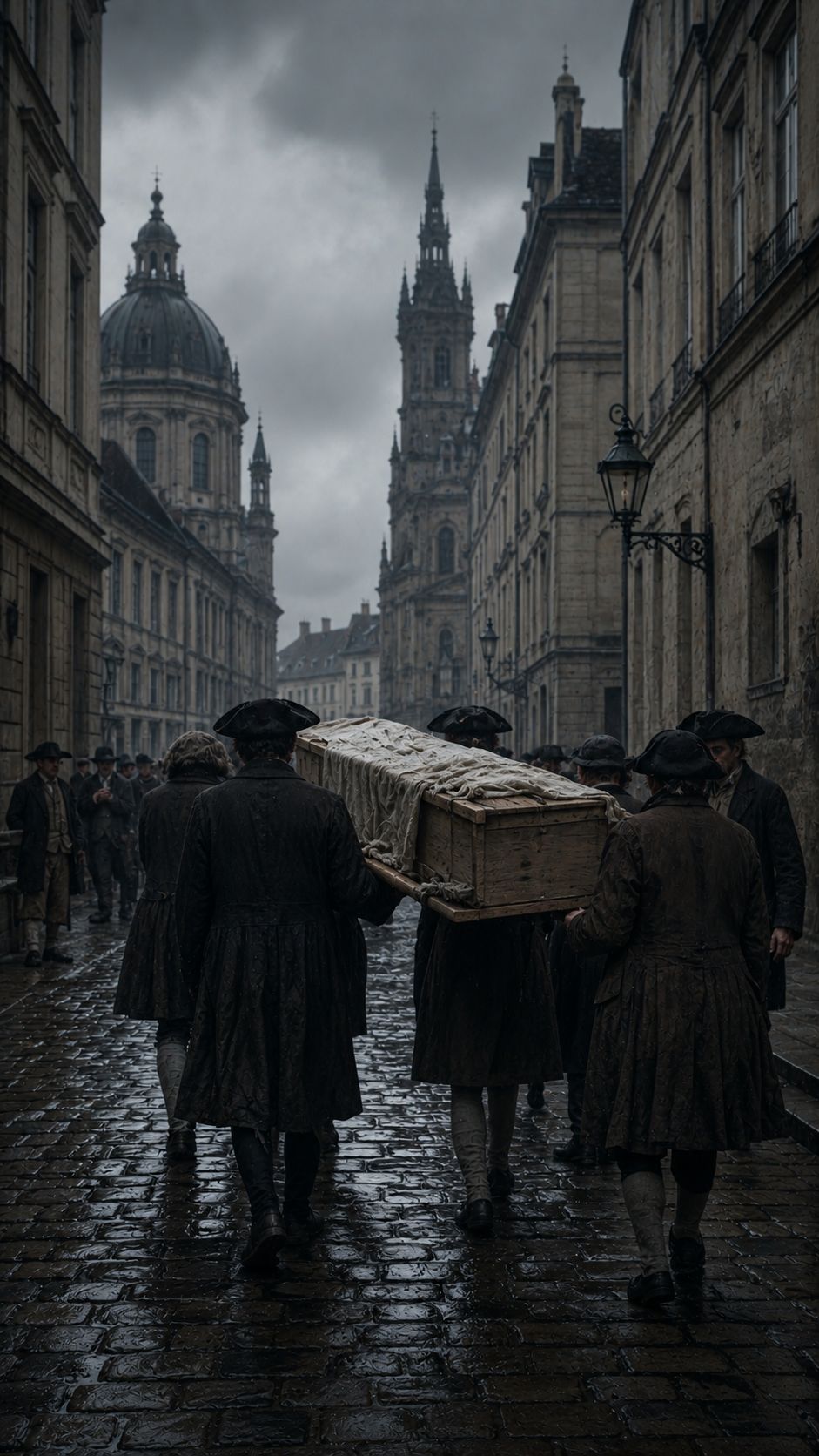 The Composer Buried In An Unmarked Grave
The man who wrote The Magic Flute and an unfinished Requiem was given the cheapest funeral money could buy.
St Marx Cemetery, Vienna, Austria · 1791 · 3.4 km away