
The story of Beatrice Cenci is one of the most tragic and haunting in the history of Rome — the tale of a young noblewoman driven to a desperate act by a monstrous father, and then executed by a Pope for it, while an entire city wept and begged for her to be spared. She became, and remains, a symbol of injustice: the innocent destroyed by the very powers that should have protected her.
Beatrice was born in 1577 into the Cenci family, one of the oldest and wealthiest noble houses of Rome. But wealth and rank were no protection from the man at the head of that family — her father, Count Francesco Cenci.
The Horror
Francesco Cenci was, by all accounts, a genuine monster. He was violent, cruel, and depraved — a man of enormous wealth and influence who used both to terrorise his own family and to escape justice for a long list of crimes. He was repeatedly arrested and even convicted of serious offences, including sexual crimes committed against others. But time and again, because of his noble status and his money, he was simply fined and set free. The law, in the Rome of that age, did not truly apply to a rich and powerful nobleman. And behind the walls of his palaces, Francesco Cenci was free to be a tyrant.
He brutally abused his wife and his children. And his cruelty fell hardest of all on his young daughter, Beatrice. According to the account that all of Rome came to believe, Francesco subjected Beatrice to horrific abuse — beating and imprisoning her, and, most monstrously of all, raping his own daughter. To keep his crimes hidden, he took Beatrice and his second wife, Lucrezia, away from Rome and locked them up in a remote, isolated fortress in the countryside, the castle of La Petrella, where he could brutalise them far from any prying eyes.
Beatrice was trapped. She tried, it’s said, to get word out, to appeal for help against her father’s abuse. But no help came. Who would move against the wealthy, well-connected Count Cenci on the word of his daughter? The girl was utterly alone, imprisoned with her abuser, with no hope of rescue from any authority on earth.
So Beatrice, along with her stepmother Lucrezia and her brother Giacomo, made a terrible decision: if the law would not free them from this man, they would free themselves. In 1598, they conspired to murder Francesco Cenci. With the help of two hired men, the count was killed as he slept — his body then thrown from a balcony to make it appear he had died in an accidental fall.
But the deception did not hold. Suspicions were quickly aroused; the “accident” didn’t add up, and one of the hired killers was captured and revealed the plot. When word reached Rome, Pope Clement VIII himself ordered the arrest of the entire Cenci family for murder.
And then came the trial that would break Rome’s heart. The story of Beatrice’s suffering came out — the abuse, the imprisonment, the rumours of her father’s unspeakable crimes against her. And the people of Rome rallied to her completely. They did not see a murderess. They saw a young, beautiful, gentle girl who had been tormented beyond endurance by a monstrous father the law had refused to stop, and who had finally, in desperation, freed herself. Public sympathy was overwhelming. The city was on Beatrice’s side.
But it made no difference. Under torture, the family confessed. And Pope Clement VIII refused to show mercy. He had, it’s said, resolved to make an example of them — perhaps genuinely fearing that pardoning the murder of a father would set a dangerous precedent, and, many bitterly suspected, perhaps because the vast Cenci fortune would be forfeited to the Church upon their conviction. Whatever his reasons, the Pope ordered the executions to go ahead. Beatrice, her stepmother Lucrezia, and her brother Giacomo were all condemned to death. Only the youngest brother, twelve-year-old Bernardo, was spared the blade — but he was cruelly sentenced to watch his entire family be executed before being sent to a life as a galley slave.
THE MODERN RELIC At dawn on the 11th of September 1599, the Cenci family was brought to the scaffold erected in the piazza before the Castel Sant’Angelo, beside the bridge over the River Tiber. So many Romans had gathered to witness the execution — and to grieve — that the bridge was dangerously packed, and it’s said some spectators were pushed into the Tiber and drowned in the crush.
The family died one by one. Giacomo was brutally executed. Lucrezia, the stepmother, was beheaded. And then it was Beatrice’s turn. The twenty-two-year-old approached the block with extraordinary dignity and calm, and her youth and beauty and composure moved the enormous crowd to profound compassion and sorrow. One witness recorded the feeling of the whole city, writing that the death of this young girl, “who was of very beautiful presence and of most beautiful life, has moved all Rome to compassion.” She was beheaded, and Rome mourned her as a martyr.
And in the aftermath, the suspicion that had darkened the whole affair was confirmed in the eyes of the people: Pope Clement VIII confiscated the entire Cenci fortune, and much of that immense wealth found its way into the hands of the Pope’s own family. To the Romans, it looked exactly like what many had feared — a young woman had been sacrificed, and a great fortune had changed hands.
The relics of Beatrice Cenci endure, and they are extraordinary. She was buried in the church of San Pietro in Montorio in Rome — though, tragically, her grave was later desecrated by French troops during the occupation of Rome, and her remains were scattered and lost. But her image survives: a hauntingly beautiful portrait of a young woman glancing back over her shoulder, long attributed to the painter Guido Reni and said to depict Beatrice herself, hangs today in the Palazzo Barberini in Rome. For centuries it has drawn visitors as a kind of pilgrimage, and it moved some of the greatest writers in history — Shelley, Stendhal, Dickens, Hawthorne — to tell her story. And then there is the legend that refuses to let her rest: Roman tradition holds that every year, on the night before the anniversary of her death, the ghost of Beatrice Cenci returns to the Ponte Sant’Angelo, the bridge where she died — walking in the darkness, carrying her own severed head in her hands, the young woman Rome could not save, still wandering the place where a Pope refused to show her mercy.
Nearby on the Dark Atlas
- The Cardinal's Poisoned Bandage Plot
A furious cardinal bribed the Pope's own surgeon to dress his wounds in slow-acting poison.
Castel Sant'Angelo, Rome, Italy · 1517 · same site
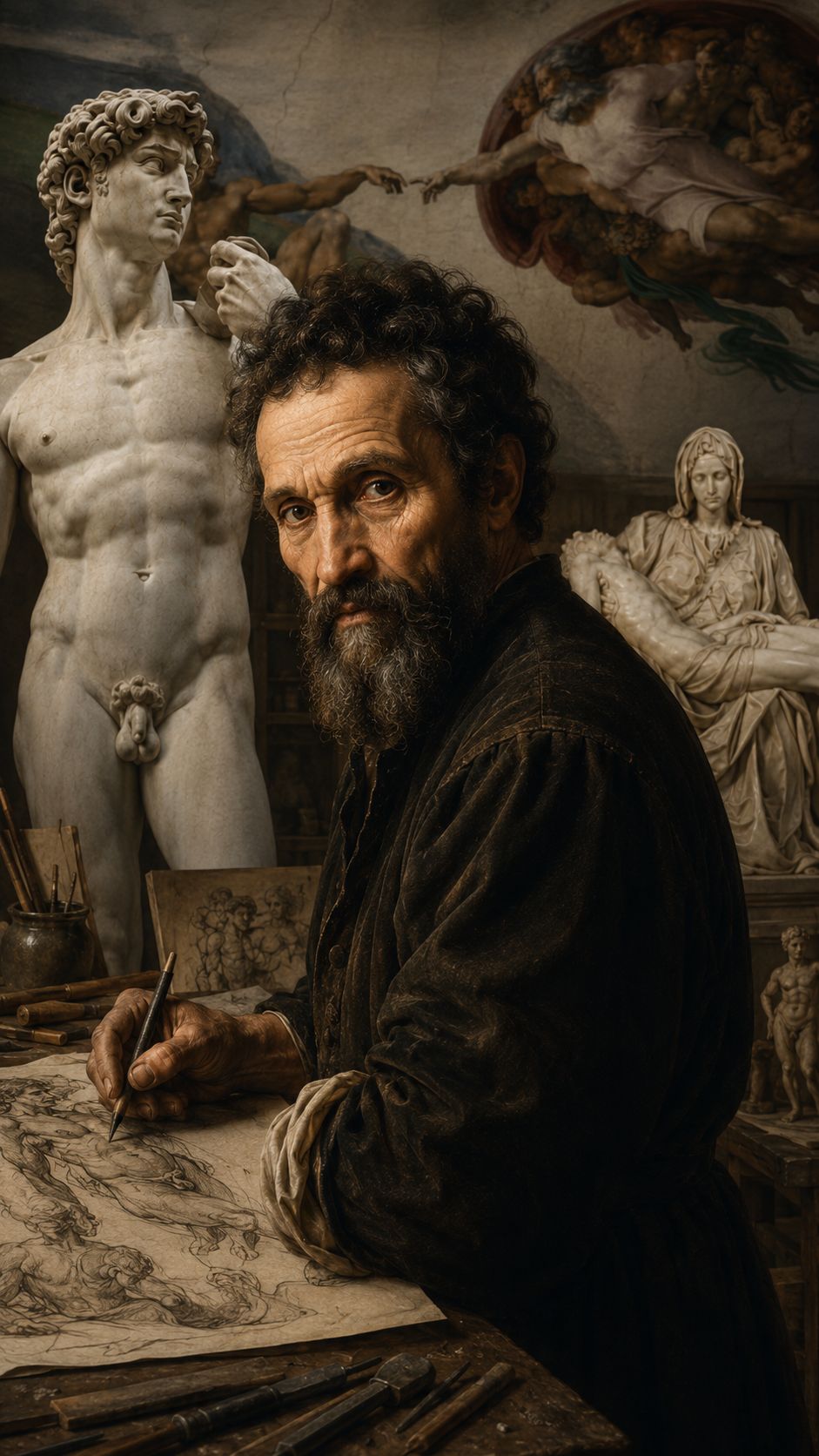 Michelangelo's Hidden Face In The Sistine Chapel
Hidden in his most famous fresco, the master painted his own tormented face on a flayed, empty human skin.
Sistine Chapel, Vatican City, Vatican City · 1541 · same site
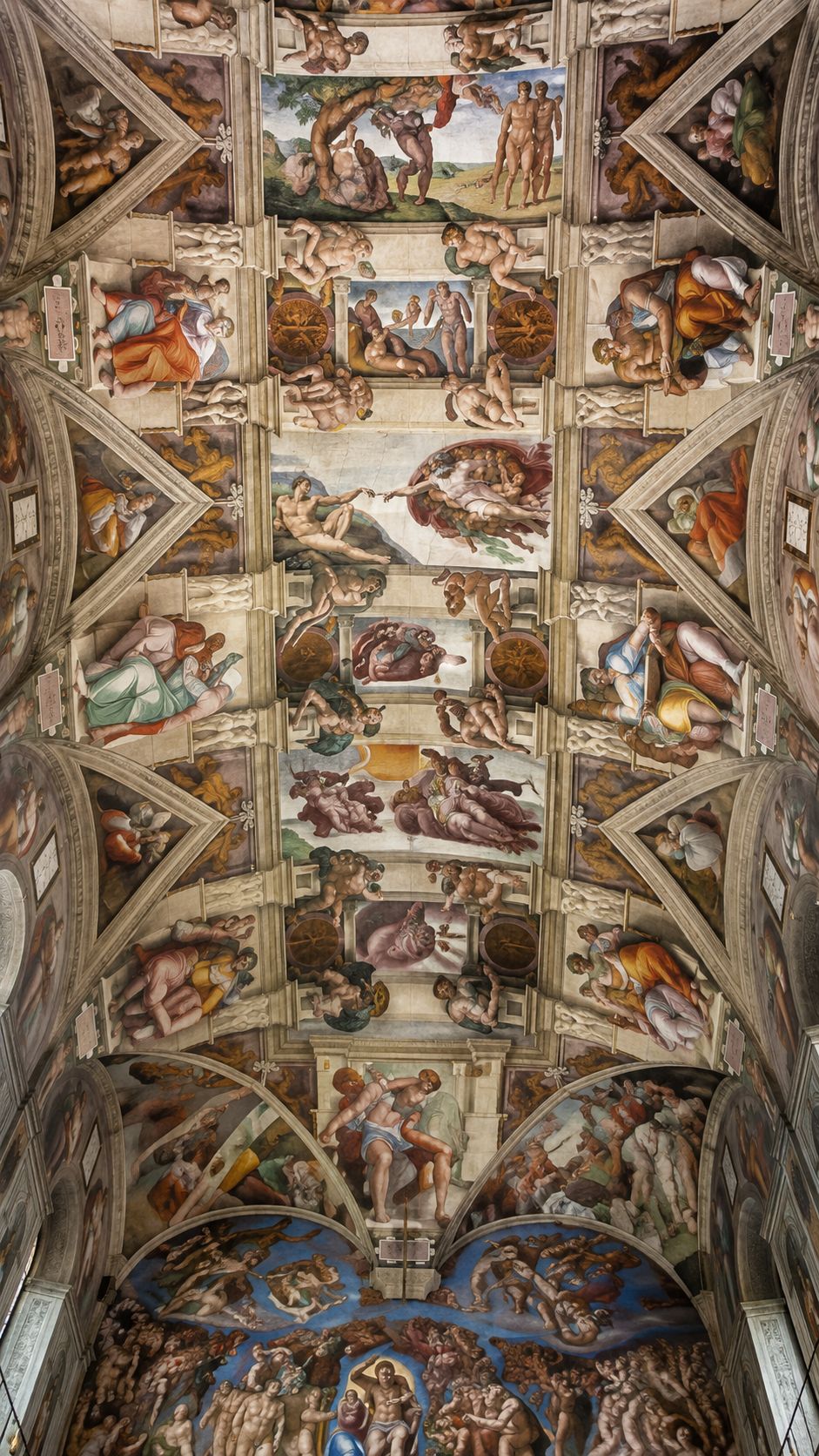 The Sculptor Forced To Paint A Masterpiece
A sculptor who insists painting isn't his profession is ordered by a warrior pope to cover an entire chapel ceiling instead.
Vatican City, Rome, Italy · 1508 · same site
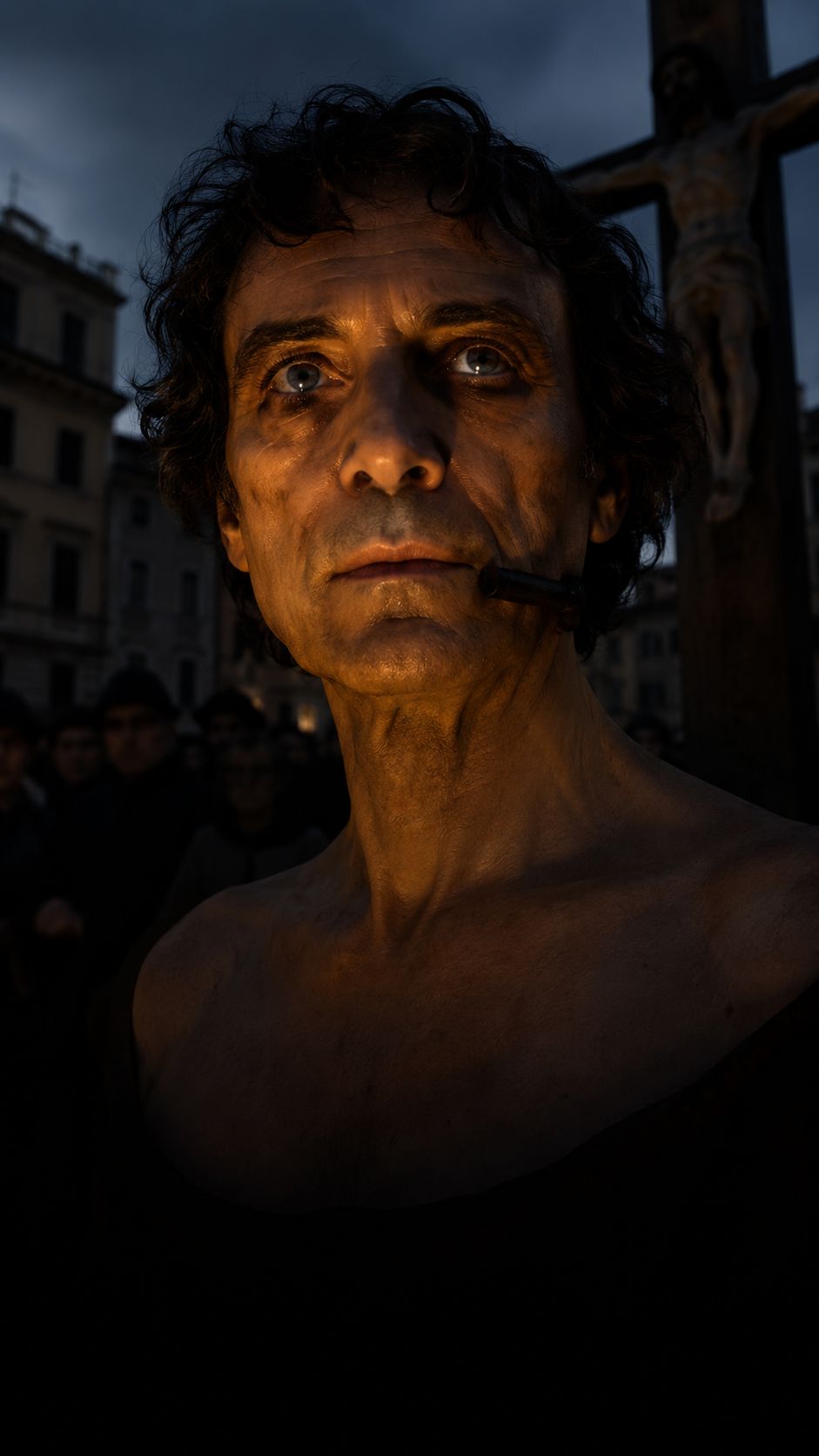 The Heretic Burned For What He Thought
After eight years of imprisonment, he refused to recant his vision of an infinite universe, and paid with his life.
Campo de' Fiori, Rome, Italy · 1600 · same site