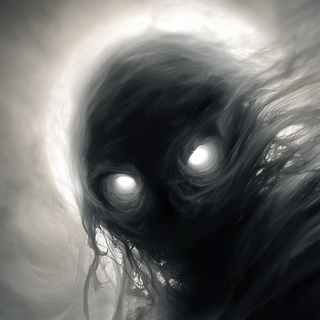
Some men are killed for what they did. Giordano Bruno was killed for what he thought — and for refusing, through eight years of imprisonment and interrogation, to stop thinking it. He is one of history’s great martyrs to the freedom of the mind, and the manner of his death was so deliberately cruel that it tells you exactly how frightened his killers were of him.
Bruno was born near Naples in 1548 and became a Dominican friar — but he was never going to fit inside the walls of a monastery. He had one of the most restless, expansive minds of his age. At a time when the Church taught that the Earth sat fixed at the centre of a small, closed universe, Bruno looked up and argued something breathtaking: that the universe was infinite, that it had no centre at all, that the Sun was merely one star among countless others, and that those other suns might have their own worlds turning around them, perhaps carrying their own life. He questioned the divinity of Christ, the Trinity, the Virgin Birth. He would not stop writing, and he would not stop talking, and in the sixteenth century that was a fatal combination.
He was arrested by the Venetian Inquisition in 1592, handed over to Rome, and held for around eight years while the Church tried, again and again, to make him recant. He was offered the way out that saved many others: admit your errors, renounce your books, and live. He would not fully do it. In 1600 the Holy Office declared him an impenitent, obstinate and pertinacious heretic. According to the accounts, when his sentence was read to him, Bruno looked at the men condemning him and said: “Perhaps you pronounce this sentence against me with greater fear than I receive it.”
The Horror
On the morning of 17 February 1600 he was taken to the Campo de’ Fiori — the “field of flowers” — a busy market square in the heart of Rome. According to the eyewitness account of Gaspar Schopp, a scholar who was there, Bruno was stripped naked and bound to a stake. But first they did something that reveals their terror of him: they clamped his tongue. Schopp records that his tongue was “imprisoned because of his wicked words” — restrained, by that account, with a vice of wood — so that as the flames rose he could not preach his heresies to the watching crowd, could not cry out, could not turn his own execution into a final sermon. In his last moments a crucifix was held up before his face. Schopp says Bruno turned his head away from it. Then they lit the fire beneath him, and burned him alive in front of the market. No grave was left for him.
For nearly three centuries, the Church’s victory looked complete. The square went back to being a market. The man who said the stars were suns was gone without a grave, his books on the Index of forbidden works, his name a warning.
The Modern Relic
And then Rome changed hands. After Italian unification and the end of papal rule over the city, a new, secular Italy went looking for heroes of free thought — and it found Bruno. In 1889, on the exact spot where he had been burned, the city of Rome erected a great brooding bronze statue of him, hooded and grim, sculpted by Ettore Ferrari. And they set it facing deliberately, pointedly, toward the Vatican — a dead heretic staring down the institution that killed him, forever. The statue is still there today, and the market still runs around its feet most mornings. You can go and stand in the Campo de’ Fiori, buy flowers and fruit in the sunshine, and look up at the shrouded bronze figure of a man who was gagged and burned alive on that very ground for saying that the universe was bigger than the Church could imagine — and who, four hundred years later, turned out to be right about the stars.
Nearby on the Dark Atlas
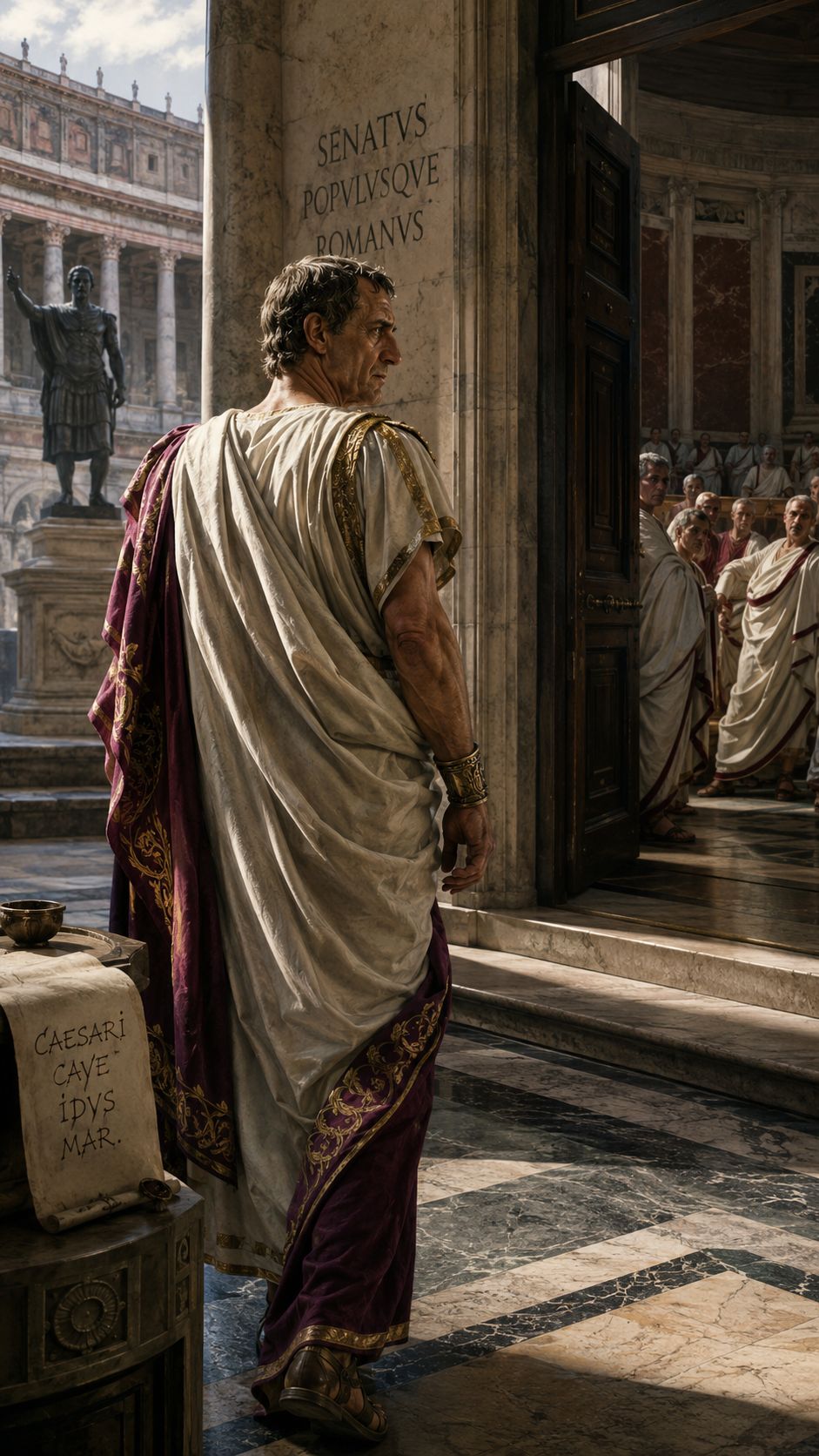 The Assassination Of Rome's Most Powerful Man
Warned by his wife's nightmare and a soothsayer's omen, Caesar walks into the Senate anyway, straight toward twenty-three daggers.
Largo di Torre Argentina, Rome, Italy · 44 BC · same site
- The Cardinal's Poisoned Bandage Plot
A furious cardinal bribed the Pope's own surgeon to dress his wounds in slow-acting poison.
Castel Sant'Angelo, Rome, Italy · 1517 · same site
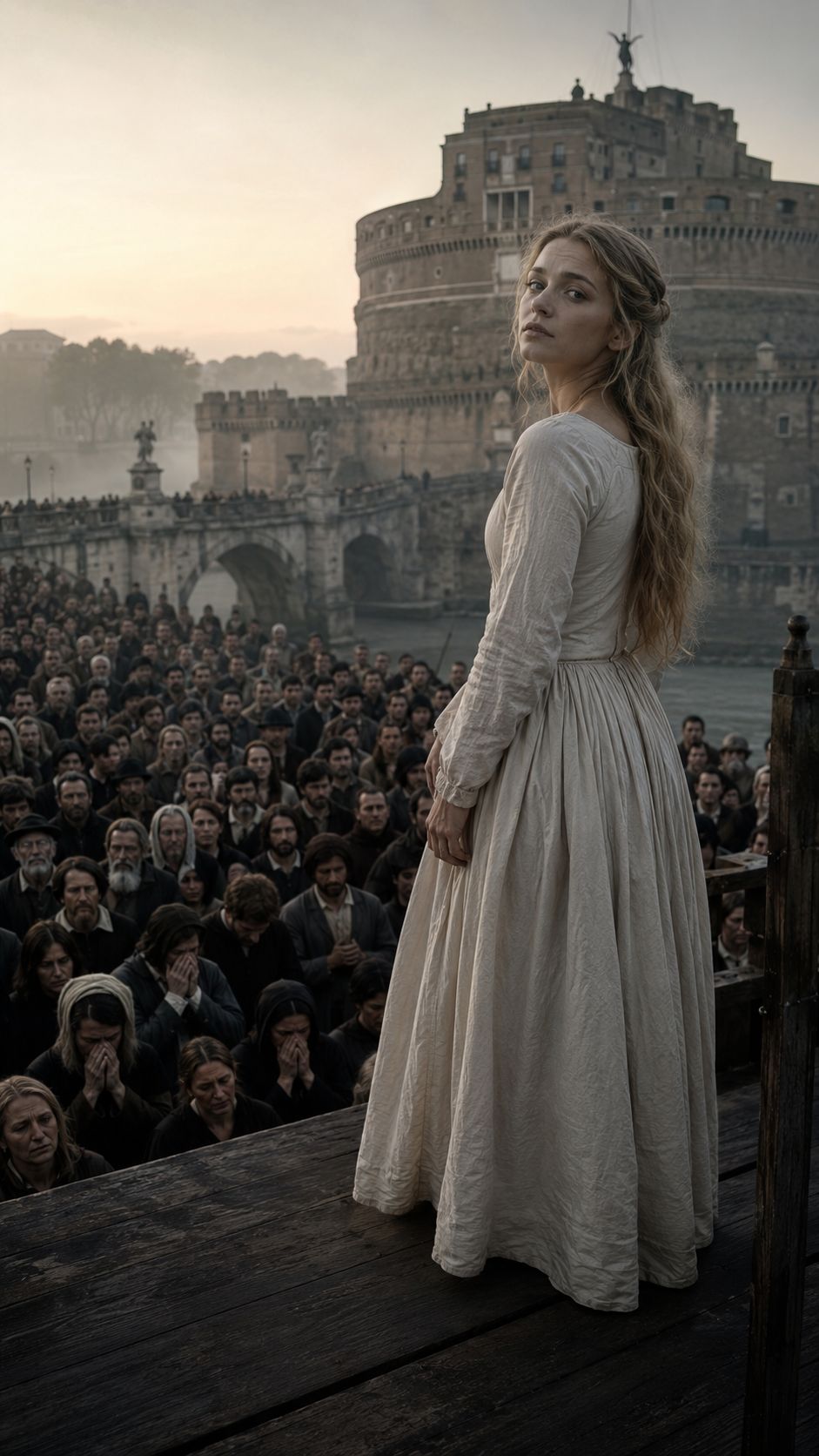 The Noblewoman Rome Wept For And Executed Anyway
Driven to a desperate act by a monstrous father, she was executed while an entire city gathered to weep and beg for her life.
Castel Sant'Angelo, Rome, Italy · 1599 · same site
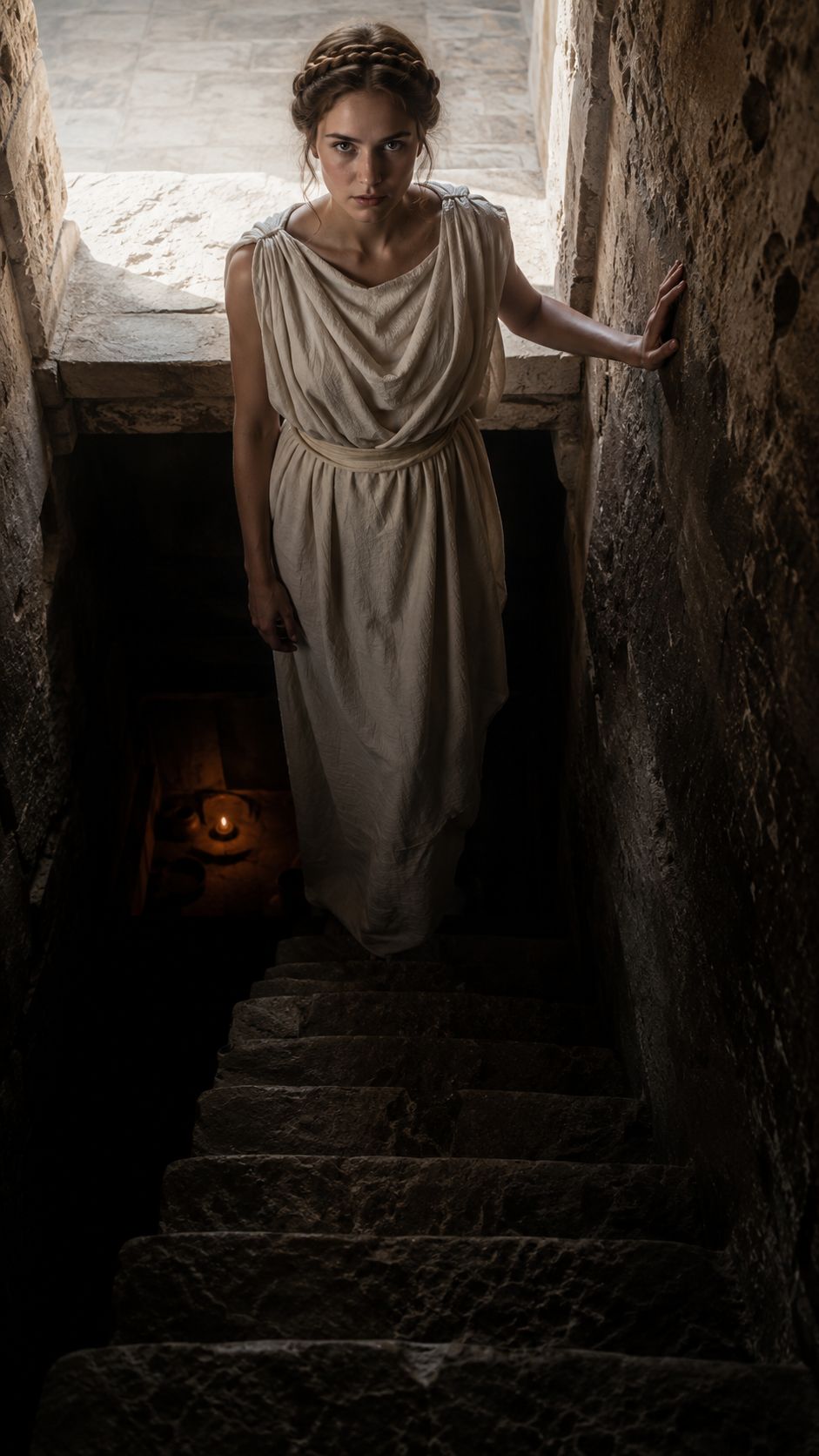 Buried Alive to Avoid Shedding Her Blood
Roman law forbade killing a Vestal or burying her in the city, so they sealed the condemned underground alive instead.
Rome, Italy · 100 BC · 1.1 km away