
In 1898, a former merchant sailor named Morgan Robertson published a novella called Futility. It told the story of the largest and most luxurious ocean liner ever built — described as “unsinkable” — that strikes an iceberg on an April night in the North Atlantic while carrying far too few lifeboats.
The ship was called the Titan.
Fourteen years later, the RMS Titanic sank under almost identical circumstances.
The Horror
The parallels are not vague thematic echoes. They are specific, measurable, and deeply unsettling.
The Titan was described as about 800 feet long. Titanic was about 882 feet.
Titan displaced roughly 45,000 tons. Titanic about 46,000.
Titan struck the iceberg at full speed, around 25 knots. Titanic hit at about 22.5 knots.
Both ships were British. Both struck the starboard side. Both hit the iceberg at night, in April, in the North Atlantic, roughly 400 miles from Newfoundland.
Both were on voyages between England and New York.
Both carried only the legal minimum of lifeboats: Titan had 24 for about 3,000 souls; Titanic had 20 for roughly the same capacity.
In both stories, the majority of passengers died because there simply weren’t enough lifeboats.
Robertson was the son of a ship’s captain. He had served nearly a decade at sea — cabin boy, merchant sailor, first mate. He knew ships. He knew the North Atlantic. He knew the way owners boasted about “unsinkable” vessels while cutting safety margins to save space and money.
When Titanic sank and readers noticed the similarities, journalists asked Robertson if he was clairvoyant. He denied it flatly: “I know what I’m writing about, that’s all.” He hadn’t seen the future. He’d understood the present well enough to know what it was heading toward.
He died in 1915 — three years after Titanic — alone in an Atlantic City hotel room, officially of a cerebral haemorrhage. He was 53. An open bottle of medicine for depression was found beside him; some biographers have wondered if it was suicide.
The Modern Relic
The original 1898 edition of Futility survives in maritime collections, sometimes displayed alongside artefacts from Titanic herself. After 1912, the story was reissued as The Wreck of the Titan and became a sensation. It has never gone fully out of print.
Robertson always insisted the parallels came from expertise, not prophecy. He understood shipbuilding trends — ever larger, ever faster liners — and he knew that lifeboat regulations were based on tonnage from a previous era, not the new behemoths crossing the Atlantic. If you build a giant “unsinkable” ship, send it fast through iceberg waters in April, and don’t give everyone a place in the boats, disaster is not a surprise. It’s scheduled.
The book is called Futility. The title refers to the uselessness of human ambition against the indifference of the sea — a ship so grand that the ocean doesn’t even notice it exists. It also fits the warning itself. Robertson published his scenario in 1898. The pattern was on the page: a vast unsinkable liner, a North Atlantic iceberg, a shortage of lifeboats. Fourteen years later, a ship with almost the same name, almost the same size, in almost the same spot, in the same month, with the same lifeboat deficit, proved him right.
The warning was on the shelf. The iceberg was in the water. Between them were fourteen years, thousands of passengers, and no one who thought the fiction was telling them the future.
Nearby on the Dark Atlas
 The Showman Who Sold Tickets To A Dissection
P.T. Barnum built his fortune exhibiting an enslaved woman alive, then sold tickets to watch her autopsy.
New York City, United States · 1836 · same site
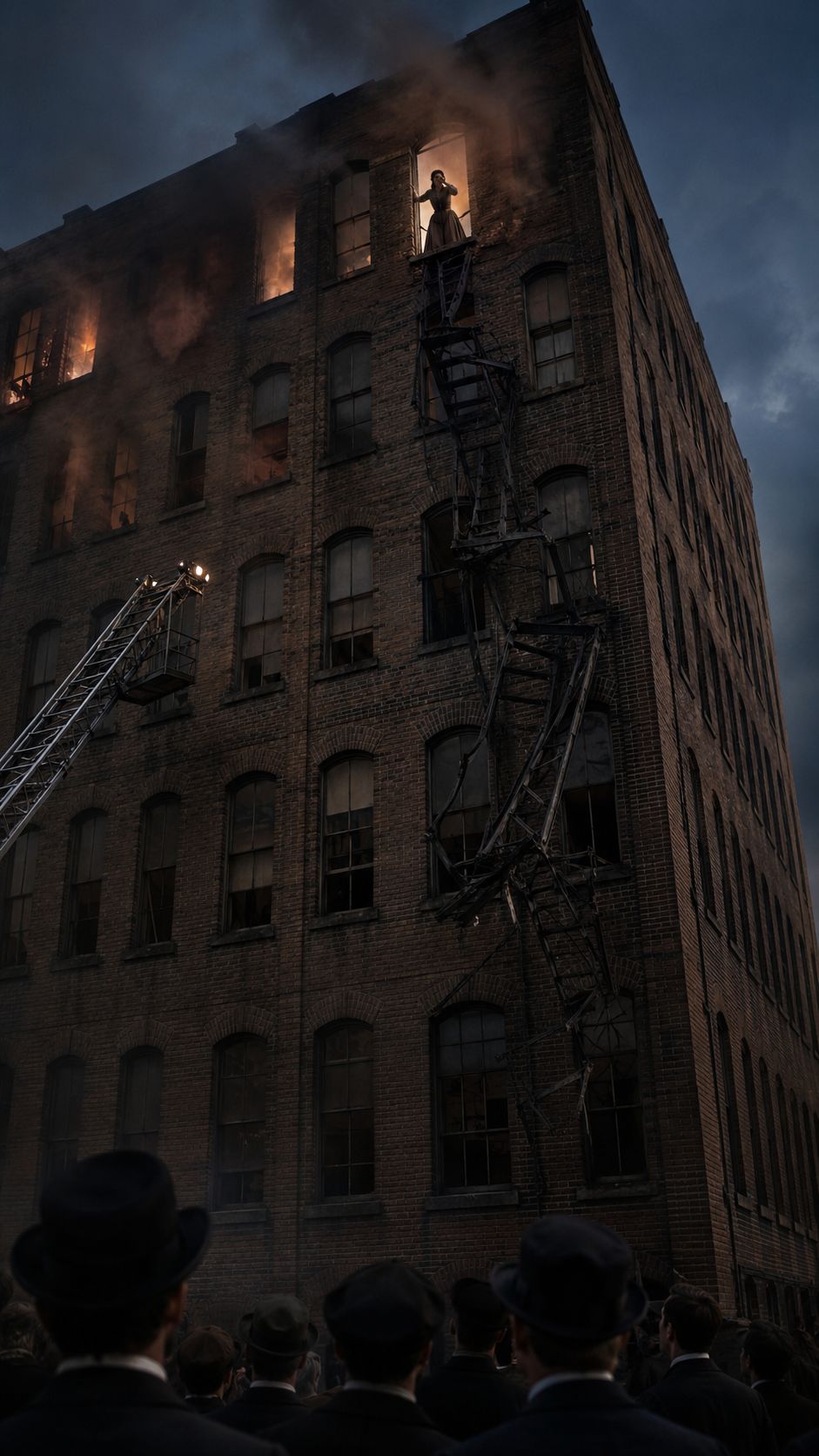 The Fire That Changed Workplace Safety
Hundreds of young immigrant women are locked inside a garment factory when a scrap bin catches fire near closing time.
New York City, United States · 1911 · 2.0 km away
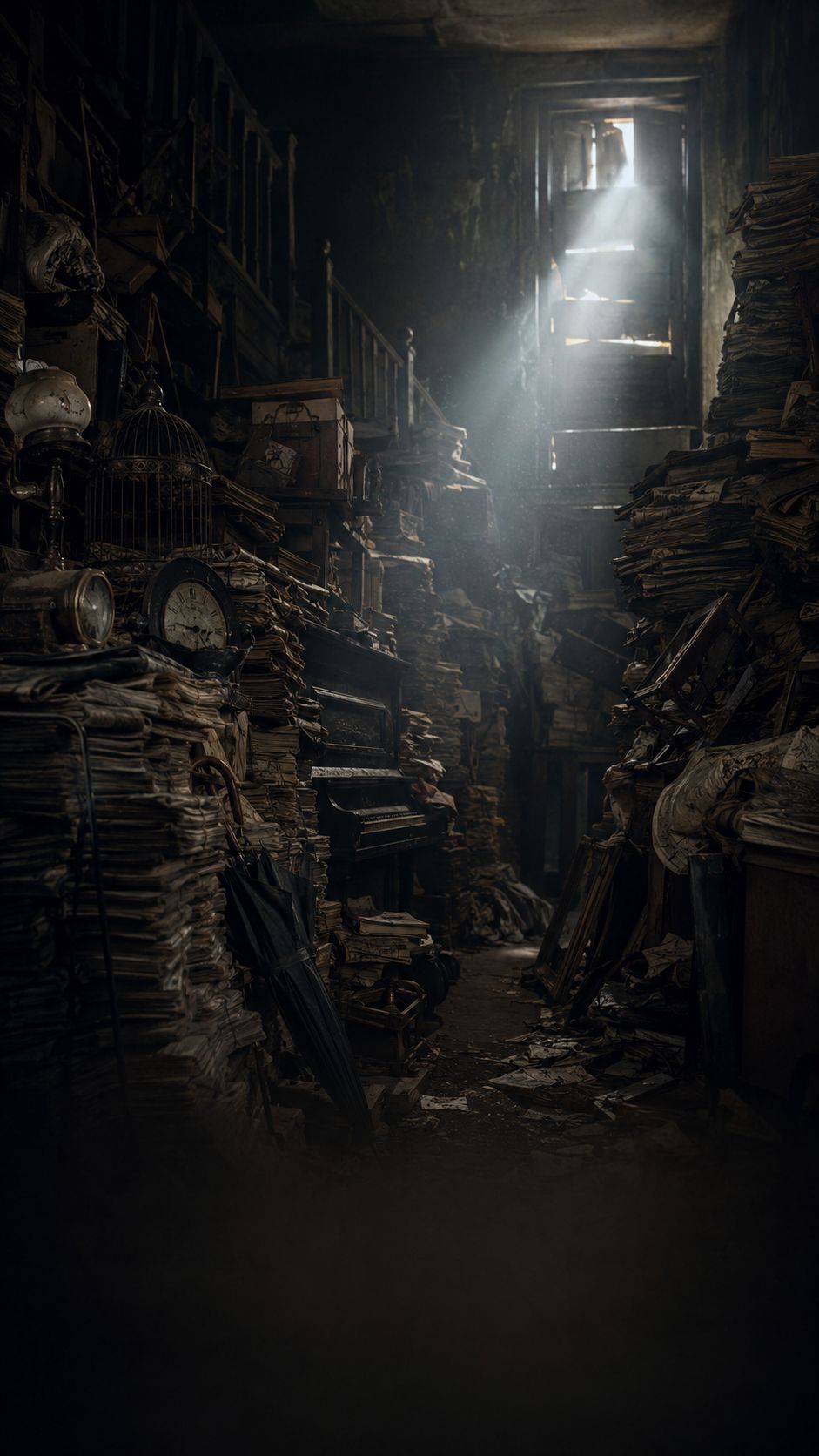 The Hoarders Who Died Buried In Their Own Mansion
Two wealthy, brilliant brothers sealed themselves inside a mansion with 140 tons of hoarded junk, and died trapped in it.
Harlem, New York City, United States · 1947 · 12 km away
- The Cook Who Refused to Believe She Was Typhoid Mary
She infected dozens as an asymptomatic carrier and spent 26 years in forced isolation, still insisting she was innocent.
North Brother Island, New York, United States · 1938 · 13 km away
More like this
 The Rape Trial That Ended In Trial By Combat
A woman's accusation of rape led to France's last judicial duel, with her own life staked on the outcome.
Paris, France · 1386
- The Parish Registers Of The Beast's Victims
Between 1764 and 1767 something killed roughly a hundred people, recorded in the registers as 'devoured by the beast.'
Saugues, France · 1764
- The Manufacturing Of England's Most Haunted House
For decades it was called the most haunted house in England, until its ghost story revealed how a haunting gets made.
Borley, Essex, United Kingdom · 1929
- The Truth Behind The Elephant Man
The real man behind the famous film was quieter, stranger and far more heartbreaking than any screenplay.
Whitechapel, London, United Kingdom · 1890