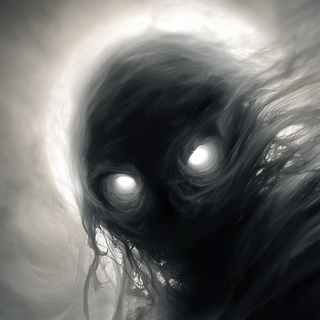
Pinocchio is one of the most famous children’s stories on earth — the tale of the wooden puppet whose nose grows when he lies, who longs to become a real boy, and who, after his adventures, finally does. It’s a story we think of as gentle and whimsical. But the original Pinocchio, written in Italy in 1881, was a far darker, crueller, and more violent tale than the one we know — and in its first version, the story didn’t end with Pinocchio becoming a real boy at all. It ended with him being murdered.
To understand it, you have to meet the man who created him. Carlo Collodi — his real name was Carlo Lorenzini; “Collodi” was a pen name he took from his mother’s home village in Tuscany — was an Italian journalist and satirist, a sharp-tongued writer not remotely known for cosy children’s fare. In 1881, a new children’s magazine in Rome asked him to contribute, and Collodi, reportedly short of money and somewhat cynical about the whole business, dashed off the first instalments of a story he called “Storia di un burattino” — “The Story of a Puppet.” It was published in weekly serial form, chapter by chapter, and from the very start it was strange, grim, and morally harsh.
The Pinocchio of this original serial is not the sweet, naïve innocent of the cartoon. He is a genuinely bratty, selfish, and disobedient creature — and Collodi punishes him brutally for it, chapter after chapter, in a story that reads almost like a savage moral fable about what happens to bad children. In one of the very first chapters, Pinocchio is lectured by a talking cricket who warns him to behave — and Pinocchio, irritated, picks up a mallet and hurls it at the cricket, crushing and killing it on the spot. This is no Jiminy Cricket; the puppet murders his conscience in chapter four. The wooden boy goes on through a series of increasingly nightmarish misadventures, and Collodi shows him suffering horribly for his foolishness: at one point Pinocchio falls asleep with his feet on a stove and wakes to find his wooden feet have burned completely off. It is a violent, frightening, and often genuinely cruel story.
The Horror
And it was all building to a bleak and shocking ending. In the original serial, Pinocchio’s adventures climax when he falls in with two sinister villains, the Fox and the Cat — a pair of con artists who pretend to befriend him. Having tricked him, they disguise themselves as bandits and pursue the terrified puppet through the dark countryside at night, hunting him down. Pinocchio runs for his life, desperate and alone, until the assassins finally catch him. And then, in the fifteenth chapter — the final chapter Collodi originally wrote — the Fox and the Cat murder him. They put a noose around Pinocchio’s neck, and they hang him from the branch of a great oak tree, leaving him to strangle and die. Collodi’s original text describes the puppet’s agony in unflinching detail: Pinocchio dangling from the tree, his breath failing, his body wracked, calling out one last time in the darkness for his father — “Oh, Father, dear Father! If only you were here!” — before his eyes close, his body goes stiff, and he hangs there, apparently dead. And that was it. That was the ending. Collodi had written a children’s story that concluded with its child-hero being lynched from a tree by two criminals and left to die. He even wrote a final line making clear he was finished with the character. In Collodi’s own mind, the story of the puppet was over — and it was over with a death.
The Modern Relic
But then something happened that changed the course of the story forever: the readers rebelled. When that grim final chapter was published, the children of Italy who had been following the serial week by week — and their parents — were utterly distraught. They were heartbroken and dismayed that the puppet they had grown to love had been killed off so cruelly, left hanging from a tree. There was an outcry. And the magazine’s editor wrote to Collodi, relaying the readers’ distress and effectively begging him to continue the story — to somehow bring Pinocchio back. Collodi, perhaps surprised by how attached his audience had become to his bratty little puppet, agreed. And so, a few months later, the serial resumed. Collodi’s solution was simple and magical: he introduced the beautiful, kindly Fairy with the Turquoise Hair — the “Blue Fairy” — who finds the hanging puppet, takes him down from the tree, and nurses him back to life. Death was undone. And from that resurrection, Collodi went on to write the rest of the story — the further adventures, the growing nose, the whale, and finally the transformation into a real boy — the tale that would be collected into a book in 1883 and go on to become one of the most translated and beloved books in the history of the world.
The relic is that this dark original still exists, plain for anyone to read. The first, murderous ending was never erased — it survives in the original 1881 serial text, and the “death” of Pinocchio remains in the completed novel to this day, only now as a near-death from which the Blue Fairy rescues him. If you read the real book, “The Adventures of Pinocchio” by Carlo Collodi, rather than watching the sanitised film versions, you will find all of it still there: the murdered cricket, the burned-off feet, and the terrible night the Fox and the Cat hanged the puppet from the oak tree. The gentle story we tell children was built directly on top of a darker one — a tale so bleak that its author killed his hero, and only the tears and protests of a nation of readers dragged Pinocchio back down from the hanging tree and gave him the second life, and the happy ending, that the world remembers.
Nearby on the Dark Atlas
- The Assassination Attempt During High Mass
In front of ten thousand worshippers, the Pazzi conspirators drove their knives into a Medici at the altar.
Florence, Italy · 1478 · 54 km away
- The Assassination Plot Inside a Cathedral
Rival bankers struck during Sunday Mass, but one Medici brother fought his way out alive.
Florence, Italy · 1478 · 54 km away
- The Bones That Remembered The Black Death
Trade ships carried plague into Italy, and within months whole families vanished into forgotten charnel chapels.
Florence, Italy · 1348 · 54 km away
 The Preacher Who Burned Art And Then Burned Himself
The friar who torched Florence's treasures in a pyramid of vanity ended up executed in the very same square.
Piazza della Signoria, Florence, Italy · 1497 · 54 km away
More like this
- The Murder Dickens Turned Into Fiction
A cold, calculated murder buried a body in a Bermondsey kitchen, and became fodder for the country's most famous novelist.
Bermondsey, London, United Kingdom · 1849
- The Chair No One Is Allowed To Sit In
A murderer's cursed armchair now hangs on a museum wall, five feet off the ground, so no one can sit in it again.
Thirsk, United Kingdom · 1702
- The Poisoner Who Weaponised A Town's Sweet Shops
She poisoned an entire town's confectionery to disguise the murder of a woman she hated, killing a child she never met.
Brighton, United Kingdom · 1871
 The Rape Trial That Ended In Trial By Combat
A woman's accusation of rape led to France's last judicial duel, with her own life staked on the outcome.
Paris, France · 1386