We hand this story to children. We put it on lunchboxes. And almost none of us have read what Jacob and Wilhelm Grimm actually wrote, because the version we know is a Walt Disney film from 1937, and Disney performed the single most successful act of literary censorship in history. The tale is called “Schneewittchen” — “Little Snow-White” — and it appeared in 1812 in the Grimms’ Children’s and Household Tales. Read the original and the first shock lands before the plot even gets moving.
The Horror
In that 1812 first edition, the woman who wants Snow White dead is not a wicked stepmother. She is Snow White’s own mother — a mother consumed with jealousy of her own daughter’s beauty. The Grimms found this so disturbing that in later editions they quietly demoted her to a stepmother, and that softened lie is the one that survived. But it gets darker. The queen summons a huntsman and orders him to take the girl into the forest, kill her, and return with her lungs and her liver as proof. He can’t do it; he kills a young boar instead and brings back its organs. The queen has the cook boil them in salt, and she eats them — believing, with satisfaction, that she is devouring her daughter’s lungs and liver. A fairy tale that opens with attempted filicide and intended cannibalism, before we ever reach the dwarfs. And the apple is only the finale. In the Grimms’ version the disguised queen tries to murder Snow White three separate times. First she laces the girl into a bodice so tightly that she collapses, unable to breathe. The dwarfs cut the lace and revive her. Next comes a poisoned comb, dragged through her hair until the venom drops her again. Only on the third attempt does the queen bring the famous apple — coloured half white, half red, with only the red half poisoned, so she can bite the safe side and coax the girl to trust her. Then comes the detail that ruins the romance forever. There is no kiss. Snow White does not wake because a prince loves her. She lies in her glass coffin, and when the prince’s servants carry it away, they stumble — and the jolt dislodges the chunk of poisoned apple lodged in her throat. She coughs it up and simply wakes. No magic. No true love. A piece of fruit knocked loose by clumsiness. THE HORROR (the ending Disney erased): In the film, the wicked queen falls from a cliff in a thunderstorm, chased by nature itself — a clean, deniable death. In the Grimms’ 1857 text, she is invited to Snow White’s wedding. She doesn’t know whose wedding it is until she arrives. And waiting for her, already heating in the coals, is a pair of iron shoes. They are lifted out with tongs, glowing red-hot, and she is forced to put them on her feet and dance — dance in shoes that are cooking her alive — until she falls to the floor dead in front of the wedding guests. The heroine’s happy ending is a public execution by torture, and Snow White watches. And Snow White is not an outlier. The Grimms’ collection is full of this darkness once you look past the Disney gloss. In their Cinderella (“Aschenputtel”), the two stepsisters are so desperate to force their feet into the golden slipper that one slices off her own toe and the other her heel, and the prince only notices the deception when he sees the blood filling the shoe; at the wedding, doves peck out the stepsisters’ eyes, leaving them blind. In the original Frog Prince, the princess does not kiss the frog — she hurls it against the wall in disgust. These were not bedtime stories in our sense. They were folk tales carried by word of mouth through centuries of plague, famine, and forests that genuinely swallowed travellers, and they carried the anxieties of that world: starving households, stepmothers who might resent another mouth to feed, the ever-present nearness of death. The Grimms, collecting them in the early nineteenth century, actually softened many across successive editions in response to middle-class readers who found them too brutal for children. The versions we call “the originals” were, in some cases, already cleaned up — and Disney simply finished the job. Even the most quoted line in the whole story is a mistranslation. “Mirror, mirror, on the wall” is Disney’s phrasing. The Grimms wrote “Spieglein, Spieglein an der Wand” — “Little mirror, little mirror on the wall.” A tiny change, but it tells you how thoroughly the version in your head was rewritten.
The Modern Relic
People desperately want Snow White to be real, and for years the German town of Lohr am Main in Bavaria has offered a candidate: Maria Sophia von Erthal, born there in 1725, in a town famous for its mirror-glass works — including a so-called “Talking Mirror” — with dwarf-sized mine tunnels nearby. It is a wonderful story and you can even see a gravestone associated with her, put on display in 2019. But honesty is the brand, so here is the truth: the man who first proposed the theory, a local pharmacist, meant it partly as a tongue-in-cheek bit of civic fun, and folklorists have firmly rejected it — the glass-coffin motif is older than she is. A second candidate, Margaretha von Waldeck, is just as speculative. So treat those as legend, not fact. What is real and visitable is the source itself: the graves of Jacob and Wilhelm Grimm in Berlin’s Alter St.-Matthäus-Kirchhof cemetery, and Grimmwelt Kassel, the museum in Hesse dedicated to the brothers and the tales they collected — the actual origin point of the story that Disney would one day sand smooth. The Grimms did not invent this darkness. They were collectors, writing down folk tales that had been told around fires for centuries — tales meant for adults as much as children, in a world where mothers really did lose their minds, where the forest really could kill you, and where justice, when it came, came red-hot. We didn’t make the story kinder over time. We just stopped reading the real one.
Nearby on the Dark Atlas
- The Blood And Blindness In The Original Cinderella
There is no fairy godmother in the Grimms' first Cinderella, only a grave, mutilation, and eyes pecked out by birds.
Kassel, Germany · 1812 · same site
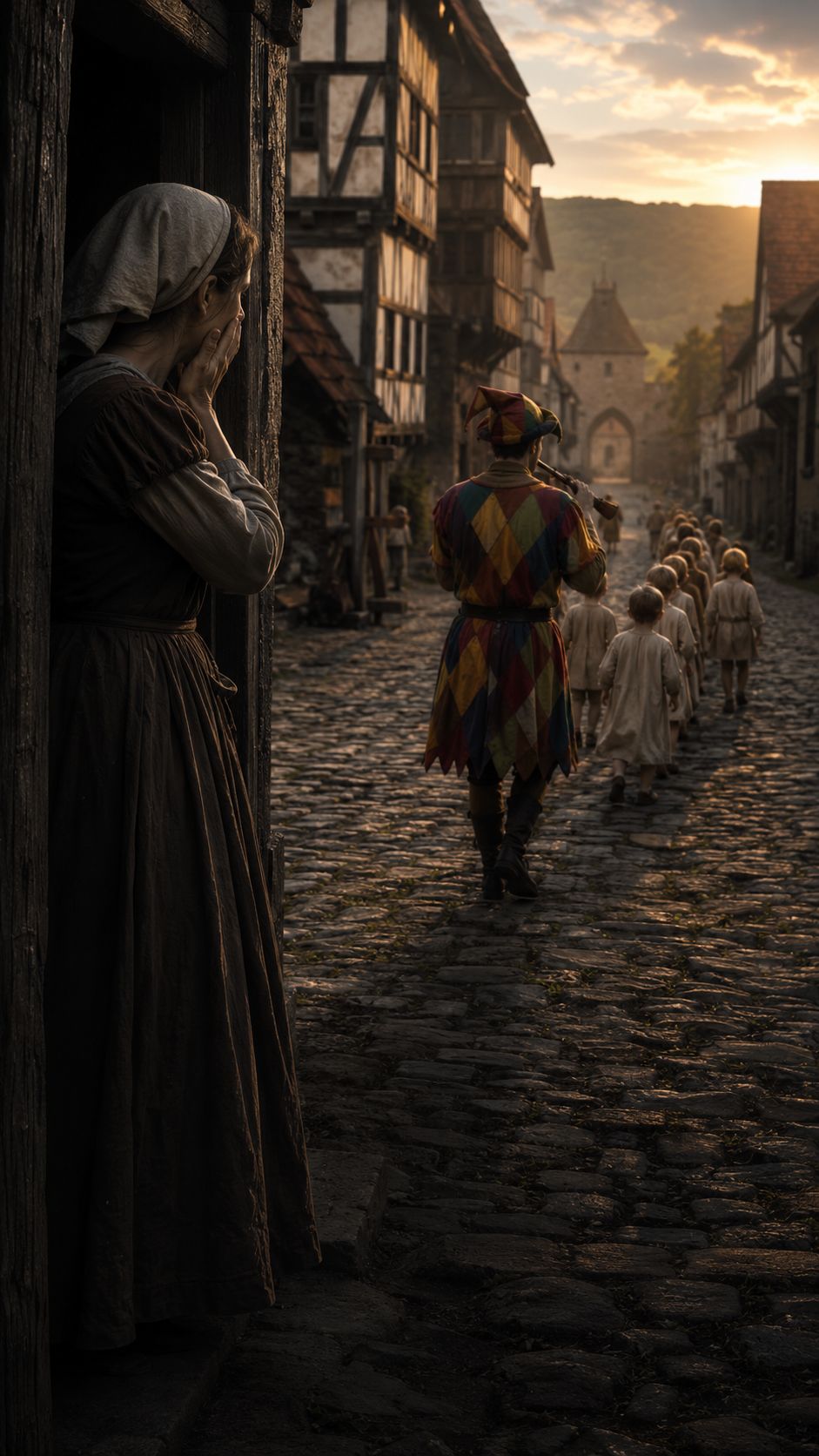 The Street Where No Music Has Played For 700 Years
A real medieval town recorded that 130 of its children vanished in a single day, and no one has ever explained why.
Hamelin, Germany · 1284 · 88 km away
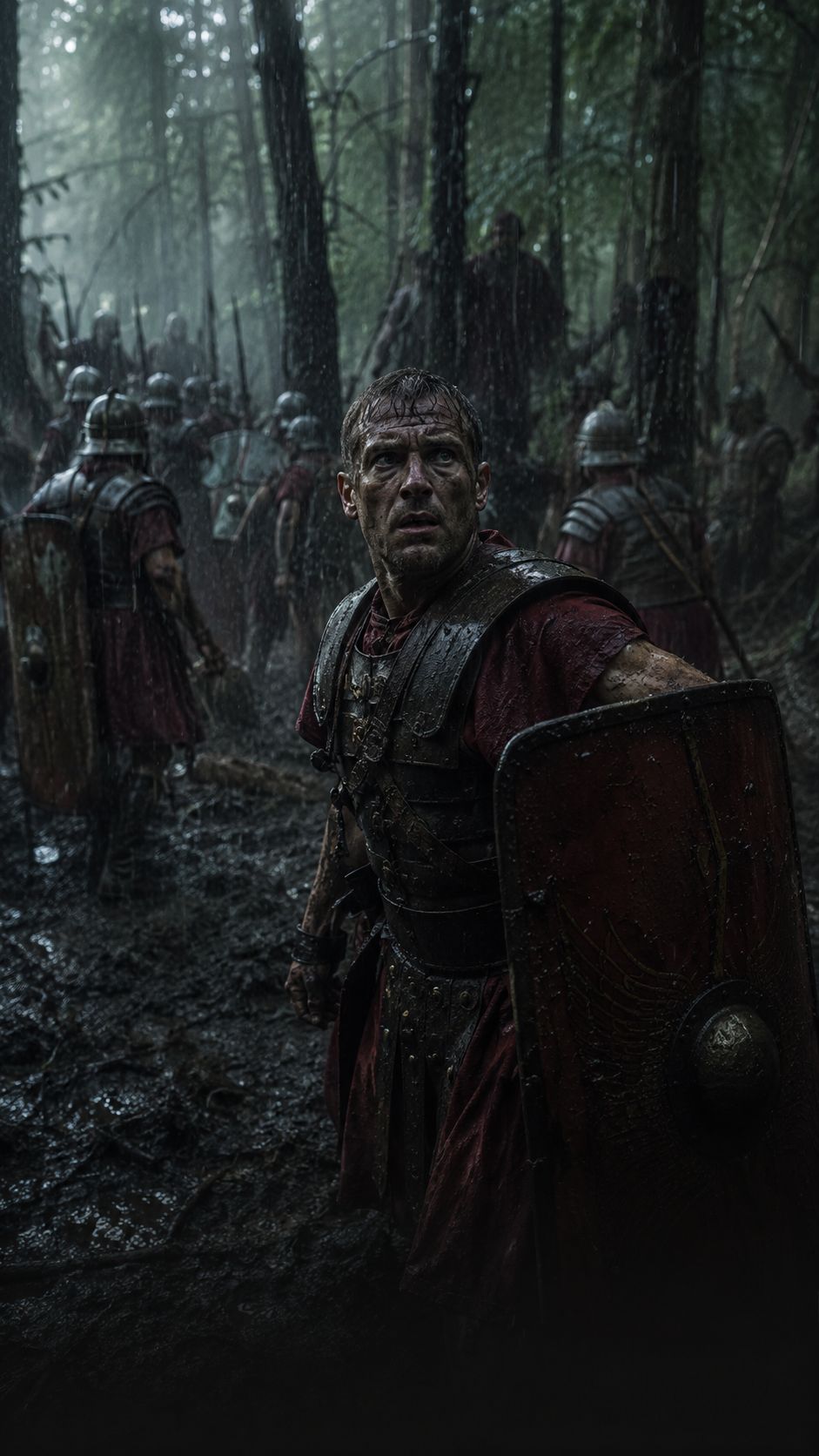 The Betrayal That Cost Rome Three Legions
A trusted Germanic prince led three Roman legions into an ambush so total the survivors found only bleached bones years later.
Teutoburg Forest, Germany · 9 · 104 km away
- The Floor That Collapsed Beneath the Elite
A floor packed with armored nobles gave way and dropped Europe's elite into a sewage pit below.
Erfurt, Germany · 1184 · 114 km away
More like this
- The Murder Dickens Turned Into Fiction
A cold, calculated murder buried a body in a Bermondsey kitchen, and became fodder for the country's most famous novelist.
Bermondsey, London, United Kingdom · 1849
- The Chair No One Is Allowed To Sit In
A murderer's cursed armchair now hangs on a museum wall, five feet off the ground, so no one can sit in it again.
Thirsk, United Kingdom · 1702
- The Poisoner Who Weaponised A Town's Sweet Shops
She poisoned an entire town's confectionery to disguise the murder of a woman she hated, killing a child she never met.
Brighton, United Kingdom · 1871
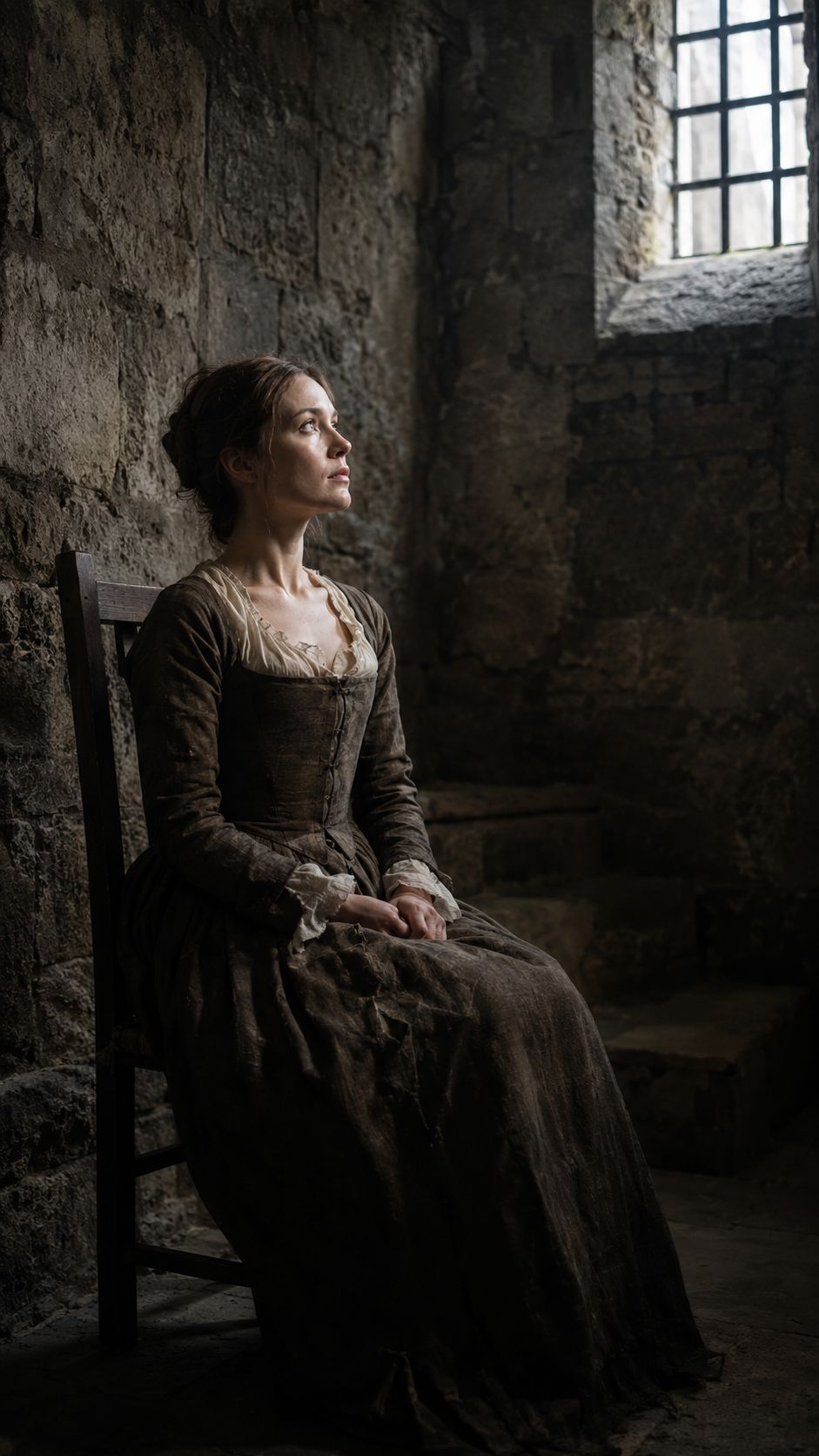 The Rape Trial That Ended In Trial By Combat
A woman's accusation of rape led to France's last judicial duel, with her own life staked on the outcome.
Paris, France · 1386