Ned Kelly is the most famous outlaw in Australian history: a bushranger, a police-killer, and, to millions of Australians, a folk hero. A man who made his last stand against the police in a homemade suit of iron armour, and who reportedly met the gallows with two of the most famous last words ever spoken: “Such is life.” To understand him, you have to understand the world that made him. Ned Kelly was born in rural Victoria, Australia, in 1854, the son of an Irishman who had been transported to the colonies as a convict. His was a poor, hardscrabble Irish-Catholic family of struggling settlers, living on the wrong side of a deeply divided colonial society, and they were treated with constant suspicion and harassment by the mostly Anglo-Protestant colonial police. Ned’s father died when the boy was twelve, forcing him to become the family breadwinner. From his teens, Kelly was in and out of trouble with the law; some of it real crime, some of it, his supporters have always argued, the police persecuting a poor Irish family they had already decided were criminals. The turning point came in 1878. A policeman named Fitzpatrick claimed that Ned had shot and wounded him at the family home. Ned always denied it, but his mother was arrested and sentenced to three years in prison over the affair, and Ned and his brother Dan fled into the bush as wanted men. The Kelly Gang was born.
Now outlaws, hiding in the rugged Australian bush, the gang’s fate was sealed at a place called Stringybark Creek. A party of police went hunting for them, and in the confrontation Ned Kelly shot and killed three police officers. There was no going back from that. The colony declared them outlaws who could be shot on sight, and put a massive price on their heads. For nearly two years, the Kelly Gang evaded one of the largest manhunts in the colony’s history, robbing banks in daring raids and, crucially, winning the sympathy of much of the rural poor, who saw them as rebels striking back at a corrupt establishment. Ned even dictated a famous, furious 8,000-word document, the “Jerilderie Letter,” laying out his grievances and the injustices done to his people. He was becoming something more than a criminal. He was becoming a symbol.
The Horror
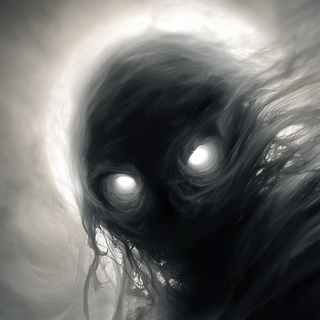
The end came at the town of Glenrowan, in June 1880, in one of the most extraordinary scenes in the history of crime. The gang took over the town’s inn, holding dozens of hostages, having torn up the railway line to wreck a special train bringing police to hunt them. But the plan unravelled, the train was warned, and the police laid siege to the inn. And it was here that Ned Kelly did the thing that made him immortal. The gang had secretly forged suits of armour: helmets and body plates hammered out of stolen iron plough mouldboards, each suit weighing around 44 kilograms, almost half a man’s body weight. At dawn, out of the morning mist, Ned Kelly walked toward the police lines alone, encased in iron, upright and terrifying. The police opened fire, and watched in disbelief as their rifle bullets struck the strange figure and sparked and ricocheted off him “like hail,” without effect. One officer later said they thought he was a fiend, a ghost, some kind of monster from the bush. He kept coming, firing back, seemingly unkillable. But the armour had one fatal flaw: it protected his head and torso, but not his arms and legs. The police realised it, lowered their aim, and shot him repeatedly in his unprotected limbs. Ned Kelly finally crashed to the ground, badly wounded but alive, and was captured. One of his companions was shot dead inside the inn; the other two died as the building burned around them. He was taken to Melbourne to stand trial for the murders at Stringybark Creek, before a judge named Sir Redmond Barry. The verdict was never in doubt: guilty, and a sentence of death by hanging. When Barry pronounced the sentence with the traditional words “May God have mercy on your soul,” Kelly reportedly answered him back defiantly, telling the judge he would meet him soon, before a higher court: “I will see you there, where I go.” What followed became legend. A petition signed by an astonishing 30,000 people flooded in, begging the authorities to spare his life. It was refused.
The Modern Relic
On the morning of 11th November 1880, Ned Kelly, twenty-five years old, was led from the condemned cell at the Melbourne Gaol to the gallows. On the way, passing through the prison’s little garden, he is said to have remarked, almost peacefully, “What a nice little garden.” He mounted the scaffold. And as the rope was placed around his neck, Ned Kelly reportedly spoke his final, immortal words, a phrase of pure, weary defiance that has been part of the Australian language ever since: “Such is life.” Then the trapdoor opened, and he was gone. And here comes the detail Australians have never forgotten: just twelve days after Ned Kelly hanged, Sir Redmond Barry, the judge who had sentenced him to death, suddenly died, of blood poisoning from an infected carbuncle on his neck. To Kelly’s supporters, it looked exactly like the fulfilment of the outlaw’s defiant promise from the dock: I will see you there.
The relics are astonishing, and you can go and see them. Ned Kelly’s actual suit of iron armour, dented by the police bullets it stopped, survives, preserved as a national treasure at the State Library of Victoria in Melbourne, alongside the Jerilderie Letter itself. The Old Melbourne Gaol where he was hanged is now a museum; you can stand where the scaffold was, see the beam he dropped from, and look at the death mask taken from his face within hours of his death, his head shaved bare by the prison authorities. His body was buried in the gaol, and for over a century his remains were a mystery, dug up, moved, and even scattered, his skull famously stolen and lost. It was only in 2011 that forensic scientists, using DNA from a living relative, finally identified Ned Kelly’s bones, and in 2013 he was at last given the private burial he had wanted, at Greta, near the country where he grew up. From an iron-clad figure walking unkillable out of the mist, to a plaster death mask behind museum glass, Ned Kelly has never stopped being what he became on that scaffold: the great, doomed, defiant folk hero of Australia, the man who looked death in the eye and simply said, “Such is life.”
Nearby on the Dark Atlas
 The Man They Could Not Hang
Four men stood trial for a constable's brutal murder, but it was a young convict's own execution that defied explanation.
Sydney, Australia · 1803 · 713 km away
- The Grief Behind The Real Mary Poppins
The woman who created Mary Poppins was shaped by a dead alcoholic father and a mother's suicide threat, and she hated the Disney film.
Maryborough, Queensland, Australia · 1934 · 1547 km away
 The Shipwreck That Descended Into Massacre
Marooned on a waterless island after a shipwreck, a self-appointed leader turned survival into a campaign of murder.
Houtman Abrolhos, Western Australia, Australia · 1629 · 3054 km away
- The Real Lord Of The Flies
Golding's novel said boys marooned without adults would turn savage — six real castaways refused to prove him right.
ʻAta Island, Tonga · 1965 · 4076 km away