
In 1579, Elizabeth I was forty‑six and seriously considering marrying François, Duke of Anjou — the much younger Catholic brother of the King of France. His family had been up to its neck in the St Bartholomew’s Day Massacre seven years earlier, when thousands of French Protestants were slaughtered in the streets.
Protestant England was horrified. And a Puritan lawyer from Norfolk named John Stubbs decided to say so out loud.
THE HORROR In August 1579 he published a pamphlet with a title that tells you everything: The Discoverie of a Gaping Gulf Whereinto England is Like to be Swallowed by Another French Marriage. Stubbs wasn’t calling for rebellion. He wrote about Elizabeth herself with real loyalty. What he did was argue policy: that a French Catholic prince would endanger religion, undermine English customs and sovereignty, and — the line that really did it — that at forty‑six the Queen was too old to bear a child safely and so had no need to marry.
He told a reigning queen, in print, that she was past it. Elizabeth, according to William Camden, “burned with choler” when she read it.
Her first instinct was simply to have him executed by royal prerogative. She was barely talked down by advisers and agreed to let the law take its course instead.
Then came the part that should worry anyone who cares about law.
They first treated Stubbs’s offence as felony, but the jury refused to convict. So the government changed the charge — reaching back to a sedition statute from Mary I’s reign and stretching it to cover this pamphlet. One judge, Robert Monson, said openly that this was an abuse of the law and the statute did not apply; he was imprisoned and removed from the bench when he refused to withdraw his opinion.
That is what it took to condemn Stubbs: overrule a jury, dust off a dead Catholic queen’s law, and destroy a judge who objected. Stubbs, his patron William Page, and his printer Hugh Singleton were convicted of seditious writing. The eighty‑year‑old printer was pardoned from the physical penalty.
On 3 November 1579, Stubbs and Page were brought out of the Tower to a scaffold in the market place at Westminster, with surgeons standing by to keep them alive.
Stubbs was allowed to speak first. He told the crowd he loved his Queen and that losing his hand would not harm his loyalty. Then, with the cleaver visible a few feet away, he turned to them and delivered one of the coldest lines ever spoken by a man about to be maimed:
“Pray for me now, my calamity is at hand.”
It was a pun — on the hand they were about to take.
Then they laid his right wrist on the block, set a butcher’s cleaver on it, and drove it through with a mallet. An eyewitness said it took three blows to sever the hand, and the bleeding stump was immediately seared with a hot iron.
And then John Stubbs stood up.
He reached across with his remaining left hand, took off his hat, and shouted — as loudly as he could — “God save the Queen!” Then he fainted. Chroniclers agree he meant it: he was genuinely loyal and saw himself as correcting, not betraying, his monarch.
THE MODERN RELIC And here is where the story becomes genuinely dangerous — and why the government never forgot it.
The crowd said nothing.
Hundreds of people had just watched a man have his writing hand hacked off on the Queen’s orders and then heard him bless her anyway. And they stood there in total silence.
John Stow, the chronicler standing beside him, wrote: “The people round about stood mute, whether stricken with fear at the first sight of this strange kind of punishment, or for commiseration of the man whom they reputed honest.” Camden added a third possibility: “or out of a secret inward repining they had at this marriage, which they suspected would be dangerous to religion.”
That silence frightened the government more than a riot would have. A riot you can club, and it proves your opponents are violent. A silent crowd is something else: a crowd that agrees with the man on the scaffold and has just chosen not to tell you. Stubbs hadn’t shouted defiance that could be painted as treason; he had shouted loyalty, which made it impossible to dismiss him as a rebel. Every person in that square understood what they had just seen.
Elizabeth got the message. The Anjou marriage negotiations collapsed; by 1581 she had abandoned the match, apparently with some personal regret.
Stubbs spent around eighteen months in the Tower. Then he was released, taught himself to write with his left hand, and kept writing — including a defence of England against Cardinal Allen’s attacks. He later sat in Parliament for Great Yarmouth in 1589 and worked under Lord Burghley, the Queen’s chief minister, one of the men who had prosecuted him. He never turned against Elizabeth. He had meant every word on that scaffold. He died in 1591, twelve years after she took his hand for telling her the truth.
The relic is the pamphlet. Copies of The Discoverie of a Gaping Gulf survive in research libraries — the actual printed object that Elizabeth ordered burned at Stationers’ Hall. They failed to erase it. And so did the attempt to erase his last words. Stow and Camden both recorded the line that rang across Westminster as his blood was being cauterised:
“God save the Queen.”
Nearby on the Dark Atlas
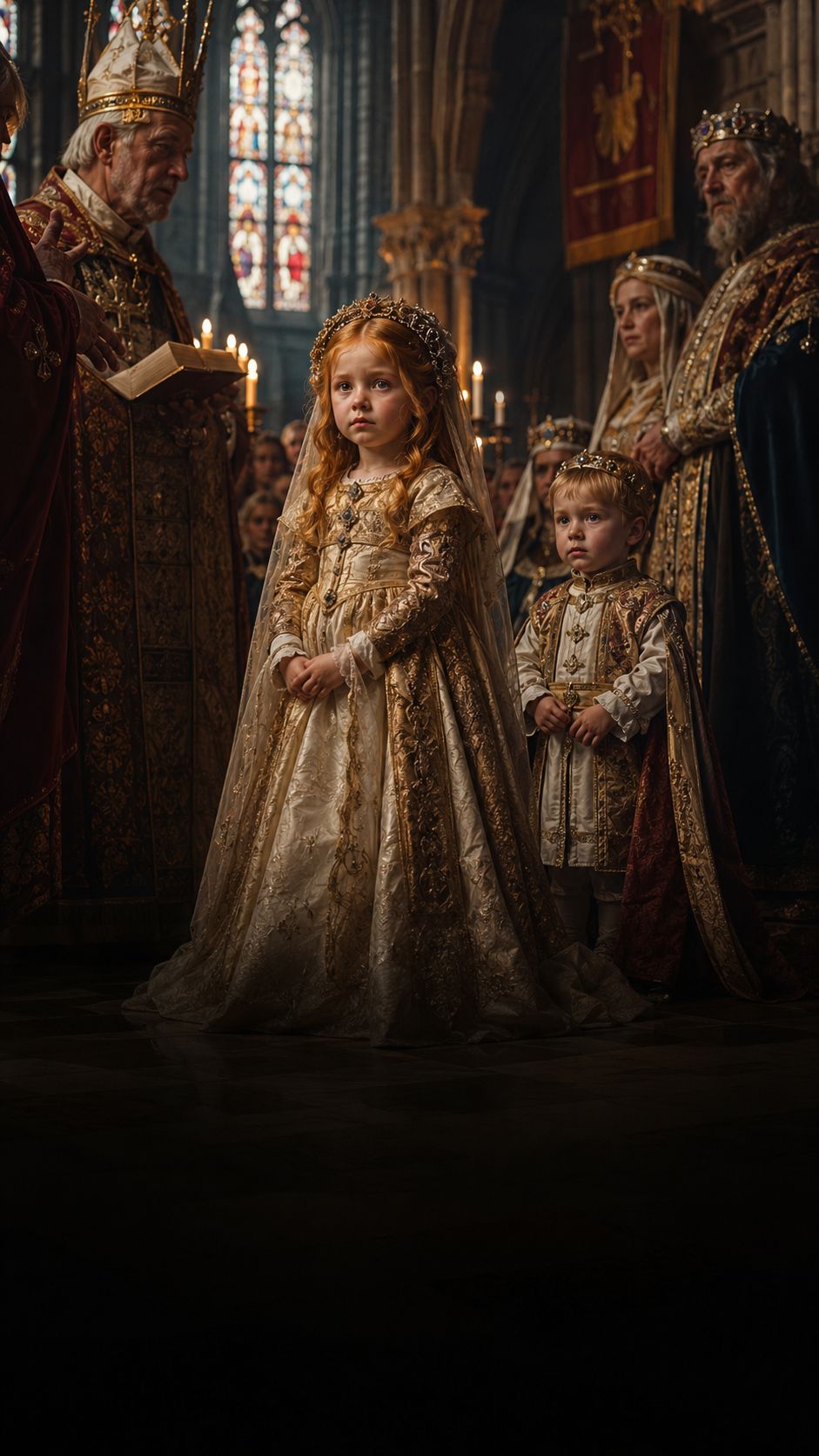 The Child Bride Whose Coffin Vanished For 500 Years
She died before she was nine, a pawn of kings, and her tiny coffin was lost until a digging machine tore it open centuries later.
Westminster, London, United Kingdom · 1481 · same site
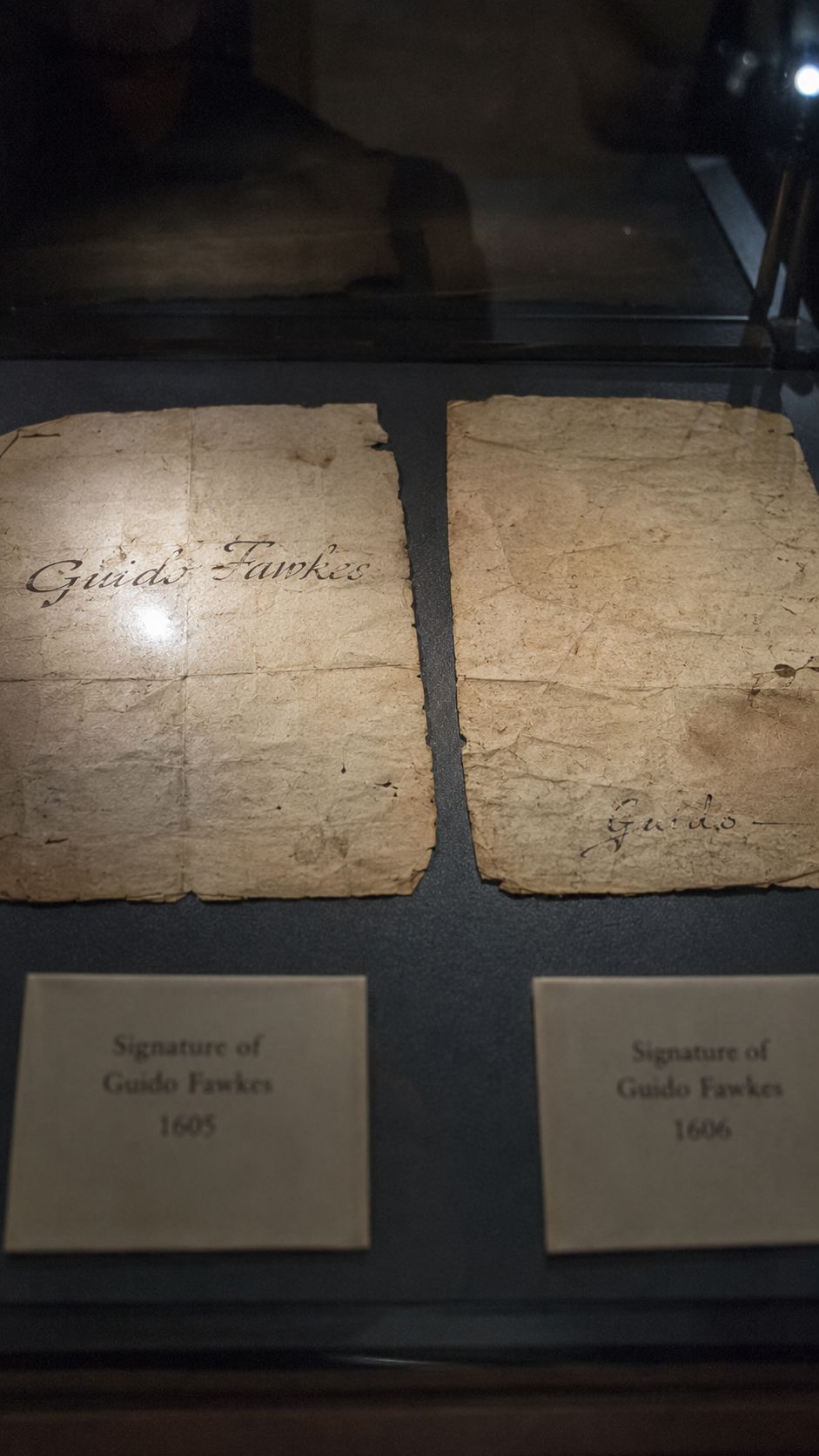 The Signature That Broke Under Torture
Found in a cellar beneath Parliament with 36 barrels of gunpowder, his confident signature collapsed into a scrawl after days on the rack.
Westminster, London, United Kingdom · 1605 · same site
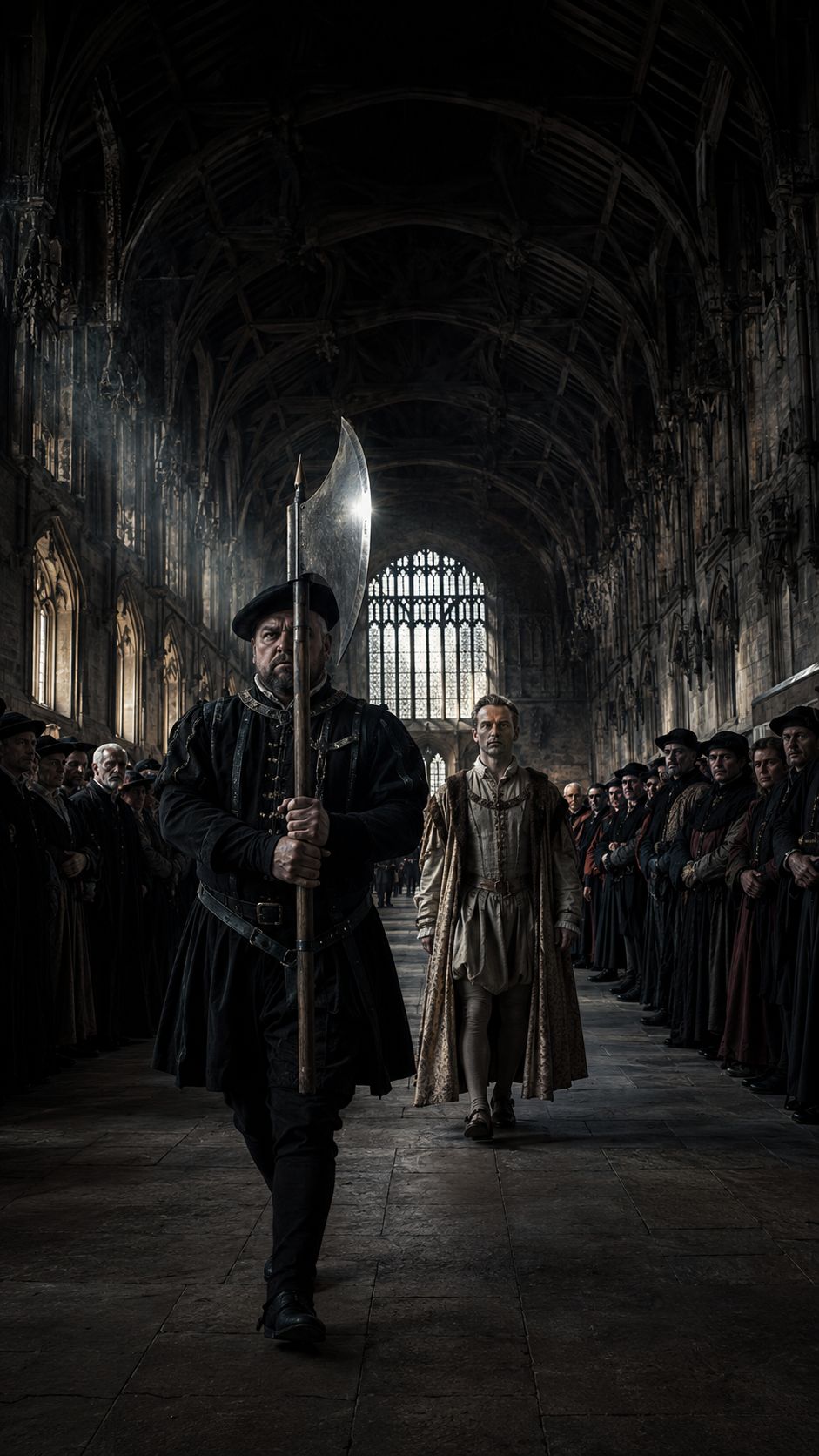 The Sword That Sealed a Traitor's Fate
Before a word was spoken, prisoners at Westminster Hall could read their fate in which way the ceremonial blade pointed.
Westminster Hall, London, United Kingdom · 1521 · same site
- The Widow Who Carried Her Husband's Head
A courtier condemned on a treason charge many believed engineered walks to the scaffold after one last failed gamble for gold.
Old Palace Yard, Westminster, London, United Kingdom · 1618 · same site