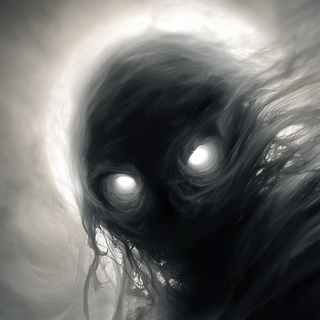
The death of Atahualpa is one of the most consequential and tragic executions in all of human history — the moment a tiny band of foreign adventurers murdered the emperor of one of the greatest civilisations on earth, took the largest ransom ever paid, and brought down an empire of millions. It is a story of breathtaking treachery, of gold beyond imagining, and of a proud emperor forced, at the very end, to choose the manner of his own death to save what he believed was his eternal soul.
To understand it, you have to grasp the sheer scale of what was destroyed. The Inca Empire, in the early sixteenth century, was the largest and most sophisticated state in all of the Americas — a vast realm stretching thousands of miles down the spine of the Andes, ruling millions of people, bound together by an incredible network of roads, monumental stone cities, and a highly organised administration, all governed by the Sapa Inca, the god-emperor. And in 1532, a new emperor had just won control of it: Atahualpa, who had emerged victorious from a brutal civil war against his half-brother Huáscar. He was, by the accounts of those who met him, an impressive man — dignified, intelligent, sharp-witted, and utterly secure in his power, commanding an army of tens of thousands. Into this world came Francisco Pizarro — a Spanish conquistador leading a band of fewer than two hundred men. When Atahualpa, at the height of his power with an army of thirty thousand at his back, agreed to meet these strange bearded newcomers at the highland town of Cajamarca in November 1532, he believed he had nothing whatsoever to fear from fewer than two hundred foreigners. It was a catastrophic misjudgement. Pizarro laid a trap. When Atahualpa entered the plaza of Cajamarca, a Spanish friar demanded he submit to the Christian God and the King of Spain; when the emperor refused, or cast aside the offered Bible, the hidden Spanish opened fire with cannon and charged with steel and horses into the packed, unarmed crowd. In a matter of hours, the Spanish slaughtered thousands of Atahualpa’s followers in the square and seized the emperor himself. The Sapa Inca, ruler of millions, was a prisoner of a few desperate men.
The Horror
And now the emperor made the offer that has echoed through history. Atahualpa quickly understood that these men were, above all, ravenous for gold. And so, to buy his freedom, he made an extraordinary promise: he would fill the very room in which he was held, once with gold, and twice over with silver, as high as he could reach up his arm along the wall. It was a ransom of almost unimaginable scale. And across the vast empire, his people obeyed, and the treasure began to flow into Cajamarca — great works of Inca gold and silver, much of it religious art of incalculable cultural value, carried in from across the Andes and melted down into bars for the Spanish. In the end, some twenty-four tons of gold and silver were gathered — the richest ransom ever paid for a single human life in the history of the world.
Atahualpa had kept his side of the bargain completely. The Spanish took the gold. And then they killed him anyway. For Pizarro, the truth was strategic and cold: a free Atahualpa, able to summon millions of subjects and coordinate the destruction of his tiny force, was simply too dangerous to release, no matter how much treasure he paid. And so, with rumours spreading of an Inca army coming to free their emperor, Pizarro convened a sham trial. Atahualpa was charged with absurd crimes against a Spanish crown he had never heard of until months before — treason, idolatry, having multiple wives, and the murder of his brother Huáscar. The verdict was never in doubt. On the 26th of July 1533, Atahualpa, the last true emperor of the Inca, was condemned to death, and led out into the same plaza at Cajamarca where his people had been massacred, to be executed.
And here came the final cruelty. Atahualpa was sentenced to be burned alive at the stake. But to the Inca, this was a horror far beyond the physical agony of the flames. The Inca believed that the preservation of the body after death was essential — that the mummified body of an emperor was sacred, and that the soul required the body to remain whole to make its journey into the afterlife. To be burned to ash was not merely to die, but to be annihilated utterly, body and soul, forever. Atahualpa faced not just execution, but eternal destruction. And it was then that the priests offered him a terrible bargain: if he would renounce his own gods and accept Christian baptism, they would show him “mercy” — he would be strangled instead of burned, and his body would remain intact. Faced with the choice between the fire that would destroy his soul and a conversion he did not believe in, Atahualpa chose to save his body. He accepted baptism, was given a Christian name, and then, that same day, an iron collar — a garrote — was placed around his neck and tightened until the last emperor of the Inca was dead. He was likely only in his early thirties. He had reigned as a free man for less than a year. It is said that even Pizarro shed a tear as the life was choked out of the dignified emperor he had chosen to murder.
The Modern Relic
With Atahualpa dead, the empire he embodied collapsed with astonishing speed. The Spanish marched on the great Inca capital of Cusco, which fell within months, and though Inca resistance would flicker on in remote strongholds for decades, the mighty empire was effectively finished — brought down not by a great army, but by fewer than two hundred men, a massacre, a broken promise, and the murder of a single captive king. It stands as one of the most staggering and tragic collapses in all of history: millions conquered through the killing of one man.
The relic still stands, in the town where it all happened, and you can walk into it. In Cajamarca, in the northern highlands of Peru, there survives a single modest stone chamber known today as El Cuarto del Rescate — “the Ransom Room.” It is traditionally held to be the very room that Atahualpa promised to fill with gold and silver to buy his freedom, and a red line on its wall is said to mark the height the treasure reached. It is the only Inca-associated building still standing in Cajamarca, and it is now a place of pilgrimage and memory, where visitors from around the world come to stand in the space where an emperor bargained for his life with the greatest treasure ever assembled — and lost. Almost all of that gold and silver itself is gone forever, melted down into Spanish coin and shipped across the Atlantic, its priceless Inca artistry destroyed. But the room remains. And it stands as a monument to Atahualpa — the last free emperor of the Inca, who filled it with a fortune to save his life, was betrayed and murdered anyway, and in his final moment chose the strangler’s cord over the flames, not out of fear of pain, but to save his soul from a fire the conquerors could never understand.
Nearby on the Dark Atlas
 The Rebel Torn Apart In A Peruvian Square
A doomed uprising against Spanish rule ended in one of the most horrifying public executions ever recorded — and an immortal symbol of defiance.
Cusco, Peru · 1781 · 1007 km away
 The Dragon Spain Wanted Dead
Spain put a fortune on the head of the English privateer who circled the globe and burned their ports, and church bells rang when he finally died.
Portobelo, Panama · 1596 · 1863 km away
 The City That Sank in Minutes
The most wicked city in the world liquefied into the sea in an earthquake that swallowed two-thirds of the town alive.
Port Royal, Jamaica · 1692 · 2797 km away
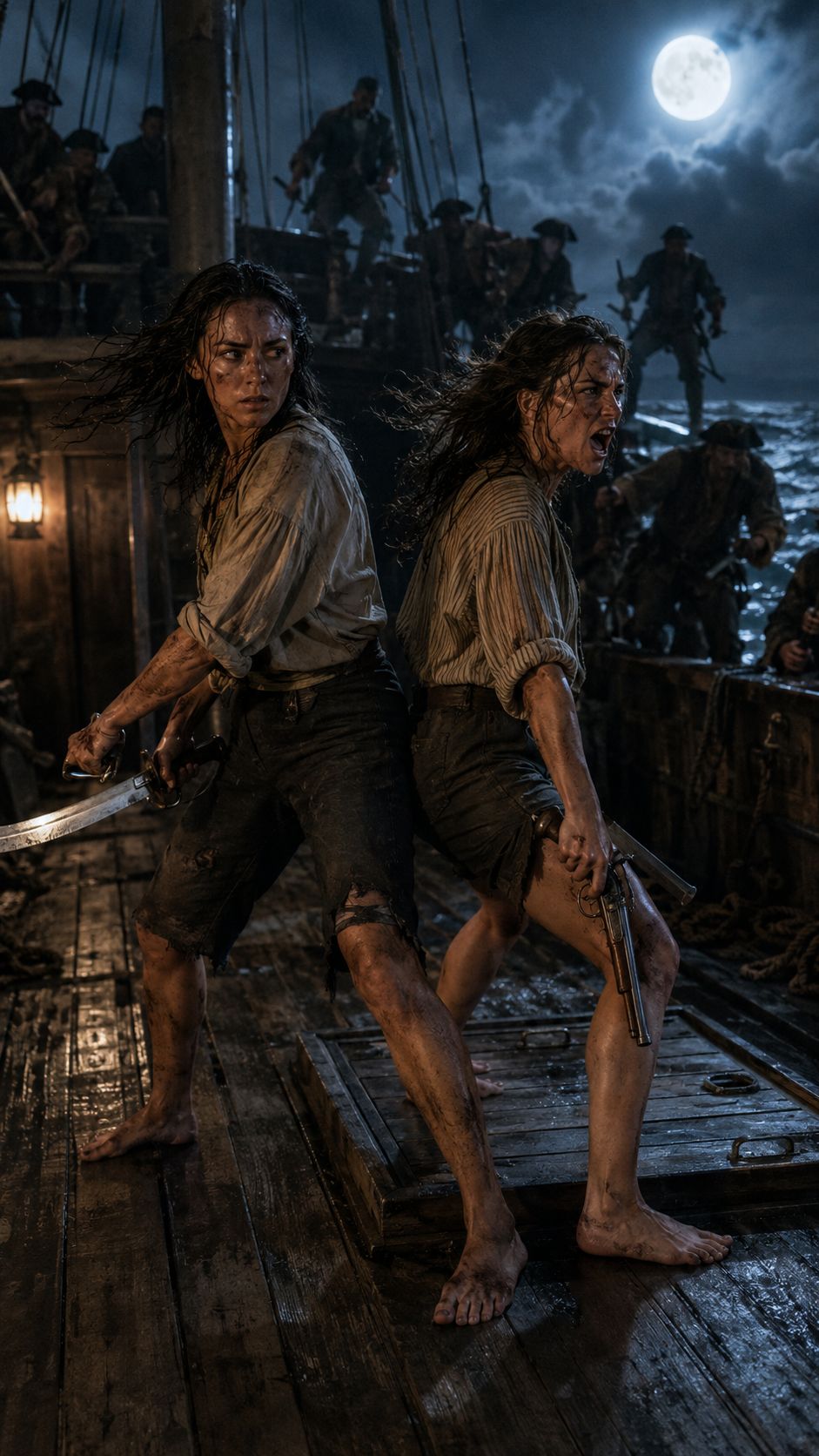 The Last Two Pirates Standing Were Women
When pirate hunters boarded the ship, the drunken crew hid below — only two fighters remained on deck, both women.
Negril, Jamaica · 1720 · 2827 km away