
The Spanish did not call him Sir Francis Drake. They called him El Draque — The Dragon.
For thirty years, he had burned their ports, stolen their gold, sunk their ships, and humiliated their king. He had sailed around the entire world — only the second man in history to do it — and come home with a ship so heavy with Spanish treasure that Elizabeth I came aboard personally to knight him on the deck. Philip II of Spain placed a bounty on his head — the modern equivalent of over six million dollars. The most powerful empire on Earth wanted one English sailor dead more than it wanted anything else.
He defeated the Spanish Armada in 1588. When the warning beacons were lit along the English coast and a messenger rode to Plymouth to tell him the largest fleet ever assembled was coming for England, Drake reportedly looked up from his game of bowls and said: “There is time enough to finish the game and beat the Spaniards too.”
He finished the game. He beat the Spaniards.
Then the sea — which had given him everything — took it back.
THE HORROR Drake’s final voyage was a disaster. He sailed for the Caribbean in August 1595 with twenty-seven ships and 2,500 men. The target was Spanish Panama — the crossing point where South American gold was carried overland to waiting galleons. He had raided it successfully twenty years earlier. He believed he could do it again.
He could not. The Spanish were waiting. Puerto Rico was fortified. His attack failed. A cannonball tore through the cabin of his flagship during the assault — passing through the spot where he had been sitting moments earlier, killing two officers beside his chair.
He sailed on to Panama. The attack failed again. The jungle fought him. Disease fought him harder.
His cousin and lifelong partner Sir John Hawkins died first — on 12th November 1595, off Puerto Rico. The man Drake had sailed with since boyhood was buried at sea. Drake pressed on alone.
By January, the dysentery had taken hold. Drake — the man who had outrun storms, outfought armadas, and outsailed every navy on Earth — could not outrun his own body. He grew weaker. He grew delirious. He knew what was coming.
He gave one final order. He asked to be dressed in his armour.
Not to fight. There was no battle left. He asked to be dressed for death the way he had dressed for war — in full plate, buckled and strapped, a soldier from breastplate to grave. The man who had spent his life on the water wanted to enter it dressed in iron.
He died at approximately 4 a.m. on 28th January 1596, aboard his flagship in Portobelo harbour, Panama. He was fifty-six years old.
His crew sealed his body — in full armour — inside a lead coffin. The coffin was carried to the side of the ship. It was lowered into the water. The Caribbean closed over the man who had terrorised it for three decades.
Then they scuttled two ships — the Elizabeth and the Delight — and sank them in the harbour beside him. His escorts into the deep. The Dragon would not go alone.
THE MODERN RELIC When news of Drake’s death reached Spain, church bells rang across the empire. In cities from Madrid to Lima, from Manila to Mexico City, bells tolled in celebration. The Dragon was dead. The man who had burned their ports and stolen their gold and humiliated their king was in a lead box at the bottom of the sea.
In England, Elizabeth I mourned. She had lost her privateer, her pirate, her weapon. The woman who had knighted him on his own deck received the news in silence.
The lead coffin lies somewhere on the seabed near Portobelo, Panama — in water estimated at 10 to 40 metres deep. Divers have searched for it for over four hundred years. Expeditions in the 20th and 21st centuries have surveyed the harbour floor using sonar and magnetometers. The wrecks of the Elizabeth and the Delight have been tentatively identified. The coffin has not.
He is still down there. In full armour. In a sealed lead box. On the ocean floor. The most feared pirate in English history is somewhere in the dark — dressed for war, waiting to be found, in the same water he sailed for thirty years. The Spanish rang bells when he sank. The English have been diving for him ever since.
Nearby on the Dark Atlas
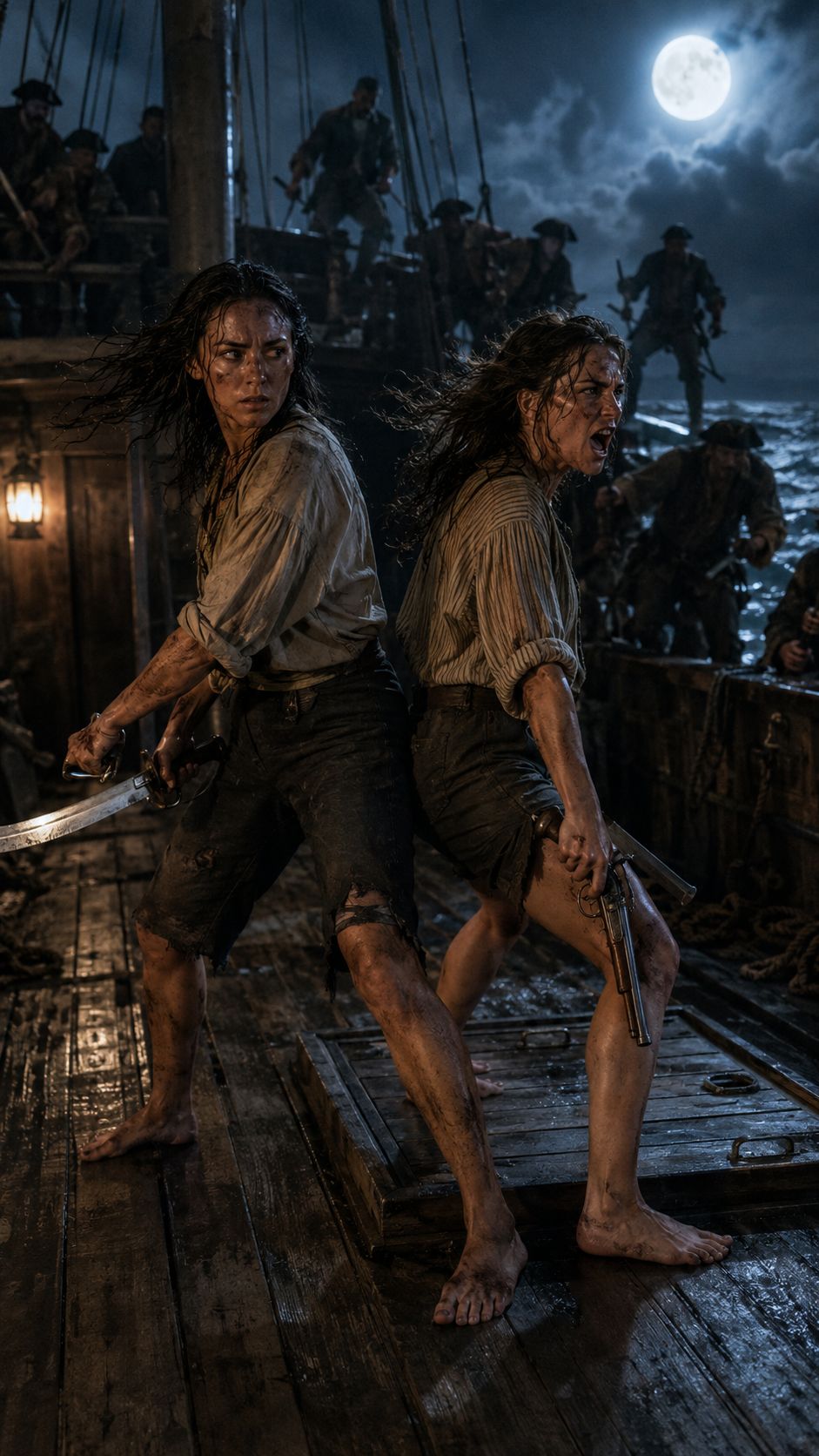 The Last Two Pirates Standing Were Women
When pirate hunters boarded the ship, the drunken crew hid below — only two fighters remained on deck, both women.
Negril, Jamaica · 1720 · 979 km away
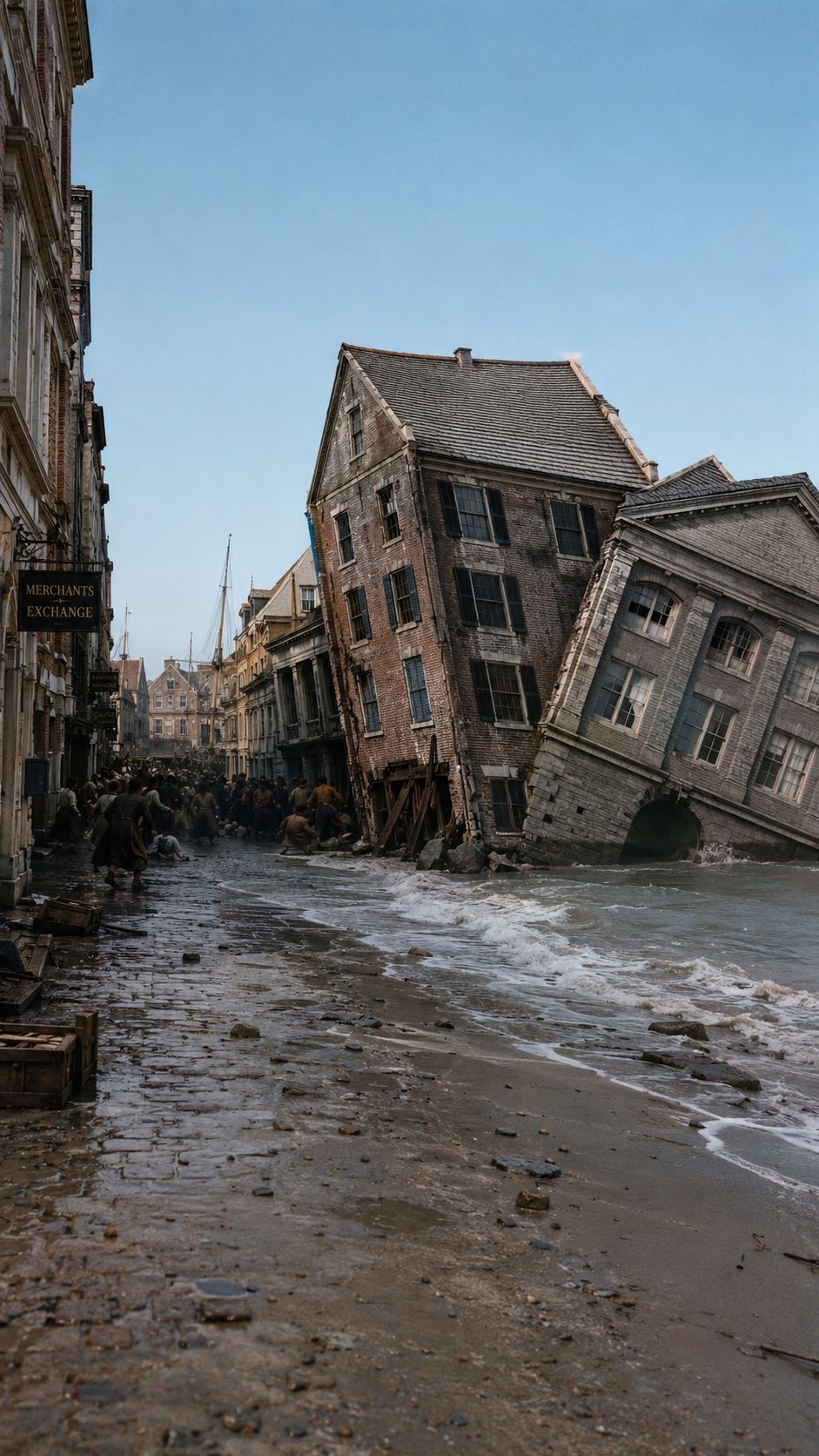 The City That Sank in Minutes
The most wicked city in the world liquefied into the sea in an earthquake that swallowed two-thirds of the town alive.
Port Royal, Jamaica · 1692 · 980 km away
- The Governor Shipped Home In Chains
The Spanish crown that funded his voyages had Columbus arrested and shipped home to answer for his own cruelty.
Santo Domingo, Dominican Republic · 1500 · 1444 km away
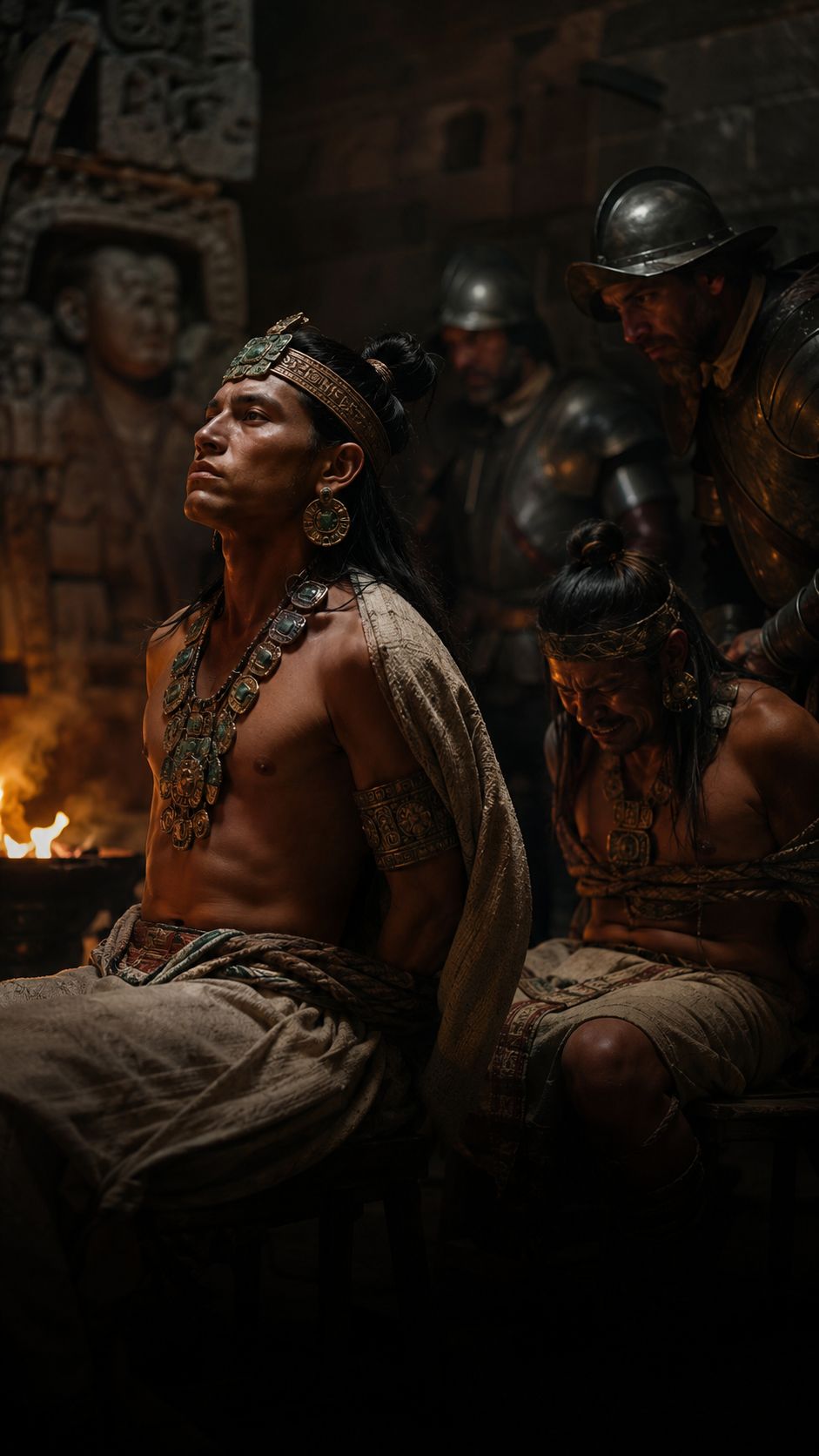 The Last Aztec Emperor Who Never Broke
Tortured by fire and marched as a prisoner into the jungle, the last Aztec emperor faced his end with unbroken dignity.
Izancanac, Tabasco, Mexico · 1525 · 1586 km away