
Ridley Scott’s 2021 film The Last Duel tells it three times over, from three points of view, and lets you sit in the awful uncertainty of it. What the film cannot fully convey is that this was not a story invented for tension. It happened, it was recorded by the chroniclers of the age, and the stakes on that December morning were even crueller than a modern audience tends to realise. In January 1386, while the knight Jean de Carrouges was away in Paris, his wife Marguerite said that a squire named Jacques Le Gris — a former friend of her husband, a charming and well-connected man — forced his way into their home with an accomplice and raped her, warning her to stay silent or be shamed and killed. Marguerite did not stay silent. When her husband returned she told him everything, and Carrouges did something extraordinary for a medieval woman’s accusation: he believed her, and he took the case all the way to the King of France. Le Gris denied it absolutely. He had powerful protectors, including Count Pierre, and the ordinary machinery of justice was never going to convict him on the word of one woman. So Carrouges demanded the oldest remedy in the law: trial by combat. A judicial duel. The theory behind it was chilling in its simplicity — God would not let a liar win, so whoever survived was, by definition, telling the truth. The Parlement of Paris granted it. It would be the last such duel it ever officially sanctioned. The bitterness ran deep, and personal. Carrouges and Le Gris had once been close — comrades in the service of the same lord, Count Pierre of Alençon, and Le Gris had even stood as godfather to Carrouges’s son. But the two men had fallen out over money, land and favour. Le Gris was clever, charming and rising fast in the count’s affection, while Carrouges, prickly and often absent on campaign, felt himself passed over and slighted at every turn, losing an inheritance and an appointment he believed were his by right. By the time Marguerite made her accusation, the two were enemies, and the count’s court sided firmly with the popular Le Gris. That is part of why an ordinary trial was hopeless for Carrouges, and why the accusation became so explosive: to many powerful people it looked like a jealous, resentful knight using his wife’s word as a weapon against a rival — which made Marguerite’s insistence, under the threat of the fire, all the more remarkable.
The Horror
Here is the part the phrase “trial by combat” hides, and the part that makes Marguerite’s courage almost unbearable to contemplate. She was not a spectator to her husband’s fight. Under the law, if Carrouges lost — if Le Gris killed him — that outcome was God’s verdict that Marguerite had lied. And the punishment for a woman who falsely accused a man of rape was to be burned alive. So on the day of the duel she was brought to the field in black and made to sit on a scaffold beside the arena, in full view of the crowd, with the stake already prepared. She had sworn her account was true on pain of damnation. Now she had to sit motionless and watch two men hack at each other, knowing that every blow against her husband was a blow towards the fire waiting behind her. If his strength failed, hers would end in the flames. She had told the truth and staked her body on another man’s sword arm. The fight itself, on 29 December 1386 at the priory of Saint-Martin-des-Champs in Paris, was brutal and close. Thousands watched, including the young King Charles VI. The men shattered lances on horseback, then fought on foot with swords and axes. Le Gris wounded Carrouges in the thigh. Carrouges, bleeding, closed with him, wrestled him down in his heavy armour, and could not immediately break the plate. He called on Le Gris to confess. Le Gris answered, to the end, “In the name of God, and on the peril and damnation of my soul, I am innocent of the crime.” Carrouges forced up his visor and drove a dagger through his throat. Marguerite lived. The crowd roared it as the judgement of God. Carrouges was showered with honour and money and knelt to thank the King. And Le Gris’s body was stripped, dragged through the streets of Paris behind a horse, and hanged on the great gibbet of Montfaucon, the towering execution scaffold where the corpses of criminals were left to rot in the open air as a warning. As for the victors: Carrouges, his honour and fortune restored, later went on crusade and is thought to have died a few years afterwards, around 1396, in the catastrophic Christian defeat at Nicopolis. Marguerite, who had staked her own life on the truth of her word and won, outlived him — but the records fall quiet on her, and history, having used her as the centrepiece of a spectacle, largely let her slip out of view. The woman who forced a kingdom to listen was, in the end, half-forgotten by it.
The Modern Relic
And here the true story turns its knife, in a way the film only hints at. Years later, according to later chroniclers including the Grandes Chroniques de France, another man — condemned for unrelated crimes — was said to have confessed on his own way to death that it was he who had attacked Marguerite, and that Le Gris had been innocent all along. Historians today treat that confession as unverifiable, a story that may have grown in the retelling, and many modern scholars still judge Le Gris probably guilty on the strength of Marguerite’s testimony. But it can never now be proven either way. That is the horror the duel was designed to erase and instead preserved forever: a system that promised God would reveal the truth, and left us less certain than when it began. You can still stand where it was decided. The priory of Saint-Martin-des-Champs survives in central Paris — its medieval buildings now house the Musée des Arts et Métiers — and the hill of Montfaucon, where Le Gris was hanged, is a Paris neighbourhood you can walk through today. Two men fought to prove which of them God believed. Six centuries later, we still don’t know.
Nearby on the Dark Atlas
- The Assassin Torn Apart With Molten Lead
A student's failed attempt on the King's life ended with red-hot pincers and molten lead poured into his open wounds.
Paris, France · 1594 · same site
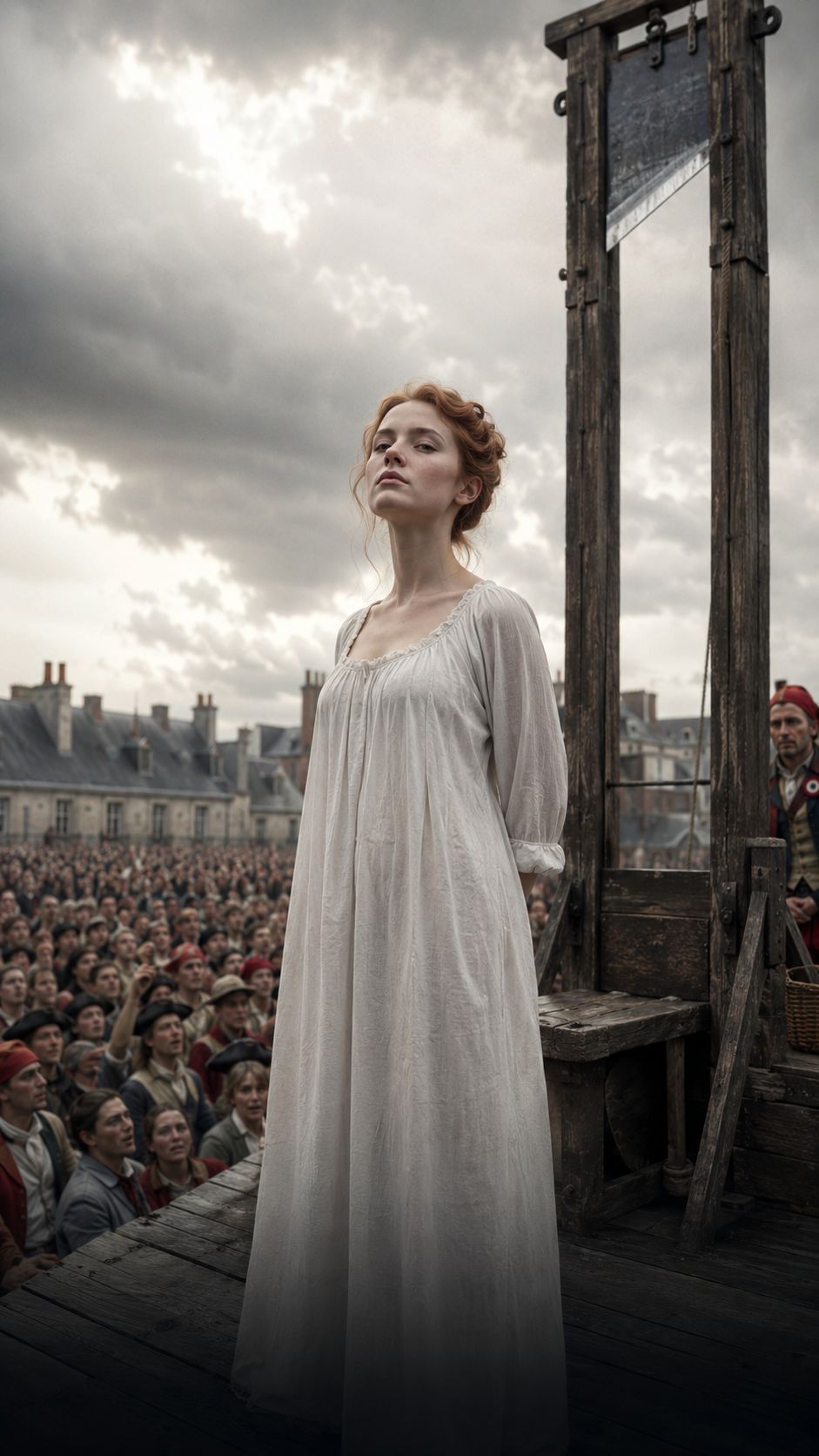 The Assassin Whose Severed Head Blushed
She murdered a revolutionary leader in his bath to save France, and witnesses swore her severed head reddened afterward.
Paris, France · 1793 · same site
 The Book That Outlived Its Author's Pyre
A woman was burned for writing that the soul could reach God without the Church, but her banned book kept circulating in secret for centuries.
Paris, France · 1310 · same site
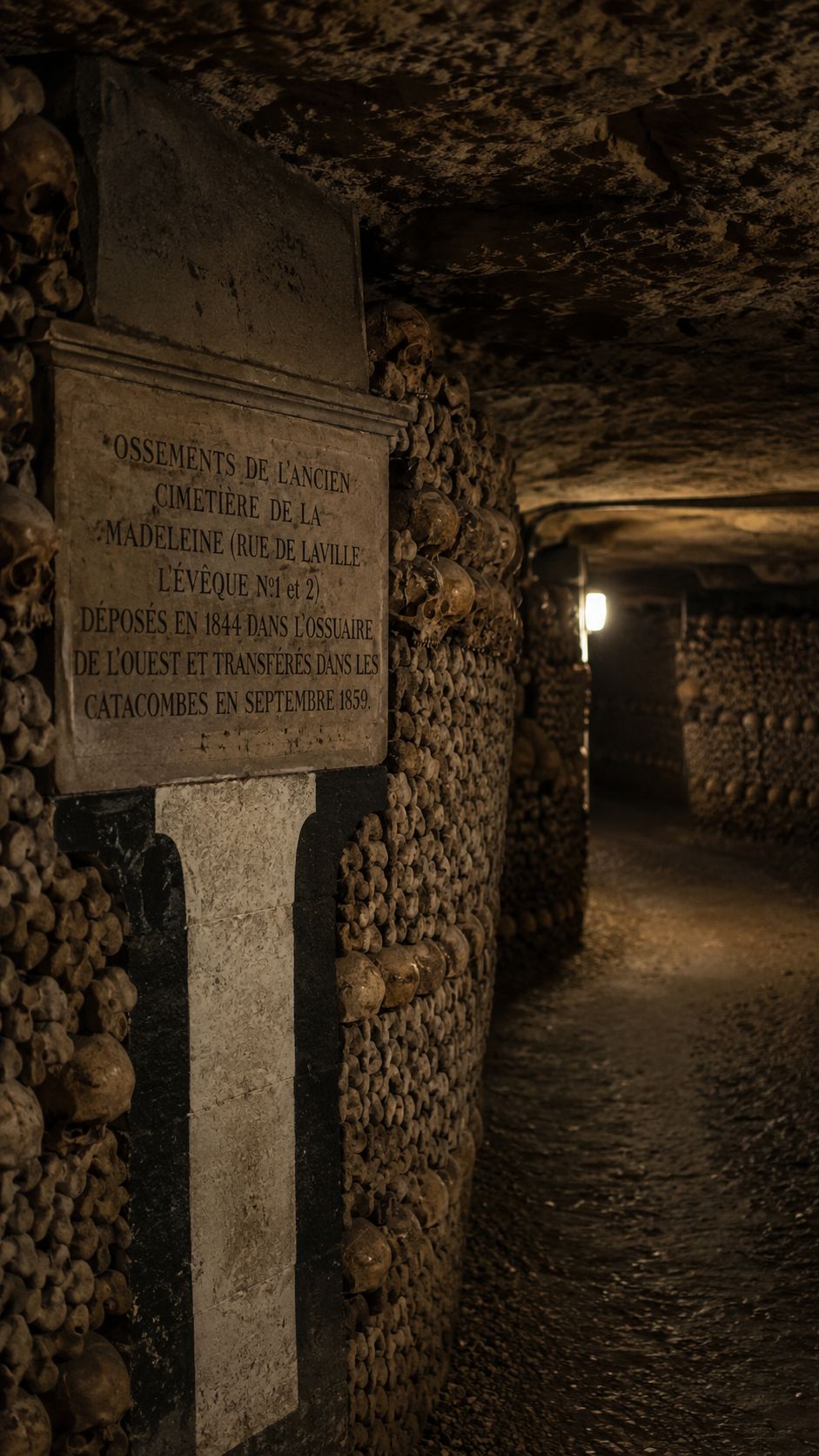 The Cemetery That Rose Above The Streets
Centuries of bodies raised a Paris graveyard eight feet above the surrounding streets before it finally gave way.
Paris, France · 1780 · same site