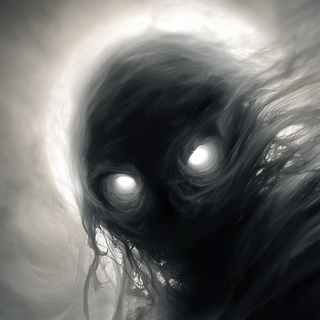
The story of Petrus Gonsalvus is the astonishing, and deeply sad, true history that lies behind one of the most beloved fairy tales in the world — Beauty and the Beast. Because the “Beast” was a real man, who really did marry a beautiful woman named “Beauty,” and really did live in a castle at a royal court. But the truth of his life is a far darker and more human story than the fairy tale — a story not of an enchanted prince waiting to be freed by love, but of a real human being treated, for his entire life, as a marvel, a specimen, and a possession.
To understand it, you have to go back to the island of Tenerife, in the Canary Islands off the coast of Africa, in the year 1537. There, a boy was born named Pedro González — later Latinised to the grander-sounding Petrus Gonsalvus. And from the moment of his birth, he was extraordinary, because Pedro was born with an exceptionally rare genetic condition — now known as hypertrichosis, and sometimes called “werewolf syndrome” — which covered almost his entire body, including his whole face, in long, soft hair. It is so rare that only a few dozen cases have ever been documented in all of history. In the superstitious world of the sixteenth century, a child who looked like this was not seen as a boy with a medical condition. He was seen as a wild man, a beast, perhaps even a werewolf. And he was treated accordingly.
The Horror
As a young child, Pedro was taken from his home — and the early accounts of his treatment are genuinely disturbing. Regarded as a wild animal rather than a boy, he is said to have been kept confined in a cage, and fed on raw meat and animal feed, as though he were a beast to be exhibited. And then, at around the age of ten, this caged, hairy child was made into a gift. He was shipped to France and presented to the new King, Henri II, as an exotic curiosity — a living novelty to amuse the royal court, given as one might give a rare and wonderful animal. He arrived unable to speak the language, a terrified child who had been treated as something less than human for his entire short life.
But at the French court, something unexpected happened. King Henri II decided to conduct an experiment. He wanted to see whether this “beast” — for he genuinely believed Petrus was a kind of savage, incapable of true human learning — could be turned into a gentleman. So, out of curiosity rather than kindness, he ordered that Petrus be given a full classical nobleman’s education: Latin, courtly manners, the learning of an aristocrat. And Petrus Gonsalvus, the “wild man,” proved them all wrong. He learned brilliantly. He came to speak fluent French, Italian, and Latin, and grew into a cultured, articulate, educated gentleman who could hold his own in conversation with the nobility — in many ways better educated than the aristocrats who gawked at him. He was a fully civilised man, in every sense. And yet, no matter how learned and refined he became, the court could never quite see past the hair on his face. To them, he remained a wonder, a curiosity — a beast in a gentleman’s clothes.
And then came the part of his life that most directly inspired the fairy tale — and it is not the romance the story pretends. When Petrus was a grown man, the Queen — by most accounts Catherine de’ Medici — decided upon another experiment. She wanted to see what would happen if this hairy man had children: would they be hairy too? And so a bride was found for him: a beautiful young woman, also named Catherine, the daughter of a court servant. According to the accounts, this Catherine was not asked and did not choose. She was ordered, or bribed, to marry Petrus — and, in the most haunting detail of all, she is said not to have known what her husband truly looked like until the wedding itself, when she saw, for the first time, the face beneath the fur. She had been given, sight unseen, to the “Beast.” But here the true story offers a small, genuine grace that the fairy tale would later borrow. Against all the cruelty of how their marriage began, Petrus and Catherine, by every indication, came to genuinely love one another. They stayed together for around forty years. Surviving portraits of the couple show Catherine, the beautiful “Beauty,” resting her hand affectionately on the shoulder of her hair-covered husband — a real image of tenderness between them. They had seven children together. And this is where the darkness returns. Four of their seven children inherited their father’s condition, and were born covered in hair. And those children were not allowed to simply grow up with their parents. They were regarded as marvels, as property — and they were taken from Petrus and Catherine and given away, as gifts, as living “pets,” to various nobles and aristocrats across Europe, to be kept as curiosities in their courts, just as their father had once been given to a king. The family was studied by scientists as medical specimens. A beloved father and mother had their hairy children taken from their arms and distributed around the continent like exotic objects.
The Modern Relic
Petrus Gonsalvus lived out his life under the “protection” — and ownership — of a series of noble patrons, eventually settling in Italy, and he died sometime around 1618. The exact location of his grave, and Catherine’s, is unknown. But the family was painted, again and again — because Renaissance nobles loved to own images of the wonders in their collections. And this is the relic. Because those portraits survive. Across the museums of Europe, you can still look into the faces of the real Beauty and the Beast and their hairy children — Petrus and Catherine, and their daughter Antonietta, and the others — painted in fine aristocratic dress that deliberately contrasted with their “wild” appearance. Many of these haunting portraits hang today in the Chamber of Art and Curiosities at Ambras Castle in Austria, the famous cabinet of wonders assembled by an archduke, where the Gonsalvus family were displayed as marvels of nature — so much so that the condition is sometimes still called “Ambras syndrome” after the castle where their pictures hung. Another tender portrait of Petrus and Catherine together survives in a gallery in Washington. Roughly two hundred years after they lived, a French writer named Gabrielle-Suzanne de Villeneuve wrote the tale of Beauty and the Beast, and many scholars believe the real marriage of Petrus and Catherine Gonsalvus was one of its inspirations. The fairy tale gave the Beast a happy ending: love breaks the curse, and the beast transforms into a handsome prince. But there was no transformation for Petrus Gonsalvus. He was never cursed and never enchanted — he was simply a man, a brilliant and cultured man, who happened to be born looking different, and who was treated as a beast for it his whole life, however gilded the cage. The real magic in his story was not a spell being broken. It was that a woman ordered to marry a stranger she feared, and a man the whole world called a monster, somehow found, in each other, forty years of real love — and looked out at us, side by side, from a painting that has survived for four hundred years.
Nearby on the Dark Atlas
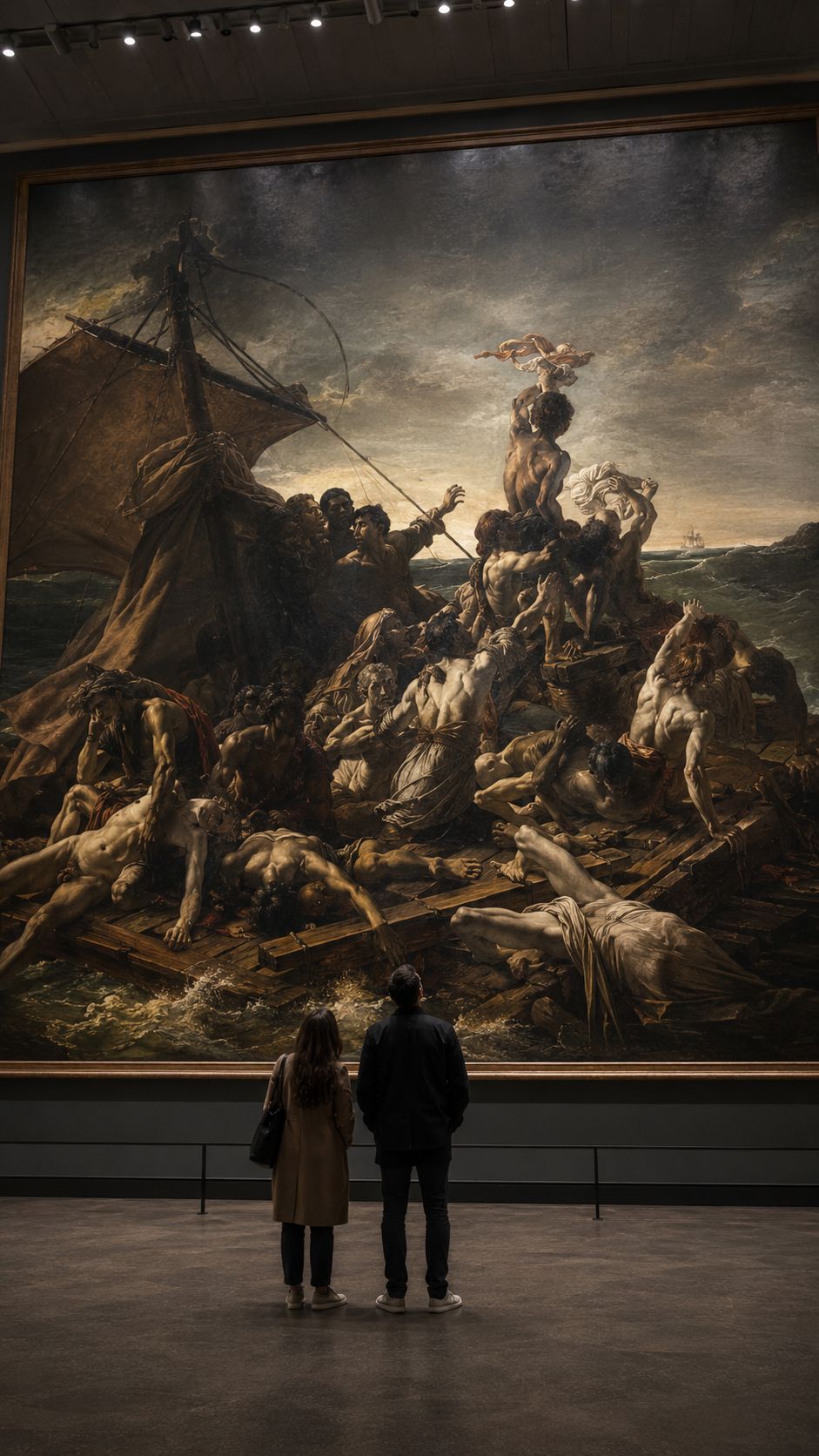 The Raft That Inspired A Masterpiece
147 people were abandoned on a raft in the Atlantic — starvation, madness and cannibalism followed before rescue.
Arguin Bank, off Mauritania, Mauritania · 1816 · 868 km away
- The Execution Designed To Keep Victims Alive Longer
Hanging a person upside down kept blood in the brain long enough for the saw to finish its work.
Meknes, Morocco · 1705 · 1224 km away
- The Heart Thrown Into Battle Against The Enemy
Surrounded and facing certain death, the knight hurled his dead king's heart into the enemy line and followed it.
Teba, Spain · 1330 · 1473 km away
 The Lovers Portugal Crowned After Death
A king's mistress was murdered in front of her children — and her lover later crowned her corpse queen.
Coimbra, Portugal · 1355 · 1523 km away
More like this
 The Rape Trial That Ended In Trial By Combat
A woman's accusation of rape led to France's last judicial duel, with her own life staked on the outcome.
Paris, France · 1386
- The Parish Registers Of The Beast's Victims
Between 1764 and 1767 something killed roughly a hundred people, recorded in the registers as 'devoured by the beast.'
Saugues, France · 1764
- The Manufacturing Of England's Most Haunted House
For decades it was called the most haunted house in England, until its ghost story revealed how a haunting gets made.
Borley, Essex, United Kingdom · 1929
- The Truth Behind The Elephant Man
The real man behind the famous film was quieter, stranger and far more heartbreaking than any screenplay.
Whitechapel, London, United Kingdom · 1890