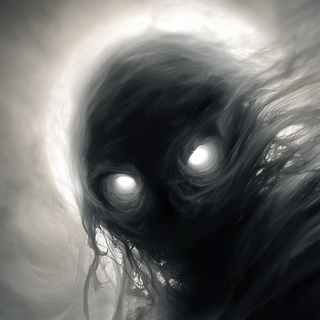
Elagabalus is one of the strangest figures ever to sit on the throne of Rome — a teenage priest-emperor whose brief, scandalous reign so appalled the Roman establishment that when they finally killed him, they weren’t content just to end his life. They set out to erase him from existence entirely, and to give his body the most degrading fate imaginable.
His rise was as bizarre as his fall. He was born around 204 AD in Syria, and his real name was Varius Avitus Bassianus. His family were hereditary high priests of a Syrian sun god called Elagabal — worshipped in the form of a large black conical stone — and the boy served as its priest. He should have lived and died in obscurity in the East. But his ferociously ambitious grandmother, Julia Maesa, had other plans.
When the emperor Caracalla was assassinated, Maesa spread a rumour: that her teenage grandson was actually Caracalla’s secret illegitimate son, and therefore the rightful heir. In 218 AD, the fourteen-year-old boy was smuggled into a Roman legion’s camp and proclaimed emperor. The army rallied to him, the reigning emperor Macrinus was defeated and killed, and a fourteen-year-old Syrian sun-priest became the master of the Roman world. History would remember him by the name of his god: Elagabalus.
And Rome was not ready for him. The young emperor arrived in the capital and proceeded to horrify the deeply traditional Roman elite in almost every way possible. His greatest offence was religious: he tried to overthrow the entire Roman religious order. He brought his Syrian sun god’s sacred black stone to Rome in a lavish procession, built a huge temple for it, and declared Elagabal the supreme god of the Roman state — placing this foreign deity above Jupiter himself, the king of the Roman gods. For Rome, this was an outrage: the emperor was supposed to be the guardian of Roman tradition, and instead he was elevating an exotic Eastern god over Rome’s own.
Beyond that, the ancient sources pile scandal upon scandal onto him — tales of wild extravagance, shocking banquets, sexual excess, and a total contempt for Roman custom and dignity. It’s genuinely hard to know how much of this is true and how much is character assassination by writers who despised him, but the effect was the same: Elagabalus became, in the Roman imagination, the very image of a decadent, unfit ruler.
Even his own family turned against him. His grandmother Julia Maesa — the woman who had made him emperor — saw that he was a lost cause, a liability threatening the whole dynasty. So she engineered a backup plan, persuading Elagabalus to adopt his young cousin Alexander as heir. But then Elagabalus grew jealous and paranoid of the popular boy, and tried to have him killed. That was the final straw. The Praetorian Guard — the emperor’s own elite bodyguard — vastly preferred the level-headed Alexander, and they had been quietly bribed by the women of the family to support him.
In March of 222 AD, it came to a head at the Praetorian camp. The soldiers rose against Elagabalus. The eighteen-year-old emperor, terrified, tried to hide — and, according to the sources, was found cowering in a latrine. The guards fell on him and killed him there, and killed his mother, Julia Soaemias, alongside him; the two reportedly died clinging to each other.
But death was only the beginning of his punishment.
THE MODERN RELIC The soldiers were determined to humiliate him utterly, and to deny him even the dignity of a grave. They beheaded the young emperor. They dragged his corpse through the streets of Rome for the mob to abuse and mutilate. His mother’s body was contemptuously cast aside and abandoned in the street.
Then they came to the sewers. The ultimate insult a Roman could inflict on an enemy of the state was to deny them proper burial and cast their body into the filth. So the soldiers tried to stuff the dead emperor’s body down into a sewer. But — in a grimly absurd detail recorded by the ancient historians — the sewer opening was too small, and the corpse wouldn’t fit. Undeterred, they dragged it to the river, tied a weight to it so it could never float back up and be recovered, and hurled it into the Tiber. He was denied a tomb, denied a resting place, thrown into the water to vanish forever. It earned him a grim posthumous nickname: Tiberinus — “the one thrown in the Tiber” — and Tractatius, “the dragged.”
And then Rome tried to make it as though he had never existed at all. The Senate passed damnatio memoriae against him — the “condemnation of memory,” the ultimate official erasure. His statues were torn down. His name was chiselled off every inscription and monument. His coins were withdrawn. His Syrian sun god’s sacred black stone was packed up and sent back to Syria, and the old Roman gods were restored to their proper place. Every trace of the boy-emperor and his foreign religious revolution was scrubbed away, as if Rome could un-happen the whole strange episode. His cousin Alexander took the throne and ruled for thirteen years.
The relic is the ground of Rome itself, and the debate that surrounds him to this day. The great temple Elagabalus built for his sun god on the Palatine Hill — the Elagabalium — once stood over the heart of imperial Rome, and its remains have been studied by archaeologists among the Palatine ruins you can visit today. But the most fascinating relic of Elagabalus is how the argument over him has never died. Because the ancient accounts of his life were written by his enemies, historians still fiercely debate who he really was — a genuinely unfit and cruel ruler, or a misunderstood teenager crushed by a hostile establishment and then slandered for eighteen centuries. In recent years, some have even re-examined ancient claims that Elagabalus asked to be called a lady and preferred to be addressed as a woman, leading to modern debates about the emperor’s identity. Eighteen hundred years after Rome tried to erase him completely, we are still arguing about the eighteen-year-old they threw in the river — which means, in the end, their attempt to make him disappear failed. We remember Elagabalus precisely because of how desperately Rome tried to make us forget him.
Nearby on the Dark Atlas
- How Crucifixion Actually Killed Its Victims
The nails weren't the killer — the Romans built a death that came from suffocation, one agonising push-up at a time.
Rome, Italy · 100 · same site
 Nero Never Fiddled While Rome Burned
The most famous image of imperial cruelty in Roman history turns out to be almost entirely fabricated.
Rome, Italy · 64 · same site
 Six Thousand Crucified Along The Appian Way
The slave rebellion Hollywood romanticised did not end with one man on a cross, but six thousand.
Rome, Italy · 71 BC · same site
 The Borgia Pope's Unsolved Family Murder
The pope's own favourite son was murdered and dumped in the Tiber, with suspicion pointing straight at his own brother.
Rome, Italy · 1497 · same site