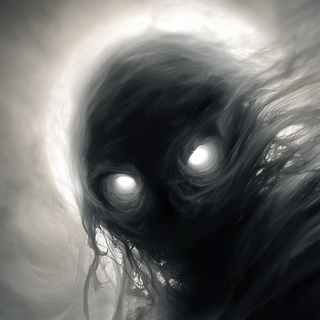
Sir Everard Digby was one of the most famous conspirators in the Gunpowder Plot — and the story of his execution in 1606 contains one of the most extraordinary and chilling legends of defiance in all of English history.
The Gunpowder Plot of 1605 is one of the most infamous conspiracies ever attempted. A group of English Catholics, led by Robert Catesby and including the famous Guy Fawkes, plotted to blow up the House of Lords during the State Opening of Parliament on the 5th of November 1605 — killing the Protestant King James I, his government, and the assembled lords in a single, colossal explosion, and sparking a Catholic uprising. They had smuggled 36 barrels of gunpowder into the cellars beneath Parliament.
Sir Everard Digby was a wealthy, handsome, and charming young gentleman — a convert to Catholicism who joined the conspiracy late. His role was not to light the fuse, but to lead the planned armed uprising in the Midlands that was supposed to follow the explosion, seizing the King’s daughter to place her on the throne as a Catholic puppet queen.
But the plot was betrayed. An anonymous letter warned a lord to stay away from Parliament, the cellars were searched, and Guy Fawkes was caught red-handed with the gunpowder in the early hours of the 5th of November. The conspirators scattered and fled. Some were killed resisting capture; the rest, including Digby, were hunted down and taken to the Tower of London. Digby was the only one of the plotters to plead guilty at their trial. It made no difference. They were all condemned to death for high treason — and in 1606, the punishment for high treason was the most terrifying and agonising death the English state could devise.
The Horror
The sentence was to be hanged, drawn, and quartered — a punishment deliberately designed to be as prolonged, painful, and humiliating as possible, and to utterly destroy the body of the traitor. The condemned man would be dragged through the streets to the execution site tied to a wooden hurdle, then hanged by the neck — but crucially, only for a short time, cut down while still alive and conscious, before the rest of the barbaric sentence was carried out upon him. It was a death meant to inspire absolute terror in anyone who might dare to threaten the crown.
On the 30th of January 1606, the first four of the plotters — Everard Digby, Robert Wintour, John Grant, and Thomas Bates — were dragged on hurdles through the crowded, jeering streets of London to a scaffold erected at the west end of St Paul’s Churchyard. It was one of the most public execution sites in the country, and an enormous crowd had gathered to watch the traitors die.
Digby was the first to mount the scaffold. And what struck everyone who witnessed it was his astonishing composure and courage. He was completely unrepentant — not for offending God, he said, but he freely admitted breaking the laws of the realm, and was willing to die for the cause that had moved him: what he saw as the ending of the persecution of England’s Catholics. He refused to pray with the Protestant preachers, instead calling on the Catholics in the crowd to pray with him, and fell to his own prayers with such devotion that it deeply moved many of the onlookers.
Then he did something remarkable. He turned and saluted the noblemen and gentlemen gathered on and around the scaffold — bowing to each of them in so friendly, calm, and cheerful a manner that witnesses said he seemed utterly free from any fear of death, as though he were simply taking his leave of them at court or bidding farewell before a journey, rather than facing the most horrific execution imaginable. His serenity in that moment became legendary.
Digby was hanged — but, as the sentence demanded, only very briefly, and he was taken down alive to face the remainder of his punishment.
THE MODERN RELIC And it is here that the most famous and haunting legend of Everard Digby’s death was born. As the executioner performed the terrible final acts of the sentence and, following the grim custom, cut out the traitor’s heart, held it aloft before the roaring crowd, and shouted out the ritual words — “Here is the heart of a traitor!” — Digby’s body, it was said, gave an answer.
According to the account, the dead man’s own corpse spoke, and replied: “Thou liest!”
It is, of course, almost certainly impossible — a man cannot speak once his heart is removed. And yet this astonishing story was recorded and passed down by no less a figure than Sir Francis Bacon, the great philosopher and statesman, a contemporary who lived through these events. Whether it was a final reflexive spasm, a trick of the horrified crowd’s imagination, or pure legend, the tale of Everard Digby’s defiant corpse — refusing, even in death, even with his heart torn out, to accept the label of “traitor,” and flinging the accusation back with his final breath — became one of the most powerful images of steadfast defiance in English history. To his fellow Catholics, he was no traitor but a martyr, and his impossible last word was proof of a conscience that not even death could silence.
The other plotters followed him to their deaths over that day and the next, and the most famous of all, Guy Fawkes, cheated the worst of his own sentence — climbing the scaffold weak and ill, he either fell or jumped from the hanging ladder and broke his neck, dying instantly and sparing himself the agony that followed.
The relic is the memory itself, woven into the fabric of British life every single year. The Gunpowder Plot became the most famous failed conspiracy in English history, and its defeat is still marked, more than four centuries later, every 5th of November — Bonfire Night, or Guy Fawkes Night — when across Britain people light bonfires and set off fireworks, and burn effigies of Guy Fawkes, in a tradition of celebrating the survival of the King that has continued unbroken since 1605. The old rhyme still echoes: “Remember, remember, the fifth of November, gunpowder, treason and plot.” The site at St Paul’s Churchyard in the heart of London, where Everard Digby faced his terrible death with such unnerving calm — and where, legend insists, his heart was called a traitor’s and his own dead body answered back “Thou liest” — is walked over by thousands every day, in the shadow of the great cathedral, most of them never knowing that it was once a stage for one of the darkest and most defiant deaths in the nation’s history.
Nearby on the Dark Atlas
- The Duchess Who Turned to Witchcraft
Desperate for her husband to be king, a duchess conspired with witches to melt a wax effigy of a young king.
St Paul's Cathedral, London, United Kingdom · 1441 · same site
 The Prophet Who Warned a King
She told Henry VIII he would die within months if he married Anne Boleyn — and paid with her own head instead.
London, United Kingdom · 1534 · same site
- The Monks Starved in the Dark
Refusing to bow to the King, ten monks were chained upright in darkness and left to waste away.
Newgate Prison, London, United Kingdom · 1537 · same site
 The Thief Who Escaped His Own Execution Cell
Chained to the floor of a condemned cell with hours to live, he picked his way out with a crooked nail.
Newgate Prison, London, United Kingdom · 1724 · same site