
In the early 14th century, King Philip IV of France had a very practical problem. Paris was executing so many people that the city’s small gallows and ad‑hoc hanging places couldn’t cope. Bodies were left rotting near busy streets and gatehouses. The sight — and the smell — were unbearable.
His powerful minister and treasurer, Enguerrand de Marigny, oversaw the construction of a permanent solution.
The Horror
The Gibbet of Montfaucon was raised on a hill outside the city walls — a massive three‑sided stone structure roughly 20 feet high, about 45 feet long, and nearly 40 feet wide. Sixteen stone pillars supported tiers of heavy wooden beams from which hung rows of iron chains. Contemporary descriptions and reconstructions suggest it could display up to 50 or 60 corpses at once.
It was not a “gallows” in the simple sense of a single beam and a rope. It was an industrial storage facility for the dead.
Many victims were executed elsewhere in Paris and then brought to Montfaucon to be hung from the chains. Their bodies were left to decompose in the open air for months or even years as a warning to everyone who passed. The royal treasurer Pierre des Essarts, for example, is recorded as having been displayed there for about three years before his family was allowed to collect what remained of him.
Beneath the platform was a vaulted underground charnel house, sealed with iron grating. When chains corroded and bones finally dropped, they fell straight into this pit. Over the course of more than four centuries, the remains of hundreds of executed people accumulated there.
In the early 1600s, the English travel writer Thomas Coryat made a point of visiting Montfaucon. He described it as “the fairest gallows that ever I saw, built upon a little hillocke, with fourteen pillars of free stone,” clearly struck by its scale and symmetry.
On 30th April 1315, Enguerrand de Marigny himself — the minister who had overseen the building — was arrested under Philip IV’s son, accused of sorcery and financial abuses. He was hanged at Montfaucon, swinging from the beams of his own creation. Chroniclers noted that the king’s once‑all‑powerful adviser now dangled among the criminals he had helped to condemn.
For the next four hundred years, the gibbet remained one of the grisliest landmarks on the approach to Paris. Victor Hugo later placed scenes from The Hunchback of Notre‑Dame there, describing worm‑eaten beams, rusted chains, grass sprouting from the platform and bones rotting in the pit beneath. He was writing fiction. He didn’t have to exaggerate much.
The Modern Relic
The Gibbet of Montfaucon was dismantled in the 1760s as attitudes to public display of corpses began to shift, and the hill itself was gradually eaten away by development. Today, the site is roughly where 53 Rue de la Grange‑aux‑Belles stands in the 10th arrondissement: a garage entrance with apartment blocks above.
The stone pillars and beams are gone, but archaeological work and historical mapping indicate that the underground charnel spaces and surrounding burial ground were never completely cleared. Construction and utility works in the area have turned up medieval mass burials nearby, almost certainly linked to the execution site on the hill.
You can stand on the pavement there today, outside a perfectly ordinary block of flats, and know that somewhere beneath your feet is the ground where the remains of more than four centuries of French “justice” fell through iron gratings into the dark. Nobody looks down.
Nearby on the Dark Atlas
- The Assassin Torn Apart With Molten Lead
A student's failed attempt on the King's life ended with red-hot pincers and molten lead poured into his open wounds.
Paris, France · 1594 · 2.6 km away
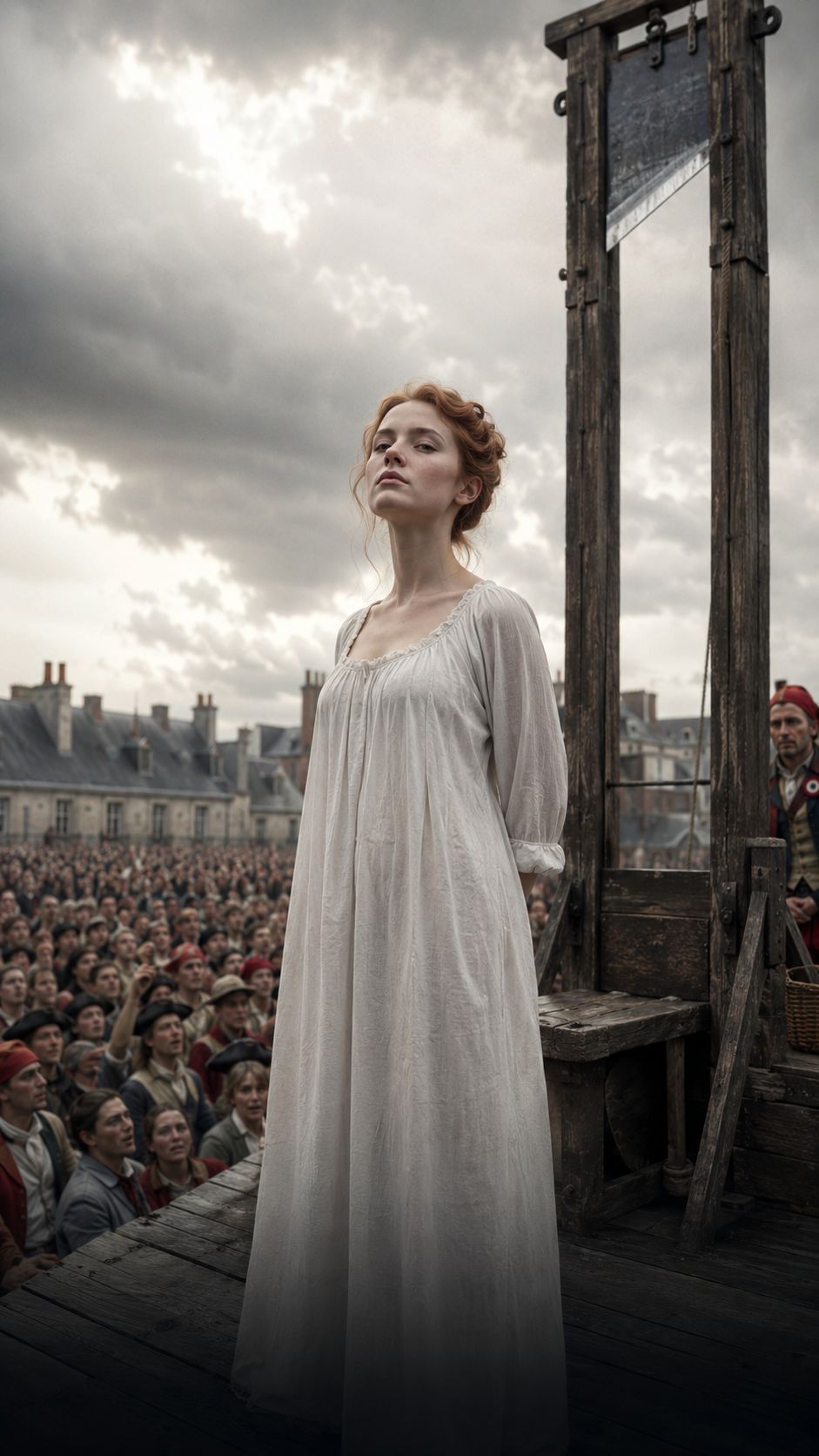 The Assassin Whose Severed Head Blushed
She murdered a revolutionary leader in his bath to save France, and witnesses swore her severed head reddened afterward.
Paris, France · 1793 · 2.6 km away
 The Book That Outlived Its Author's Pyre
A woman was burned for writing that the soul could reach God without the Church, but her banned book kept circulating in secret for centuries.
Paris, France · 1310 · 2.6 km away
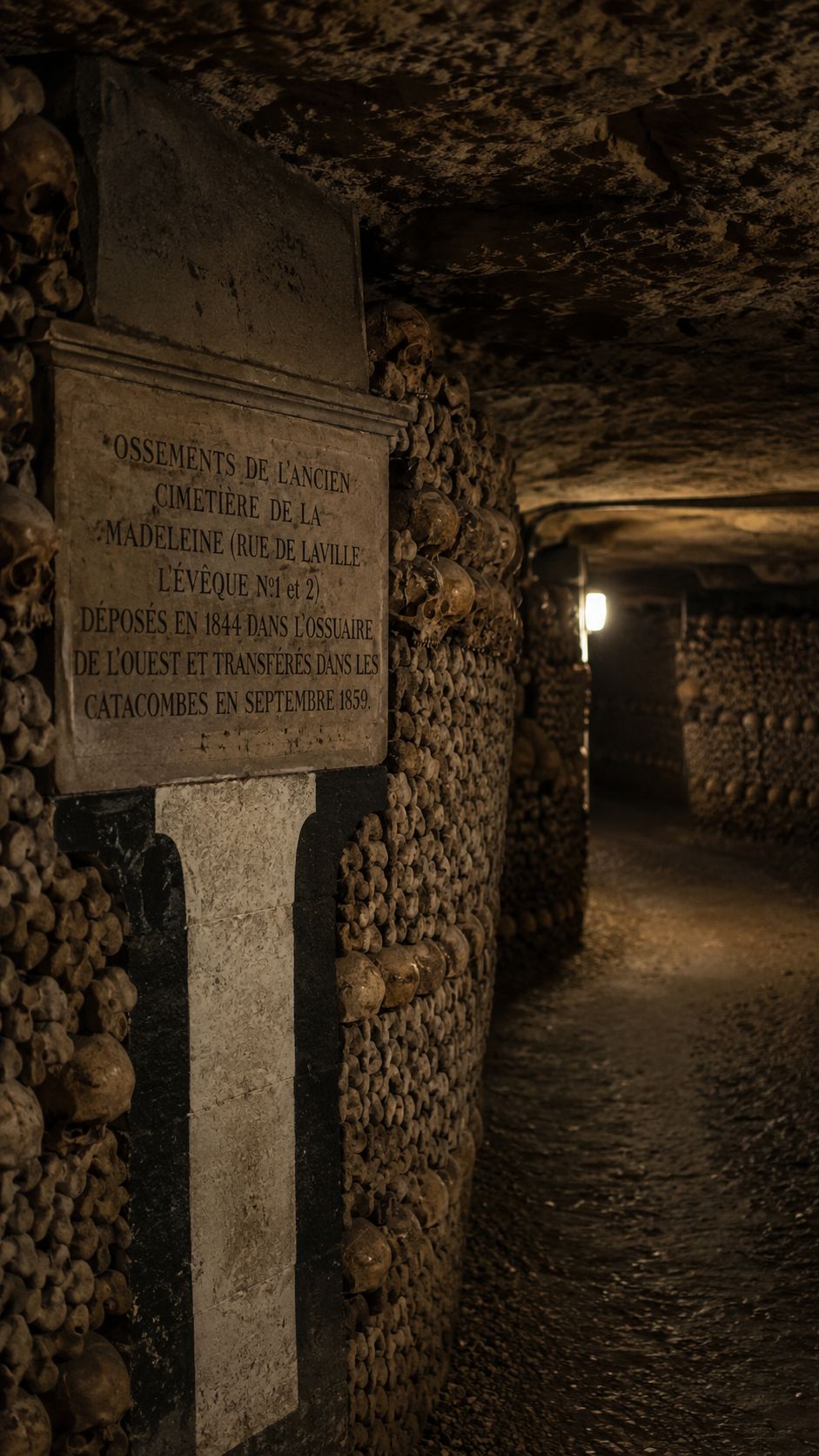 The Cemetery That Rose Above The Streets
Centuries of bodies raised a Paris graveyard eight feet above the surrounding streets before it finally gave way.
Paris, France · 1780 · 2.6 km away