
On 14th July 1789, a crowd of Parisians marched on the Bastille — the medieval fortress‑prison that, in the public imagination, represented everything the Revolution was rising against: arbitrary imprisonment by royal decree, the dreaded lettre de cachet, the king’s power to lock people away without trial or explanation.
The attackers expected to find a dungeon full of political prisoners — innocent men chained in darkness by a tyrant.
They found seven.
The Horror
The seven inmates of the Bastille that day were not what the crowd imagined. They were:
Four men convicted of forgery, held for financial crimes and awaiting transfer.
One aristocrat imprisoned at his own family’s request for “monstrous crimes” — generally thought to be sexual offences; his detention was paid for privately.
Two men considered insane, kept there as long‑term detainees.
There was no room full of pamphleteers or dissident deputies. The fortress that had become shorthand for royal terror was, by then, mostly administrative storage and a handful of difficult cases.
The crowd didn’t come for the prisoners. They came for the gunpowder stored inside — and for the symbol.
The governor, Bernard‑René de Launay, tried to negotiate. As tension escalated, fighting broke out. After hours of chaotic combat in which scores of attackers and several defenders were killed, de Launay agreed to surrender on conditions.
Once outside, the promise of safety dissolved. He was seized, beaten, and killed. His head was cut off and carried through the streets on a pike. Accounts emphasise the improvised brutality — no formal execution, just a mob, a blade, and time.
In the weeks and months after, the Bastille itself was demolished. A contractor oversaw the dismantling, stone by stone. Fragments were sold as souvenirs. Small models of the Bastille were carved from its own masonry and distributed across France as trophies of liberty. Keys and locks from the prison were gifted abroad; one key still hangs at Mount Vernon in the United States.
The symbol was physically erased and then re‑made in miniature, turned into an object people could put on their mantelpiece.
The Modern Relic
Today, the Place de la Bastille is a busy roundabout in eastern Paris. A tall column — the July Column — stands in the centre, commemorating a later uprising in 1830, not the storming of 1789.
Almost nothing of the original fortress is visible above ground. The outline of the old walls is traced in stone in the nearby streets; fragments of the foundations can be seen behind glass in the metro station. Most pedestrians pass without noticing.
Every year on 14th July — Bastille Day — France marks the fall of a prison that, on its last morning, held four forgers, two disturbed men and one aristocrat whose own relatives had asked for him to be locked away. Jets roar over the Champs‑Élysées. Troops parade. Fireworks burst above the city.
The governor’s head on a pike, the nearly empty cells, the forgers who vanish from the record, the man who believed he was someone else and ended his life in an asylum — all of that sits behind the holiday, mostly unseen.
The prison is gone. The roundabout is full. The date is still sacred.
Nearby on the Dark Atlas
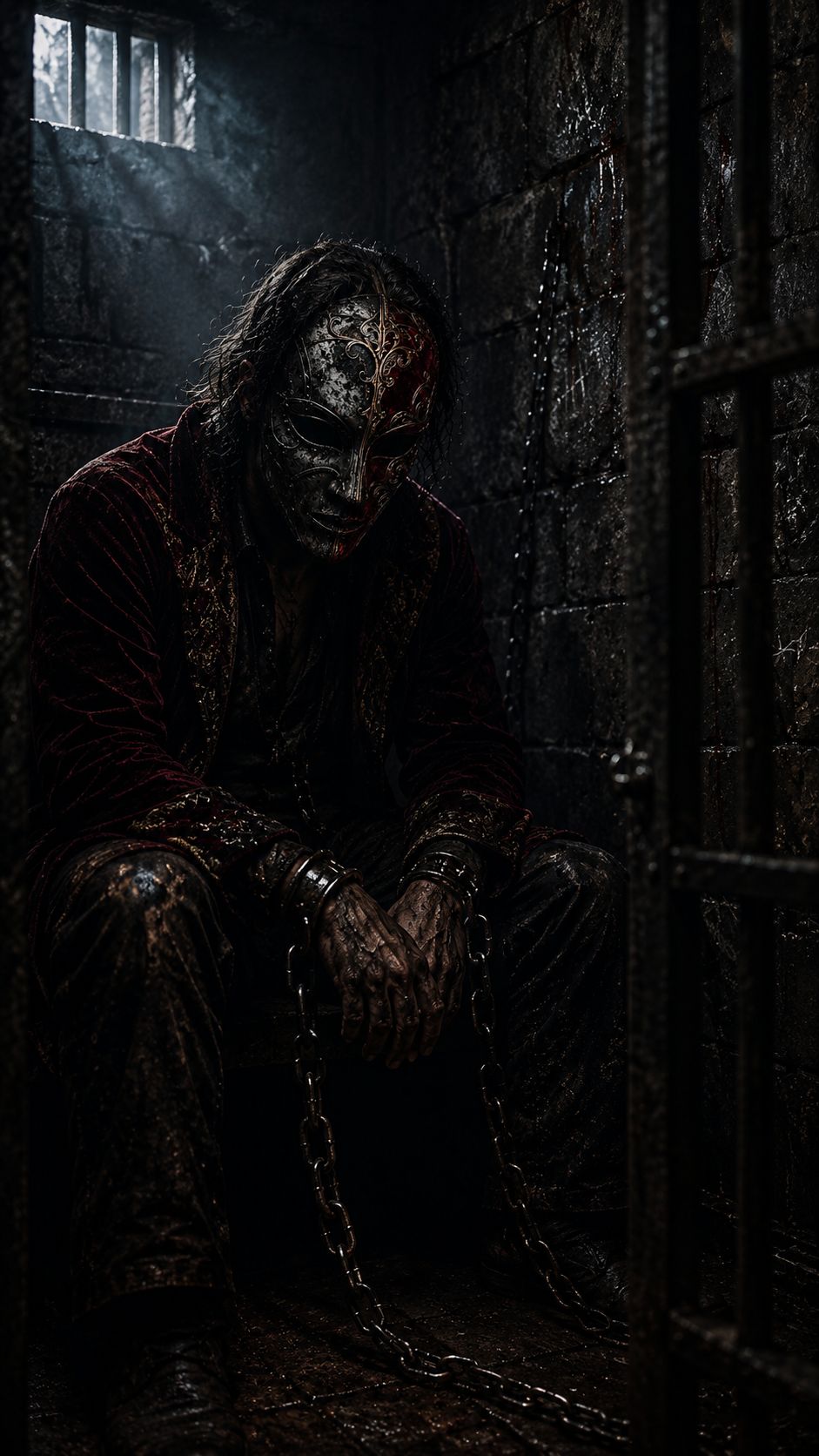 The Man Erased Behind a Mask
A man who knew a dangerous royal secret was seized in the night and erased from the human race forever.
Bastille, Paris, France · 1669 · same site
- The Assassin Torn Apart With Molten Lead
A student's failed attempt on the King's life ended with red-hot pincers and molten lead poured into his open wounds.
Paris, France · 1594 · 1.3 km away
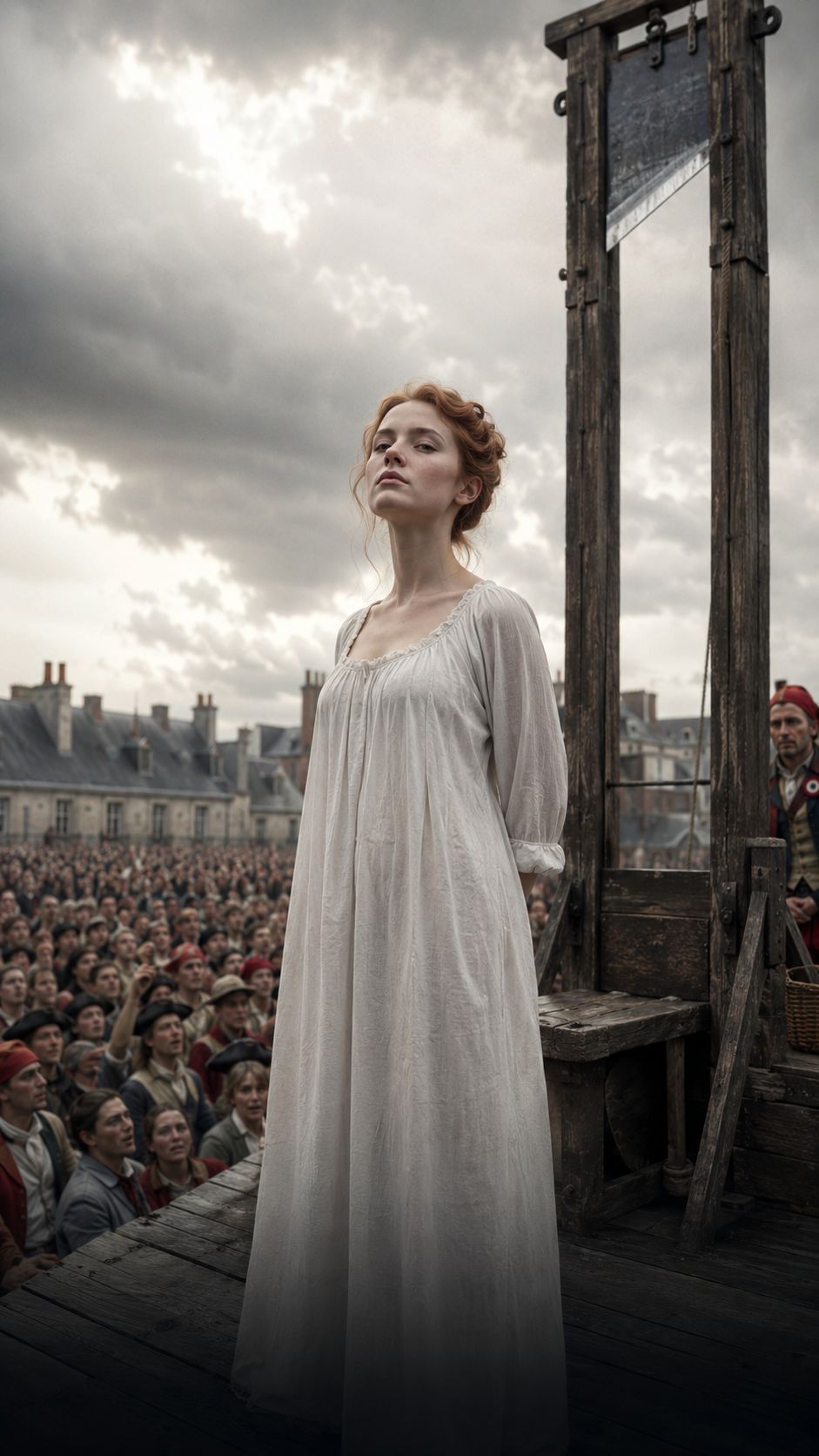 The Assassin Whose Severed Head Blushed
She murdered a revolutionary leader in his bath to save France, and witnesses swore her severed head reddened afterward.
Paris, France · 1793 · 1.3 km away
 The Book That Outlived Its Author's Pyre
A woman was burned for writing that the soul could reach God without the Church, but her banned book kept circulating in secret for centuries.
Paris, France · 1310 · 1.3 km away