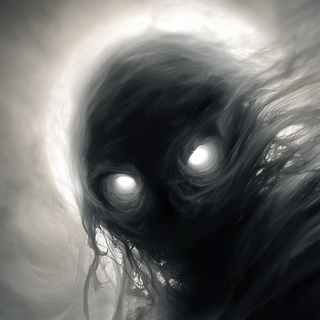
You’ve almost certainly heard the story. It’s one of the most repeated “fascinating facts” on the internet, shared millions of times: that centuries ago, so many people were accidentally buried alive that a gruesome solution was devised. A string was tied to the wrist of the corpse, run up through the coffin and the earth, and attached to a bell above the grave. If the “dead” person woke up underground, they could ring the bell — and someone sitting in the cemetery through the long night, working the “graveyard shift,” would hear it and dig them out. And so, the story goes, we got three phrases we still use today: the buried person was “saved by the bell,” they were a “dead ringer,” and their rescuer worked the “graveyard shift.”
It is a brilliant, chilling, satisfying story. And almost every word of it is false.
The Horror
Let’s kill the myth first, because it deserves killing. Linguists and dictionaries trace all three phrases, and none has anything to do with coffins.
“Saved by the bell” is boxing slang from the late 19th century — a losing fighter, about to be knocked out, is saved when the bell rings to end the round. An early known use, from an 1893 newspaper, is literally about a boxer: “Half a dozen times Flaherty was saved by the bell.”
“Dead ringer” comes from horse racing. A “ringer” was a horse secretly substituted for another of similar appearance to cheat bookmakers; “dead” meant exact or precise, as in “dead centre.” A dead ringer was an exact double.
And “graveyard shift” is simply an evocative name for the late-night shift, when the world feels as still and lonely as a graveyard. The related term “graveyard watch” also existed in nautical usage. None of these phrases came from bell-rigged coffins, grave-watchers, or people buried alive.
The whole explanation was popularised by a modern urban legend, especially the notorious “Life in the 1500s” chain email that circulated widely from the late 1990s. It stitched together invented origins for familiar sayings and presented them as grisly historical fact.
But here is the twist — and it is why this story refuses to die: the phrase is false, but the terror underneath it was absolutely, horrifyingly real.
The fear of being buried alive even has a name: taphephobia. In the 18th and 19th centuries it was widespread in Europe and America. Doctors had no electrocardiograms, brain scans, or reliable modern tests for death. Deep coma, catalepsy, hypothermia, and illnesses that slowed breathing and pulse could make a living person appear dead. In an age before reliable diagnosis, the line between death and unconsciousness could feel terrifyingly uncertain.
And that fear reached the very top of society. George Washington, dying in 1799, reportedly asked that his body not be placed in the family vault until at least two days had passed, so that death could be certain. Lord Chesterfield similarly wrote in 1769: “All I desire for my own burial is not to be buried alive.” These were not simply Gothic tales for frightened peasants. Powerful, educated people feared waking inside a sealed box beneath the earth.
The Modern Relic
So people did something about it — and this is the part of the true story that is somehow more unsettling than the myth. They invented safety coffins.
Across the 19th century, inventors in Europe and America designed and patented burial devices intended to save a person mistakenly buried alive. These designs included bells, air tubes, flags, spring-loaded signals, escape mechanisms, and viewing tubes.
One often-cited American example is Franz Vester’s 1868 “Improved Burial Case,” associated with Newark, New Jersey. It was designed with a tube leading from the coffin to the surface, a cord-and-bell signalling system, and an escape mechanism. Such inventions reveal that the fear was real enough for people to turn it into engineering.
But there is an important correction to the popular story: there is no solid evidence that graveyards commonly employed dedicated “bell-watchers” sitting through the night waiting for signals. The bell-coffin myth wrongly turns scattered experimental devices into an everyday burial custom.
The safety coffin was real. Bell-based designs were real. Patents and diagrams were real. The terror that inspired them was real. And yet here is the final, haunting truth: there is no documented case of anyone being rescued by one of these devices after premature burial.
So the next time you use the phrase, remember the layers of it. “Saved by the bell” does not come from a buried body calling for rescue — it comes from a boxing ring. But behind that harmless origin lies a genuine age of terror, when even presidents feared the grave, and inventors built bell-rigged coffins to answer a nightmare that medicine could not yet rule out. The phrase is a myth. The horror behind it was not.
Nearby on the Dark Atlas
 The Dial Painter Whose Bones Still Glowed
A false diagnosis blamed her death on syphilis — the truth was the radium paint she'd been told to point with her lips.
Orange, New Jersey, United States · 1922 · 6.2 km away
- The Novel That Predicted The Titanic
Fourteen years before Titanic sank, a novelist described an 'unsinkable' liner hitting an iceberg on an April night, with eerie precision.
New York City, United States · 1898 · 14 km away
 The Showman Who Sold Tickets To A Dissection
P.T. Barnum built his fortune exhibiting an enslaved woman alive, then sold tickets to watch her autopsy.
New York City, United States · 1836 · 14 km away
 The Fire That Changed Workplace Safety
Hundreds of young immigrant women are locked inside a garment factory when a scrap bin catches fire near closing time.
New York City, United States · 1911 · 15 km away
More like this
- The Leper King's Story No Film Would Show
Kingdom of Heaven gave him a dignified death behind a silver mask, the truth was far crueller.
Jerusalem, Israel · 1185
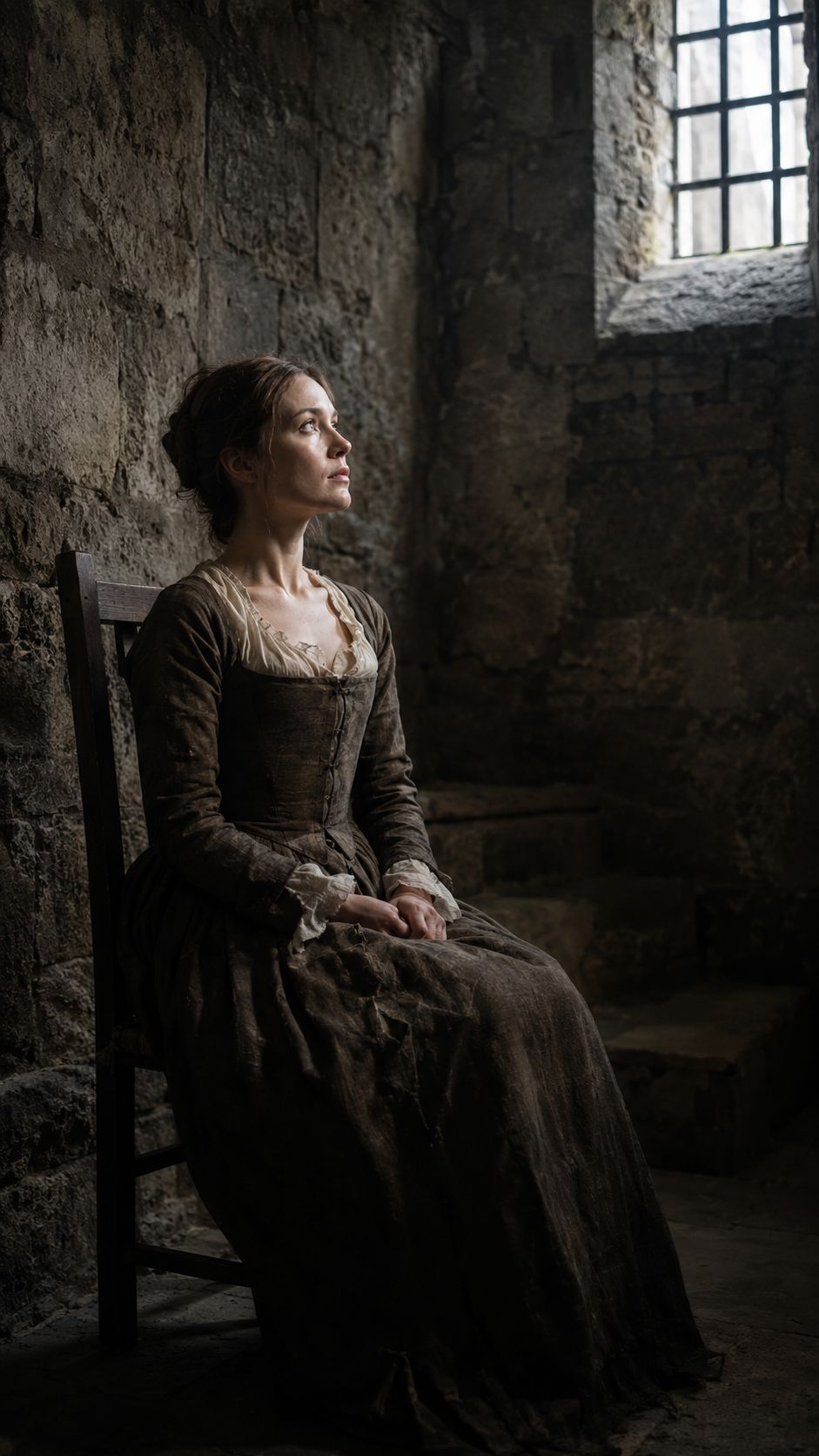 The Rape Trial That Ended In Trial By Combat
A woman's accusation of rape led to France's last judicial duel, with her own life staked on the outcome.
Paris, France · 1386
- The Parish Registers Of The Beast's Victims
Between 1764 and 1767 something killed roughly a hundred people, recorded in the registers as 'devoured by the beast.'
Saugues, France · 1764
- The Manufacturing Of England's Most Haunted House
For decades it was called the most haunted house in England, until its ghost story revealed how a haunting gets made.
Borley, Essex, United Kingdom · 1929