Everyone thinks they know the Elephant Man. The 1980 film gave us a soft-spoken, dignified soul in a Victorian hospital, and it gave us that unbearable cry — “I am not an animal! I am a human being!” What the film could not give us was the truth, because the truth is quieter, stranger, and far more heartbreaking than any screenplay.
His name was Joseph Carey Merrick. Not John. The surgeon who saved him, Frederick Treves, simply misremembered it in his memoir, and the film carried the mistake to millions. Joseph was born on 5 August 1862 at 50 Lee Street, Leicester, an ordinary boy in an ordinary house. He did not stay ordinary for long. Somewhere in his first years, his body began to build itself wrong. For over a century, people called it elephantiasis. Today the leading theory is Proteus syndrome — a rare disorder that makes bone and skin grow without limit, without symmetry, without mercy. It is worth being honest here: even this diagnosis is not certain. When scientists tried to extract DNA from his bones in 2003, the results were inconclusive, because the skeleton had been bleached again and again over the decades for display. We are still, in a sense, guessing at what happened to him.
The Horror
The numbers Treves recorded are hard to read even now. Joseph’s head measured about 36 inches around — the size of a man’s waist. A mass of bone pushed his mouth out of shape until an 8- or 9-inch lump of it had to be surgically cut away so that he could eat and speak. His skin hung in heavy, cauliflowered folds. His right arm had swollen into something almost useless, the hand a bundle of fused fingers. His feet were vast. And yet — this is the detail that undoes people — his left arm and hand stayed perfectly formed, slender and delicate as a pianist’s, and his mind stayed sharp, sensitive, and kind. Inside that reshaped body was a gentle, articulate man who read constantly and built models of cathedrals from cardboard.
Because his head was too heavy to rest on a pillow, he could never lie down. He slept sitting up, spine curled forward, forehead resting on his drawn-up knees, every single night of his adult life. Imagine that. Not for a week. For years. Before the hospital took him in, he was a sideshow exhibit, billed as “Half-a-Man and Half-an-Elephant” in a penny shop on Whitechapel Road — directly across from the London Hospital, which is how Treves first found him in November 1884. When the freak-show trade collapsed, a manager robbed Joseph of his life savings, around £50, and abandoned him in Brussels. Alone, unable to speak clearly to anyone who would listen, he made his way back across the Channel and to the one man who had shown him kindness. A public appeal, launched by a letter to The Times, finally won him a permanent home in the hospital’s rooms. For the last years of his life, Joseph Merrick had something he had never known: safety. And more than safety — something like a life. Sheltered in his rooms at the London Hospital, he received visitors, many of them curious, some of them genuinely kind. Society ladies called on him; the actress Madge Kendal took an interest in his welfare, and it is recorded that Alexandra, Princess of Wales, visited him and shook his misshapen hand — a gesture that reportedly moved him deeply, because so few people had ever willingly touched him. He wrote letters, he read, and he built his intricate cardboard model of a church, working with his one delicate hand toward a steeple he could see from his window. Frederick Treves came to know him not as a specimen but as a friend, and left a memoir full of affection and guilt in equal measure. It is worth resisting the tidy villain, too: Tom Norman, the showman who had exhibited him, always insisted that the freak shows gave Joseph an income and a strange kind of dignity, and that the alternative — the workhouse — was far crueller. There may be some truth in that. But nothing in those exhibitions gave Joseph what the hospital finally did: to be looked at, at last, with tenderness.
THE TRUTH THE FILM LEFT OUT: On 11 April 1890, an attendant found him dead in bed. He was lying down. The death certificate said asphyxia; Treves, who performed the autopsy, concluded that his neck had been dislocated by the weight of his own skull. Treves believed — and it is his theory, not proven fact, but it fits everything we know — that Joseph had deliberately tried to sleep flat on his back, “like other people.” After a lifetime folded upright, he wanted, just once, to lie down and rest like anyone else. That ordinary wish is what killed him. The most human act imaginable, and his body would not allow it.
Even the poem the film and the legends attribute to him tells a smaller true story. He signed off his letters with the lines, “’Tis true my form is something odd, / But blaming me is blaming God…” — words often quoted as his own. They are not; he borrowed them, adapting a verse by the hymn-writer Isaac Watts. A man mocked as a monster reaching for someone else’s beautiful words to explain his own soul.
The Modern Relic
You can, in a sense, still visit Joseph Merrick. After his death, Treves preserved his skeleton, and it remains today in the care of Queen Mary University of London, at the Royal London Hospital in Whitechapel — the same institution that finally sheltered him. It is not on public display; it is kept privately, used for teaching, seen only by students and clinicians. Nearby, the small Royal London Hospital Museum displays casts and letters connected to him. His soft-tissue remains were buried separately, and in 2019 a researcher named Jo Vigor-Mungovin traced the likely plot to the City of London Cemetery — meaning that, more than a century on, part of Joseph finally has a grave. There is an ongoing, tender argument about whether his skeleton should be buried too, as this devout Christian man would surely have wanted, or kept for the science it still teaches.
Whatever the film left out, this much is real: a man the Victorians paid pennies to gawp at is now handled only with gloves and reverence, and the crowds that once jeered have been replaced by people who come, quietly, to pay their respects. He wanted, at the end, only to lie down. It seems right that at last he can rest.
③ Hashtags
Nearby on the Dark Atlas
 The Body Snatchers of Nova Scotia Gardens
A veteran grave robber stopped digging and started killing when he realized freshly murdered bodies paid better.
Bethnal Green, London, United Kingdom · 1831 · 1.1 km away
- The Body Left to Rot in the Tides
A tarred corpse was caged in iron and hung above the river, left for the rising tides to slowly consume.
Execution Dock, London, United Kingdom · 1700 · 1.3 km away
 Executed for a Coat of Arms
A dying king found an excuse to destroy England's most powerful noble house over a painted family crest.
Tower Hill, London, United Kingdom · 1547 · 1.4 km away
 The Man Who Refused to Save Himself
Offered a chance to save his own life, the King's closest attendant chose silence and the executioner's block instead.
Tower Hill, London, United Kingdom · 1536 · 1.4 km away
More like this
- The Leper King's Story No Film Would Show
Kingdom of Heaven gave him a dignified death behind a silver mask, the truth was far crueller.
Jerusalem, Israel · 1185
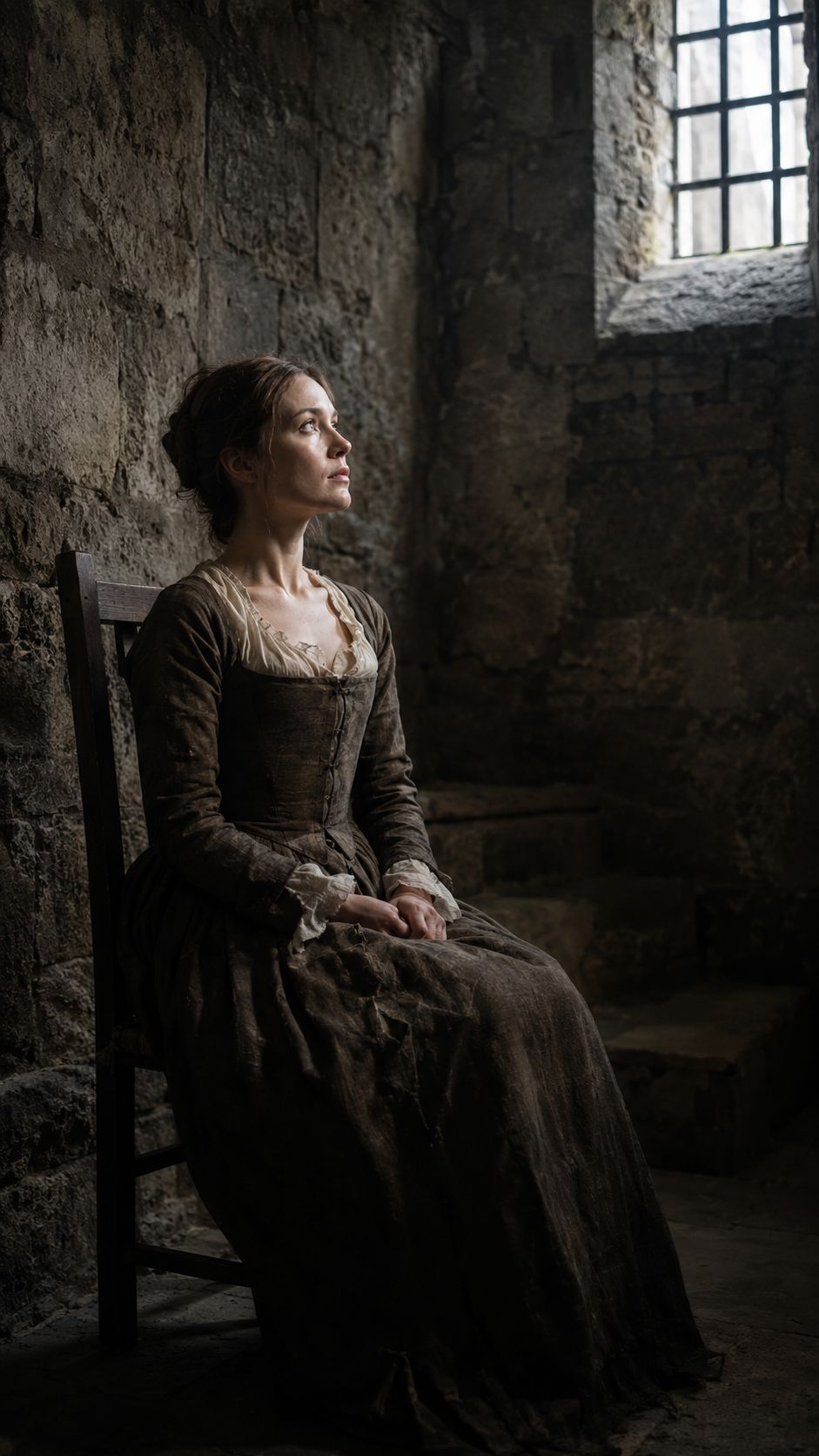 The Rape Trial That Ended In Trial By Combat
A woman's accusation of rape led to France's last judicial duel, with her own life staked on the outcome.
Paris, France · 1386
- The Parish Registers Of The Beast's Victims
Between 1764 and 1767 something killed roughly a hundred people, recorded in the registers as 'devoured by the beast.'
Saugues, France · 1764
- The Manufacturing Of England's Most Haunted House
For decades it was called the most haunted house in England, until its ghost story revealed how a haunting gets made.
Borley, Essex, United Kingdom · 1929