
On 19 July 1545, King Henry VIII stood on the ramparts of Southsea Castle, watching his fleet confront a French invasion force in the Solent. His flagship, the Mary Rose — a heavily armed Tudor warship carrying roughly 500 men, 90‑plus guns, and enough firepower to shred anything in range — turned to bring her broadside to bear.
As she leaned over to fire, she heeled too far. Water poured through the open gunports. In less than a minute, England’s pride rolled, filled, and vanished beneath the surface. Henry saw his flagship go down from the beach.
The Horror
The crew had almost no chance. The Mary Rose carried anti‑boarding netting stretched across her upper deck to stop enemy sailors swarming aboard during a close‑quarters fight. In battle, it was a shield. When the ship rolled and began to sink, it became a trap. Men trying to scramble upward hit the mesh and could not get clear.
Around 500 men drowned within sight of their king. Contemporary accounts say Henry could hear the screams from shore as the ship went under. The French fleet was still out there. His vice‑admiral, Sir George Carew, refused to abandon ship and died with her; he was reported to have shouted, just before she went over, that he had “the sort of knaves I cannot rule.” Seconds later, almost everyone aboard was in the water or crushed inside the hull.
The Mary Rose settled into the soft silt of the Solent and disappeared. Over time, mud and sand buried the wreck, sealing half of the hull and much of the lower decks in a cold, oxygen‑poor capsule. For 437 years, the ship lay on the seabed with most of her crew still inside.
When underwater archaeologists began excavating the site in the 1970s, they found people exactly where they had been when she sank. Skeletons lay beside the tools and weapons of their trades. The ship’s carpenter was near his working area and tool chests. The barber‑surgeon was found close to his medicine chest — still packed with ointment pots, syringes, surgical knives and a bone saw. Archers lay with their longbows and arrow bundles. The cook was found by the galley with a large cauldron still containing animal bones from the last meal he had been preparing when the deck rolled.
Scattered through the silt were personal possessions: rosary beads worn smooth by fingers, a pocket sundial, leather shoes and jerkins, dice, gaming pieces, a wooden tankard, a backgammon set, combs, belt buckles, sewing kits. Each object mapped back to someone who had gone down in sight of the king.
They even found the ship’s dog — a small young male, almost complete, lying near the carpenter’s cabin. He had lived aboard the Mary Rose, probably as a ratter, padding the decks between the same guns and boots as the men. He drowned with them when the netting came down.
The Modern Relic
In 1982, after years of preparation, the Mary Rose was raised from the Solent in one of the most complex maritime recovery operations ever attempted. A huge lifting cradle brought the surviving half‑hull — still dripping mud and bristling with timbers — to the surface while millions watched live on television. For the first time since 1545, Henry’s warship saw the air.
Today, the conserved hull is the centrepiece of the Mary Rose Museum in Portsmouth Historic Dockyard. The dark, preserved timbers loom in a climate‑controlled gallery, lit so you can see the decks where men once ran gun drills and died under the netting. Around it, in glass cases, sit the things they left behind: skeins of longbows and arrows, the barber‑surgeon’s chest laid out with 16th‑century medical tools, carved rosaries, gaming dice, wooden bowls and tankards, shoes shaped by long‑vanished feet — and the delicate skeleton of the ship’s dog.
The anti‑boarding netting that trapped the crew is there in fragments, conserved and displayed. Five hundred men went down in under a minute, within shouting distance of their king, under a mesh designed to keep them safe. The king turned back into the castle. The wreck stayed in the mud for nearly four centuries. The dog waited there with them until the day the ship finally rose.
Nearby on the Dark Atlas
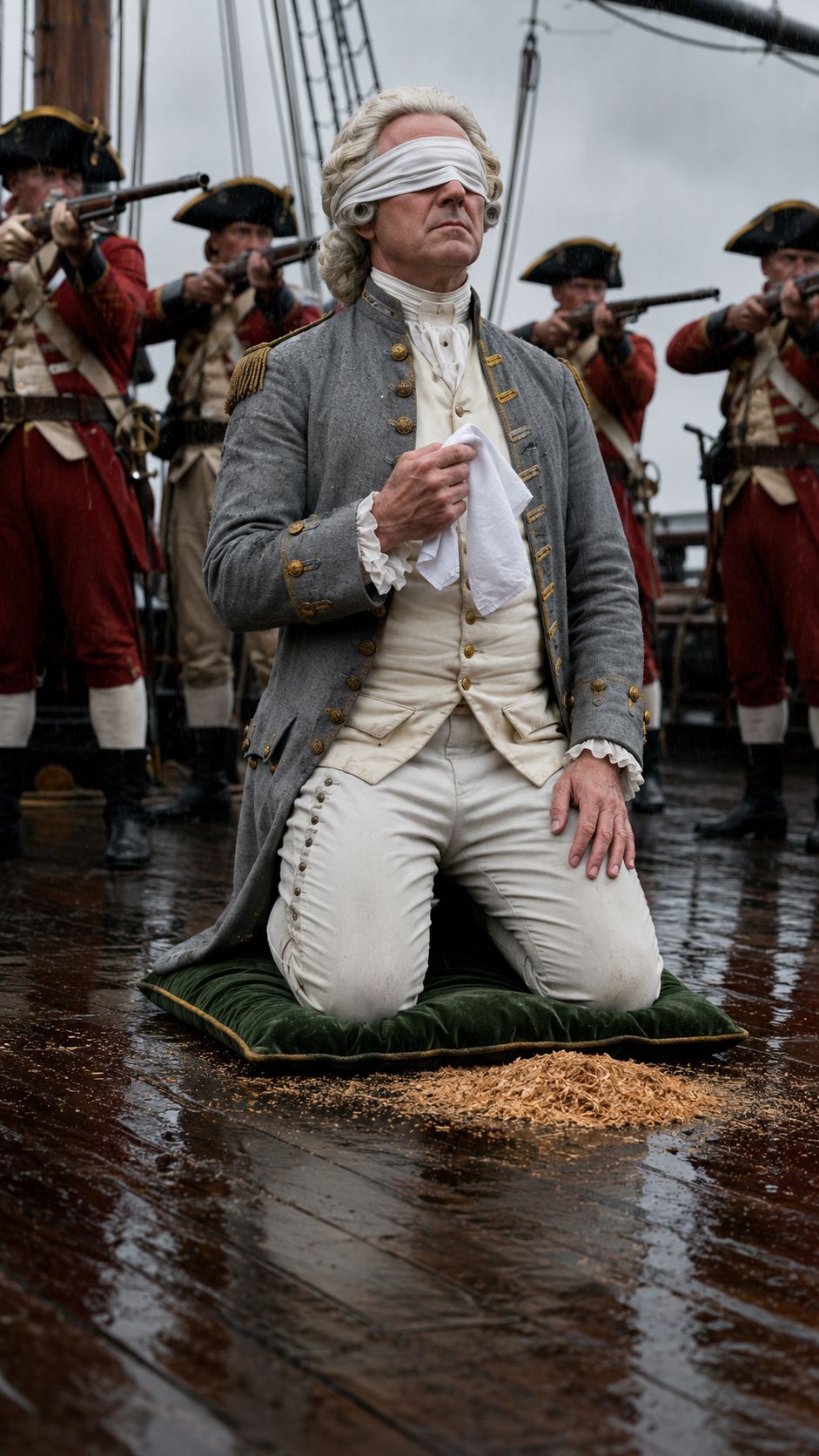 The Admiral Shot To Encourage The Others
He sailed to his own execution with his coffin already aboard, shot by his own marines for failing to win.
Portsmouth, United Kingdom · 1757 · 6.3 km away
 Beheaded For A Single Night's Shelter
An elderly gentlewoman was condemned to burn alive for the crime of giving fugitives a bed for one night.
Winchester, United Kingdom · 1685 · 38 km away
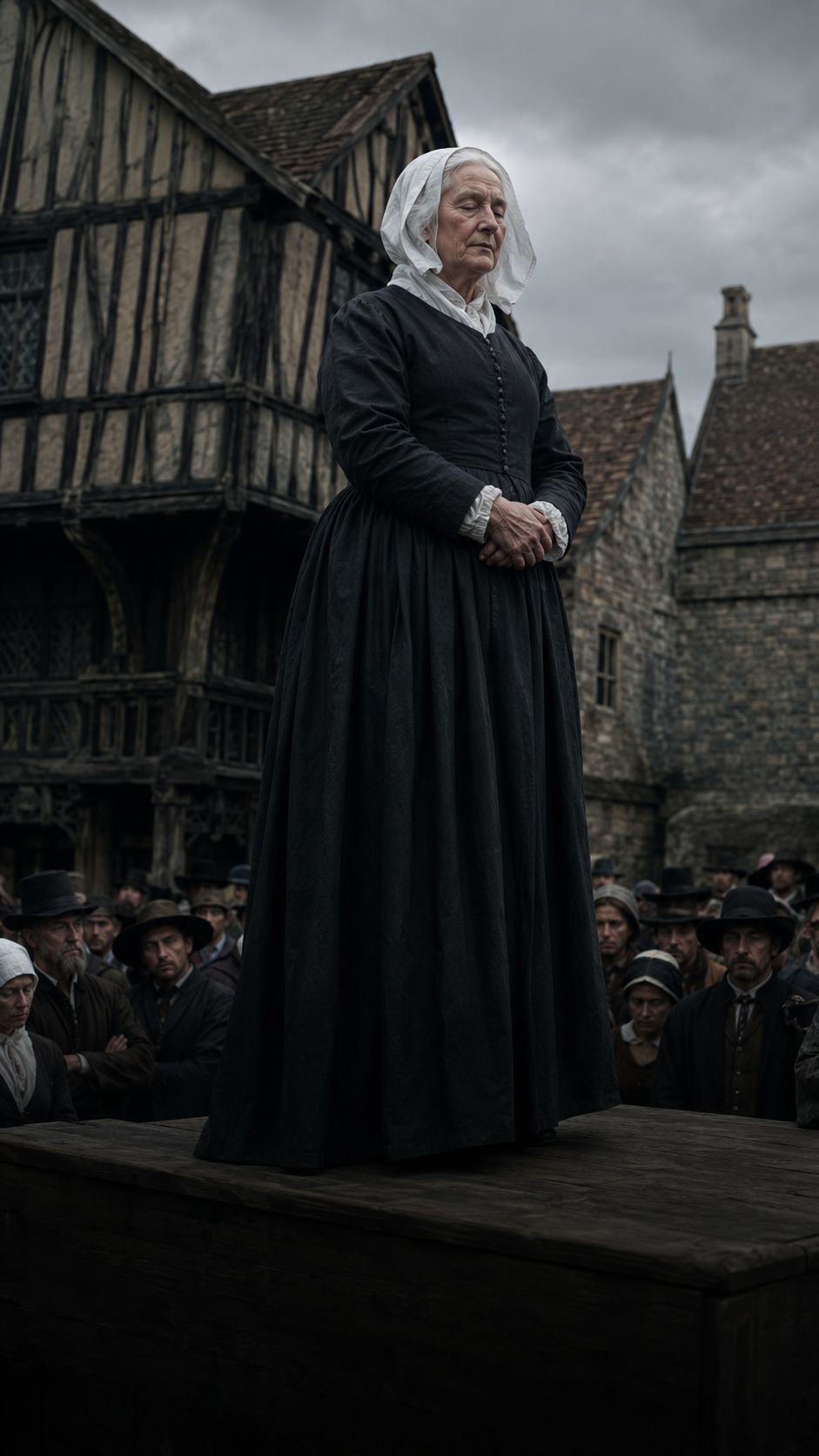 The Hanging Judge's First Victim
An elderly woman sheltered fugitives after Monmouth's failed rebellion, and the Hanging Judge made her his first target.
Winchester, United Kingdom · 1685 · 38 km away
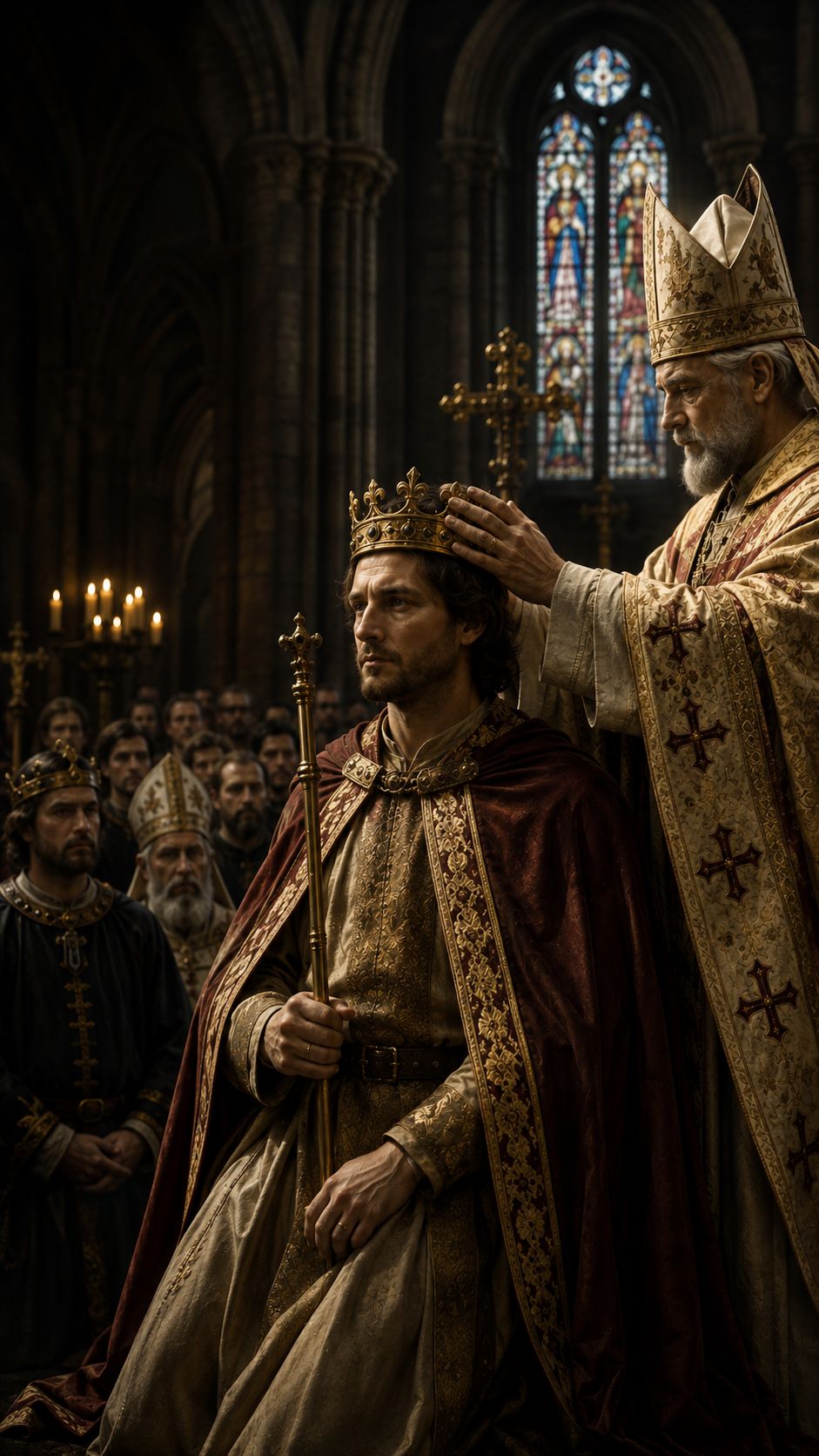 The King Killed By An Arrow And The Brother Who Profited
A king died in a forest with an arrow through his chest, and his brother was crowned just three days later.
New Forest, Hampshire, United Kingdom · 1100 · 41 km away