
On the morning of 15th March 44 BC — the Ides of March — Gaius Julius Caesar walked into a meeting of the Senate in the complex attached to the Theatre of Pompey in Rome. He had been warned. His wife Calpurnia had dreamed of his body drenched in blood and begged him not to go. A soothsayer had told him to “beware the Ides of March.” He went anyway.
He took his seat. A senator, Publius Servilius Casca or Tillius Cimber depending on the source, moved in close with a petition and tugged at Caesar’s toga, pulling it from his shoulder — the agreed signal.
Twenty‑three senators drew daggers and attacked.
The Horror
The assassination was messy, not surgical. Plutarch describes the conspirators crowding around Caesar so tightly that they stabbed one another as they lunged. Brutus was cut on the hand, another conspirator in the thigh. The men who claimed to be saving the Republic by killing one man were so desperate to share in the deed that they literally bloodied each other.
The first blow, according to several accounts, was delivered by Casca — a shallow stab to Caesar’s neck or shoulder. Caesar, still on his feet, reportedly grabbed Casca’s arm and said, “Casca, you villain, what are you doing?” Then the others closed in.
A post‑mortem examination — one of the earliest forensic autopsies on record — was carried out by a physician named Antistius. He reported 23 stab wounds. Only one, a thrust into the chest that pierced the aorta, was fatal by itself. The rest were shallow, in the back, arms and torso — wounds that would have been survivable on their own.
In other words, the killing wasn’t efficient. It was communal. Every conspirator needed blood on his blade; the act was designed so no single man could be singled out as the murderer and every man could claim a share in the “liberation.”
Shakespeare, writing more than 1,600 years later, gave Caesar the line that has defined the scene ever since: “Et tu, Brute?” — “And you, Brutus?” It’s not in the ancient Latin sources.
Suetonius, writing in the 2nd century AD, offers a different possibility. He says some reported Caesar died in silence; others claimed his last words were in Greek: “Kai su, teknon?” — “You too, child?”
The word teknon — child — is the detail that has haunted commentators for centuries. Caesar had a long, well‑attested affair with Servilia, the mother of Marcus Junius Brutus. Ancient writers gossip about it openly. Some modern historians have concluded that Brutus could have been Caesar’s biological son, though it can’t be proved.
If that speculation is right, then Caesar’s last words were not a public accusation but a private recognition: a father looking up from the floor and seeing his own child among the men holding daggers.
After the attack, the body was left where it fell. The conspirators fled the building, raced into the streets, and waved their bloody knives, shouting that Rome was free. Inside, the Senate chamber emptied. No one in that moment dared to lift the corpse of the most powerful man in the Roman world.
Later, three of Caesar’s slaves came and carried his body home on a litter.
The Modern Relic
The site of Caesar’s murder, inside the portico of Pompey’s theatre, now lies beneath modern Rome. Excavations place it in the area around Largo di Torre Argentina — a sunken archaeological zone surrounded by tram lines and modern streets. The ruins there include the remains of Republican‑era temples and part of Pompey’s complex.
Today, the space is famous less for its history than for its cats. A colony of feral cats lives among the broken columns and foundations; a shelter cares for them, and tourists lean over railings to photograph them sleeping on ancient stones. Somewhere under those paws is the floor where Caesar fell.
The Ides of March — just a date in the Roman calendar — has become shorthand in English for betrayal and doom because Shakespeare turned it into a line and history turned it into a warning. Caesar’s body was cremated in the Forum; a modest structure marks the probable spot, and visitors still leave flowers there.
The line everyone remembers — “Et tu, Brute?” — belongs to a playwright, not to Caesar. The line that might be closer to the truth — “You too, child?” — sits in a footnote, attached to an unprovable rumour that Brutus was his son. The father is ash. The supposed child died two years later at Philippi. The stones of the Senate floor and the cats above them are indifferent. The question of what he said, and who Brutus was to him, is still open.
Nearby on the Dark Atlas
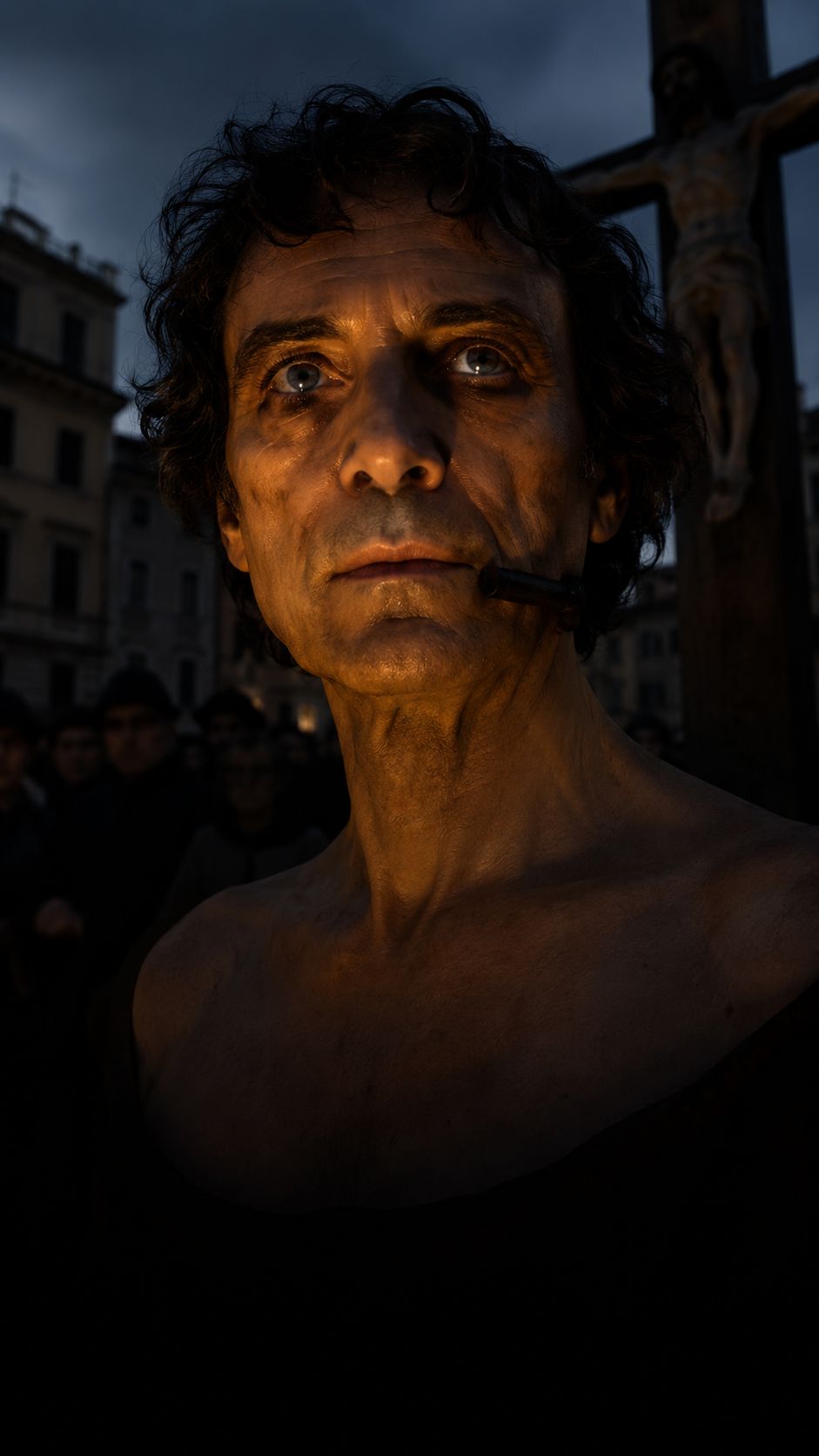 The Heretic Burned For What He Thought
After eight years of imprisonment, he refused to recant his vision of an infinite universe, and paid with his life.
Campo de' Fiori, Rome, Italy · 1600 · same site
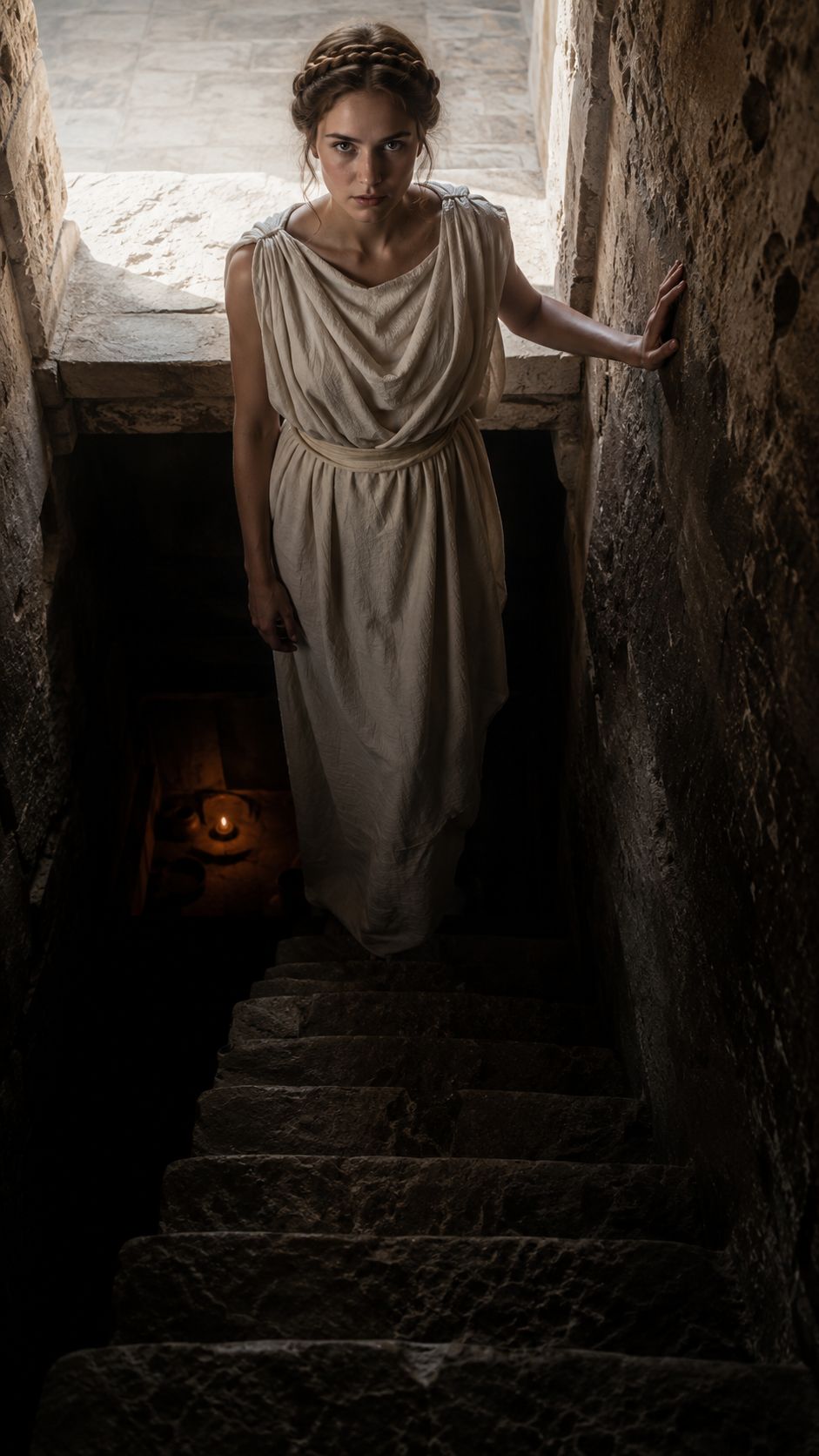 Buried Alive to Avoid Shedding Her Blood
Roman law forbade killing a Vestal or burying her in the city, so they sealed the condemned underground alive instead.
Rome, Italy · 100 BC · same site
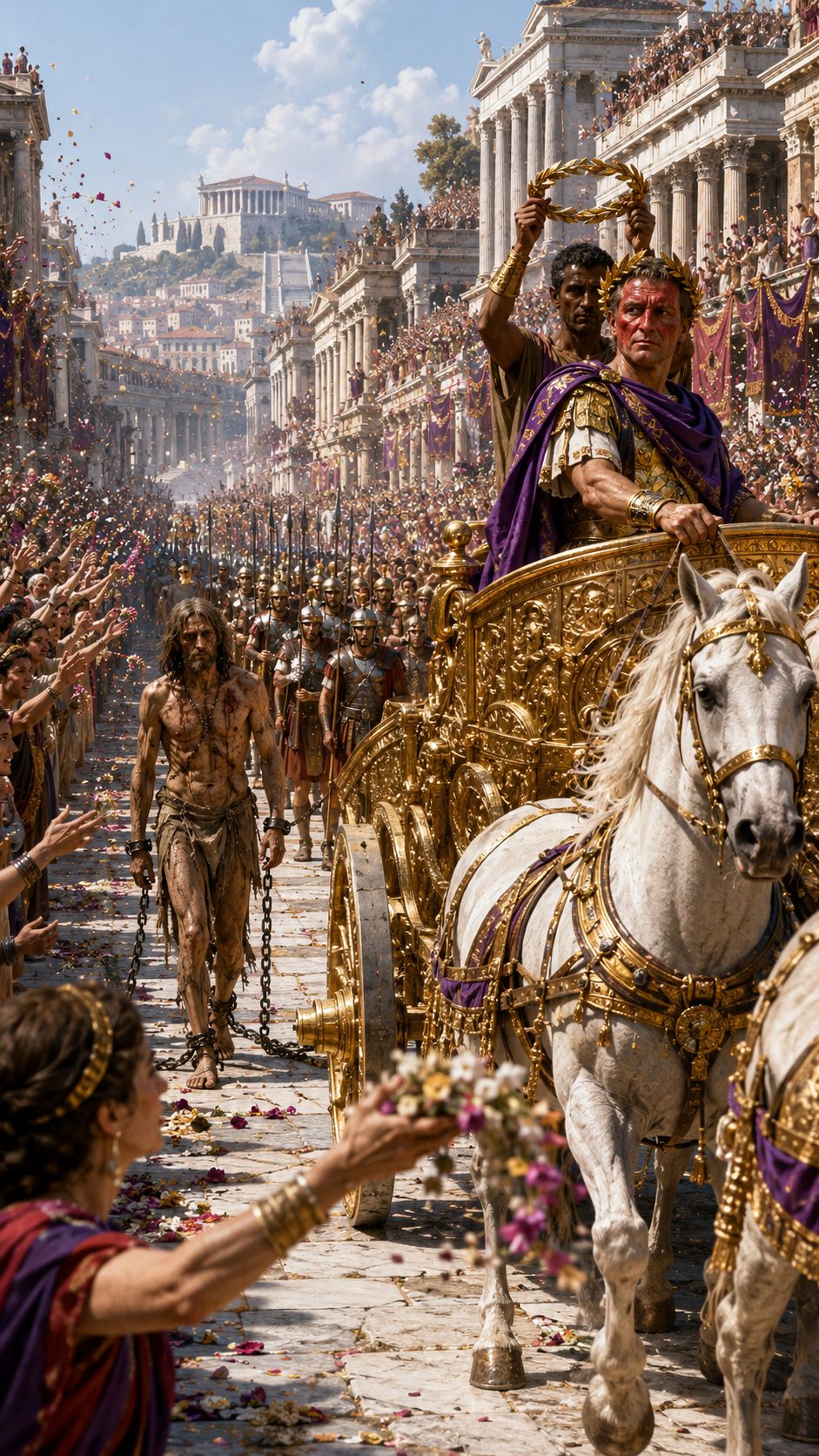 The Chieftain Who Surrendered To Save His People
The Gallic leader who nearly beat Caesar rode out to surrender rather than let his starving people die, and spent six years dying slowly in a Roman prison.
Rome, Italy · 46 BC · same site
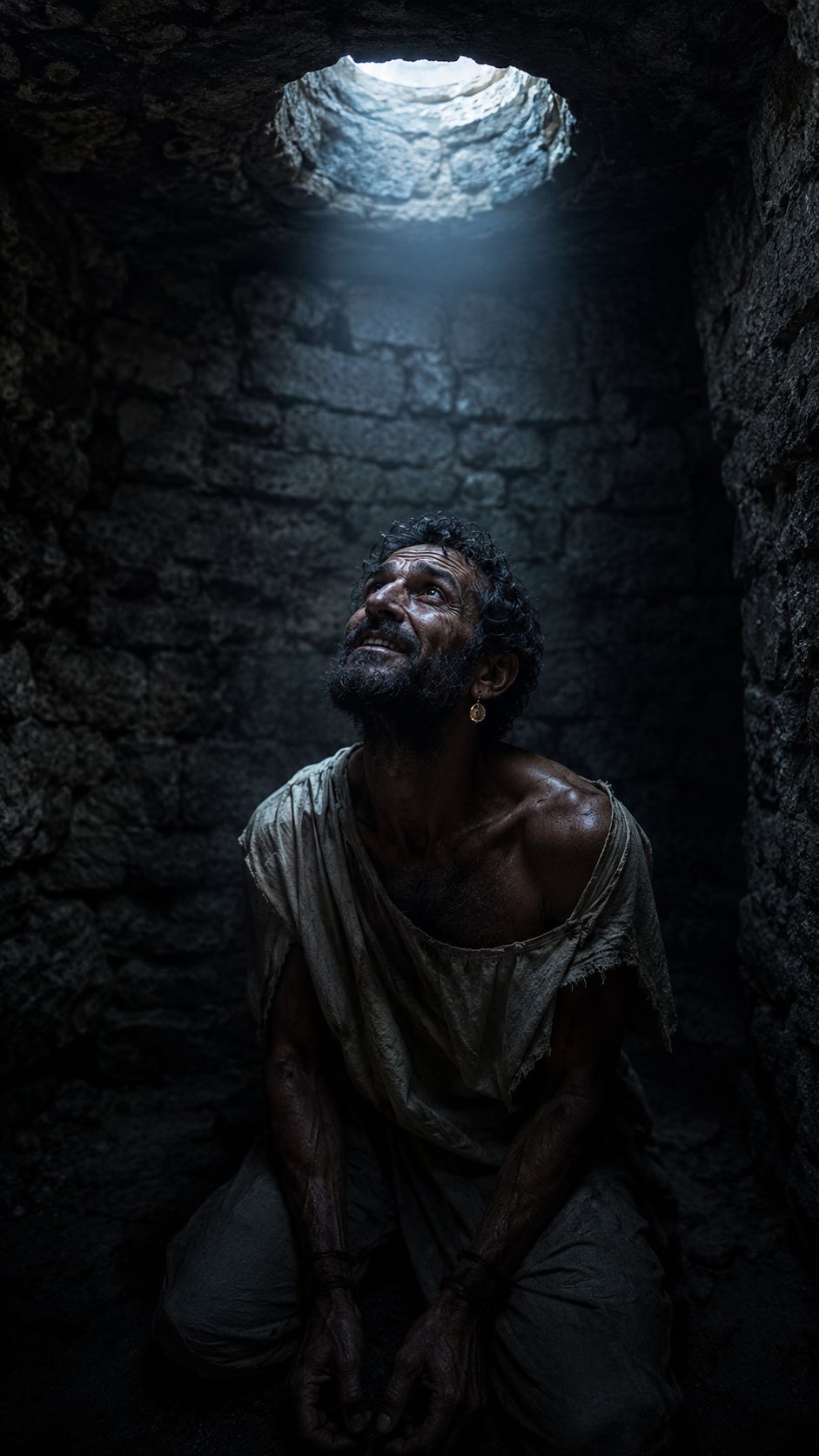 The King Left To Starve Beneath Rome
A Numidian king who beat Rome with bribery for years was finally stripped naked and left to starve in a pit.
Rome, Italy · 104 BC · same site