Dunnottar Castle is one of the most breathtaking and dramatic castles in all of Britain — a vast, ruined medieval fortress perched on a sheer rock plateau, jutting out into the North Sea on the coast of Aberdeenshire, ringed by cliffs and crashing waves. It is one of the most photographed places in Scotland, a sight of pure romance. And hidden inside its beautiful ruins is a single cellar that was the scene of one of the most shameful atrocities in Scottish history — a place where 167 people were crammed together and left to suffer, for the crime of refusing to change the way they worshipped God.
To understand it, you have to understand the “Killing Time.” In the seventeenth century, Scotland was torn apart by a bitter religious conflict. A large body of Scottish Presbyterians, known as the Covenanters, had signed solemn covenants pledging to defend their form of Protestant worship — a faith in which no king, but only Christ, could be the head of the Church. But the restored Stuart monarchy, first Charles II and then his Catholic brother James VII, was determined to force the Scottish Church to accept the king’s authority and bishops appointed by the crown. The Covenanters refused. And so the government moved to crush them. Through the 1680s, in the period Scots remember as the “Killing Time,” Covenanters were hunted down, imprisoned, tortured, and executed — often without trial — for the simple act of attending their own outlawed open-air religious services, or refusing to swear an oath acknowledging the king’s supremacy over their faith. It was a campaign of religious persecution, and in the summer of 1685, with the government in a state of near-panic over the fear of an uprising, it produced the horror of Dunnottar.
The Horror
In May 1685, a large group of Covenanters who had been rounded up and held in Edinburgh — men and women who had refused to swear the oath of allegiance demanded of them — were condemned to be transported to the colonies as forced labour. But first they had to be got out of the overcrowded Lowland prisons and held somewhere secure until ships could be arranged. And so, on the 24th of May 1685, 167 of these prisoners — 122 men and 45 women — were marched all the way to the far-off fortress of Dunnottar on the north-east coast, and there they were sealed into a single stone cellar in the bowels of the castle. That cellar has been known ever since as the Whigs’ Vault — “Whig” being the name given to these anti-royalist Presbyterians.
The conditions were beyond appalling. The vault was a single chamber, and into it were packed all 167 human beings — so tightly crammed that there was barely room to move or to sit down, let alone lie. The cellar had almost no ventilation, and no sanitation whatsoever. It was high summer. For week after week — from late May until the end of July — these men and women were left standing together in the stifling, airless dark, forced to stand in their own filth, which rose around their feet until they were, by the accounts, ankle-deep and worse in the mire of human waste. They were given pitifully little food and water. Disease swept through the packed bodies. The stench, the heat, the thirst, the sickness, and the sheer physical torment of being unable to move for weeks on end reduced the vault to a scene of unimaginable suffering. And people began to die. At least five of the prisoners died there in the vault, of disease and the brutal conditions, their bodies among the living in that dark, foul space.
Some, unable to endure it any longer, made a desperate bid for freedom — and the horror of the castle’s very location turned against them. Dunnottar sits atop sheer cliffs falling straight down to the sea. A group of around twenty-five prisoners managed to break out of the vault and attempted to escape by climbing down the treacherous, near-vertical rock face to the shore below. It was a suicidal gamble. Two of them lost their grip and fell to their deaths on the rocks. And of those who made it down, fifteen were recaptured — and were then brought back and tortured as punishment for the escape attempt, subjected, according to the accounts, to the cruelty reserved for those who defied the authorities. Meanwhile, thirty-seven of the prisoners, broken by the conditions, finally relented and took the oath of allegiance, and were released. But for most, the ordeal in the vault was only the beginning of the end. When the survivors were at last taken from Dunnottar, the majority were shipped off, as planned, to be transported to the American colonies as bonded labourers — effectively as slaves. And even that journey was a death sentence for many: of those put aboard the ships, it is believed that around seventy more died of fever on the terrible voyage across the Atlantic, or shortly after they arrived. Of the 167 souls sealed in the Whigs’ Vault, only a fraction ever knew freedom again.
The Modern Relic
The Covenanters who died at Dunnottar and in its aftermath became, in Scottish memory, martyrs — remembered and honoured for their refusal to abandon their faith even unto death. Their suffering in that cellar became one of the defining atrocities of the Killing Time, a symbol of the price paid for religious conscience in that brutal age. And they are remembered still: a simple stone memorial to the Covenanters stands in the churchyard of Dunnottar parish church, on the edge of the nearby town of Stonehaven, marking those who perished, and a number of the Covenanters who died are buried there.
The relic is the vault itself, and it is one of the most sobering places you can visit in Britain. Dunnottar Castle, now a magnificent and much-loved ruin, is open to visitors, who come in their thousands to walk its dramatic clifftop ruins and take in one of the most spectacular views in Scotland — the castle so evocative that it has served as a film location, standing in for Elsinore in a version of Hamlet. But down in the lower levels of the fortress, you can still descend into the Whigs’ Vault — the actual, surviving stone cellar, measuring only around fifty feet by fifteen, where 167 men and women were sealed for ten weeks of the summer of 1685. Standing in that cramped, dark, silent chamber today, it is almost impossible to comprehend how so many people were forced into so small a space, or how any of them survived at all. The romance of Dunnottar — the crashing sea, the soaring cliffs, the beautiful ruin against the sky — is real. But so is the vault beneath it: a plain stone room that still holds the memory of one of the cruelest episodes of Scotland’s religious wars, where ordinary men and women were left to suffer and die in the dark, ankle-deep in filth, because they would not let a king tell them how to pray.
Nearby on the Dark Atlas
 The Real King Shakespeare Turned Into A Murderer
The real Macbeth was a capable, pious king, so how did propaganda transform him into history's most famous murderer?
Lumphanan, United Kingdom · 1057 · 37 km away
 Scotland's First Protestant Martyr
A young scholar was destroyed by an institution not ready to hear him — and his botched, hours-long death made him more dangerous than ever.
St Andrews, United Kingdom · 1528 · 77 km away
- The Musician Slaughtered at the Queen's Table
A queen's trusted secretary was dragged from her private dinner and stabbed to death by her own jealous husband's men.
Holyrood Palace, Edinburgh, United Kingdom · 1566 · 126 km away
 The Bloody Scottish Law Behind Red-Handed
A phrase now used for stolen biscuits once meant a killer caught with blood still on his hands.
Edinburgh, United Kingdom · 1819 · 126 km away
More like this
- The Poisoner Who Weaponised A Town's Sweet Shops
She poisoned an entire town's confectionery to disguise the murder of a woman she hated, killing a child she never met.
Brighton, United Kingdom · 1871
- The Heretic Burned By The Reformers Who Fled Rome
Calvin's Geneva burned a brilliant Spanish physician for his beliefs, then, centuries later, erected a monument of atonement.
Champel, Geneva, Switzerland · 1553
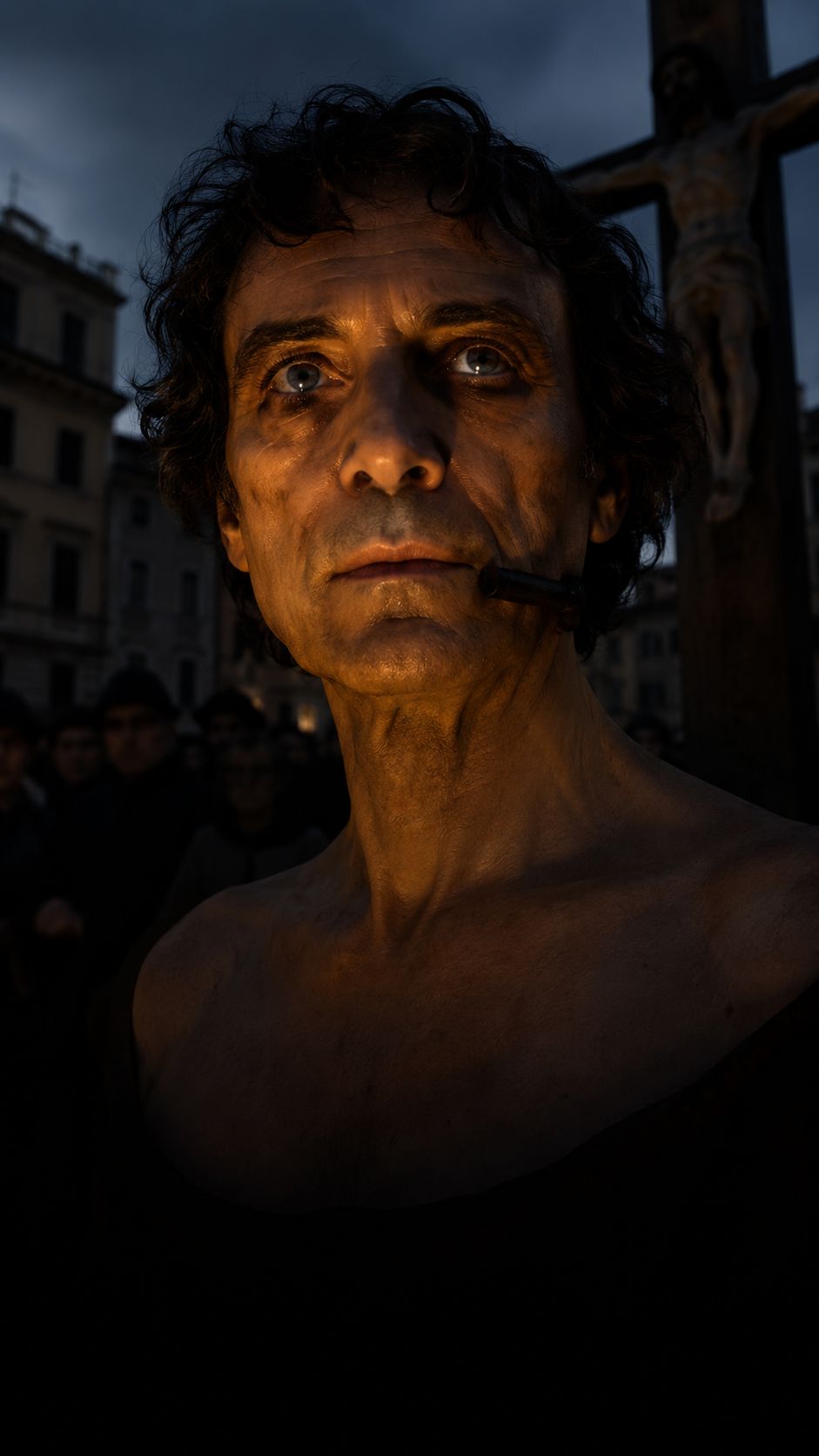 The Heretic Burned For What He Thought
After eight years of imprisonment, he refused to recant his vision of an infinite universe, and paid with his life.
Campo de' Fiori, Rome, Italy · 1600
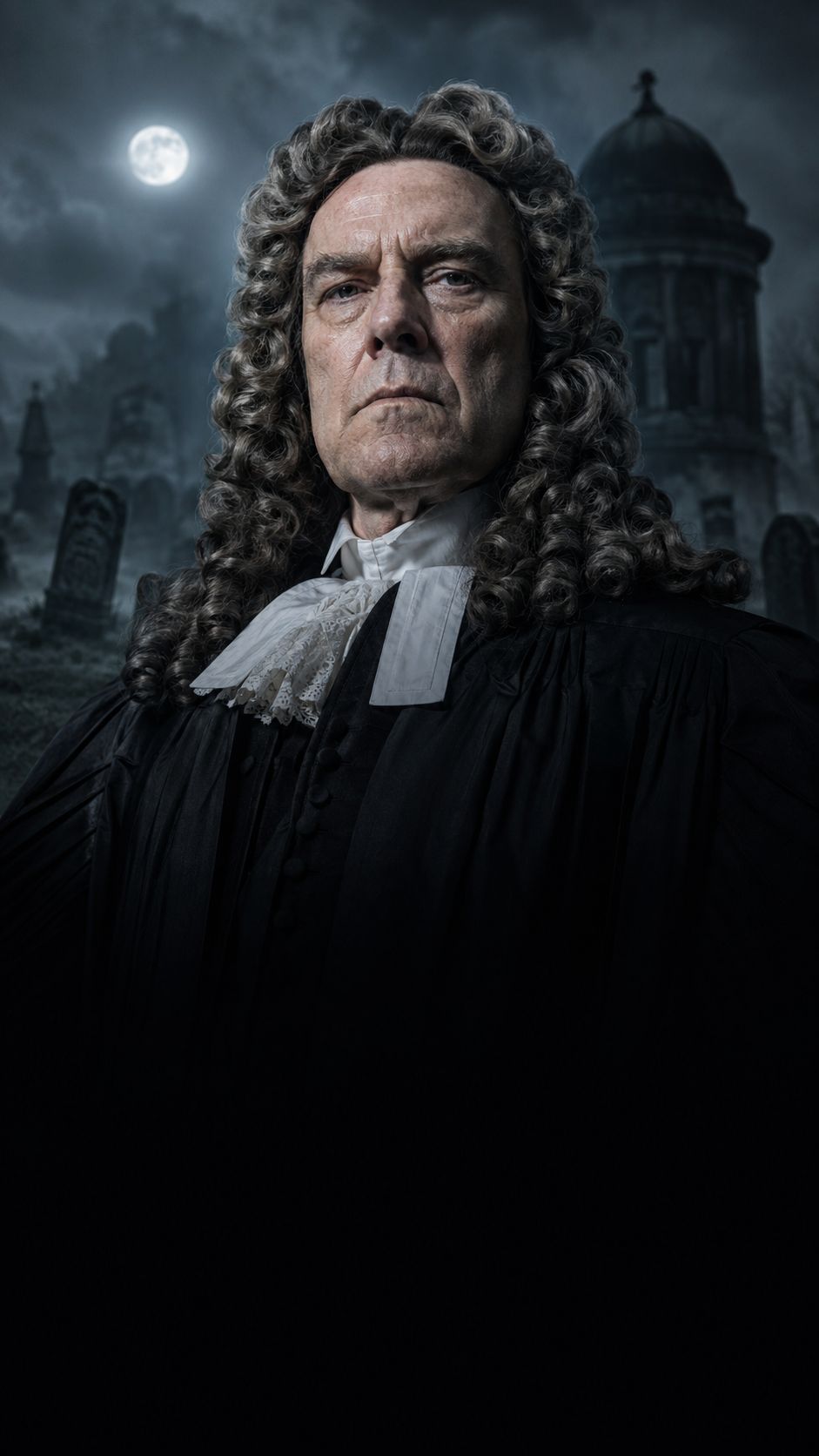 The Poltergeist That Attacks Visitors In Edinburgh
Over 350 visitors have reported being scratched, bruised and knocked unconscious at one graveyard tomb.
Greyfriars Kirkyard, Edinburgh, United Kingdom · 1999