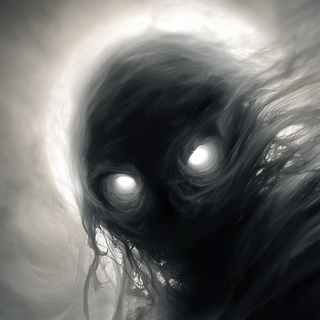
In 316 BC, the most powerful woman in the ancient world walked out of a besieged city in full royal regalia to face a mob assembled specifically to kill her.
Her name was Olympias. She was the mother of Alexander the Great. She was about 60 years old. She had spent her entire life making people afraid of her. She had succeeded too well — the soldiers sent to execute her were so terrified that they refused and turned back.
So they sent the families of the dead instead.
THE HORROR Olympias was not a passive royal mother. She was a force.
She had been a priestess of the Dionysian mysteries — an ecstatic cult with snake‑handling and trance rituals. Ancient writers describe her sleeping with serpents coiled around her body. Philip II of Macedon, her husband, supposedly stopped sharing her bed after finding a snake lying beside her.
When Philip was assassinated in 336 BC, clearing the path for her son Alexander to take the throne, several ancient sources hinted that Olympias had a hand in it. She was never formally accused. She was never formally cleared.
After Alexander’s death in Babylon in 323 BC, his empire broke into wars among his generals. Olympias fought for the throne for her grandson Alexander IV. Her methods were direct.
In 317 BC, she seized Alexander’s half‑brother, Philip III Arrhidaeus — a man with cognitive impairments used as a puppet king. Olympias had him dragged out of sanctuary and butchered in public. His wife Eurydice was captured. Olympias sent her three things: a sword, a rope, and a cup of poison, and ordered her to choose how to die. Eurydice chose the rope and hanged herself with her own girdle.
Olympias then ordered the execution of roughly a hundred of her political enemies — supporters of the rival general Cassander. She killed some herself, watched others die, and ancient sources say she took visible pleasure in it.
Cassander responded. He besieged Olympias at Pydna. The city starved. The war elephants died. Soldiers deserted. Eventually Olympias surrendered, on one condition: her life would be spared.
Cassander agreed. Then he broke his word.
He ordered his soldiers to execute her. They marched to where she was kept. They saw her. They turned around.
Ancient historians Justin and Diodorus both record that the soldiers simply could not bring themselves to kill Alexander’s mother. Whether it was superstition, lingering loyalty to Alexander’s memory, or sheer fear of this woman who had handled snakes and ordered killings with satisfaction, they refused.
Cassander found another solution. He gathered about 200 relatives of the people Olympias had killed — the families of Philip III and Eurydice, the kin of the hundred political enemies she had eliminated. He gave them permission to do what his soldiers would not.
Olympias heard they were coming. She dressed in royal robes. She set her hair. She walked out to meet them. She did not hide, beg, or run.
The mob stoned her to death.
No surviving account describes her screaming. None say she fell to her knees. Even hostile sources emphasise that she died standing, facing the stones.
Cassander at first refused burial, denying her a tomb — in Greek belief, one of the worst fates a person could suffer, because an unburied body meant a wandering, restless soul. Her remains were eventually interred, but not in any monument we can clearly identify today.
THE MODERN RELIC Olympias’s tomb is not securely known. Ancient reports differ about where and when she was finally buried.
The palace complex at Aigai (modern Vergina in northern Greece), where Philip II was assassinated and where Olympias began her rise to power, has been excavated. Visitors can walk through an underground museum containing royal tombs, including a richly decorated burial believed to be Philip’s, with a golden chest and painted façade.
Olympias is not there. Her grave, if it survives, is unmarked or disputed. The woman who made Alexander possible — who helped shape him, protected him, killed for him and died because of him — has no universally recognised tomb, no golden box, no carved relief.
The soldiers who refused to kill her are anonymous. The mob that did has no memorial.
Alexander has cities named after him on three continents. Olympias has silence.
Nearby on the Dark Atlas
- The Emperor Who Blinded an Army
Fifteen thousand captured soldiers were blinded almost to a man, leaving only one in a hundred to lead the rest home.
Kleidion, Bulgaria · 1014 · 129 km away
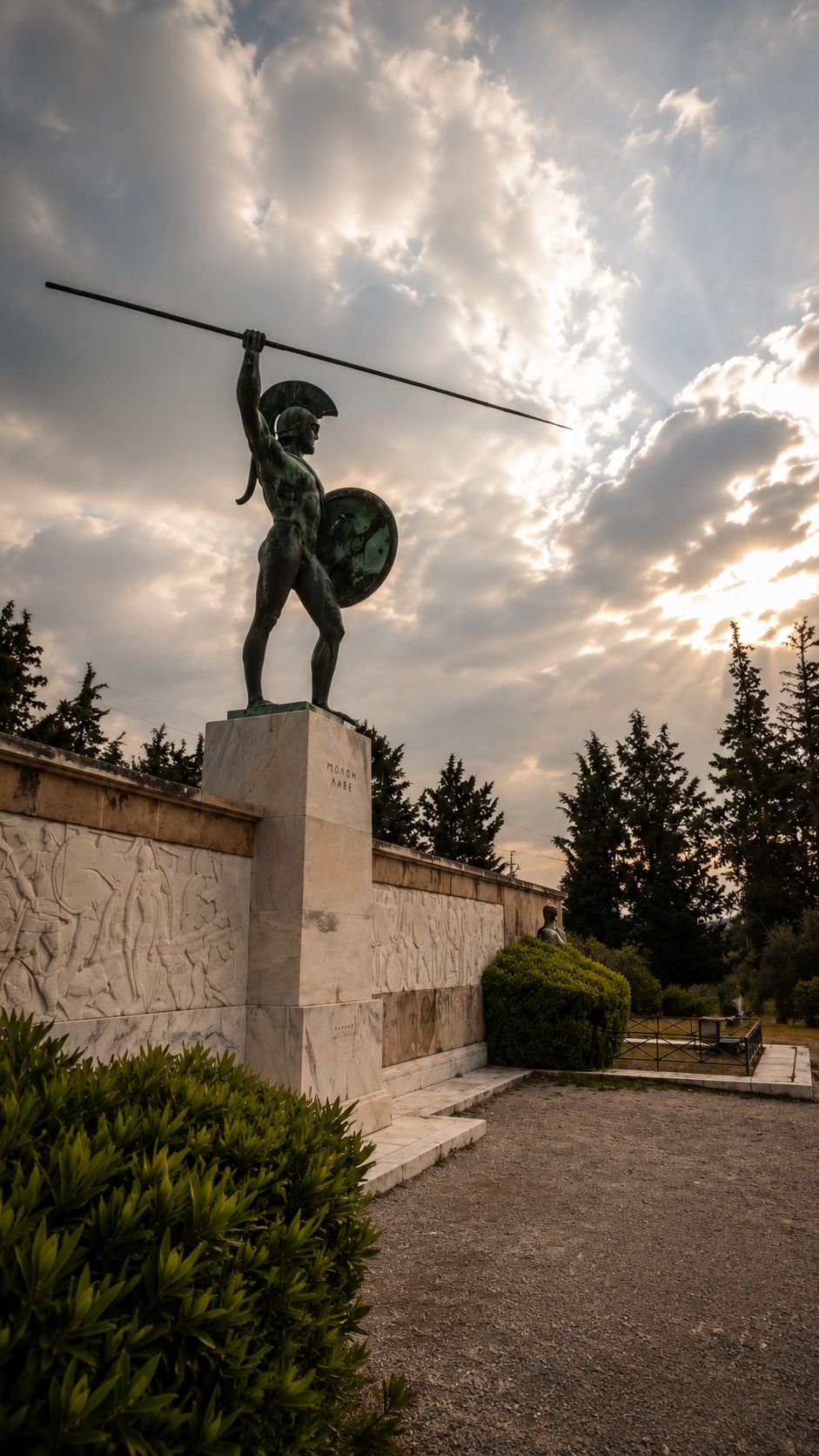 The Real Battle Behind The Legend Of 300
The film shows 300 Spartans making a last stand alone, but the truth about who actually held the pass at Thermopylae is crueller.
Thermopylae, Greece · 480 BC · 177 km away
 The Only One Who Recognised The Beggar King
After twenty years away, only one creature in Ithaca knew Odysseus on sight beneath his beggar's disguise.
Ithaca, Greece · 1180 BC · 272 km away
 The Runner Who Died Delivering Victory
A professional long-distance runner is sent to beg Sparta for help, then races on to deliver news that costs him everything.
Marathon, Greece · 490 BC · 273 km away