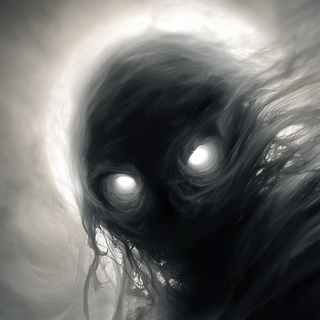
Every time someone says “it was absolute bedlam” — about a chaotic party, a playground, an airport — they are using the name of a real place where real people were chained to walls and watched for fun.
The word comes from Bethlem Royal Hospital in London. Founded in 1247 as a religious foundation, it evolved into a hospital for the “mad” and is still operating today. It is the oldest psychiatric institution in continuous use in the world.
The Horror
By the late 17th and early 18th centuries, Bethlem — slurred by London mouths into “Bedlam” — had become one of the city’s best‑known attractions. For a penny, roughly the price of a pint of ale, anyone could stroll through certain wards and look at the patients.
They came in their tens of thousands: gentlemen escorting ladies, families bringing children, servants on a day out. Estimates suggest as many as 96,000 visits a year at the peak. They moved between cells the way tourists today move through a museum — pointing, whispering, laughing, recoiling, and moving on.
The patients were restrained. Some were manacled by wrists and ankles to the walls or to iron rings fixed into stone. Others lay on straw in filthy conditions. Some screamed and raved at visions only they could see. Others sat or lay in exhausted silence, staring back at the paying spectators who stared at them. The mixture of shrieks, groans, clanking chains and crowd chatter is what gave “bedlam” its modern meaning: noisy chaos.
Treatments were crude and often brutal. Common practices included bloodletting, purges, cold‑water immersion and mechanical devices such as the “rotary chair,” which spun patients until they vomited, on the theory that madness was caused by excess fluid that needed to be expelled. The interventions were more likely to injure or terrify than cure. People who arrived distressed might leave broken — if they left at all.
In 1735, William Hogarth published the final plate of A Rake’s Progress, his series about a young heir’s slide into ruin. The last scene is set inside Bedlam. The main character sits half‑naked on the floor, eyes wild. Around him, other patients enact different forms of delusion and despair. In the background, two well‑dressed women stand with fans, touring the ward with mild curiosity. They are fashionable sightseers. They have paid their penny.
Public visiting was not formally stopped until about 1770. For generations before that, other people’s mental illness was a day’s entertainment.
The Modern Relic
Bethlem has moved several times. The medieval institution stood near Bishopsgate; the most notorious incarnation was the grand Baroque hospital built at Moorfields in 1676, with a long classical façade, columns and domes designed to impress. In 1815, the hospital relocated again, to a building in Southwark whose shell now houses the Imperial War Museum.
When you walk through the museum’s entrance hall — past tanks, aircraft and war exhibits — you are moving through spaces that once held chained patients and penny‑paying visitors. The exterior architecture, with its pillars and proportions, is a direct legacy of Bedlam.
Bethlem Royal Hospital itself now occupies a modern campus in Beckenham, Kent, as part of the NHS. It treats patients with therapies and protections its earlier residents could never have imagined: rights to consent, privacy, and humane care. The institution that once sold misery as spectacle has, over centuries, been turned toward actual treatment.
The word it gave to English, though, has barely softened. “Bedlam” appears in every major dictionary as a synonym for uproar, confusion, and wild noise. Almost no one who uses it is thinking about iron rings in walls, or about the penny dropped into a box for the privilege of watching a stranger scream. The building kept its stones. The language kept the name. The people who lived and died inside mostly kept nothing at all.
Nearby on the Dark Atlas
- The Rebel Woman Burned for Treason
A law meant to spare women from the executioner's blade instead condemned her to the flames.
Smithfield, London, United Kingdom · 1537 · same site
 Boiled Alive for Poisoning a Bishop's Porridge
A prank with purgatives killed two people and earned the cook a punishment so brutal England abolished it soon after.
Smithfield, London, United Kingdom · 1532 · same site
 Starved Into Martyrdom at Charterhouse
Henry VIII chose slow starvation over swift execution to break England's most devout holdouts.
Smithfield, London, United Kingdom · 1535 · same site
- The Boy King Who Faced Down A Rebellion
A fourteen-year-old king rode out to negotiate with the rebel leader who had beheaded his archbishop — the meeting turned to blood.
Smithfield, London, United Kingdom · 1381 · same site